

‘Iran needs 18 months to produce the bomb’
If only to deal a blow to the ayatollahs, Assad must go, says the head of the Iran desk at Israel’s Ministry of Strategic Affairs
 Add ToI as a Preferred Source on Google
Elhanan Miller is the former Arab affairs reporter for The Times of Israel
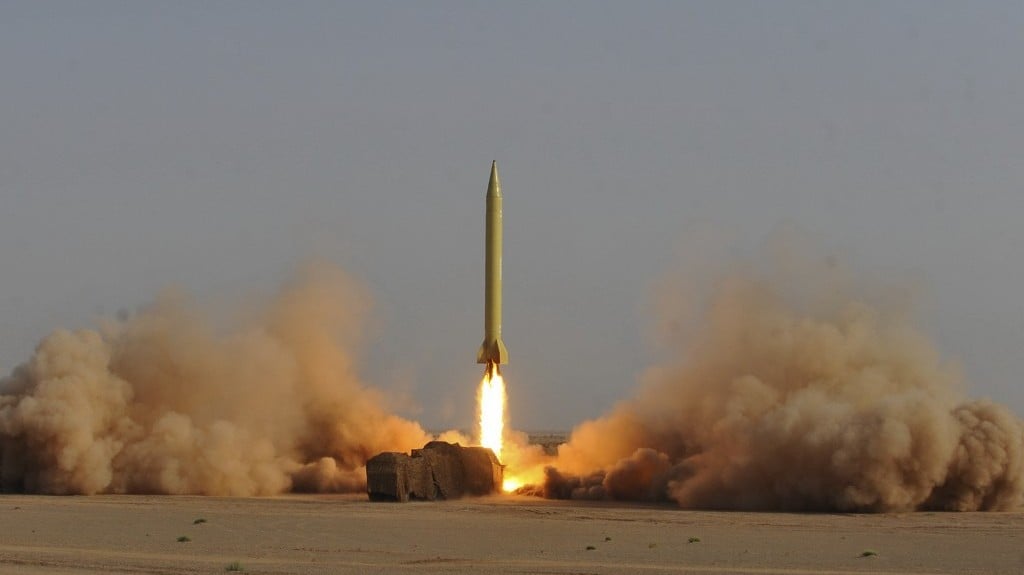
Iran would need a year and a half to complete the creation of a nuclear bomb if it decided to do so today, an Israeli security official tasked with the Iranian threat told The Times of Israel.
Sima Shine, who heads the Iran desk at Israel’s Ministry of Strategic Affairs, told The Times of Israel on the sidelines of the Israeli Presidential Conference that it would take Iran “a few months” to produce enough fissile material for a single nuclear bomb and around a year and a half to produce the bomb itself.
“If the Iranian leader decided today that he wants to build a bomb, and he will probably want more than one bomb … it will take him a few months to enrich uranium to weapon’s grade level. Then it would take a little while to create the bomb itself. The common presumption today is that [the entire process] will take him around a year and a half, assuming not too many things go wrong along the way.”
Shine’s comments seemed to contradict a statement by Amos Yadlin, the former head of Israel’s Military Intelligence, who said in April that by summer Iran will have crossed the nuclear “red line” set by Prime Minister Benjamin Netanyahu in his UN speech last September. Netanyahu warned that Iran must not be allowed to produce enough 20%-enriched uranium for a single bomb, or some 240 kg. (529 lbs).

Shine is no newcomer to the Iranian portfolio. As former head of the Mossad’s research department and deputy director of Israel’s National Security Council, she spent years monitoring Iran’s nuclear proliferation efforts, which she analyzes with great detail.
On June 10, Shine’s boss, Strategic Affairs Minister Yuval Steinitz, told foreign reporters that Iran was between “weeks and two months” away from enriching enough uranium at the level of 20% — easily convertible to weapon’s grade levels of over 90% — for a nuclear bomb. But Shine said the exact timetable is of little consequence to Israel.
“It doesn’t matter, we don’t build our security strategy on months or weeks. If they [the Iranians] decide they’re going for nuclear weapons, they are very close. Even a year or a year and a half is not a long time.”
Iran is so far wary of crossing Netanyahu’s red line, and has diverted some of its 20%-enriched uranium into fuel rods for a small civilian reactor in Tehran, Shine said. But at the same time, Iran is adding centrifuges for uranium enrichment and is working on a parallel plutonium-based nuclear track through its reactor in Arak.
“They are slowly but surely establishing a wide and diverse [nuclear] program, without actually crossing the red line.”
‘We don’t build our security strategy on months or weeks. If they [the Iranians] decide they’re going for nuclear weapons, they are very close’
How will the election of Hasan Rowhani as Iran’s new president affect the country’s nuclear program? “God knows,” Shine said, but she expressed fear that countries like Russia and China will take advantage of Iran’s ostensible new moderation to demand the removal of American and European sanctions. A new set of sanctions are set to be imposed this July.
A Russian announcement last week that Iran was willing to halt its uranium enrichment to 20% in return for the lifting of sanctions was a first, ominous, indication of that trend, she said. With such large enrichment capabilities at Iran’s disposal, halting enrichment could hardly be considered an Iranian concession, since it could replenish its 20%-enriched uranium in a matter of weeks.
“Here we expect the P5+1 (the permanent members of the UN Security Council plus Germany, engaged in nuclear negotiations with Iran) to remain steadfast in their basic position that ‘you [Iran] will receive no easing of the sanctions unless you comply with our demands’.”
‘Assad must go’
When Israel debates whether the fall of Syrian President Bashar Assad is “good or bad for the Jews,” it should consider the devastating impact his ouster would have on Israel’s sole strategic foe, Iran, Shine said.
“In my personal opinion, the ‘devil we know’ is worse than the devil we don’t,” said Shine, adding that the Israeli security establishment is gradually becoming more convinced that Assad remaining in power would be far worse than his ouster, although that position has not yet been adopted as official Israeli policy.
Israeli officials have largely been cautious when speaking out on the Syrian civil war, raging since March 2011. In April, Prime Minister Benjamin Netanyahu instructed his cabinet ministers to keep silent on Syria following a radio interview by deputy foreign minister Ze’ev Elkin, in which he seemed to be calling for international military action in Syria.
‘A weakened Assad [remaining in power] would be completely dependent on Iran. In my opinion that’s the worst thing that can happen to Israel’
“Israel’s main strategic threat is Iran. Not Syria, not Hamas. Therefore, strategically, Israel should examine things from the perspective of what harms Iran and what serves Israel’s agenda in confronting it. If Bashar remains in power, that would be a huge achievement for Iran. A weakened Assad [remaining in power] would be completely dependent on Iran. In my opinion that’s the worst thing that can happen to Israel.”
Those sentiments echo the outlook sounded by former defense minister Ehud Barak, who in an interview with CNN in May 2012 said that Assad’s fall would deal a severe blow to his allies Iran and Hezbollah. But one year and some 90,000 casualties later, Shine is less equivocal in the words she chooses.
“Bashar Assad must not remain in power. Period. What will happen later? God only knows.”
“The alternative, whereby [Assad falls and] Jihadists flock to Syria, is not good. We have no good options in Syria. But Assad remaining along with the Iranians is worse. His ouster would exert immense pressure on Iran.”
Shine said she hoped the Syrian rebels were being assisted, though was cautious in admitting Israel was indeed providing any such aid. “I hope Israel is doing more than I know of,” she said. In an event, Israel would not publicly admit assisting the rebels for fear of harming their domestic posture.
“That would be bad for the rebels themselves. They do not want to be perceived as being supported by Israel, which — as the occupier of the Golan Heights — is the enemy.”
Did the Israeli security establishment fail in predicting the Syrian uprising? Shine rebuffs that criticism. Israeli intelligence gathering, she noted, always focused on government officials in Syria — who themselves never anticipated the revolution — not on the common Syrian citizen. “If Assad himself didn’t know [the revolution was imminent], how are we expected to have known?”
“Even if we had remarkable sources in the Syrian public, who ever attributed any importance to the Syrian public? Everyone thought they were a group of people scared of the regime. Who ever thought they would take to the streets and kill each other?”
Asked whether with its back to the wall following Assad’s ouster Lebanese terror organization Hezbollah could attack Israel, Shine answered in the negative.
“I don’t think so. Why would Hezbollah take on Israel alone?”
—







The Times of Israel Community.