Iran unveils second homegrown virus vaccine as it launches inoculation campaign
Human tests to begin ‘in coming days,’ while Islamic Republic struggles with Mideast’s deadliest coronavirus outbreak, totaling over 58,500 dead out of over 1.4 million infections
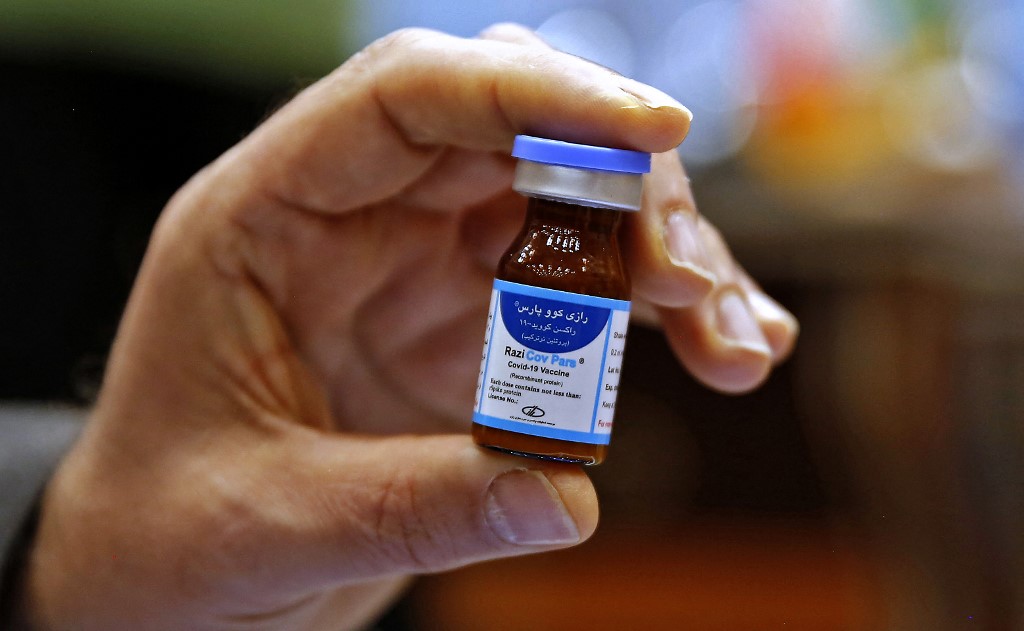
A vial of the Iranian-made 'Razi Cov Pars' coronavirus vaccine at an unveiling ceremony at the Razi Vaccine and Serum Research Institute in the city of Karaj in the northern Alborz Province, on February 8, 2021. (ATTA KENARE / AFP)
TEHRAN, Iran — Iran unveiled its second homegrown coronavirus vaccine project Monday, the day before the launch of a vaccination campaign to combat the Middle East’s deadliest COVID-19 outbreak.
“We will start human tests in the coming days, or in a week at the latest,” Massoud Soleimani, a member of Iran’s national vaccine committee, told journalists in Karaj near Tehran.
The vaccine, dubbed Razi Cov Pars, was developed at the Razi Vaccine and Serum Research Institute, which is linked to the agriculture ministry, Soleimani said.
At the start of Phase 1 of the clinical trials, “13 volunteers between the ages of 18 and 55” will receive a jab, he added.
The unveiling comes the day before the launch Tuesday of a campaign to vaccinate Iran’s 80-million-plus population, starting with the Sputnik V jab, according to Health Minister Saeed Namaki.
Get The Times of Israel's Daily Editionby email and never miss our top stories
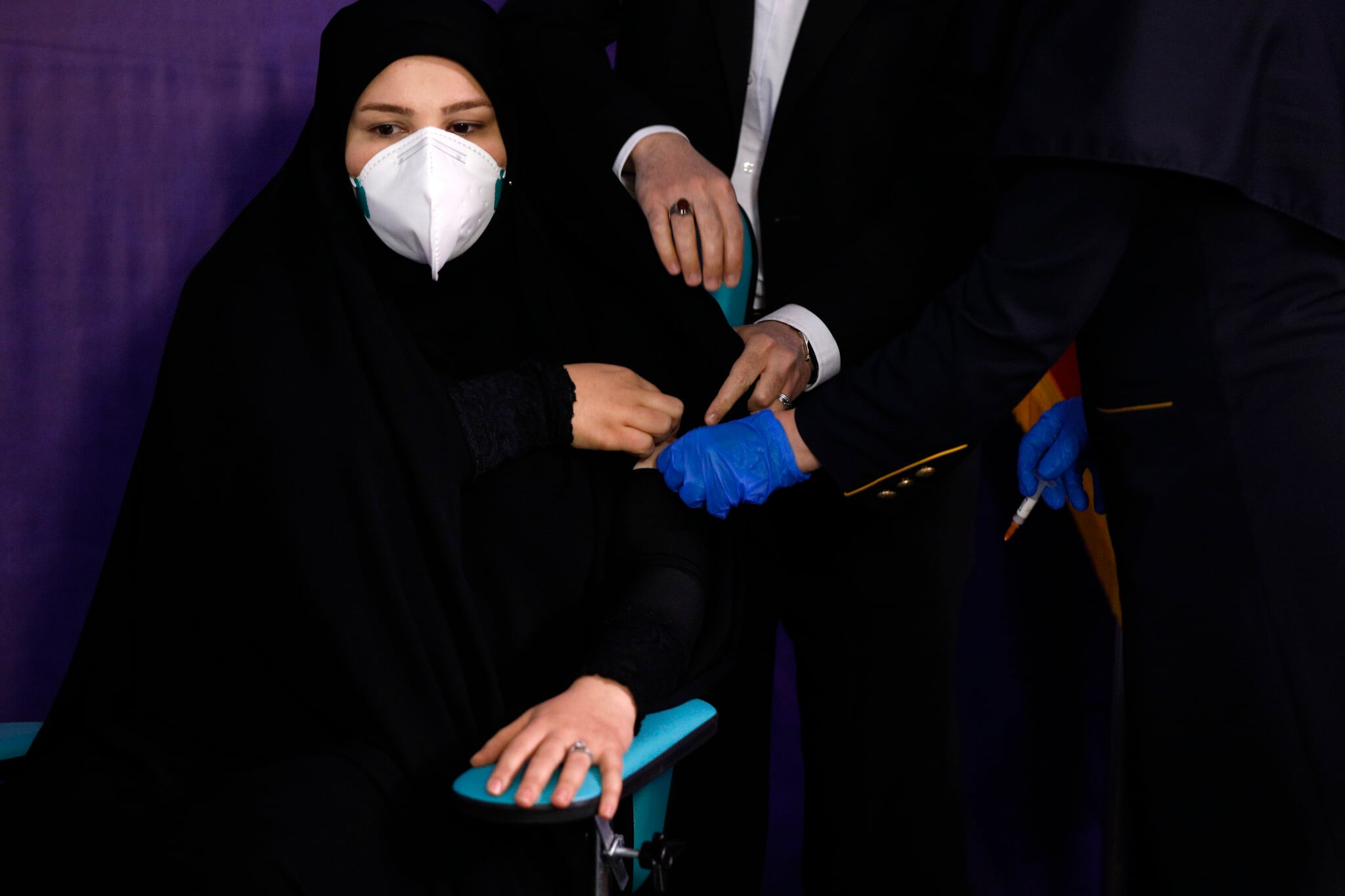
Tayebeh Mokhber is injected with the Coviran coronavirus vaccine produced by Shifa Pharmed, part of a state-owned pharmaceutical conglomerate, in a ceremony in Tehran, Iran on December 29, 2020. (AP/Aref Taherkenareh)
The first doses of the Russian vaccine arrived on Thursday in Tehran, with two other shipments expected by February 18 and 28, according to Iranian authorities.
The Islamic Republic has bought two million doses of Sputnik V, health ministry spokesman Kianoush Jahanpour told AFP on Saturday.
Namaki said last week that Iran would also receive 4.2 million doses of the vaccine developed by Anglo-Swedish firm AstraZeneca and Oxford University, purchased via the international vaccine mechanism Covax.
Advertisement
The coronavirus has killed more than 58,500 people and infected 1.4 million in Iran, according to the health ministry.
The Islamic Republic started clinical trials of its first locally developed vaccine in late December.

We can't do this work alone.
The war with Iran has been draining for all of us in Israel. But when I heard about a high casualty incident – ballistic missile impacts in Arad and Dimona that left nearly 200 people wounded – I drank a cup of coffee, packed a bag, and headed south.
There, I spoke with Shilgit, the head of an after-school program for underprivileged youth. Standing outside her destroyed center, Shilgit said it was a miracle that no children were hurt and spoke about the community coming together in the hours since.
As a Times of Israel reporter, I’m committed to telling stories of resilience like Shilgit’s. But my colleagues and I can't do this alone. If you value work like this,please consider joining our reader support group, The Times of Israel Community. Your financial support is essential to keep real human reporting like this going.
We’re really pleased that you’ve read X Times of Israel articles in the past month.
That’s why we started the Times of Israel - to provide discerning readers like you with must-read coverage of Israel and the Jewish world.
So now we have a request. Unlike other news outlets, we haven’t put up a paywall. But as the journalism we do is costly, we invite readers for whom The Times of Israel has become important to help support our work by joining The Times of Israel Community.
For as little as $6 a month you can help support our quality journalism while enjoying The Times of Israel AD-FREE, as well as accessing exclusive content available only to Times of Israel Community members.
Thank you, David Horovitz, Founding Editor of The Times of Israel