

Iran’s regime still looks likely to survive protests but has no answers for public anger
Massive unrest comes as regime is weak and vulnerable but doesn’t yet show signs of cracking; the main question now is how Trump enforces his red lines

 Add ToI as a Preferred Source on Google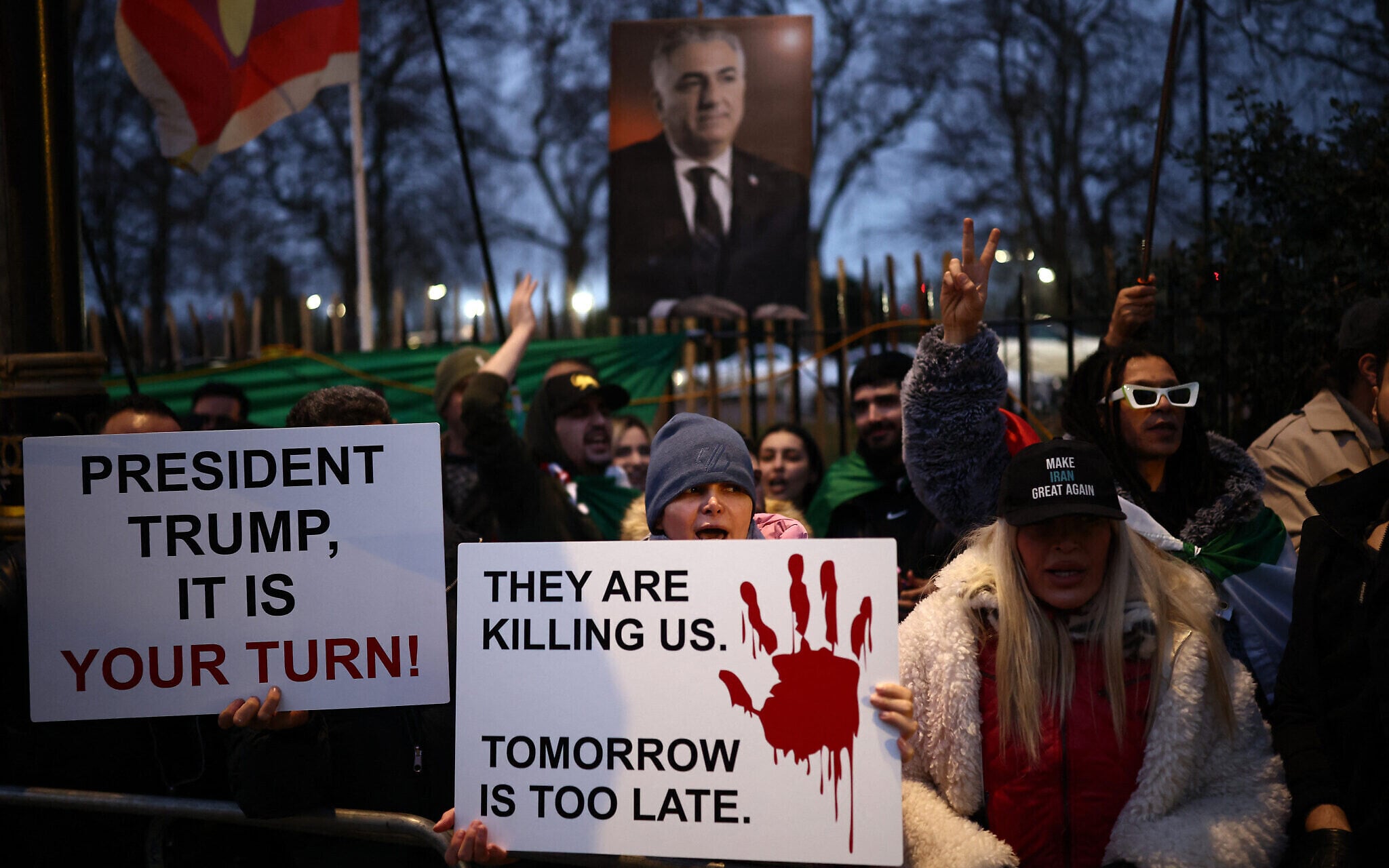
Iran is once again on fire.
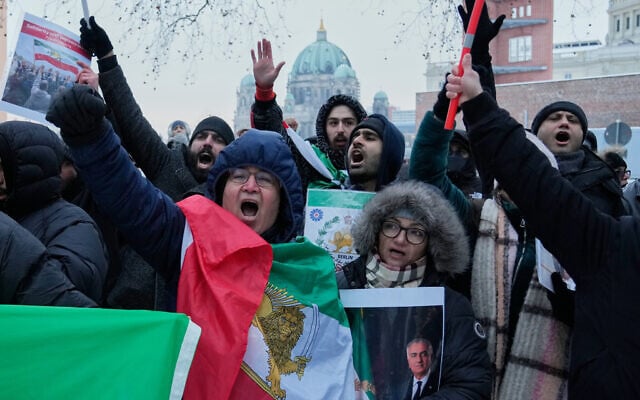
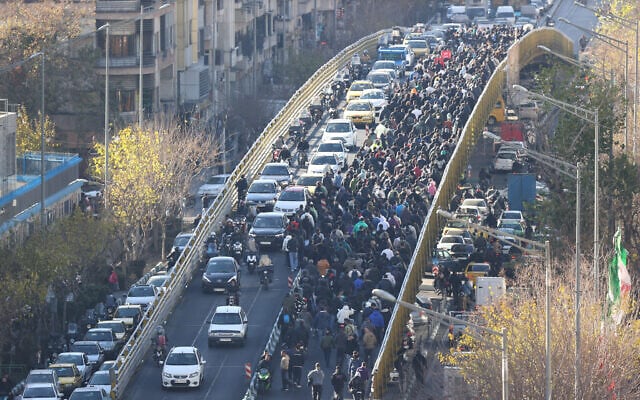
Protests have broken out in every one of Iran’s 31 provinces, and thousands of protesters have reportedly been killed and many more arrested.
This, of course, is not the first time that the Islamic Republic has faced mass protests. Since the Green Movement protests in 2009 that erupted after reformists accused then-president Mahmoud Ahmadinejad of stealing the elections, Iranians have come out to the streets regularly, often to be crushed with deadly force by state security forces, while the world does nothing to help.
The “woman, life, freedom” protests in 2022 brought millions of furious Iranians out for months, but were squelched after hundreds were killed and over 20,000 arrested.
This time, both the regime and the protesters know that the protests are different.
“It’s denser, more widespread, larger numbers of the smaller groups of people, and it’s more diverse,” said Farzin Nadimi, senior fellow at The Washington Institute. “There are groups of young students, very young people, both men and women, young boys and girls, and older people, retirees. Still, there are not very many civil servants, which was expected.”
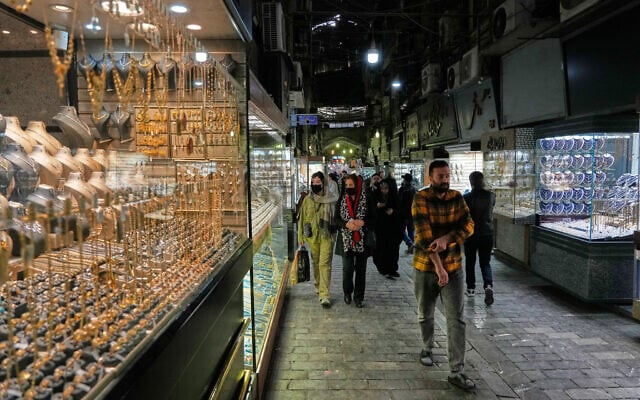
Though the protests started with merchants in Tehran’s bazaar over the collapse of the rial, they quickly took on clear anti-regime and even occasionally pro-monarchist tones.
The growing unrest comes at the Islamic Republic’s weakest moment since the 1979 revolution.
In the years since the Hamas invasion of Israel on October 7, 2023, Israel has hammered Tehran and its terror proxy network. Hamas is still very much in control of Gaza’s population but in no position to attack Israel anytime in the foreseeable future. Hezbollah was beaten into agreeing to a humiliating ceasefire that provides for its own disarmament. Syria’s Bashar al-Assad regime fell shortly afterward, depriving Iran of its major state ally in the Middle East.
Even worse for Tehran, Iran itself was hit hard by Israel and the US in June and proved unable to defend itself or deter its attackers.
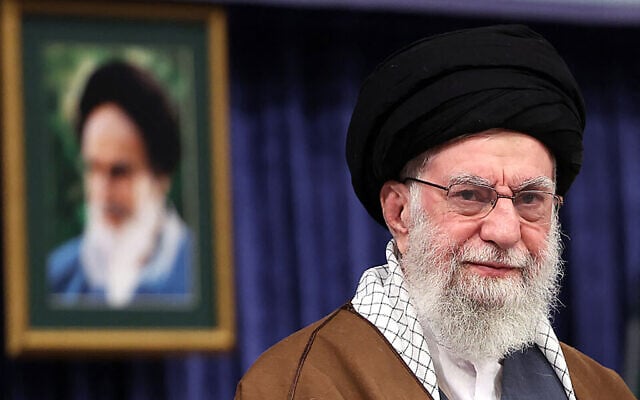
“The regime has never appeared weaker,” said Michael Makovsky, CEO of the Jewish Institute for National Security of America. “Israel, and the US, humiliated the regime in the 12-day war. Imagine — Israel achieved air supremacy within 48 hours, meaning for 10 days [Israeli Air Force] planes flew over Tehran with impunity.”
Not only is Iran’s entire regional network — into which it has poured massive resources that could have gone to its own citizens — in shambles, but the regime has no conceivable avenue to address the protesters’ demands.
Though it has the world’s second-largest proven natural gas reserves, Iran can’t provide its people with heating in the winter or air conditioning in the summer. It has badly mismanaged its water resources, driving up food prices.
Facing US sanctions that are only getting tighter, inflation — the problem that sparked these protests — isn’t going to get better.
“Unlike previous protests, the regime has no answer,” said Yossi Kuperwasser, director of the Jerusalem Institute for Strategy and Security. “This isn’t something that can be solved. There’s no solution to the currency’s collapse, no solution to shortages in basic necessities like water and electricity. There’s no answer to the failed governance — none at all.”
At the same time, the combination of those factors doesn’t equal an impending collapse of the regime. The political elite is showing cohesion and confidence. There have been no signs that security personnel are defecting or refusing orders.
“The regime feels threatened, but I don’t think anyone currently assesses that its situation is hopeless,” said Raz Zimmt, Iran expert at the Institute for National Security Studies.
Fateful days
The question now is where the protests, and possible Israeli or US involvement, go from here.
It is entirely possible that, as it has in the past, the Iranian regime will manage to crush the protests in a matter of weeks.
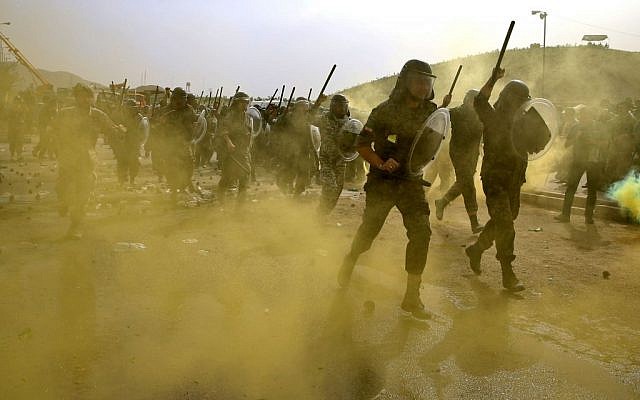
“It’s not impossible,” said Zimmt, “but it seems much harder this time, because many in the Iranian public have concluded they have nothing to lose.”
The Islamic Revolutionary Guard Corps (IRGC), whose mission is to protect the Islamic Revolution, could decide that the government is being too gentle and take matters into its own hands. That would mark a much harsher approach to the protests, and would likely mean that the IRGC would take Iran in an even more anti-Western and aggressive direction. As of now, there have not been signs of such moves by the IRGC.
There is also the possibility that senior figures in the regime decide that the 86-year-old Supreme Leader Ali Khamenei no longer has the ability to guide the country through the growing challenges it faces, and must be pushed aside and replaced.
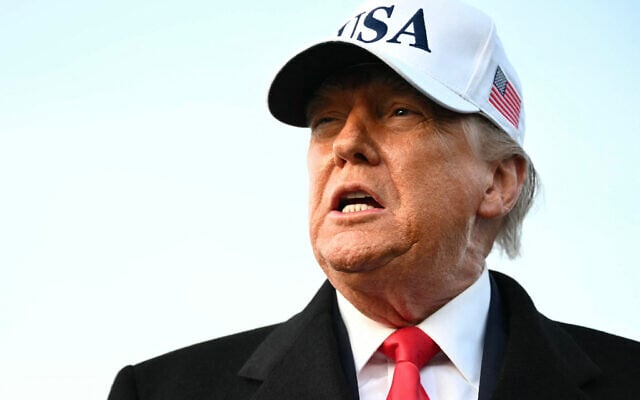
And there remains the very real possibility of an attack by the US or Israel.
Trump has drawn his line in the sand. “I have let them know that if they start killing people, which they tend to do during their riots… we’re going to hit them very hard,” he said, and more recently warned of “very strong action” if Iran goes ahead with the threatened hanging of protesters.
Riding high on a wave of short and generally successful military operations following explicit threats, it is unlikely that Trump wants suddenly to be seen as another US president issuing red lines that he doesn’t back up with action.
A potential US attack could come in many forms.
A likely focus would be the regime’s suppression machine currently being used against protesters.
Targets could include the internal command networks the regime uses, and the Russian military jammers Iran is using to block Starlink internet connection.
The US or Israel could also carry out cyber and kinetic attacks on the extensive surveillance camera network Iran has deployed on the roads, businesses and public transportation, said Nadimi.
Even without attacking, Trump could declare that toppling the Iranian regime is the official US policy, even if this won’t be done by American troops.
He can also move more naval assets to the Indian Ocean and the Persian Gulf, choking Iran’s ability to export oil to China.
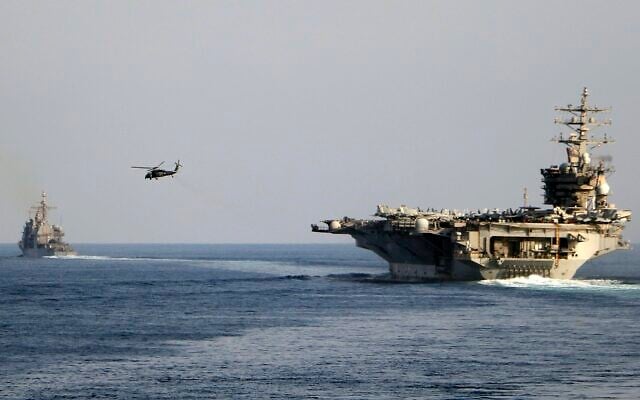
“This would embolden the Iranian people, who would see it as a strong show of support for them against the regime,” said Makovsky. “It might convince some Iranian officials and those supporting and defending it to change sides.”
There is always the danger of an Iranian escalation, whether or not it is attacked. Tehran threatened on Sunday that it will retaliate against Israel as well as US military bases in the event of American strikes on Iran.
Israel should take the possibility of missile attacks from Iran seriously, but it doesn’t seem like the most desirable path for the Iranians. Their hands are already full with the domestic unrest, and it hardly makes sense to drag into the fight the same country that showed the ability to reach Iran’s most sensitive defense sites and top security officials in June.
Even if Trump defies expectations and backs off, and the regime figures out how to inflict enough violence to scare the public back into their homes, it is only a matter of time before mass anger erupts again.
Iran’s adversaries have failed to meaningfully support the protesters in the past. At some point, however, they would do well to recognize that the Iranians risking their lives in the streets are their best chance for ending the threat from the Islamic Republic once and for all.









The Times of Israel Community.