

Israeli study: Untreated chronic thyroid condition in pregnancy ups autism risk in children
In peer-reviewed research of 51,000 pregnant women, Ben-Gurion University scientists find that if hormone imbalance is ‘adequately treated,’ kids don’t exhibit higher occurrence of ASD
 Add ToI as a Preferred Source on Google
Reporter at The Times of Israel

Israeli scientists say that women with persistent thyroid hormone imbalance during their pregnancy may be at an increased risk of having children with autism spectrum disorder (ASD).
Their new peer-reviewed study tracked thyroid levels in more than 51,000 pregnant women. The study found that children of women with long-lasting, untreated thyroid hormone imbalance during pregnancy had about two to three cases of autism per 100 children, compared with about one case per 100 in the general population.
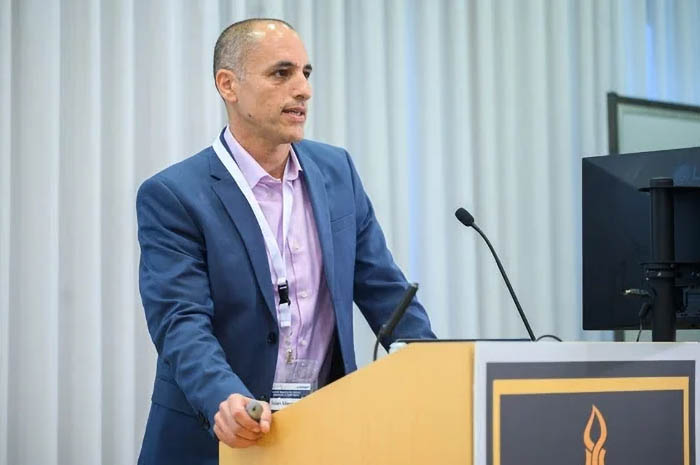
“Women who had a chronic thyroid condition that went untreated and got worse during pregnancy had a greater risk of having children with autism than pregnant women who were adequately treated,” Prof. Idan Menashe of Ben-Gurion University of the Negev, the study’s lead author, said in a phone call.
However, the scientists found that when a pregnant woman’s chronic thyroid dysfunction was “adequately treated,” there was no association with increased autism risk in her offspring, said Menashe, who is head of Ben-Gurion’s Department of Epidemiology, Biostatistics and Community Health Sciences, and the scientific director of the Azrieli National Center for Autism and Neurodevelopment Research.
Ben-Gurion researcher Leena Elbedour, May Weinberg of the Meir Medical Center and Tel Aviv University, Analya Michaelovski of Soroka University Medical Center, and Prof. Gal Meiri, also of Soroka University and Ben-Gurion University, collaborated on the study, which recently appeared in The Journal of Clinical Endocrinology & Metabolism.
Thyroid hormones contribute to brain development.
The thyroid is a small, butterfly-shaped gland at the front of the neck.
Thyroid hormones regulate the body’s metabolism, which is how the body uses and manages energy. These hormones also play a crucial role in essential processes such as heart rate regulation and the body’s muscle control.
Thyroid hormones also support the production of myelin, an insulating, fatty coating around nerve fibers. These allow electrical signals to travel between the brain and body more quickly.
During pregnancy, a woman’s thyroid hormone is essential for the neurodevelopment of the fetus. Studies have shown the association of a woman’s thyroid imbalance with atypical neurodevelopment.
When the thyroid produces the right amount of hormone, it is considered to be within the normal range, or balanced.
If a pregnant woman’s thyroid hormone levels are too low, doctors usually prescribe an artificial hormone that safely replaces the missing hormone.

Children with autism may have delayed or absent speech, difficulties with social interaction, motor impairment, and repetitive behavior, with a spectrum of severity.
Around the world, autism spectrum disorder diagnoses have increased, including in Israel. A recent Israeli study found the number of ASD cases had quadrupled from 2017 to 2021 in two- and three-year-old children, and doubled in older ages.
Thyroid imbalance during pregnancy
Scientists have studied the connection between a woman’s thyroid levels during pregnancy and her child’s development. However, most earlier studies checked the thyroid hormone once, usually early in pregnancy, and not throughout the pregnancy.
Menashe’s research, done at Soroka Medical Center, followed more than 51,000 births between January 2011 and December 2017 in a retrospective cohort study, with a follow-up through January 2021.
Using blood-test data and the women’s medical records, the team divided the mothers into four groups: those with no thyroid problems, those with a chronic thyroid condition whose hormones were balanced in pregnancy, those with thyroid imbalance only during pregnancy, and those who had both a chronic thyroid condition and imbalance during pregnancy.
This gave researchers the data to compare the women’s thyroid levels during pregnancy.
“What surprised me is that only the last group, those who had both a chronic thyroid condition and were imbalanced during pregnancy, were at risk of having a child with autism,” Menashe said.
The scientists also observed that the longer the duration of thyroid dysfunction across trimesters, the higher the risk.
“We don’t really know the cause,” Menashe said. “But we know there is a link between them.”
When asked if he could calculate the specific percentage of risk, the scientist replied, “Not exactly, because this is not the exact way to assess risk. All we can say is that we see an increased risk, or more exactly, untreated thyroid problems are associated with an increased risk of autism.”

Dr. Dorit Shmueli, a specialist in neurology and child development and the Child Development Coordinator in Clalit Health Services, told The Times of Israel that research on the safety and importance of balancing hypothyroidism in pregnancy is “essential.”
“Optimal maternal thyroid function plays a key role in supporting healthy fetal brain development, and understanding how best to manage it can directly influence the developmental outcomes we see in children, especially autism spectrum disorder,” said Shmueli, who was not involved in the study. “Evidence-based insights from Prof. Idan Menashe’s research are crucial for informing clinical guidance and improving long-term well-being in the populations we serve.”
Researchers believe there is “some mechanism where the imbalance in the maternal thyroid hormone affects the neurodevelopment of the fetus,” Menashe said. “Eventually, this abnormal neurodevelopment is translated into autism in the child.”
The Israeli Medical Association, following international guidelines, recommends that thyroid levels be monitored in pregnant women who are already being treated for thyroid imbalance. However, it does not recommend universal screening because treating mild thyroid problems has not been shown to clearly improve pregnancy or neurodevelopmental outcomes.
When asked whether there has been a change in the Health Ministry’s policy about routine thyroid screening, Menashe said, “I don’t think doctors change the protocols based on one study.”
The Health Ministry did not respond to a query about this issue.
Menashe said that more research is needed to “really study these mechanisms in animal models on a molecular level, and to specifically test these hypotheses.”
Until then, he said, the findings “underscore the need for routine monitoring and timely adjustment of therapy to maintain normal thyroid hormone levels throughout pregnancy.”










The Times of Israel Community.