

Lebanon begins to simmer as Syria continues to burn
Cautious Palestinian optimism ahead of new attempt to reconcile Fatah and Hamas
 Add ToI as a Preferred Source on Google
Elhanan Miller is the former Arab affairs reporter for The Times of Israel
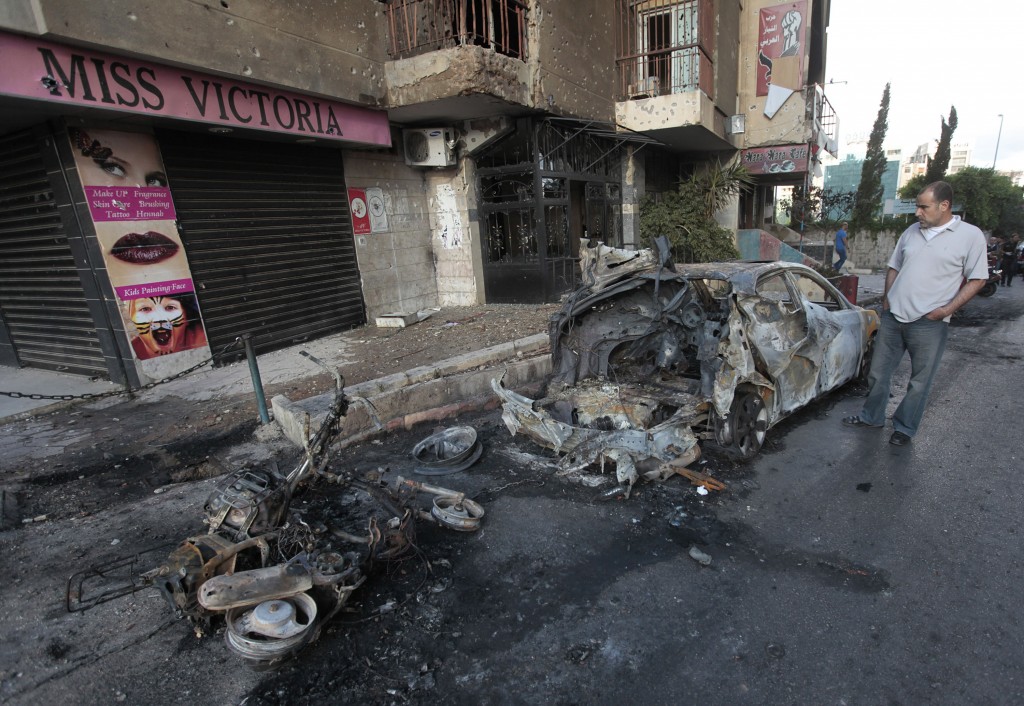
Violence from Syria has spilled into the Lebanese capital, Beirut, following the killing of a Lebanese cleric by the Lebanese army in northern Lebanon.
Sunni Sheikh Ahmad Abd Al-Wahid was killed at a military checkpoint in the town of Halba, on his way to a rally organized by Saad Hariri’s Future Movement. Saudi-owned daily A-Sharq Al-Awsat quotes Hariri as calling his supporters to stay calm following the killing. “We will not be dragged into reactions aimed at carrying anarchy into our area.”
Dubai-based news channel Al-Arabiya describes Abd Al-Wahid as an opponent of the Syrian regime. The channel reports that roads were closed with burning tires in Beirut in protest of the killing.
Arab-nationalist daily Al-Quds Al-Arabi reports that the killing of the cleric rekindled violence in northern Lebanon only days after calm was restored following clashes between Sunnis and Allawites in the northern city of Tripoli that were affected by sectarian tensions in Syria.
“Civil war reaches Lebanon,” reads the headline of the lead editorial in Al-Quds Al-Arabi.
“Lebanon is experiencing sectarian tension these days unprecedented since the signing of the Taif agreement which ended the Lebanese Civil War following 16 years of bloody fighting,” reads the daily.
“It is only natural that the mounting tension in Syria would influence its neighbor Lebanon one way or another given the sectarian divide, but if such bloody clashes are taking place, this means the country is facing a civil war that may last years, and may be more bloody than its predecessor.”
The editor also refers to a decision by Saudi Arabia, the United Arab Emirates and Qatar to issue a travel warning to Lebanon, asking their citizens to leave the country within 24 hours.
“When three Gulf countries… call on their citizens not to visit Lebanon and demand of those who are there to leave immediately, this means that a large, bloody explosion will occur in the country within days.”
Dozens of victims near the Syrian city of Hama
Meanwhile, violence continues to plague Syria.
“Massacre in Hama and clashes and explosions in Damascus,” reads the headline of A-Sharq Al-Awsat in its typically shrill tone. The daily reports the bombardment of the town of Soran, near Hama, killing 34 civilians. Quoting opposition forces, the daily also reports clashes between government and opposition in the southern suburbs of the capital Damascus.
On Sunday, the Syrian opposition reported killing six high-ranking security officials including the minister of defense. But those reports were never substantiated, leading one columnist to bemoan a blow to the opposition’s credibility.
“If the report on the killing of six Syrian personalities was true, we could report that the regime has only a few days left and is about to collapse,” writes Abd Al-Rahman Rashed in A-Sharq Al-Awsat. “But the magnitude of the story tells us it’s a lie.”
“This lie should not have affected the Free Syrian Army which rushed to issue statements… this was a trap set by the Syrian regime, which the opposition fell for.”
Fatah and Hamas aim for unity, again
Rival Palestinian factions Hamas and Fatah reached an agreement Sunday on a unity government within three weeks, Arab press is reporting Monday.
Qatar-based news channel Al-Jazeera reports that the new government will be announced within 10 days of the start of consultations May 27, and will be headed by Mahmoud Abbas who will become prime minister in addition to his presidential title. The government is set to last only six months and prepare the ground for general elections, as well as continue reconstructing Gaza.
PA daily Al-Ayyam dubs the agreement “a surprise,” reporting that the Palestinian Central Elections Committee will be allowed to enter Gaza on May 27, from which it was previously banned by Hamas.
Adli Sadek, a columnist for PA establishment daily Al-Hayat Al-Jadidah, is cautiously optimistic about the new reconciliation announcement.
“We hope the news of successful reconciliation delivered by our brother Azzam Al-Ahmad of Fatah is correct this time. This, despite a pessimistic statement released by him two days ago whereby they [Hamas] do not want to reconcile.”
Sadek writes that Hamas needs the reconciliation much more than Fatah does.
“The reconciliation has become existential for Hamas and its rulers in the Gaza Strip. We do not want, in this conciliatory occasion, to explain how close the gas canister which is the Gaza Strip was to exploding. Hamas knows how high the level of anger is among the people.”







The Times of Israel Community.