

 From the Liveblog of
Saturday, June 28, 2025
From the Liveblog of
Saturday, June 28, 2025
Bennett says Iran strikes ‘proved to the world that we’re still bastards’; says ‘it’s clear’ regime will try to renew nuclear program
 Add ToI as a Preferred Source on Google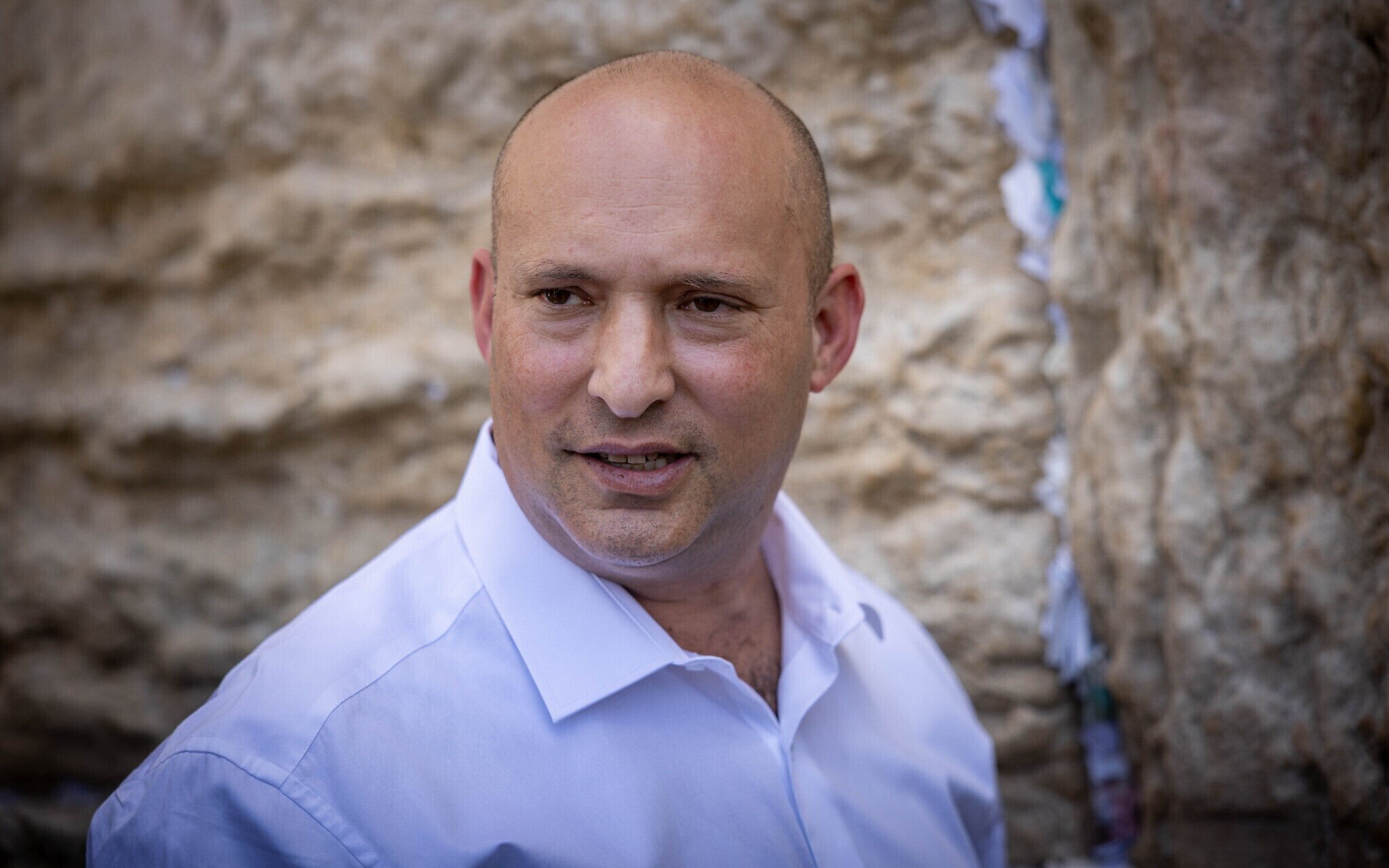
Former prime minister Naftali Bennett praises the decision to strike Iran, saying the attacks targeting the Islamic Republic “went better than expected.”
“It’s an extraordinary achievement,” he says, and one that contrasts deeply with the failures and “total collapse” surrounding October 7, 2023.
In a pre-recorded interview aired this evening by Channel 12 news, Bennett states that his government budgeted some NIS 6 billion for operations in Iran, without which he argues the recent strikes would not have been possible.
“The failure was in 2018,” Bennett says, explaining that Israel did not put plans in place to attack Iran after US President Donald Trump withdrew the United States from the nuclear deal with Tehran in 2018.
“I think this attack, like the [exploding] pagers targeting Hezbollah and other very nice things, proved to the world that we are still bastards, we have outside-the-box tricks, and that we have force and will,” he adds.
He says that he said seven years ago that Israel had to target “the head of the octopus” — Iran — and complained that Israel was not doing so. “I pushed for this, and also, as prime minister, I took action inside Iranian territory several times.”
He says that he “devoted the first month” that he was prime minister, from June 2021, “to delving deep into [the threat posed by] Iran,” including its nuclear program. He concluded that Iran was far weaker than was believed.
He was also “stunned,” he said, to discover that the previous Netanyahu government “had not carried out” the necessary preparations and thus “we didn’t have the capacity to attack Iran.”
The NIS 6 billion shekels necessary for intelligence and munitions “had not been budgeted, the order had not been given.” Therefore, in his term, he allocated the budgets and ordered those various means and capacities without which no attack could be executed. “Without the actions we took in 2021, it would not have been possible to give the order in 2025.”
Detailing that it takes four days to enrich uranium from 60% to weapons-grade, he says he believes some of Iran’s pre-war 400-kg. stockpile of 60%-enriched uranium remains, but does not know if it is “all or only some.”
He says we’ll also know “soon” whether some of the “halls of centrifuge cascades” survived the Israeli and American strikes.
Bennett says that Israel, in principle, should work for the fall of the regime in Iran, and that “the regime will fall… in 40 years or 4 years… The regime is loathed by the [Iranian] public… But you cannot bring down the regime with bombs.”
He says he has in the past proposed ideas to help enable the regime’s fall, including sending in tens of thousands of Starlink devices to re-enable the internet when the regime shuts it down as it quells internal protests, steps to help bolster the opposition, moves to harm the regime economically, and other measures.
There need to be “comprehensive moves” to accelerate the demise of the regime, because “it’s clear that they will now start to renew” the nuclear program. The key is to prevent them from doing that, too.”








The Times of Israel Community.