

 From the Liveblog of
Tuesday, July 15, 2025
From the Liveblog of
Tuesday, July 15, 2025
Edelstein says ‘compromise not possible’ on sanctions against Haredi draft dodgers; urges ultra-Orthodox not to quit government
 Add ToI as a Preferred Source on Google
Sam Sokol is a former political correspondent at The Times of Israel. He was previously a reporter for the Jerusalem Post, Jewish Telegraphic Agency and Haaretz. He is the author of "Putin’s Hybrid War and the Jews"
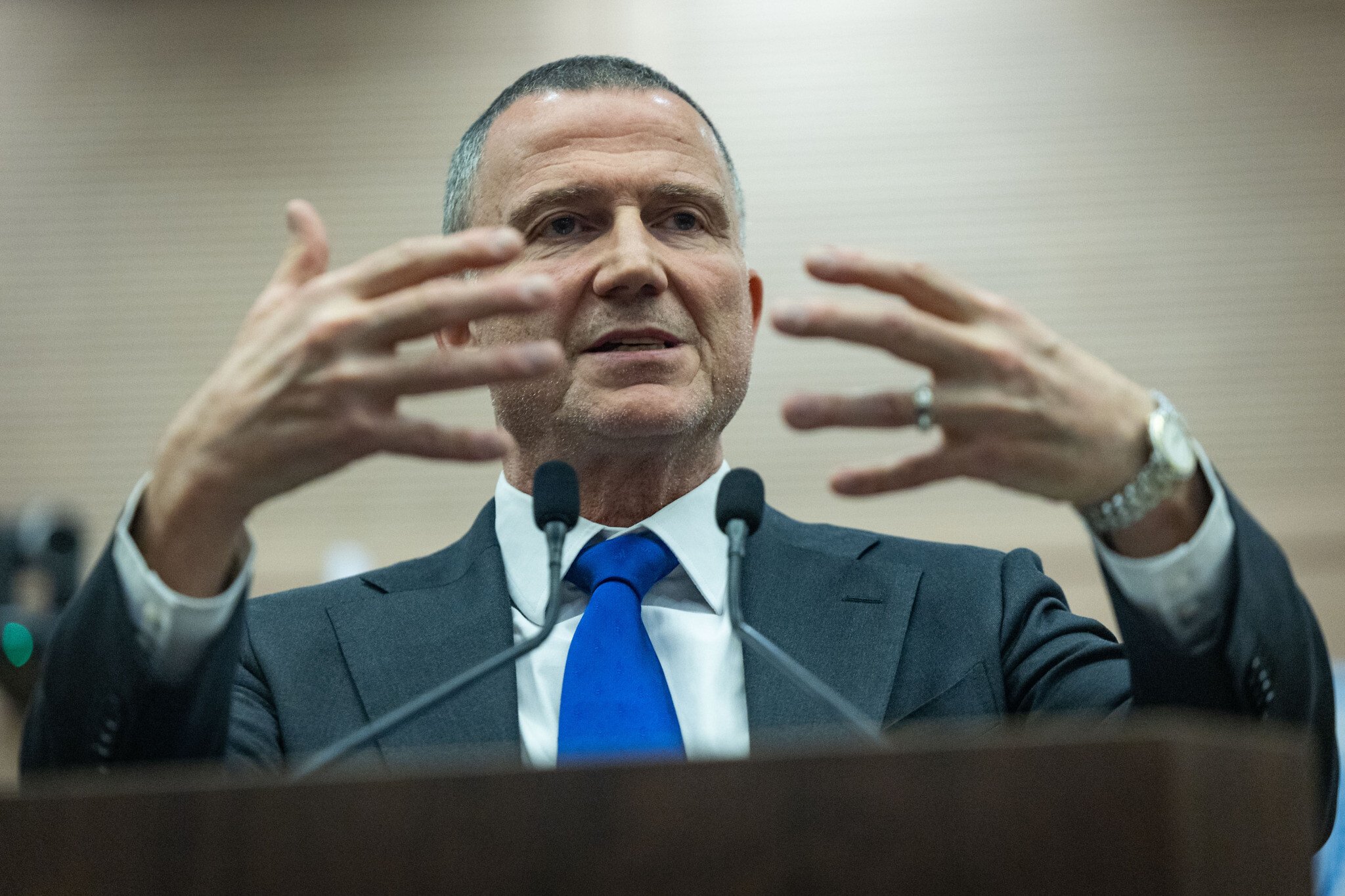
Addressing reporters in the Knesset following the United Torah Judaism’s exit from the coalition, Foreign Affairs and Defense Committee chairman Yuli Edelstein (Likud) draws a line in the sand regarding personal and institutional sanctions against draft dodgers while also appealing to the Haredi parties not to topple the government.
UTJ quit the coalition last night after being presented with a copy of a proposed enlistment bill prepared by Edelstein, which it argued violated the terms of a previous compromise agreed to by the two sides last month in an effort to prevent the Haredi parties from toppling the government ahead of the war with Iran. Fellow ultra-Orthodox party Shas is considering following suit later this week.
“Unfortunately,” Edelstein complains, “the representatives of the Haredi factions in the Knesset are not ready for the outline of the law that I have formulated.”
Rather than representing a surprise, the bill was “based on the principles that we have discussed throughout the legislative process and includes a number of essential sections on which compromise is not possible,” Edelstein says.
These include “effective personal sanctions, institutional sanctions if targets are not met, applying high recruitment targets, which will increase rapidly” and “effective oversight and enforcement mechanisms.”
“Without these, it would not be a conscription law, but a bluff law,” he adds, appealing to Haredi lawmakers not to “dismantle the right-wing government.”
Declining to share a copy of the updated bill itself, which has yet to be seen even by members of his own committee, Edelstein declared that he had insisted since the beginning of the legislative process that he would “only pass a good law that would meet the needs of the IDF and significantly ease the burden of reservists and the serving public.”
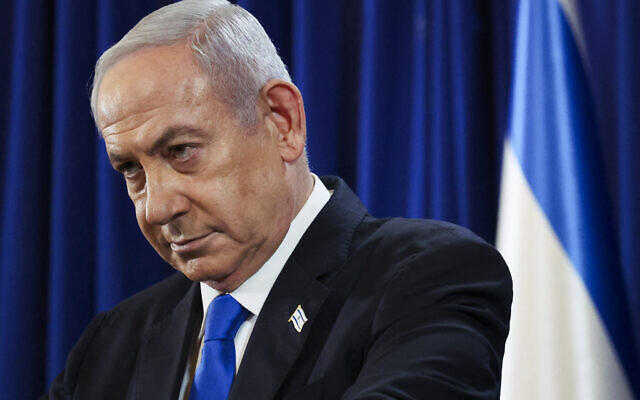
Arguing that he had repeatedly acted to thwart threats to the coalition over the conscription issue, Edelstein says that ahead of Israel’s war with Iran, he worked with Prime Minister Benjamin Netanyahu “to prevent the dissolution of the Knesset.”
“That evening, some of the clauses were agreed upon, but it was clear to everyone that the drafting work was not finished then. Since then, we have worked intensively, in consultation with the serving public, representatives of the Haredi public and IDF representatives, to complete the clauses and details of the law,” he states.
“Last night, I had a long meeting with the Prime Minister and representatives of the Haredi parties, and I presented to them the draft of the Conscription Law that I believe in, prepared and ready for submission,” he continues — calling the bill one that “meets the needs of the IDF” and ensures “that anyone who enters the army as a Haredi will be able to leave it as a Haredi.”
“The future of the country is not subject to political games at a time when the security challenges facing us are many and more existential than ever,” Edelstein continues. “The public will not forgive those who fail to rise to the occasion and unite for one common goal – the security and future of the State of Israel.”
According to a spokesman for UTJ chairman Yitzhak Goldknopf, Edelstein’s bill failed to deliver on several key demands, including offering a full amnesty to yeshiva students who have already received enlistment orders. It also reportedly contained a clause requiring yeshiva students who receive exemptions to check in and out of their yeshivas using a fingerprint scanner.








The Times of Israel Community.