

 From the Liveblog of
Sunday, December 7, 2025
From the Liveblog of
Sunday, December 7, 2025
In meeting with Israeli diplomats, Netanyahu touts strength as key to making peace
 Add ToI as a Preferred Source on Google
Lazar Berman is The Times of Israel's diplomatic reporter
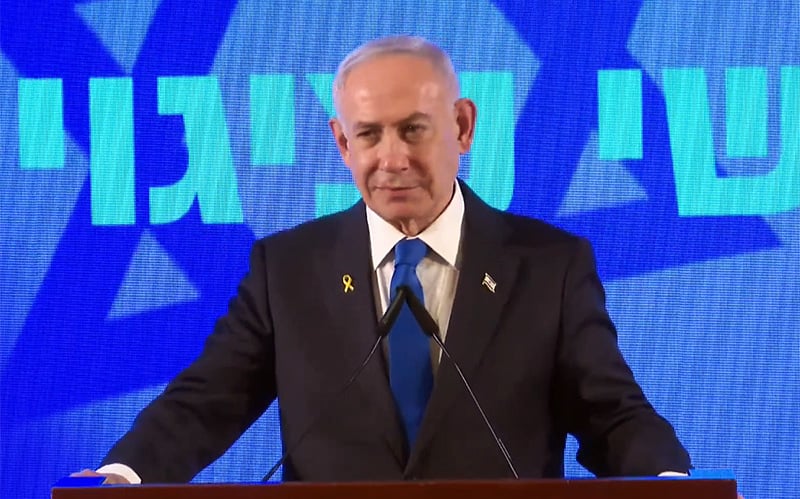
In a rapidly changing world, there is one simple rule, Prime Minister Benjamin Netanyahu tells a meeting of Israel’s ambassadors in Jerusalem, “You have to be strong. You have to be very strong.”
“With the strong, pacts are made. With the strong, peace is made,” he says.
Israel’s strength is a key factor in other countries’ decision to make peace with Israel, he argues.
“Israel is stronger than ever,” Netanyahu continues. “It is a superpower – certainly regional, in several fields, it is a world power.”
Israel has become stronger military and economically since the October 7, 2023 attacks, Netanyahu insists. “As a result, we have increased our diplomatic strength.”
He says that there were a series of important decisions he made in the immediate aftermath of the attack — to declare war, to call up all the reservists, and whether to attack Hezbollah in Lebanon. Netanyahu says he decided not to attack Hezbollah because it would have happened when both Hamas and Hezbollah “were at the height of their power.”
Amid an ongoing political fight in Israel over how many ultra-Orthodox soldiers will be drafted into the IDF, Netanyahu says in his speech – without mentioning the draft issue – that “we have a very, very big army compared to our population.”
Netanyahu says that during the first days of the war, he made the decision to deal with Hamas first, then turn to Hezbollah, then other Iranian proxies, and finally Iran itself. He takes the diplomats through the campaigns against those enemies, stressing that he did not trust the US Biden administration enough to tell them that Israel was going to take out Hezbollah secretary-general Hassan Nasrallah.
Turning to the new government in Syria that replaced Bashar Al-Assad, Netanyahu says that “We are very much hoping that we will be able to come to a disarmament agreement in southwest Syria and also to take care of our Druze brothers,” he says, adding that Israel will “keep the high ground” in Syria.






The Times of Israel Community.