

 From the Liveblog of
Friday, January 9, 2026
From the Liveblog of
Friday, January 9, 2026
Kibbutz Alumim members gather in Tel Aviv, call for return of Ran Gvili’s body
 Add ToI as a Preferred Source on Google
Jessica Steinberg, The Times of Israel's culture and lifestyles editor, covers the Sabra scene from south to north and back to the center
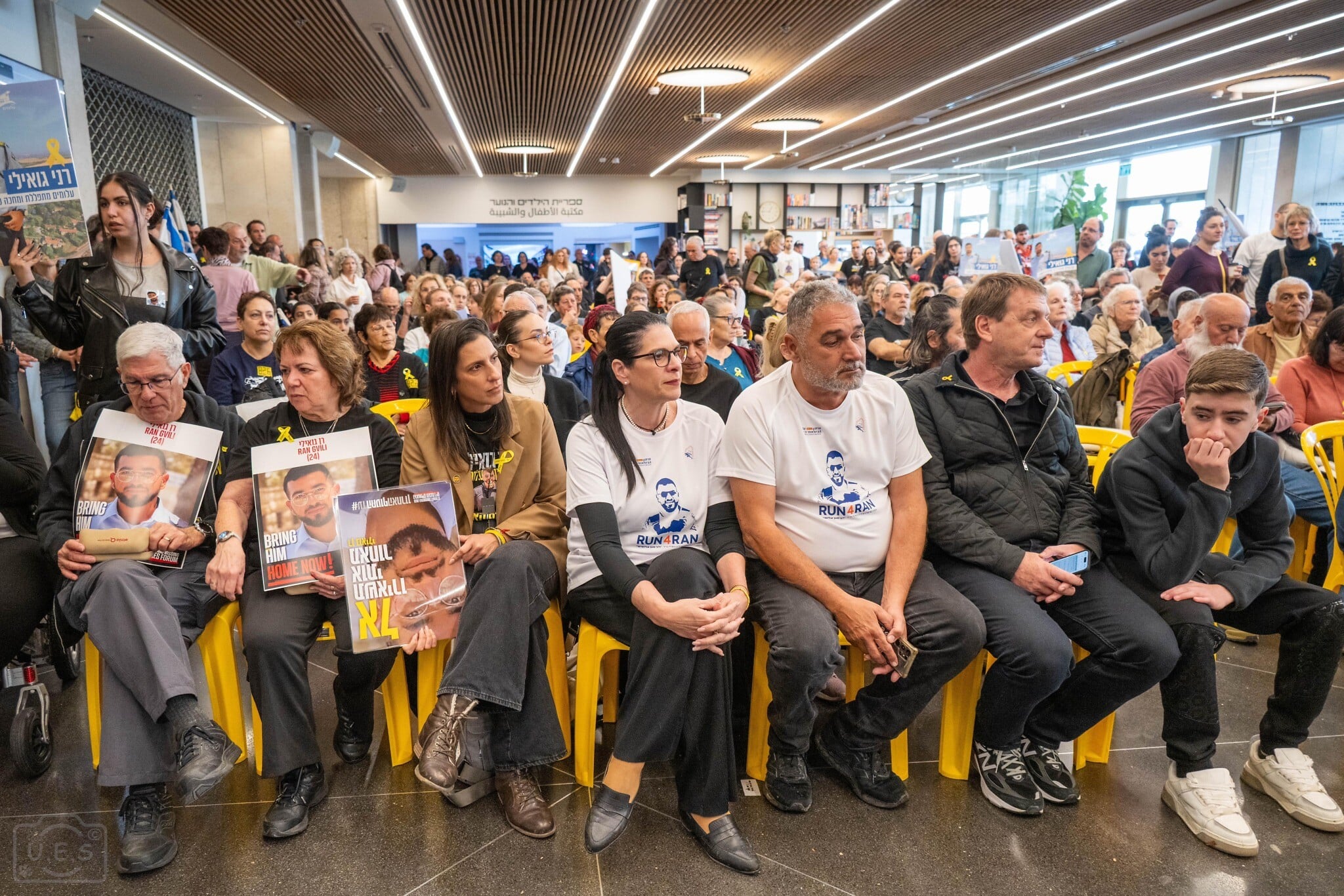
Members of Kibbutz Alumim — the Gaza envelope community where police officer Ran Gvili fought Hamas terrorists on October 7 before he was killed and had his body abducted to Gaza — gathered Friday afternoon at Beit Ariela, the library next to Hostage Square in Tel Aviv.
The weekly gathering includes a call to release Gvili’s body before continuing to the second phase of the Gaza deal.
“Rani doesn’t know this (yet), but he saved the kibbutz and built us a new family,” says Itzik Gvili, Ran’s father. “I come to Kibbutz Alumim often, and the envelope region is starting to recover and return. God willing, it will grow and flourish.”
The Gvili family speaks about their son and brother in the present tense, noting that until they see his body, they believe he could still be alive.
Former hostage Bar Kuperstein, who was abducted from the Nova festival and released from captivity in October, speaks to the gathering about observing Shabbat during captivity and how it offered a kind of stability.
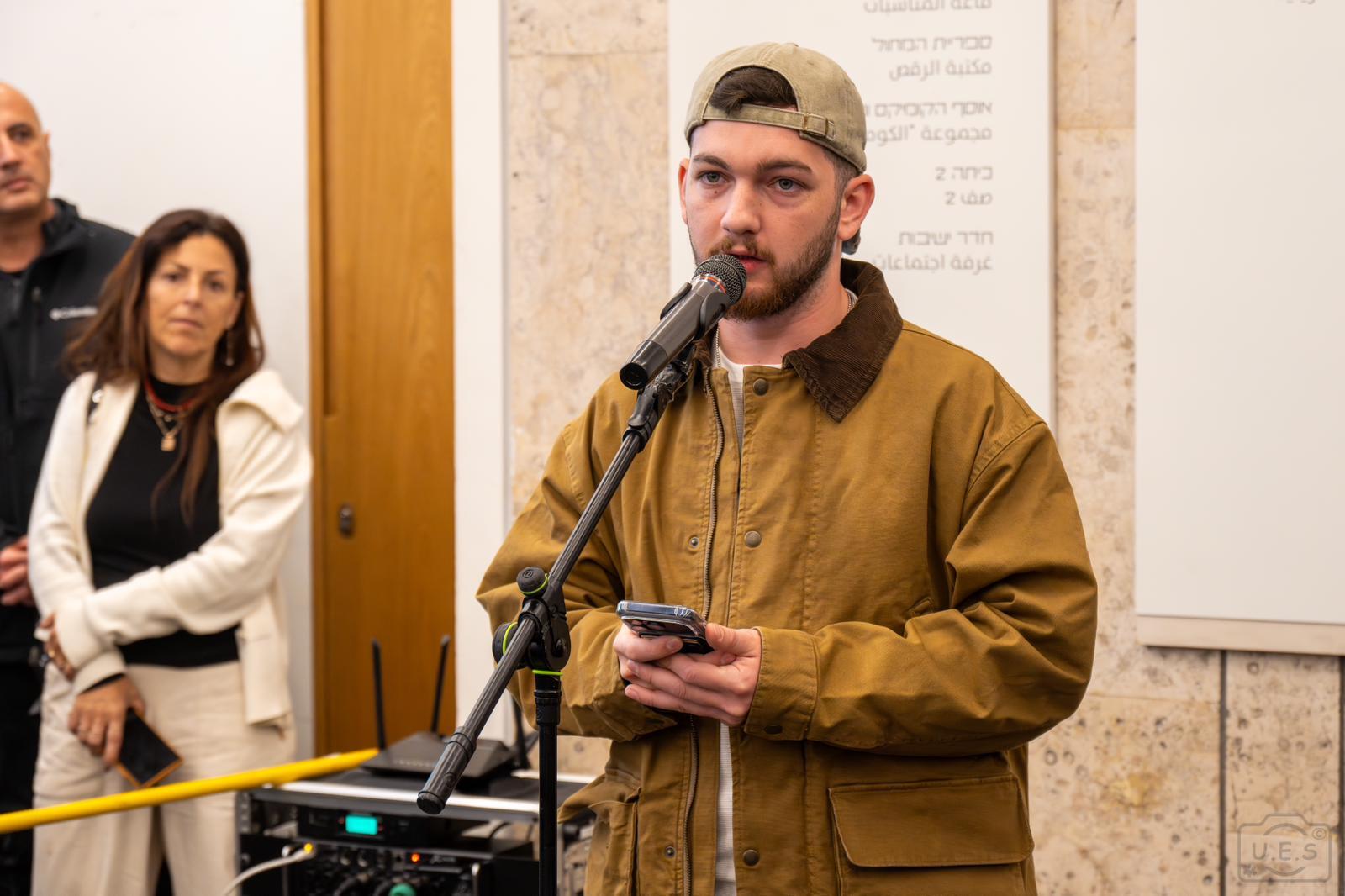
“In captivity, Shabbat was the most stable thing I had, as funny as that sounds,” says Kuperstein. “In captivity, there is no day, no night, no sense of time. But the sanctity of Shabbat is something that holds you. I couldn’t pray out loud, so the prayer was inside, quietly, to myself, without anyone hearing. It was the only place where I felt free. It helped me not lose myself and remember where I came from and where I’m going.”
Kuperstein speaks about the necessity of caring for one another, and for the Gvili family, as it experiences the agony of not having their son home.
Tamir Idan, head of the Sdot Negev Regional Council, apologizes to the Gvili family for the loss of their son, but Itzik Gvili says he doesn’t want the apologies.
“Rani went there, went to fight,” says Gvili. “He knew where he was going and what he was doing. If we put him back in that same situation, including captivity, he would do it another hundred times — because that’s Rani, that’s who he is. So there’s no need for apologies.”
Several members of Alumim, a religious kibbutz, speak about Gvili’s bravery as well as the sense of trauma and communal loss.




The Times of Israel Community.