

 From the Liveblog of
Sunday, December 7, 2025
From the Liveblog of
Sunday, December 7, 2025
Sa’ar at summit of Israeli envoys: We cannot succeed without improved public diplomacy
 Add ToI as a Preferred Source on Google
Nava Freiberg is The Times of Israel's deputy diplomatic correspondent.
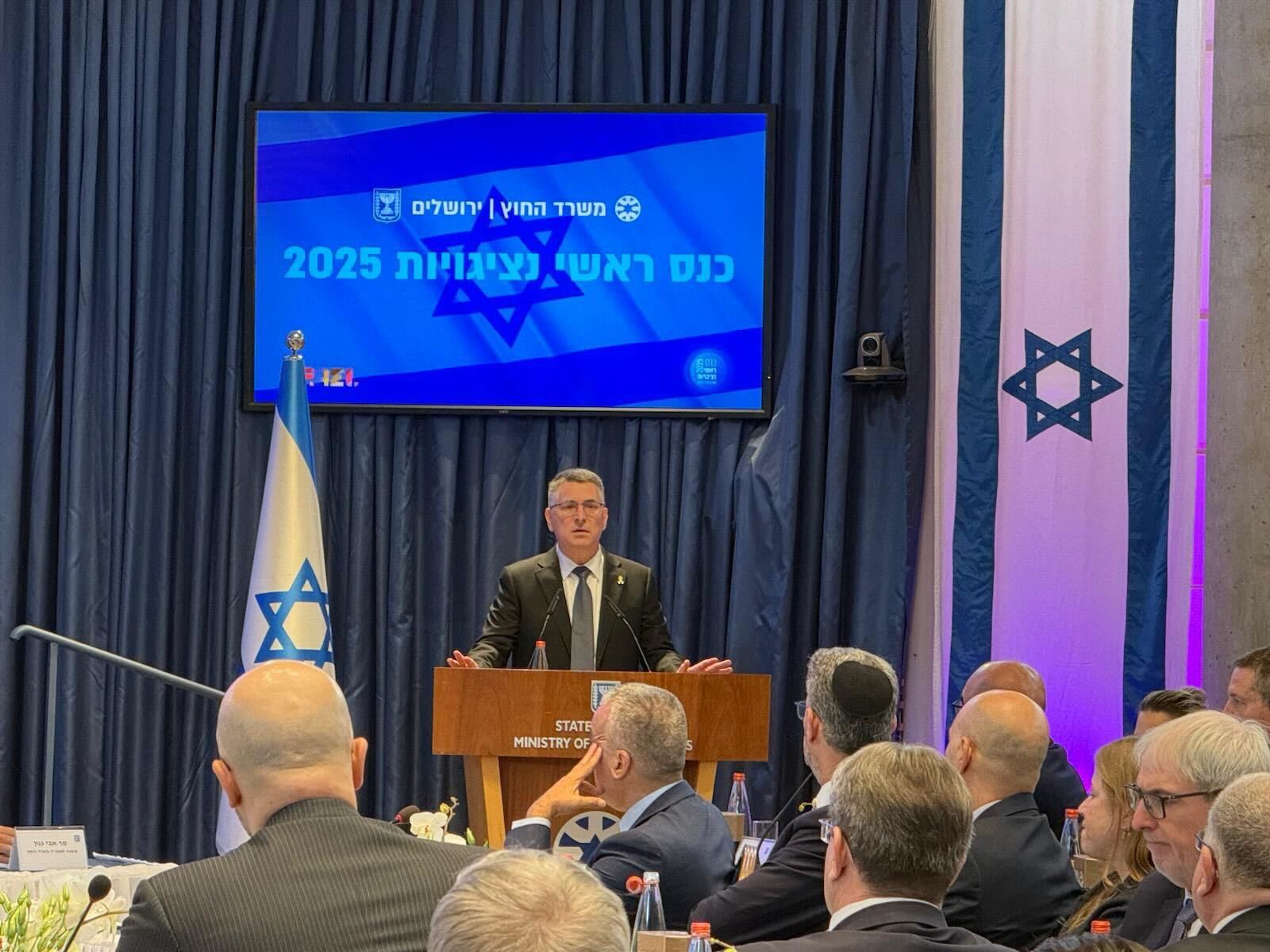
Delivering remarks at a Foreign Ministry conference of 108 Israeli ambassadors and heads of diplomatic missions from around the world, Foreign Minister Gideon Sa’ar says that Israel “cannot succeed” without intensifying its public diplomacy efforts.
Sa’ar says that he and Prime Minister Benjamin Netanyahu “spoke a great deal today about public diplomacy — about the fact that Israel’s ambassadors today must possess sets of skills that include public diplomacy in all its aspects.”
“This requires profound change – change in training, starting from the cadets and upward. Because the arenas today – social media, the press, civil society in every country, interactions with communities, including friendly communities, and not only Jewish ones but also Christian ones – this is an essential part of an ambassador’s role,” he says at the conference, which is supposed to take place annually but has not occurred for six years due to the 2019 global pandemic and the war in Gaza.
“It may not be relevant in most countries for other states, but for Israel, without this, we cannot succeed,” Sa’ar continues.
In November last year, Sa’ar announced a NIS 545 million ($163 million) budget for the ministry’s public diplomacy efforts. There is an unprecedent allocation of some NIS 2.35 billion ($725 million) for public diplomacy.
Throughout its war with Hamas, Israel has faced mounting global condemnation and strained relations with allies over its wartime conduct in Gaza, drawing greater attention to its handling of public diplomacy and ability to effectively communicate its policies.
Sa’ar adds that Israel carried out public diplomacy campaigns “with great success” during the war with Iran in June, and says he sees “far more exposure on social media” to material shared by Israel’s official diplomatic channels.
“Of course, this is only a small part of the work we will need to do in 2026,” he adds, noting that the government “set the direction” for this by approving its state budget on Friday. He says the ministry must “prepare the optimal plan, based both on the lessons of the past year and on many things we have not yet done, some of which are already underway.”






The Times of Israel Community.