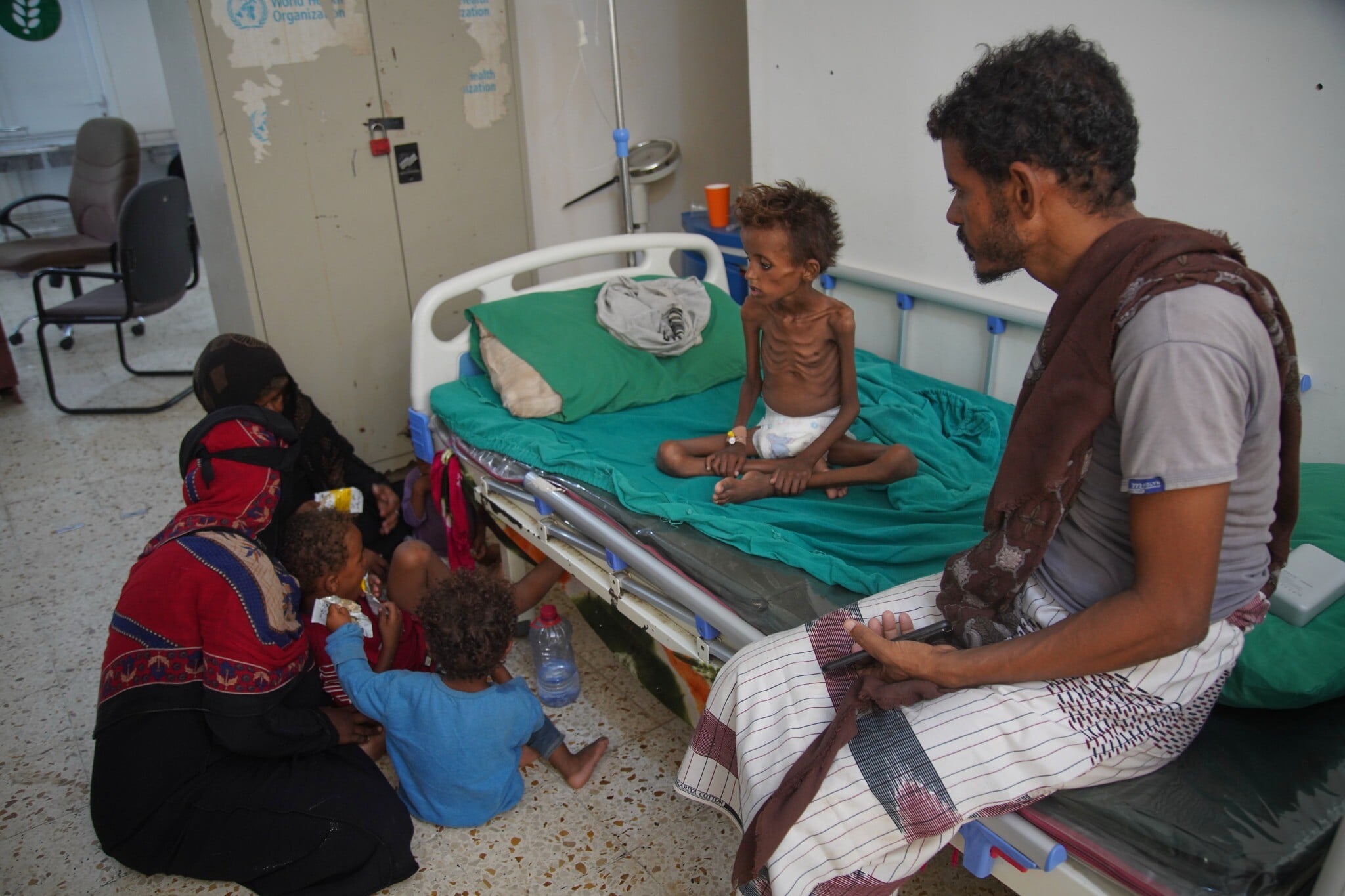
Mohammed al-Salami, displaced with his family from the city of Mokha, sits beside his son Tarek, 7, who is showing symptoms of malnutrition and receiving treatment as other family members sit nearby at a therapeutic feeding center in Buraiqa, on the western outskirts of Aden, Yemen, September 22, 2026. (AP Photo/Abdulnasser Alseddik)
Three in four families in parts of Yemen are going hungry from the “absolutely devastating” impact of a surge in fighting, which has displaced tens of thousands of people and disrupted supplies to millions, the World Food Programme says.
Yemen is experiencing the most serious escalation in fighting between Saudi Arabia and the Iran-backed Houthi group since a UN-brokered truce largely halted cross-border attacks in 2022. The renewed conflict could reshape control in Yemen, with implications for Red Sea shipping lanes.
Within just a few weeks, the fighting has driven the share of households without sufficient food to 74% in government-controlled areas accessible to WFP, the UN hunger body’s assistant executive director for program operations told reporters in Geneva. The total population of government-held areas is estimated at around 10 million people.
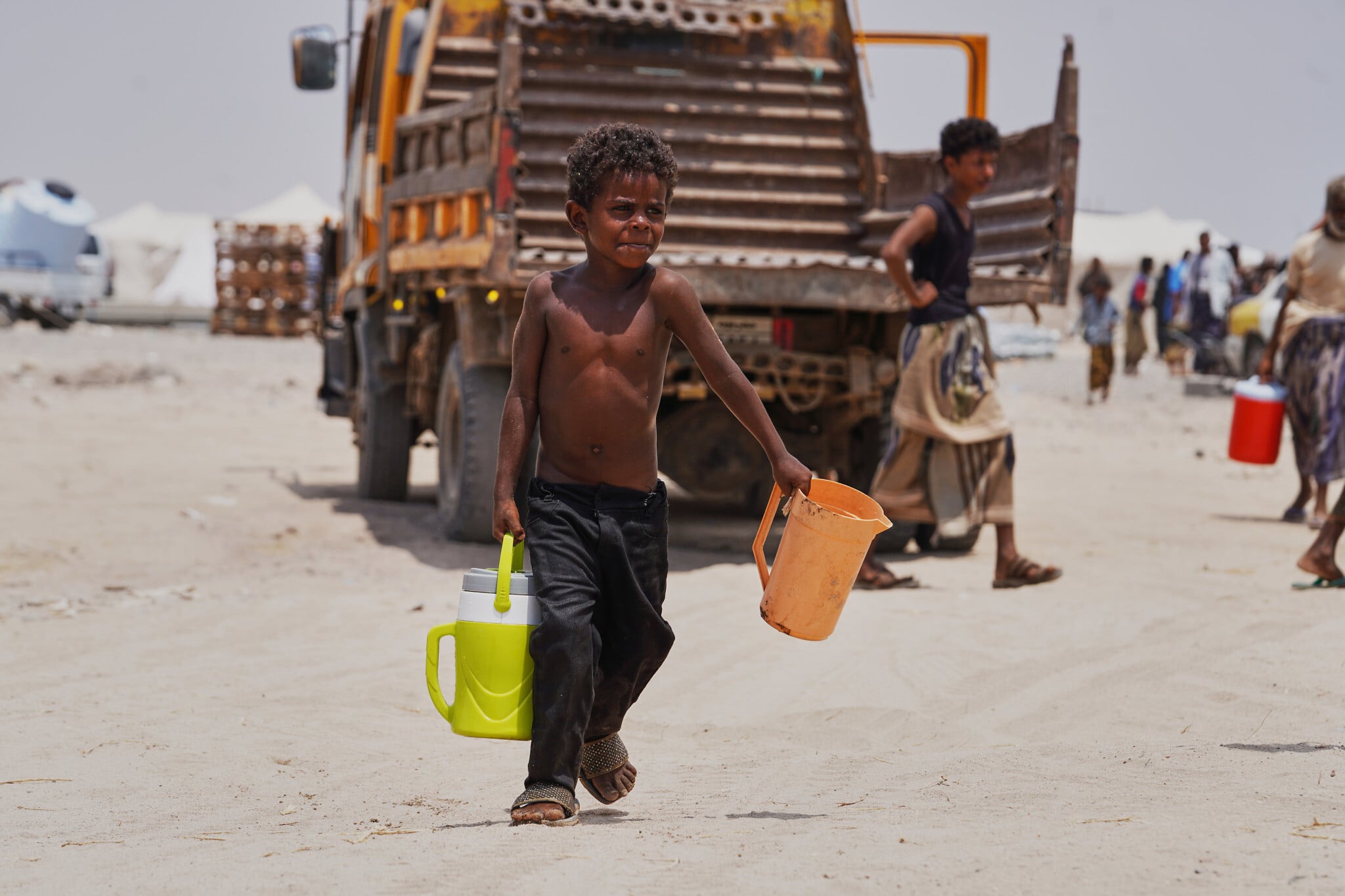
A displaced Yemeni boy carries water containers at Al-Firdaws camp in Ras Imran, on the western outskirts of Aden, Yemen, September 29, 2026. (AP Photo/Abdulnasser Alseddik)
Prices of basic food staples such as wheat flour and vegetable oil are rising in a country that imports around 90% of its food.
“We are looking at a hunger crisis that is going to grow as it persists,” Hollingworth said, adding that frontline areas like Taiz were increasingly hard to access due to the fighting.
WFP said it was scaling up its response but unless it gets around $125,000 in funding within a few weeks it will run out of food stocks and money to help the 152,000 newly displaced persons inside the country, as well as the 1.4 million people it is already supporting.
Help us report truthfully on social media
As a multimedia journalist, my job is to take the quality, fact-based journalism produced by The Times of Israel newsroom and make it accessible across every platform — from Instagram posts to podcasts to short-form videos.
This is how many, especially young people, consume news these days. But misinformation is rampant on social media. Our team at ToI produces accurate, responsible short-form reporting on Israel and the Jewish world.
If you believe in the importance of factual social media journalism, please consider joining our reader support group, The Times of Israel Community. Your financial support is essential to sustain responsible multimedia reporting.
We’re really pleased that you’ve read X Times of Israel articles in the past month.
That’s why we started the Times of Israel - to provide discerning readers like you with must-read coverage of Israel and the Jewish world.
So now we have a request. Unlike other news outlets, we haven’t put up a paywall. But as the journalism we do is costly, we invite readers for whom The Times of Israel has become important to help support our work by joining The Times of Israel Community.
For as little as $6 a month you can help support our quality journalism while enjoying The Times of Israel AD-FREE, as well as accessing exclusive content available only to Times of Israel Community members.
Thank you, David Horovitz, Founding Editor of The Times of Israel


 From the Liveblog of
Friday, October 2, 2026
From the Liveblog of
Friday, October 2, 2026
 Add ToI as a Preferred Source on Google