

‘Lulled to sleep’: Ex-IDF chief Halevi describes lead-up to Oct. 7 in leaked audio
In undated recording, Halevi admits to bereaved families that Hamas fooled Israel into thinking it didn’t want to attack and that he’ll carry weight of failure ‘until my dying day’
 Add ToI as a Preferred Source on Google
In a newly released recording, former IDF Chief of Staff Herzi Halevi can be heard describing to bereaved families his version of the events and decisions that led up to the October 7, 2023, Hamas attack and massacres, admitting that the defense establishment, which he led at the time, had been “lulled to sleep” by the terror group for years.
The undated recording, aired Sunday night on Channel 12, captured Halevi candidly describing how Hamas had successfully deceived Israel over several years, the unheeded warnings that preceded the attack, the misinterpretations within Israel’s intelligence and defense establishments, and the sense of personal responsibility for the failures that he has carried with him ever since.
“It was a mistake to let Hamas run Gaza,” Halevi told the families, describing the policy of allowing the terror group to manage civilian life in the Strip and receive funding from abroad — a policy employed by successive governments — as a strategic misjudgment.
“Even when we made sure the money reached people in need, Hamas simply diverted other funds to build up its military power,” Halevi said.
He described how Hamas constructed an elaborate mechanism of deception, founded upon the facade of seeking work permits, aid arrangements, and infrastructure projects. According to Halevi, the terror group convinced both Israeli and international actors that it was prioritizing civilian welfare and was uninterested in armed combat against Israel.
“They managed to convince everyone — the mediators, our leadership, the army, intelligence, the Shin Bet, the Mossad,” the former IDF chief said.
Deception and discipline
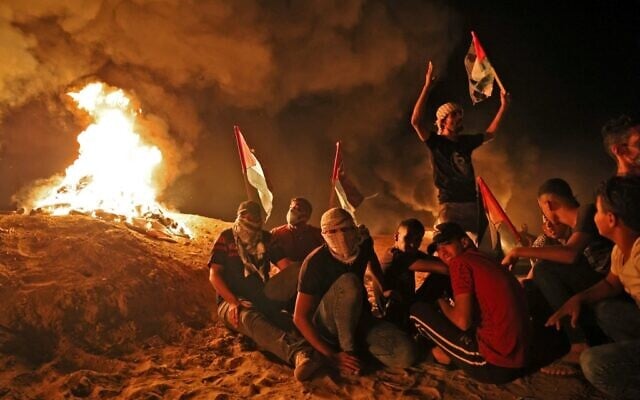
A major component of that deception, Halevi said, was Hamas’s deliberate restraint of Palestinian Islamic Jihad, the other main terror group active in the Strip, which Israel interpreted as evidence of its desire to maintain stability.
Describing drone footage showing Hamas operatives punishing an Islamic Jihad operative who launched a rocket toward Israel, Halevi said: “They pinned him to the ground and shot him in the legs with a Kalashnikov.”
That scene, Halevi said, helped reinforce the belief that Hamas was more interested in maintaining its internal control over Gaza’s affairs than it was in fighting a major war against Israel.
The 2021 Gaza conflict, dubbed Operation Guardian of the Walls by the military, was a turning point, Halevi said, but not the one Israeli leaders assumed. While Israel saw the operation as a military success, Hamas read it very differently, he argued.
“During Guardian of the Walls, everything flipped for them,” Halevi noted. “We told ourselves it was a big success story and that lulled us to sleep.”
Hamas concluded from that operation that Israel was unwilling to use ground forces inside Gaza, he said, an assessment that encouraged the group to move ahead with its plan to carry out a large-scale attack on Israel, which it had been developing for years under the military’s nose.
Halevi noted that alarm bells had sounded over Hamas’s movements in the weeks leading up to October 7, with an unnamed junior intelligence analyst telling her supervisors that she had detected a “sharp change” in the terror group’s training patterns, but her warning went unheeded.
“It was a statement that a division intelligence officer should have been alarmed by,” he said, admitting that the warnings should have been taken more seriously.
Instead, he elaborated, the defense establishment was convinced Hamas was averse to conflict, especially after the group had been seen disciplining Gazans who participated in protests and riots near the Gaza border fence in the weeks leading up to the attack.
“It was all part of the lulling,” he admitted.
‘Everything looks routine’
Halevi said he received a phone call around 3:10 a.m. on October 7, some three hours before the attack, about “suspicious signs” in Gaza, though he said that initial assessments by both the IDF and Shin Bet showed that “everything seems routine,” and there was “no indication of anything imminent.”
Halevi made a note at the time, he said, reminding himself “not to tell ourselves that it’s nothing.”
Understanding the possibility that the assessments were wrong, he said he considered the possibility that Hamas had been able to slip under the radar and was about to carry out an attack.
“Maybe they’ve neutralized all our sensors and we don’t know,” Halevi said, describing his thinking at the time.
At 4 a.m., he said, he spoke with the head of the IDF’s Southern Command, telling him that the army should “approach the morning stronger,” arguing that “at worst we’ll understand that nothing happened.”
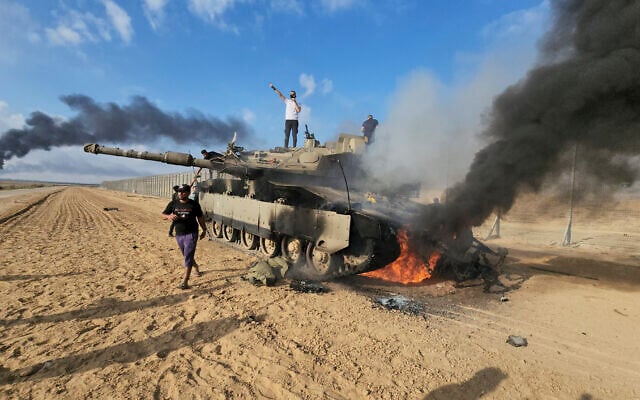
Just over two hours later, Hamas started the attack, launching thousands of rockets and leading some 5,000 terrorists across the border into Israel in an onslaught against border communities and IDF bases. On that day, the Hamas-led terrorists killed some 1,200 people, mostly civilians, and took 251 hostages back to Gaza.
‘Responsibility is all-encompassing’
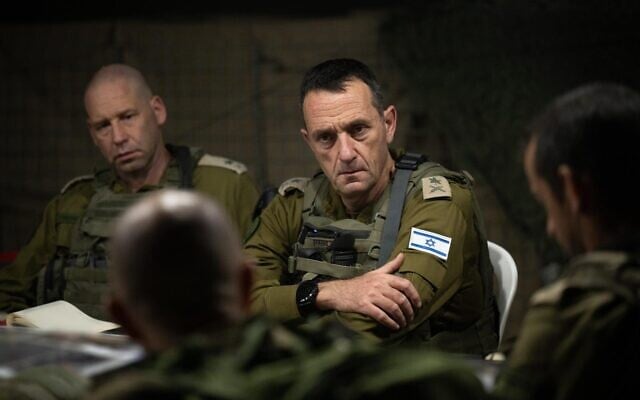
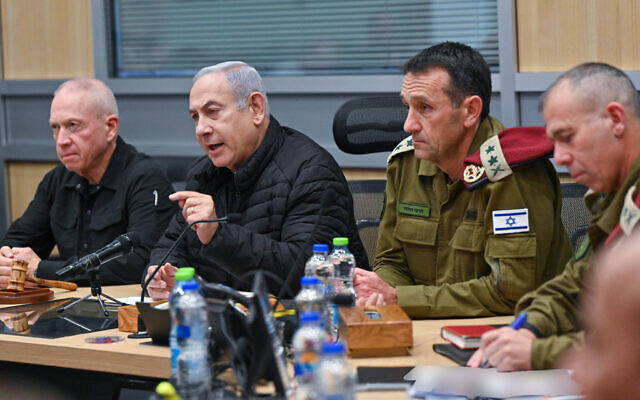
“The IDF, we failed,” Halevi recounted telling the General Staff in the military’s command bunker that morning. “I lead the army and I am responsible.”
“Responsibility is all-encompassing,” he told the families in the recordings, in an apparent hint at the role of political leaders who have evaded responsibility for their roles in the failures that led to the attack. “You’re responsible for what you know and what you don’t know.”
Moreover, he argued, “you’re responsible for the results.”
Bucking advice not to do so, Halevi said he had to acknowledge his personal responsibility for the failures: “I don’t care. I’m not competing over who is more responsible.”
“I was the chief of staff that day,” he said in the leaked recording. “And I’ll carry this until my dying day.”
Halevi also rejected a conspiracy theory to the effect that some in the defense establishment knew of Hamas’s plans and allowed the attack to go forward. That conspiracy theory has been peddled both by the Israeli far-right, including Prime Minister Benjamin Netanyahu’s son Yair, and by many in the global anti-Israel movement.
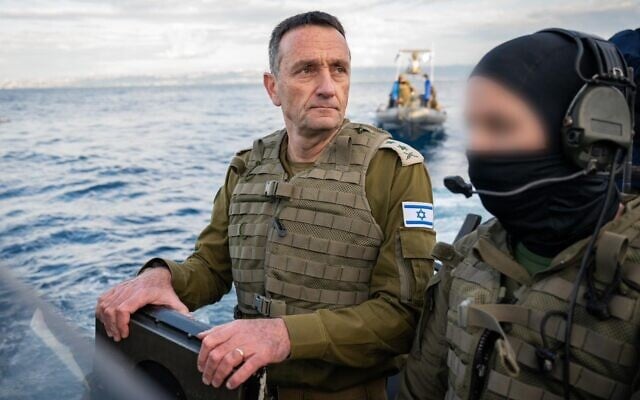
“Whoever started this theory started it for certain reasons,” he said, arguing that such conspiracies were being “fueled from above” for political purposes.
“There were mistakes, big mistakes,” he admitted, but insisted that “no one wanted this to happen.”
Halevi resigned from his post as IDF chief of staff in January and was replaced by Lt. Gen. Eyal Zamir, who had served as director general of the Defense Ministry and was a former deputy chief of staff.
In a statement at the time of his resignation, Halevi said he was leaving the military after “recognizing my responsibility for the failure of the IDF on October 7, and at a point in time in which the IDF has recorded significant achievements, and is in the process of implementing an agreement to release hostages.”
“I bear responsibility for the IDF’s failure, and I also bear responsibility for its achievements. I will say in advance that I wish we had not needed these achievements, and no success can undo the immense pain, sorrow, and loss caused since the war began,” Halevi said.
It was the first time in 17 years that an IDF chief of staff resigned before completing his three-year tenure. Lt. Gen. Dan Halutz quit in 2007 over the 2006 Second Lebanon War.








The Times of Israel Community.