

Meng Hongwei: Ex-Interpol chief caught in China’s anti-graft drive
During President Xi Jinping’s six-year tenure, over a million officials have been punished in anti-corruption crusade
 Add ToI as a Preferred Source on Google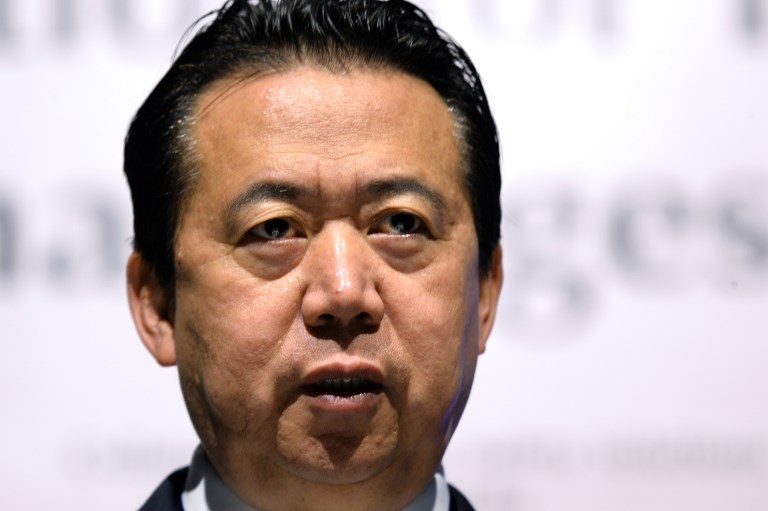
BEIJING, China (AFP) — Fallen former Interpol president Meng Hongwei rose through the ranks of China’s feared public security apparatus before being caught himself in President Xi Jinping’s no-holds-barred campaign against corruption.
The vice public security minister, who went missing after traveling to China last month, resigned as head of the France-based international police organization on Sunday after Chinese authorities announced he was under investigation.
During Xi’s six-year tenure, over a million officials have been punished in an anti-corruption crusade that critics say has also served as a way to root out the president’s political enemies.
According to a statement released Monday by China’s Ministry of Public Security, Meng is suspected of accepting bribes and is under investigation by the country’s anti-corruption agency.

In particular, the country’s public security bureau links Meng’s detention to a broader initiative to “completely remove the pernicious influence” of Zhou Yongkang, who led China’s domestic security sector until 2014, when he was sentenced to life in prison under corruption charges.
That does not bode well for Meng, who was appointed vice security minister by Zhou in 2004.
Party loyalty
Meng, 64, leaves behind a 14-year career overseeing various top public security bureaus in China, including the country’s armed police force.
Born in 1953 in northeastern Heilongjiang province, Meng joined the Communist Party of China in his early 20s after graduating from Peking University with a bachelor’s degree in law.
As vice security minister, Meng has been entrusted with a number of sensitive portfolios, including the country’s counter-terrorism division, and he was in charge of the response to violence in China’s fractious northwestern region of Xinjiang.
During Meng’s tenure, China’s public security bureau also arrested and interrogated a number of prominent Chinese dissidents, including Nobel Peace Prize laureate Liu Xiaobo, who died of liver cancer while in police custody last year.

In 2013, Meng was appointed director of China’s maritime police bureau, which includes the country’s coast guard and maritime anti-smuggling authorities. In recent years, the bureau has sent patrol ships to the East China Sea due to territorial disputes with Japan over islands.
At Interpol, Meng was expected to serve a four-year term until 2020. His election in 2016 had raised concerns among human rights groups, which feared that Beijing would use the organization to round up Chinese dissidents overseas.
While day-to-day operations are overseen by Interpol secretary general Juergen Stock, Meng presided over the organisation’s General Assembly and Executive Committee meetings, where key discussions around Interpol’s general policies and international cooperation take place.
Though Meng has emphasized the need for political neutrality in Interpol speeches, he made clear as a Chinese security official that the national police should be loyal to the Communist Party.
In a 2014 speech, Meng reportedly told police officers training for a peacekeeping mission overseas to put “politics first, party organization first and ideological thinking first.”





The Times of Israel Community.