

More than ‘Hocus Pocus’ to Salem’s Jewish past
Biblical history and Mosaic Law permeated the lives — and deaths — of the Massachusetts Bay community which would not ‘suffer a witch to live’
 Add ToI as a Preferred Source on Google
Reporter at The Times of Israel
SALEM, Massachusetts – No Jews were tried for witchcraft during Salem’s notorious 1692 trials, but the Puritan world in which the hysteria occurred was deeply influenced by Jewish history and religious law.
Locating their town on the sea coast north of Boston, the Puritans nodded directly to Jerusalem by calling their settlement Salem. Obsessed with the Hebrew Bible, these separatists identified with the Exodus from Egypt and the vision of life in a New World, covenanted to God. They called themselves “New Zion,” or “Christian Israel,” and the Old Testament was their guide to naming children, towns and mountains, and the legal source for their founding charters.
The New Testament received less attention from the Massachusetts Bay Colony’s clergy, and many of the pilgrims’ practices – like Sabbath observance and days of prayer and fasting – were adapted from ancient Israelite tradition. The Puritans referred to their enemies as Philistines and Amalekites – the Hebrews’ former foes. Mosaic Law permeated daily life.
In hindsight, it’s easy to claim the Puritans’ worst enemy was their own superstition – especially their literal interpretation of biblical injunctions against witchcraft, including the line in Exodus, “Thou shalt not suffer a witch to live.”
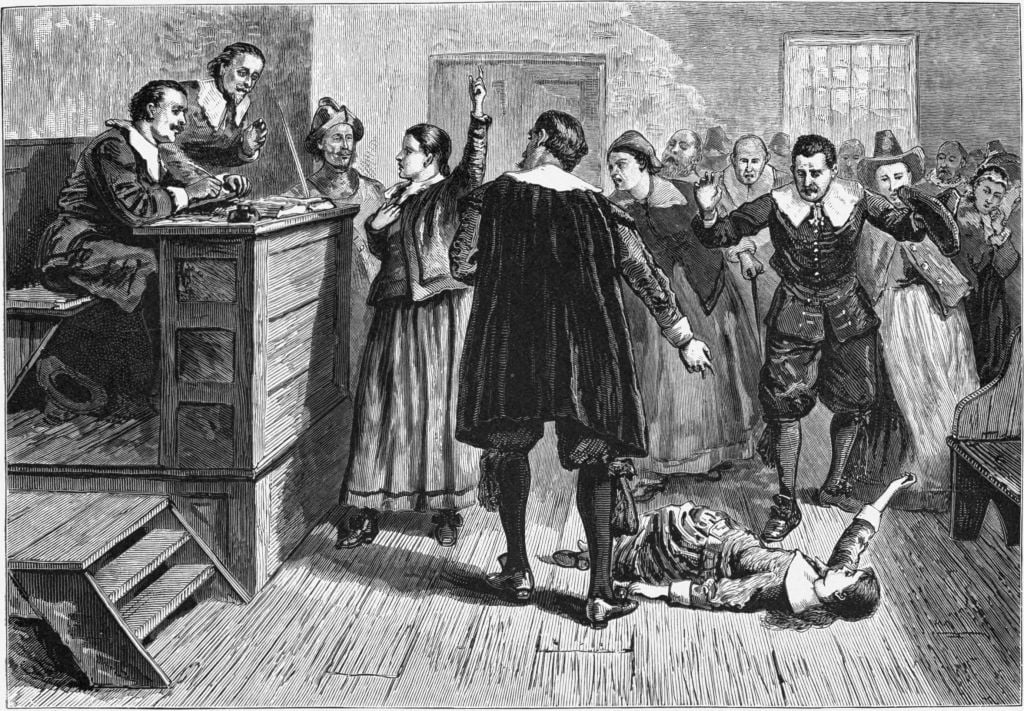
In the name of these injunctions and amid mass hysteria, twenty people and two dogs were executed for allegedly practicing witchcraft.
Often probed by historians, the Salem witch trials’ mitigating factors included property disputes, personal vendettas and – some say – hallucinogenic fungus. Though brief in duration and scope, the episode left an oversized print on the emerging nation’s conscience.
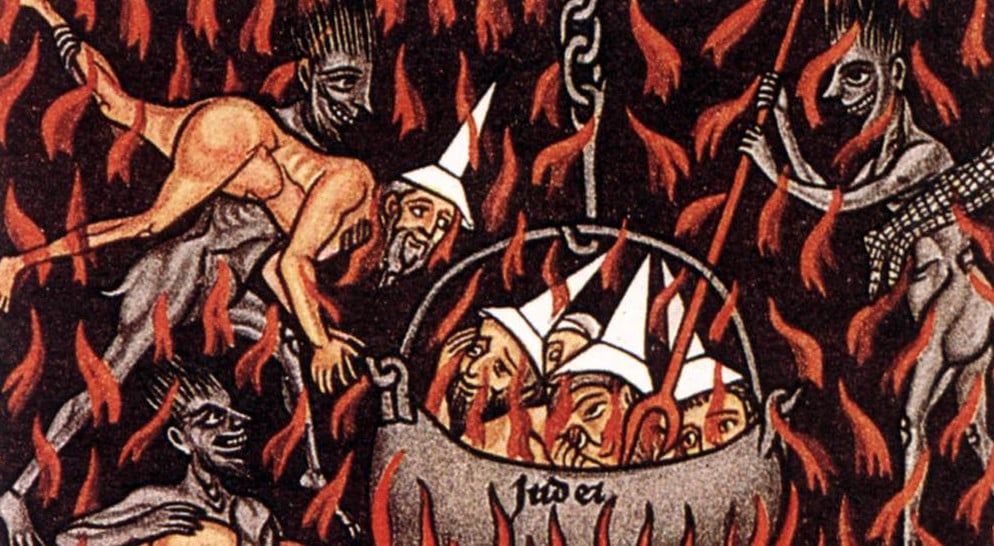
The practice of burning, hanging or otherwise executing alleged practitioners of black magic went back many centuries, and some if its victims were Jews. In Medieval depictions, Jews are seen wearing white, witch-like hats as they’re tossed into fiery cauldrons to meet their fate. The victims of Europe’s so-called “Burning Times” were usually those on the margins of official society – women, religious minorities, and the poor.
Theologically, the Salem witch trials inadvertently forced a new understanding upon New England’s faithful. As the witch judges realized there might be no end to the accusations, some began to scrutinize the evidence more closely, as well as question long-held beliefs about the nature of evil.
“There were no trained lawyers on the [Salem] bench, but all believed that there was a devil and that he contracted secretly with men and women to do his evil work in the colony,” said Peter Charles Hoffer, a historian of Puritan America. “Thus, at least in theory, witches have the power to leave their bodies and in spectral form assault their victims,” wrote Hopper of the episode.
The discrediting and banning of “spectral” evidence – including dreams, premonitions and spirit visions – ultimately shut down the witch trials in 1693, with 49 accused parties released from jail for lack of non-spectral evidence. Four years later, the Puritans held a day of fasting and soul-searching, with a public admission of error by witch judge Samuel Sewall.
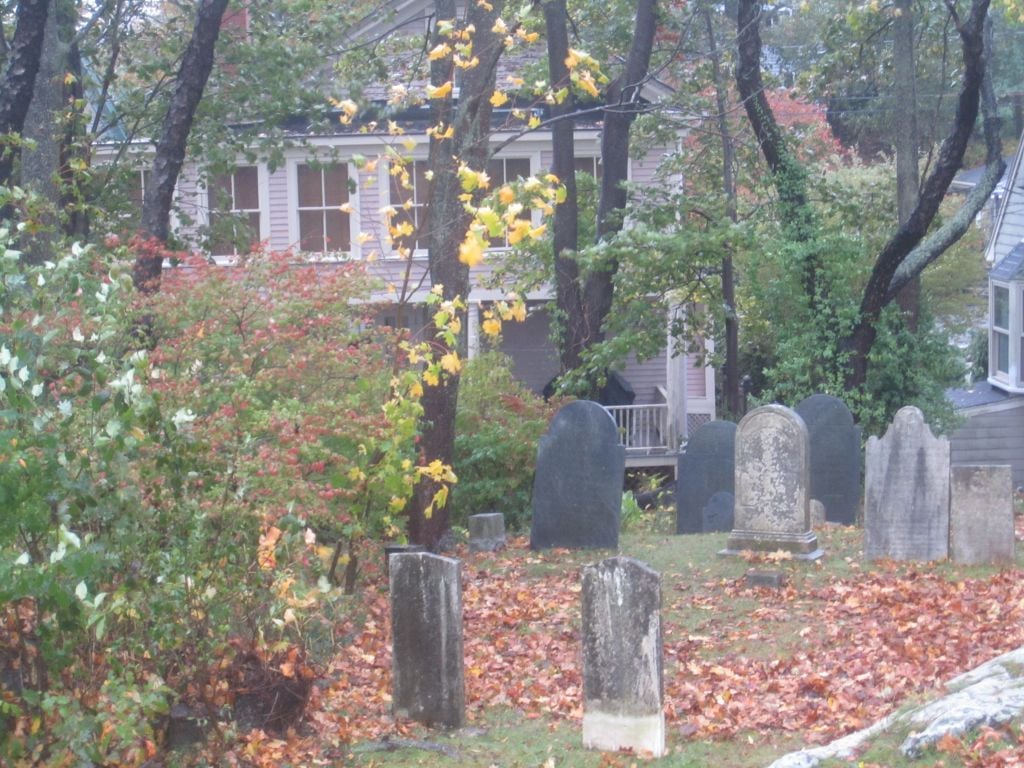
In the decades before American statehood, Salem officials continued to disassociate themselves from the witch hysteria, including a 1702 General Court declaration that the trials were unlawful. Pivotally, one of the leading accusers apologized, and a 1711 bill restored good names to the deceased, plus 600 pounds in restitution to their heirs.
For more than two centuries, the witch trials lived in the recess of American memory, a disturbing example of religious fervor gone too far.
‘Gradually, over weeks, a living connection between myself and Salem, and between Salem and Washington, was made in my mind’
It took a new form of persecution after WWII to unfurl the sails of Salem’s troubled past, not to mention of a disgruntled Jewish playwright.
Agitated by the “blacklisting” of fellow artists as Communists, Arthur Miller penned “The Crucible” in 1953 as an allegory to McCarthyism. He emphasized the role of hearsay evidence, personal vendettas and political expediency in the 1692 witch trials, leaving Americans to connect those dots with their own Red Scare.
“Gradually, over weeks, a living connection between myself and Salem, and between Salem and Washington, was made in my mind,” said Miller of his linkage with the witch trials and blacklisting.
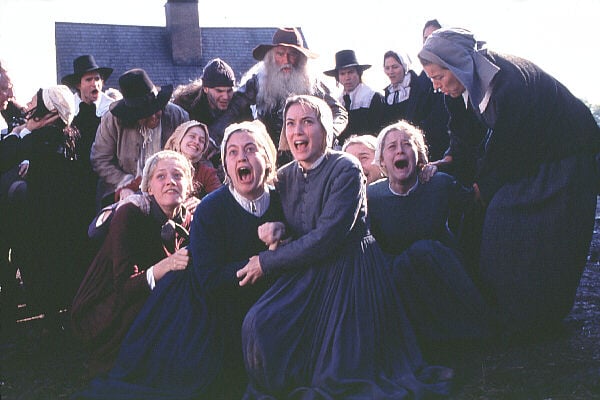
“For whatever else they might be, I saw that the hearings in Washington were profoundly and even avowedly ritualistic,” said Miller.
“The main point of the hearings, precisely as in seventeenth-century Salem, was that the accused make public confession, damn his confederates as well as his Devil master, and guarantee his sterling new allegiance by breaking disgusting old vows — whereupon he was let loose to rejoin the society of extremely decent people,” said Miller.
‘For whatever else they might be, I saw that the hearings in Washington were profoundly and even avowedly ritualistic’
Perhaps unsurprisingly, Miller became a victim of blacklisting three years after “The Crucible” premiered, when in 1956 he was called before the House Committee on Un-American Activities. There, Miller refused to “name names” of alleged fellow Communists, and he was declared “in contempt of Congress.”
Since Miller’s play reignited interest in the witch trials, the “dangers of mass hysteria” motif has been applied to other settings.
In 1992, Holocaust survivor Elie Wiesel gave remarks to dedicate Salem’s Witch Trials Memorial, and he drew comparisons between religious-fueled persecutions – including the Holocaust – throughout history. The ribbon on a wreath placed near the new memorial read, “Never Again the Burnings,” a reference to centuries of persecution in Europe that managed to gain a foothold in the Puritans’ “New Zion.”
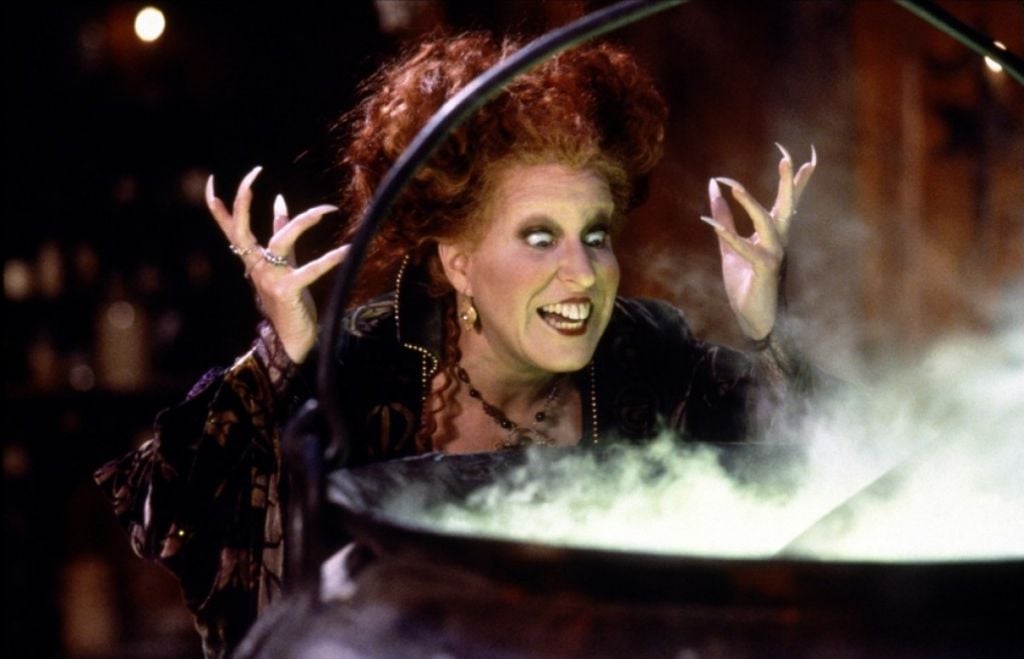
Just a few months after Wiesel affirmed the executed victims’ innocence in Salem, Hollywood took another direction with the 1993 Disney children’s film, “Hocus Pocus.”
Problematically for those loyal to history, Disney’s Salem witches actually did “suck the lives out of little children” in their quest to remain young. They also rode broomsticks, turned people into animals, and in general behaved rankly. The film’s goofy Sanderson sisters were revived by accident, 300 years after the witch hangings, and they set out to steal the “life force” from Salem’s trick-or-treating children on Halloween.
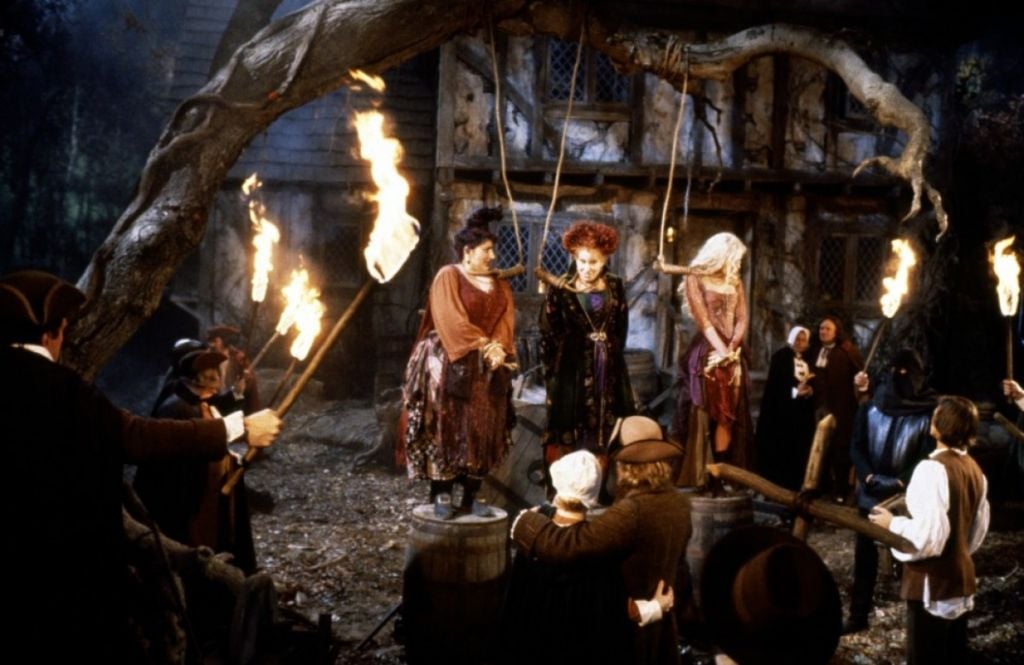
“Hocus Pocus” featured a heavily Jewish or part-Jewish cast – including Bette Midler, Vinessa Shaw, Omri Katz, and Sarah Jessica Parker. The former “Sex in the City” star wound up discovering that her maternal tenth great-grandmother, Esther Elwell, was actually part of the historical Salem witch hysteria.
A resident of adjacent Gloucester, Elwell had been charged with murdering a neighbor and “sundry acts of witchcraft.” Fortunately for SJP’s lineage, Elwell’s trial was terminated before it began, due to court errors and the erosion of judges’ faith in spectral evidence.
In 1996, Arthur Miller adapted “The Crucible” for the big screen, with half-Jews Winona Ryder and Daniel Day-Lewis cast in the lead roles. Producers of recent “Crucible” mountings – including one in London last summer – have referenced the connection between witch hysteria and modern Islamic jihad, both genocidal in nature.
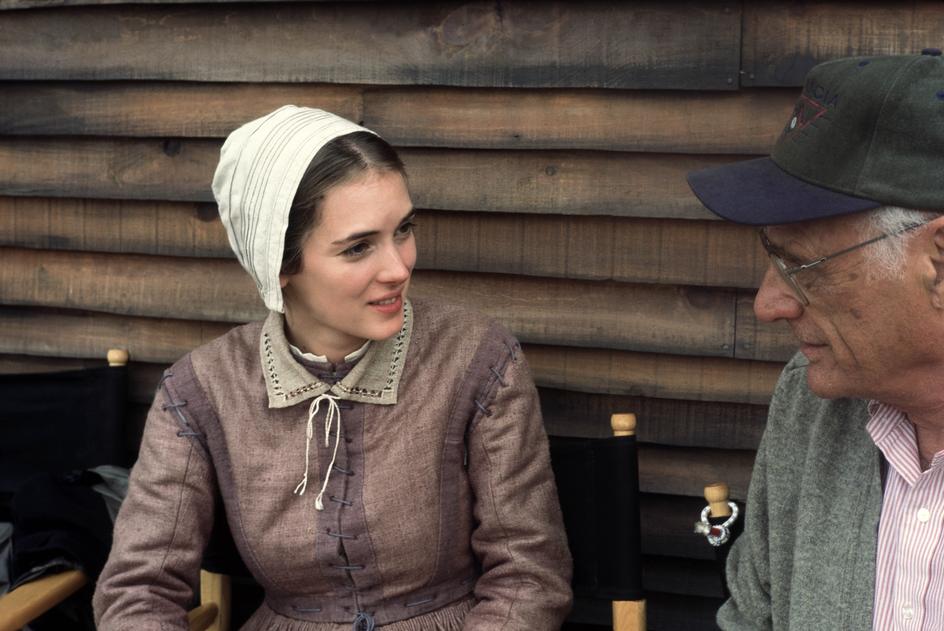
Far from its extremist roots and gory past, today’s Salem is a bastion of liberalism on Boston’s north shore. One of the first American cities to enact laws protecting transgendered individuals, Salem is home to a wide mix of ethnic groups and religions, including 2,000 Jews.
The Jewish community is unofficially led by philanthropist Robert Lappin, whose fortune was hit hard by the Bernard Madoff scandal. Almost three decades before the launch of Birthright Israel trips, the pony-tailed Lappin, now 92, began subsidizing free, twelve-day trips to Israel for Salem-area Jewish teens. He’s also known for flying the Israeli flag outside his office on Salem Harbor.
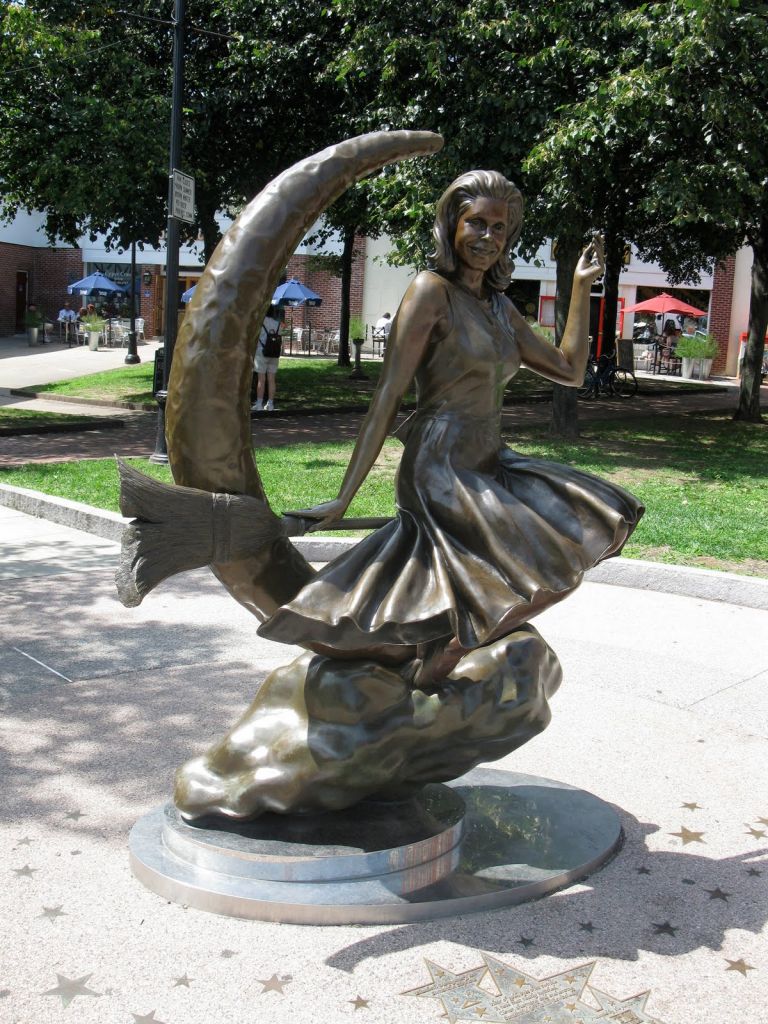
Of course, even the influential Lappin could not escape the city’s obsession with witches. In the heart of downtown Salem, just down the street from where the accused were tried in 1692, his namesake Lappin Park fills the corner of an intersection. The lawn’s main attraction is not the philanthropist, but a nine-foot tall, bronze, broomstick-riding Samantha Stephens “Bewitched” statue.
Erected by TV Land in 2005, the statue has drawn criticism for equating the Salem witch trials with actual sorcery.
“It’s like TV Land going to Auschwitz and proposing to erect a statue of [‘Hogan’s Heroes’] Colonel Klink,” said John Carr, a former member of the Salem Historic District Commission, at the time of the statue’s installation. “Putting this statue in the park near the church where this all happened, it trivializes the executions,” he said.
The statue’s supporters fired back, claiming Salem had long since sold its soul and city center to witch tourism. In fact, two Salem-based episodes of “Bewitched” – created by Jewish producer Sol Saks – are credited with inspiring the city to launch its Halloween Happenings festival in 1981, begging the age-old question: which came first, the witch or the kitsch?










- Jewish Times
- Puritans
- magic
- trial
- Arthur Miller
- Halloween
- tourism
- Bette Midler
- Winona Ryder
- Daniel Day-Lewis
- Disney
- religious coercion
- Hebrew Bible
- Massachusetts
- pilgrims
- Christian pilgrims
- Shabbat
- Exodus
- Communism
- public executions
- American Jews
- history
- antisemitism
- separation of religion and state
- Elie Wiesel
- Hebrew language
- Taglit-Birthright Israel
- Auschwitz-Birkenau
The Times of Israel Community.