

Muslim countries condemn Israel’s Gaza strikes, allege ‘repeated violations’ of ceasefire
Jordan, Egypt, UAE among 8 nations to sign letter urging transition to 2nd phase of Trump’s Gaza plan, as Israel moves forward with banning Doctors Without Borders from enclave
 Add ToI as a Preferred Source on Google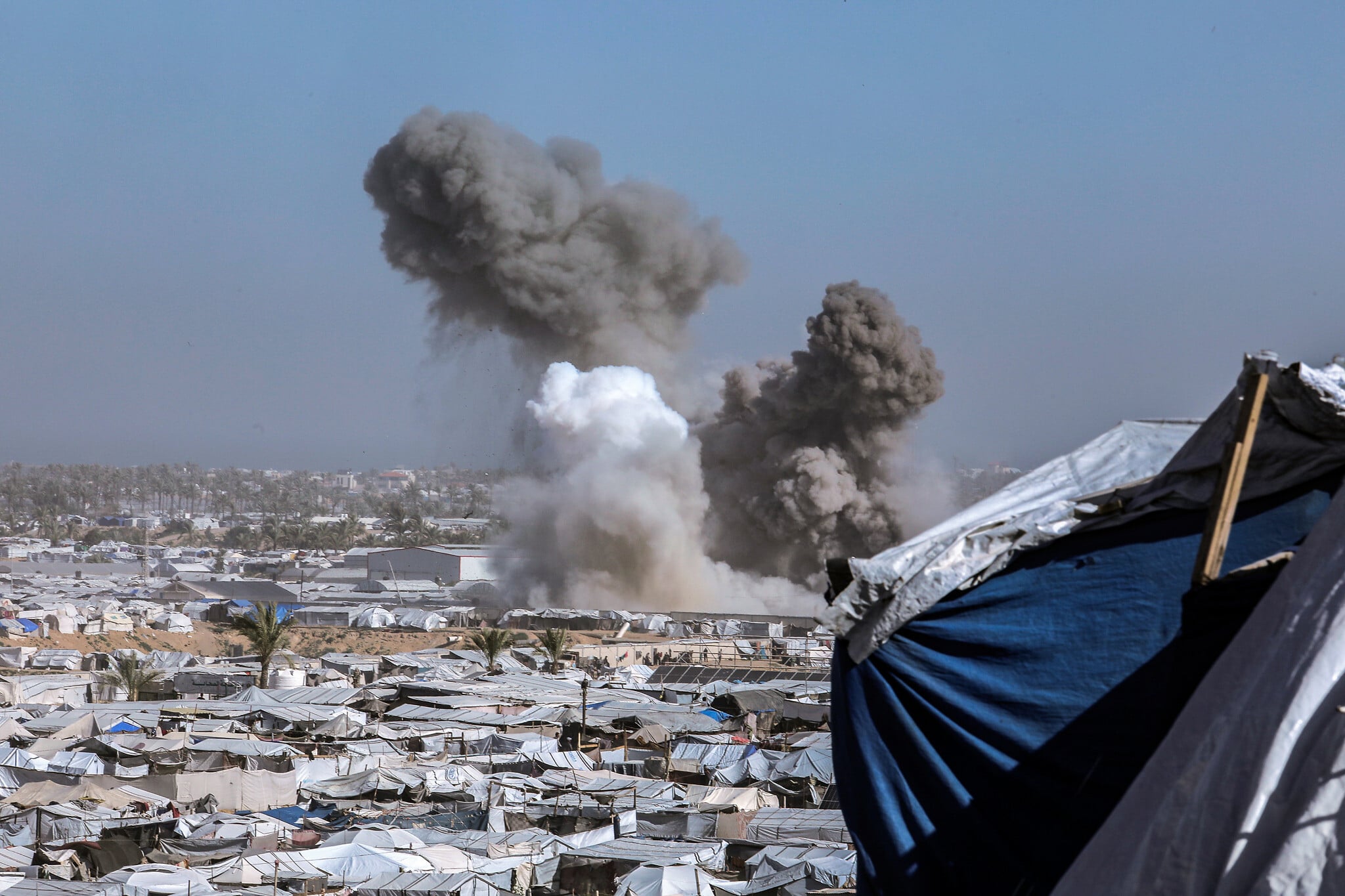
Foreign ministers for eight Muslim countries, some hostile to Israel and some friendly, issued a condemnation of Jerusalem’s “repeated violations” of the Gaza ceasefire in a letter on Sunday, after the IDF carried out a wave of airstrikes in the enclave.
The joint letter — signed by Saudi Arabia, Jordan, the United Arab Emirates, Qatar, Indonesia, Pakistan, Egypt, and Turkey — alleged that the strikes threaten “ongoing efforts to create appropriate conditions for transitioning to a more stable phase in the Gaza Strip.”
A wave of Israeli strikes killed at least 32 Palestinians across the Gaza Strip on Friday overnight and into Saturday morning — one of the highest death tolls since the October ceasefire — as the IDF confirmed targeting terror commanders and infrastructure.
The Israel Defense Forces said its strikes, in response to “a violation of the ceasefire agreement,” targeted four commanders in the Hamas and Palestinian Islamic Jihad terror groups, as well as a weapons depot, an arms manufacturing site, and two rocket launching positions.
It said they came after eight gunmen emerged from a tunnel in southern Gaza’s Rafah on Friday in IDF-controlled territory. The IDF said at the time that three of the gunmen were killed in strikes and a fourth, described as a key Hamas commander, was captured.
The eight Muslim countries also called for the full implementation of the second phase of US President Donald Trump’s plan for Gaza.
The letter urged “all parties to fully uphold their responsibilities during this critical period and to exercise the utmost restraint, in order to preserve and sustain the ceasefire.”
#Statement | The Foreign Ministers of the Kingdom of Saudi Arabia, the Hashimte Kingdom of Jordan, the United Arab Emirates, the State of Qatar, the Republic of Indonesia, the Islamic Republic of Pakistan, the Arab Republic of Egypt, and the Republic of Türkiye strongly condemn… pic.twitter.com/tiFPZjt9DW
— Foreign Ministry ???????? (@KSAmofaEN) February 1, 2026
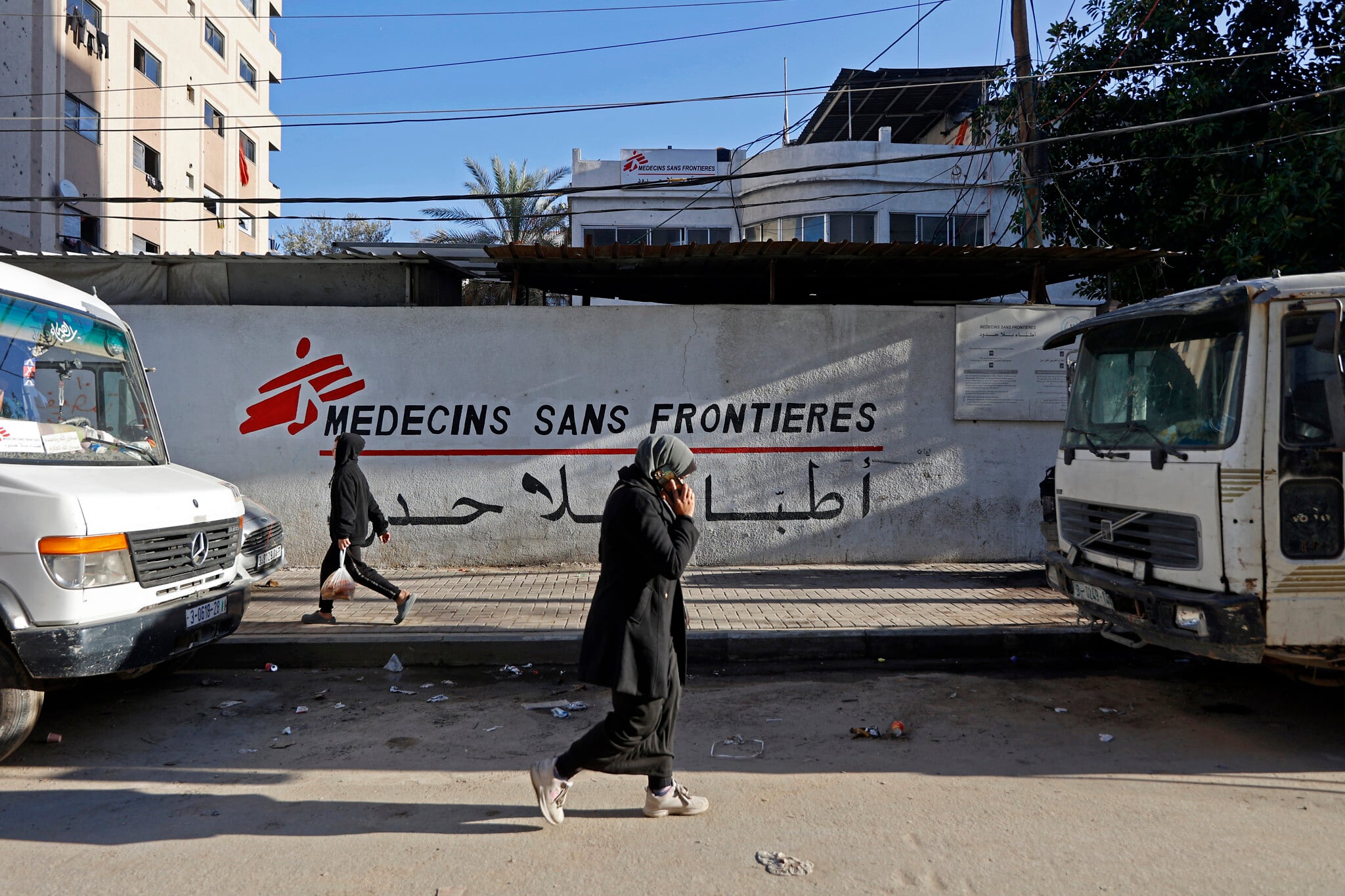
Meanwhile, Israel announced Sunday that it would move ahead with its decision to ban Doctors Without Borders (MSF) from working in Gaza, alleging the group abused a “humanitarian cover for hostile activities and terrorism.”
“The violation involves MSF’s failure to submit lists of local employees, a requirement applicable to all humanitarian organizations operating in the region,” the Diaspora Affairs Ministry, which has been charged by the government with overseeing the matter, said in a statement.
MSF called the ban a “pretext” to obstruct the delivery of humanitarian aid to the war-devastated enclave.
“This is a pretext to obstruct humanitarian assistance. Israeli authorities are forcing humanitarian organizations into an impossible choice between exposing staff to risk or interrupting critical medical care for people in desperate need,” MSF said in a statement.
On January 1, Israel vowed to enforce a ban on the activities of 37 international NGOs operating in Gaza, including MSF, over their failure to comply with stringent new “security and transparency” requirements concerning their employees.
The standards were put in place under a government resolution from March 1 requiring NGOs to submit a raft of documentation about their organization and identify all foreign and Palestinian employees, including their passports and personal identification numbers.
Some of the NGOs targeted have said the requirements flout, or at least erode, international humanitarian law, and Israel has faced international criticism for the move.
In 2024, the Diaspora Affairs Ministry was designated by the Israeli cabinet as the government body responsible for registering international NGOs focused on providing welfare to Palestinians. The ministry heads an inter-ministerial team with tools to determine if an NGO calls for boycotts against Israel or works to delegitimize the state in other ways, according to the government.
According to the ministry, MSF initially committed to handing over employee lists, and Israel expected to receive them last Tuesday. “These employee lists are not shared with external parties and are used solely for internal purposes,” said the ministry.
But MSF reportedly walked back the commitment and announced it would not comply. The organization will end operations in Gaza by the end of February, the Diaspora Affairs Ministry said.
“Assessments are being made to provide alternative medical solutions to ensure the continuity of humanitarian aid to the residents of the Gaza Strip following the organization’s departure,” said the ministry statement.

Diaspora Affairs Minister Amichai Chikli said that MSF “abruptly changed its position after publicly committing to act according to procedure.
“We are aware that MSF employs individuals active in terrorist organizations, which is why it hides its employee lists,” he charged. “The organization operates in coordination with the Hamas Ministry of Health, and not by coincidence, its statements were published in proximity to similar statements from elements within the Strip.”





The Times of Israel Community.