

Netanyahu’s election day manna from heaven: The emblematic saga of Amalia, age 4
After Yair Lapid blundered across a delightful tot at a Tel Aviv polling station, the PM’s efficient hierarchy had all the tools, skills and reach to capitalize on it

 Add ToI as a Preferred Source on Google
David Horovitz is the founding editor of The Times of Israel. He is the author of "Still Life with Bombers" (2004) and "A Little Too Close to God" (2000), and co-author of "Shalom Friend: The Life and Legacy of Yitzhak Rabin" (1996). He previously edited The Jerusalem Post (2004-2011) and The Jerusalem Report (1998-2004).
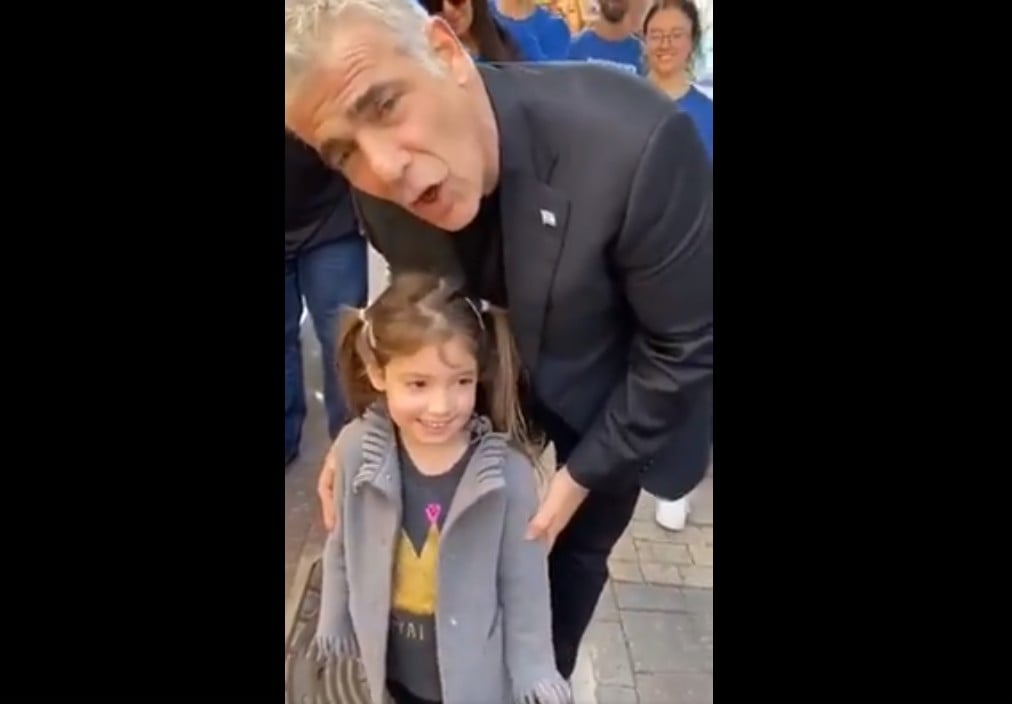
Out campaigning at a polling station in north Tel Aviv on election day, Blue and White No. 2 Yair Lapid ran into an adorable little girl named Amalia. “Who are you voting for?” he asked her cheerfully, his hands on her little shoulders, her pigtails swaying, as they both looked into a cellphone camera.
“For Bibi,” she answered instantly, with a smile and complete conviction.
Lapid took it well, managing a rueful grin, and probably consoling himself that it’ll be about 14 years before Amalia actually has the right to vote for anyone.
But that was not the end of the story.
Within minutes, the short clip was posted on Prime Minister “Bibi” Netanyahu’s Instagram account and Twitter page, and featuring on numerous other social media platforms. It was soon being screened on the day-long election specials by Israel’s main TV stations — presented, depending on the outlet, as everything from a minor moment of embarrassment for Lapid to evidence that even the youngest of Israelis knows who our prime minister ought to be.
יאיר לפיד וילדה ביום הבחירות: "מצביעה לביבי"
כנות אצל ילדים זה דבר קסום, גם כשזה לא הכי נעים למי ששומע
Posted by סיפור on Monday, March 2, 2020
But that was not the end of the story either.
Within hours of the clip doing the rounds, a second video followed it. In this one, Amalia’s father, Kobi Laxer, is shown speaking on the phone to Netanyahu. His daughter was spot on, of course, Kobi tells a delighted Netanyahu. And why the passionate support? Because, Kobi explains, Netanyahu’s brother saved his father’s life.
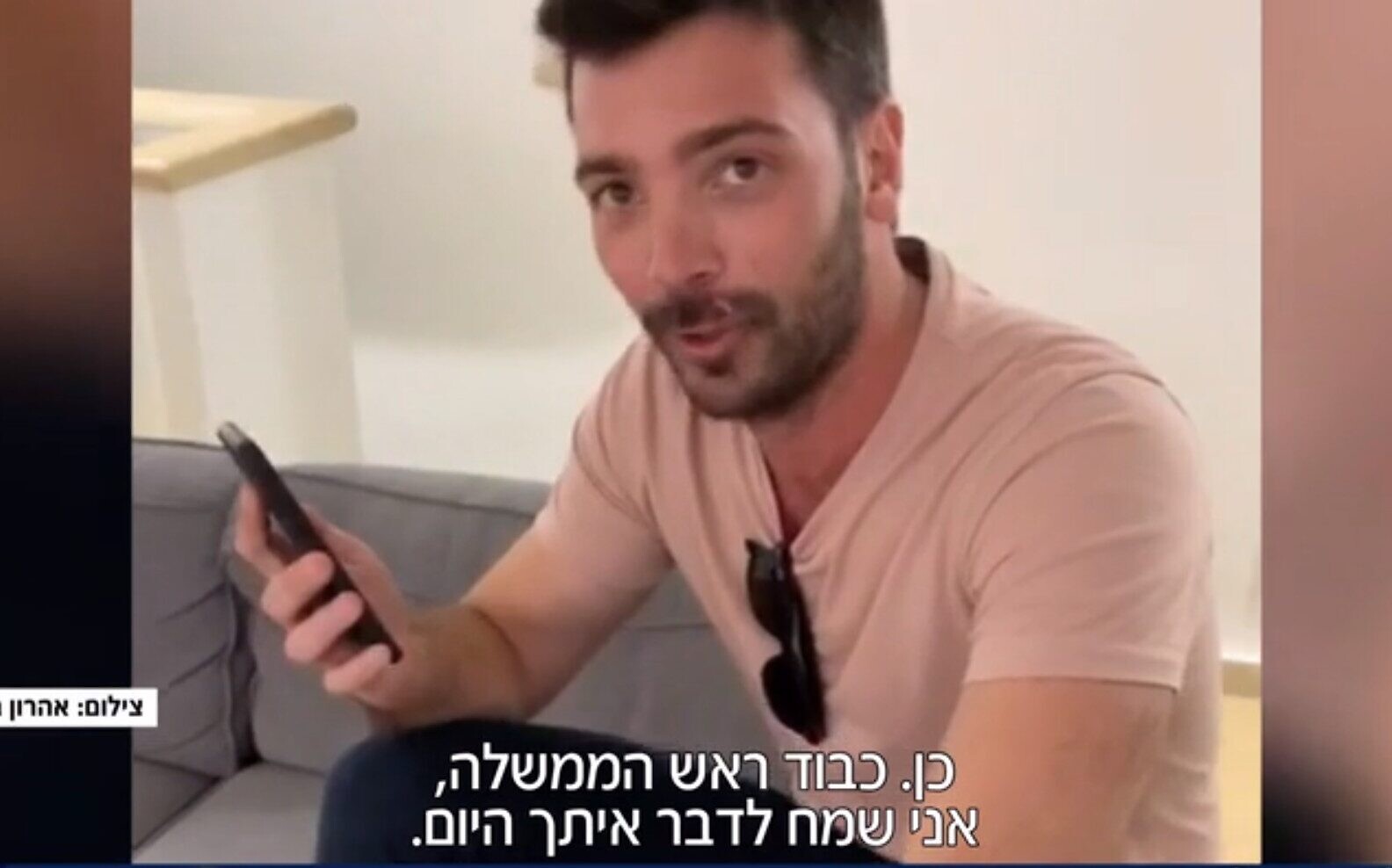
How so? “My father,” he tells the prime minister, “was one of the hostages at Entebbe. I’m only alive, and he’s only alive, thanks to your brother.” Akiva Laxer, Kobi’s father, was one of the 102 Israeli hostages rescued from Entebbe airport in 1976, in the legendary operation in which IDF commander Yoni Netanyahu, of the army’s elite Reconnaissance Unit, lost his life.
As the results in Monday’s election were being finally tallied on Wednesday, showing Benny Gantz and Lapid’s Blue and White party barely holding even with its September results and down from last April, and Likud reestablished as Israel’s biggest party despite Netanyahu facing an imminent corruption trial, the little one-two of Lapid’s encounter with Amalia, and Netanyahu’s conversation with her dad, looks emblematic.
Blue and White’s most adept politician happened upon a charming young kid and, in the way of politicians through the ages, attempted to co-opt her in order to widen his appeal to the electorate.
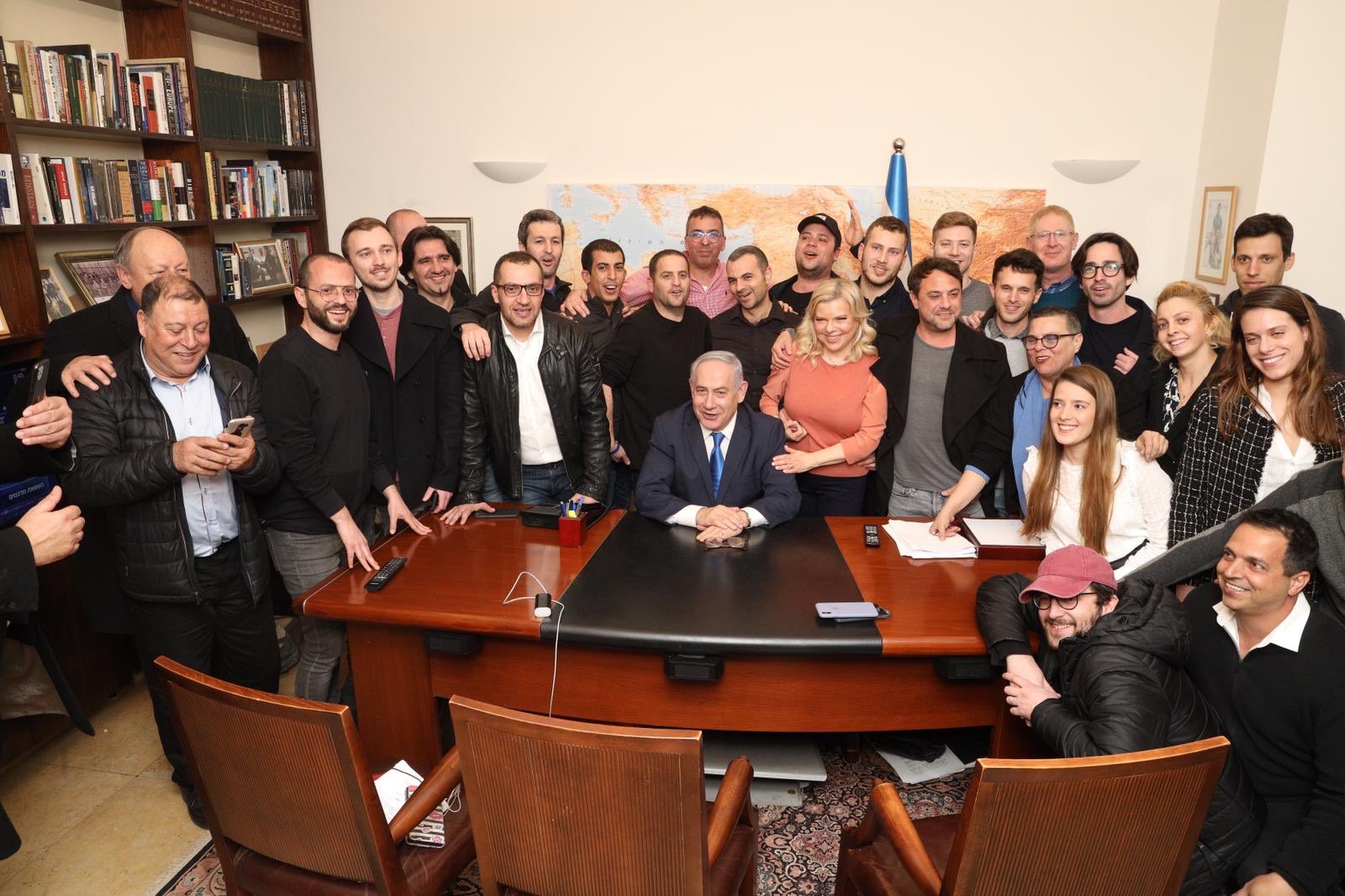
And then Israel’s most adept politician, heading a hyper-efficient political machine, not only exploited Lapid’s misfortune in bumping into a kid who actually undermined his cause, but rapidly tracked down her father, called him up, and happened upon an immensely resonant personal story that redounded still further to the Likud leader’s political benefit.
The entire small incident is so spectacularly beneficial to Netanyahu that one might be tempted to suspect that the whole thing was expertly staged — that Likud was tracking Lapid, that Amalia, with her family’s Entebbe history, was deployed for the Blue and White pol to run into, and that the Netanyahu team was primed from there to propel the encounter, and the subsequent phone call with Kobi, for speedy and maximal exposure.
But that’s not the case. It was rather, a case of the kind of manna from political heaven that sometimes falls into the hands of well-run campaigns.
Kobi told this writer by telephone Wednesday that the story played out as follows: “We were voting [in north Tel Aviv]. Yair Lapid was there at the entrance, talking to lots of kids. He came up to Amalia. I said to him, Ask her who we’re voting for, and he did. Within minutes a clip was up on the prime minister’s Instagram feed.”
Kobi said he filmed the encounter on his phone, but he didn’t send his clip to many people, and that his wasn’t the clip that went viral. “There were lots of people filming.”
How did Netanyahu then track him down for the phone call, and how did the PM hear about the Entebbe element? “I don’t know, but it couldn’t have been too hard [to find us]. My daughter is a star; lots of people know her around here.”
The phone call itself, he said, was quite straightforward. “The Prime Minister’s Office called, and said the prime minister would like to speak to you.”
Netanyahu begins by asking Kobi if he’s connected to the 1972 Sabena hijacking incident, but Kobi corrects him. “He knew it was Entebbe,” Kobi said. “It was all quite quick. I didn’t really have any time to get excited.”
***
Netanyahu has not been immune to unfortunate setbacks, ripe for exploitation, in recent months.
Rockets were fired from Gaza while he was addressing a campaign event in Ashdod a week before the September elections, and he had to be escorted offstage.
רגע הפינוי של ראש הממשלה נתניהו, אחרי שהופעלה אזעקה באשוד. pic.twitter.com/Y2KLOnrx8d
— almog boker (@bokeralmog) September 10, 2019
Three months later, the same thing happened again at a rally in Ashkelon. In both cases, his humiliation was, of course, caught on camera and widely circulated.
On election day Monday, he was filmed stumbling over a message he was recording “to our Druze brothers.”
The difference is that the Likud campaign appears to have been far better organized than that of Blue and White, the better to make use of such gifts.
Netanyahu was hamstrung by the fact that his years of efforts to demonize, delegitmize, and thus alienate Israel’s Arab electorate from the political process were finally working against him in these elections. Cumulatively infuriated by his inaccurate 2015 claim that they were “voting in droves” (as if this was somehow illicit), by his deployment of camera-wielding activists at their polling stations last September, and by a Trump peace plan they fear threatens to redesignate some of their towns and villages as part of a future Palestine, they did plainly vote in relative droves this time. The unprecedented performance of the Joint List threatened to gravely weaken him. But the rest of Israel’s opposition — the Zionist parties opposed to Netanyahu — failed to capitalize on this.

Unlike the hapless Lapid, Netanyahu didn’t blunder into embarrassing unscripted encounters on election day, or if he did, the wider public didn’t hear about them. He crisscrossed the country for weeks ahead of March 2. He Facebook-lived from north and south. He utilized his massive social media reach — a field in which Gantz continued to trail distantly. When Netanyahu posted a video of Gantz appearing to urge voters Monday not to choose Blue and White — a cruel feat achieved by the simple expedient of maliciously editing a clip posted by Gantz — the prime minister’s fake news was hugely more resonant than Gantz’s subsequent outraged attempt to set the record straight: Netanyahu has 1.7 million Twitter follows; Gantz, not quite 80,000. The Central Elections Committee banned the fake clip a few hours later, by which time the damage had of course been done.
And Netanyahu made astoundingly effective use of the Elector app — a dubious means of tracking voters, and pushing those who’ve been assessed as supportive to actually go and vote. As explained in great detail Tuesday by Likud’s delighted campaign manager Yair Revivo, the Lod mayor who introduced it to the party, the app was made available to thousands of Likud activists on election day; they were tasked with getting out the vote, one household at a time, and saw turnout in Likud strongholds rise accordingly. The morality and even the legality of the Elector app may be open to question, but it has not been banned, and its technology was available to all political parties.
***
The way Kobi Laxer sees it, the resonance of the clip of his daughter shows that some politicians don’t only want to dish dirt, and can benefit from a clip showing an adorable little girl.
In Israel’s elections, however, the support of every single voter really counts. A slightly more journalistic conclusion from the saga is that Likud’s campaign was so efficient, it made even the support of a 4 -year-old really count.







The Times of Israel Community.