

New documentary depicts the lawsuit that humbled Henry Ford – and revved up US Jewry
After its world premiere at the Miami Jewish Film Festival on Sunday, ‘Sapiro v. Ford’ is making the Jewish festival rounds
 Add ToI as a Preferred Source on Google
Reporter at The Times of Israel
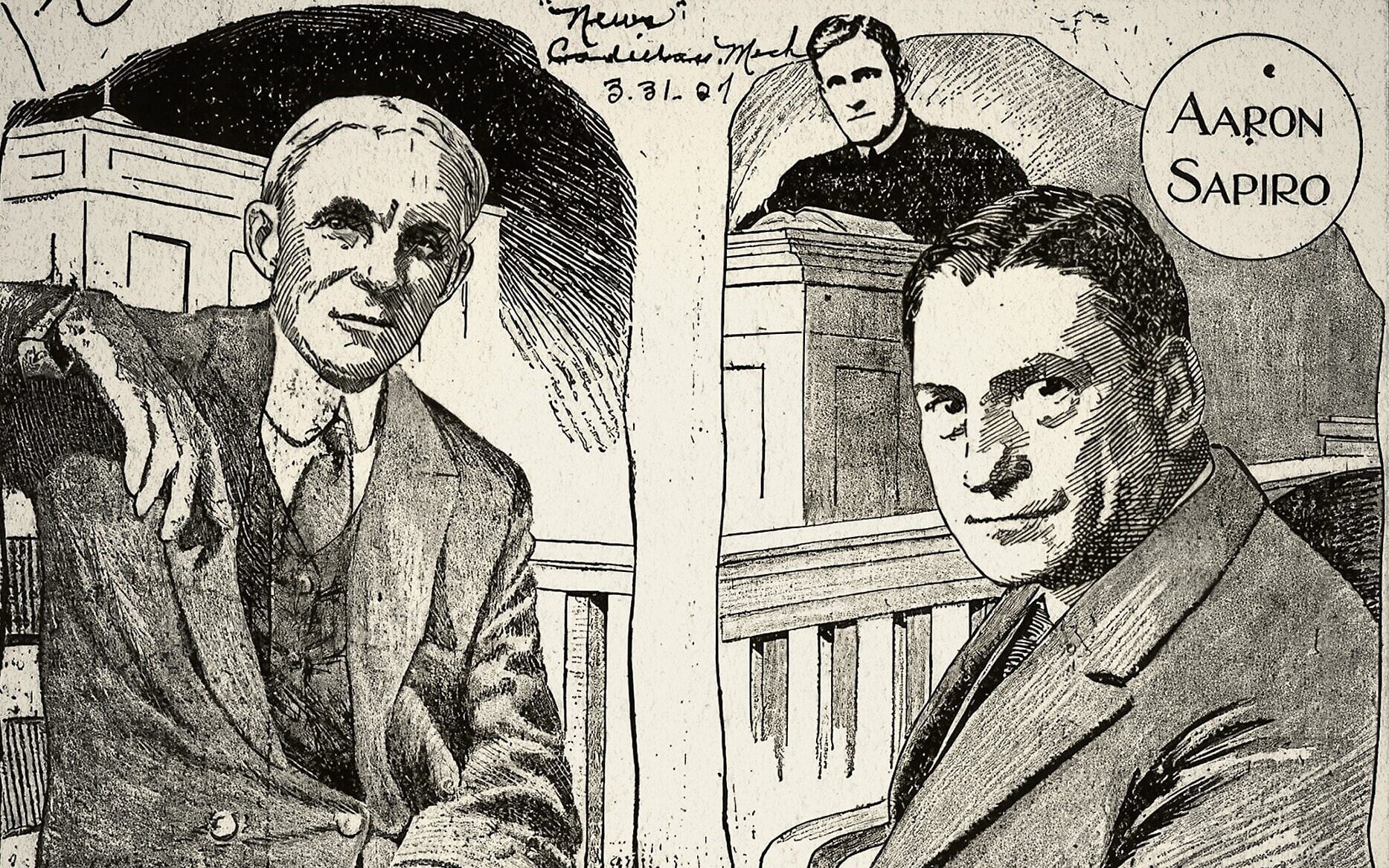
After years of spreading antisemitic conspiracy theories in his Dearborn Independent newspaper, Henry Ford was finally called to account for it. In 1927, the billionaire American auto magnate, famed for the assembly line and the Model T, was sued for libel by Aaron Sapiro, a Jewish American lawyer and a cooperative farm organizer in the United States and Canada. The ensuing trial in a Detroit federal courthouse — and subsequent apology by Ford — had repercussions for the American Jewish community and its relations with wider society.
This drama is retold in a new documentary film, “Sapiro v. Ford: The Jew Who Sued Henry Ford.” Directed by New York-based Gaylen Ross and produced by Detroit native Carol King, the film made its world premiere at the Miami Jewish Film Festival on January 18, and is available locally to stream through the festival’s website. It was also screened on January 21 at the New York Jewish Film Festival, which will show it again on January 28. Additional upcoming screenings include the Atlanta Jewish Film Festival and the Boca International Jewish Film Festival.
“I think it’s an unknown story,” King said in a joint Zoom interview between the filmmakers and The Times of Israel. “People are curious. So many people have not heard of it. They know about Henry Ford, but they did not realize the extent of what happened — with the libel suit against him by Sapiro and the resultant apology.”
“Our goal,” she added, “was to really introduce people to this hero [Sapiro], a man who risked so much, because he believed so passionately in the cause.”
Beyond amplifying Sapiro, the film looks at the ever-present debate between balancing First Amendment protections for free speech with defending minority rights in America.
“We definitely support freedom of speech,” Ross said, while noting “the concern we have for when hate speech often turns to hate crime. That’s the difficulty of protecting rights and freedom of speech at the same time… and also protecting the vulnerable.”
The Miami festival is billed as the largest showcase of Jewish and Israeli films; this year’s lineup features over 100 selections. After Miami, “Sapiro v. Ford” makes its way to the New York Jewish Film Festival, then it’s back to Florida for the Palm Beach Jewish Film Festival. Its first three in-person screenings — one in Miami, and two in New York — have all sold out.
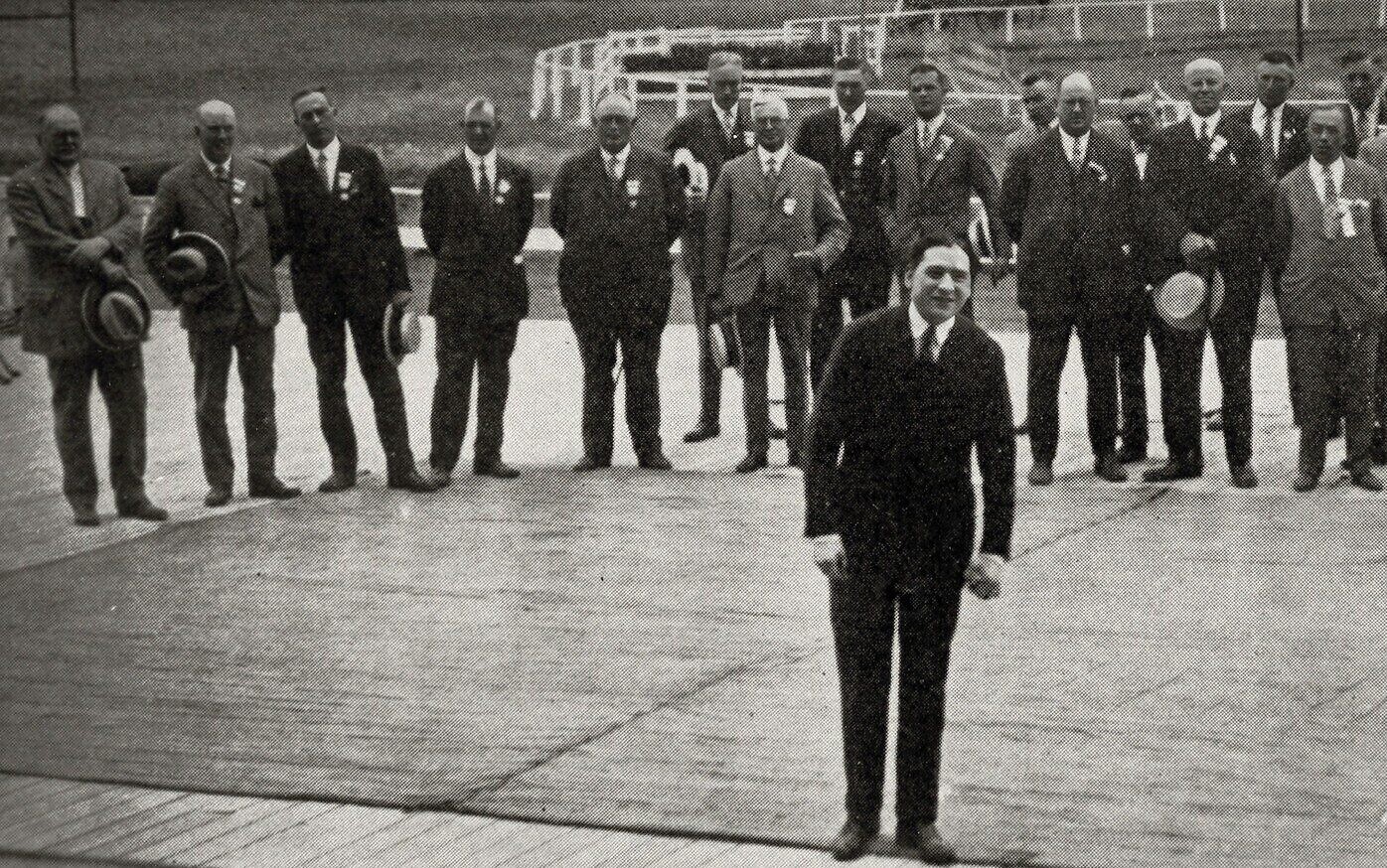
Within the film’s length of an hour and 10 minutes, the filmmakers have found creative ways to tell the story. Contemporaneous cartoons about the trial come to life through Garry Waller’s animation. Descendants of Canadian farmers whom Sapiro organized give perspectives on how he transformed their families’ lives for the better. And the post-trial euphoria among American Jews was humorously captured in a catchy 1927 Yiddish dialect song, “Since Henry Ford Apologized to Me,” which gets played twice. The filmmakers also used the well-known documentary approach of interviews with experts, including Brandeis University American Jewish history professor Jonathan Sarna and Indiana University adjunct law professor Victoria Saker Woeste, who is the author of “Henry Ford’s War on Jews and the Legal Battle Against Hate Speech.”
The film was conceived by King’s late husband, the documentary filmmaker and automotive historian Michael Rose. They pursued the project together and created a roughly 15-minute trailer before Rose died in 2020. King mentioned the idea to her fellow film colleague Ross, who looked at the trailer and was intrigued enough to join the project. Ross’s previous film subjects have included the role of Swiss banks in hiding Nazi gold during World War II, and Rudolf Kasztner, an Eastern European Jewish journalist and Labor Zionist who bargained with the SS to save Jewish lives during the Holocaust — negotiations that became the subject of a controversial trial in 1950s Israel.
Evergreen issues around the oldest hatred

For “Sapiro v. Ford,” Ross and King cast Jewish American actor Ben Shenkman as Sapiro. Throughout the film, Shenkman sits in a chair, wearing a gray blazer, brown slacks and blue buttoned-down shirt, reciting actual lines Sapiro once penned or spoke. Sometimes the actor gestures with his hands, other times he jerks his head to make a point, all while delivering his lines calmly yet forcefully.
“Bigotry, religious intolerance, contempt for racial origins — these are the danger flares in America today,” he utters to open the film, accompanied by elegant string music.
The fact that these lines sound as timely today as they did 100 years ago is part of the filmmakers’ point: The antisemitism that alarmed Sapiro in the 1920s is on the rise again, they say, and the film makes its case by interspersing Sapiro’s opening lines with much more recent footage, including from the 2017 “Unite the Right” demonstrations in Charlottesville, Virginia, where marchers wielded tiki torches and shouted “You will not replace us,” or “Jews will not replace us.” The filmmakers also included footage from a 2025 rally for Israeli October 7 hostages in Boulder, Colorado, which was tragically interrupted when a man armed with incendiary devices killed one attendee and wounded seven others.
“Look where we are today. Bondi two weeks ago, Jackson synagogue,” Ross said, referring to the ISIS-inspired shooting attack on an Australian Hanukkah gathering that killed 15 and wounded dozens, and alleged arson at Mississippi’s oldest synagogue on January 10.
She also cited an antisemitic attack on a Jewish family in Brooklyn that happened on January 9, and noted that the New York Jewish community faces the highest number of hate crimes of any minority group in the city.
Henry Ford’s dark side
The moment in 1925 that the filmmakers zero in on was a similarly fraught time for American Jews. The Ku Klux Klan felt free enough to march in public in the shadow of the US Capitol. Who or what enabled the era’s acceptance of antisemitism? To the filmmakers, it was Ford. In the film, he is shown as an innovative automaker who transformed America, yet whose dark side manifested itself when he went into newspaper publishing as the owner of the Dearborn Independent.
Ford seized upon the antisemitic conspiracy theory promoted in the “Protocols of the Elders of Zion.” The auto magnate translated this notorious czarist-era tract into English and published it as “The International Jew.” But that wasn’t all — the Dearborn Independent blamed Jews for what it saw as the evils of American culture in the 1920s, from jazz to baseball. Ford’s anti-Jewish agitation won him the approval of Nazis all the way up to Hitler himself.
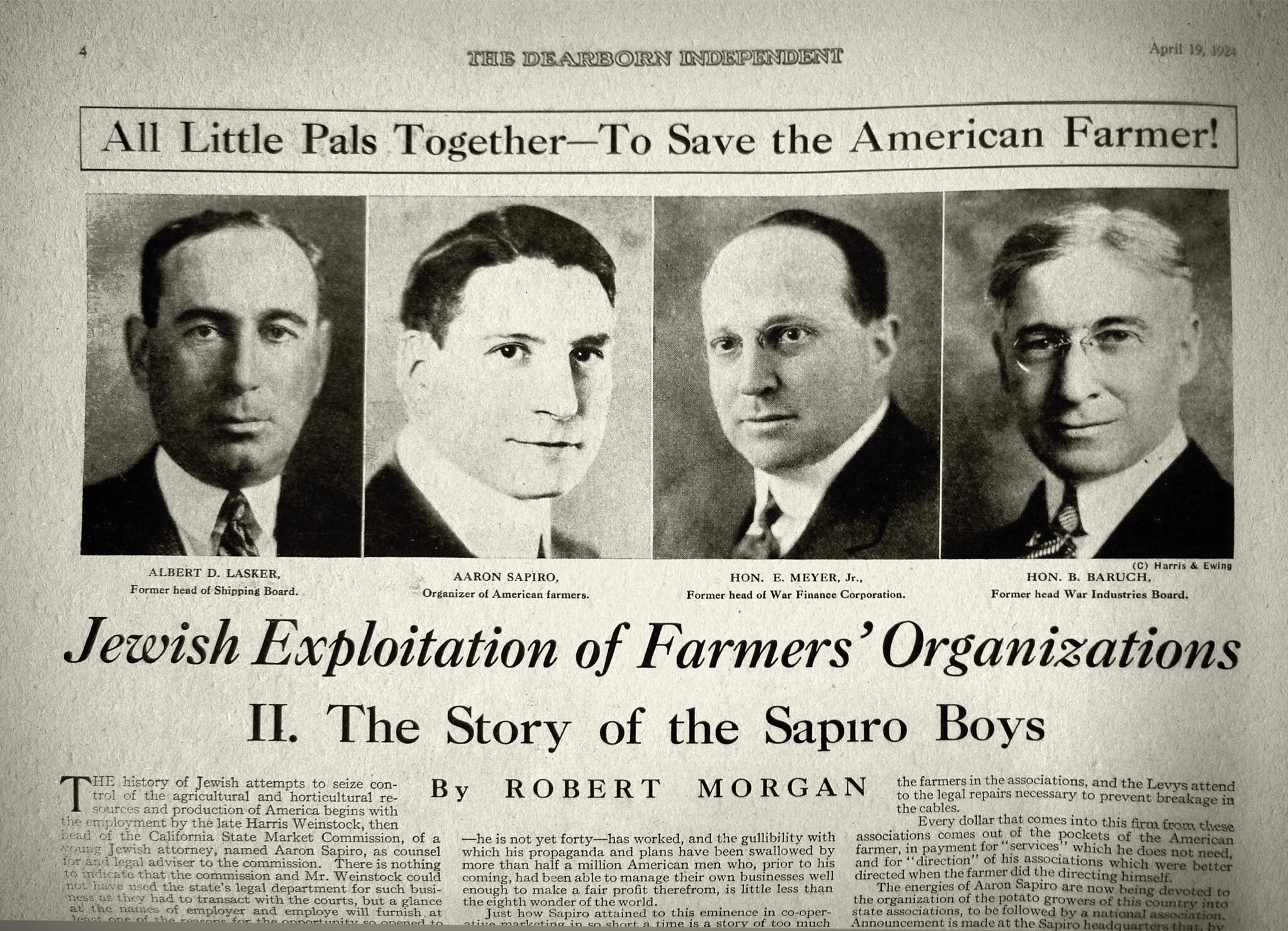
“[Ford] was on the lookout for a Jewish conspiracy,” King said. “He was eager to find it somewhere. It began according to historians that Ford believed that the Jews were warmongers, that they had made money on World War I. It was a trope about the untrustworthiness of Jewish people that’s been there since practically the dawn of time.”
Then the newspaper turned its lens on Sapiro. As the film explains, Sapiro was once a rising star thanks to his work organizing farmers in the US. Wheat, tobacco, cotton — to him, the product wasn’t as important as the principle: Individual farmers should unite into cooperatives to defend themselves from lowball offers for their crops. It seemed to work as farmers flocked to hear his speeches and join his cooperatives, which yielded millions of dollars in revenues.
According to the film, an initially auspicious move to organize wheat farmers in Saskatchewan proved his undoing and Ford viewed the border-crossing activism as a sign of an international Jewish conspiracy. The Dearborn Independent attacked Sapiro in no fewer than 21 articles. Losing clients and money, Sapiro decided to sue Ford for libel in a $1 million lawsuit.

The trial had its share of plot twists. Ford reportedly suffered a mysterious car accident that sparked claims of an assassination attempt and prevented him from testifying; Sapiro was accused of trying to bribe a female witness with a box of candy, and there was a tobacco-spouting counsel for the defense who doubled as a US senator. At the end of the trial, it seemed Ford would escape a reckoning, but he ultimately sought to make amends with the American Jewish community. Ironically, he did so through an apology ghostwritten by a prominent voice of that community, legal expert Louis Marshall. The apology did not satisfy Sapiro, whose name was left out of its text.
Finally, in 1927, Ford settled with Sapiro, shuttering the Dearborn Independent and reportedly paying his nearly bankrupt Jewish opponent $140,000. As it happened, that was the same year the Model T ceased production.
“What’s revelatory, what’s really important — besides the trial — and most meaningful to me is how prescient [Sapiro] was,” Ross said. “He talks about protecting the vulnerable and the danger of marginalizing those who are different. His emphasis on democracy, how important it was … not just in the political world but in your daily life … It could not be more contemporary.”






The Times of Israel Community.