

New exhibit on 2018 Pittsburgh synagogue massacre chronicles deadly antisemitism in US
‘Lessons from the Tree of Life: Lighting the Path Forward’ appears at Museum of Jewish Heritage alongside installations marking two other terrible Jewish anniversaries: Kristallnacht and Oct. 7
 Add ToI as a Preferred Source on Google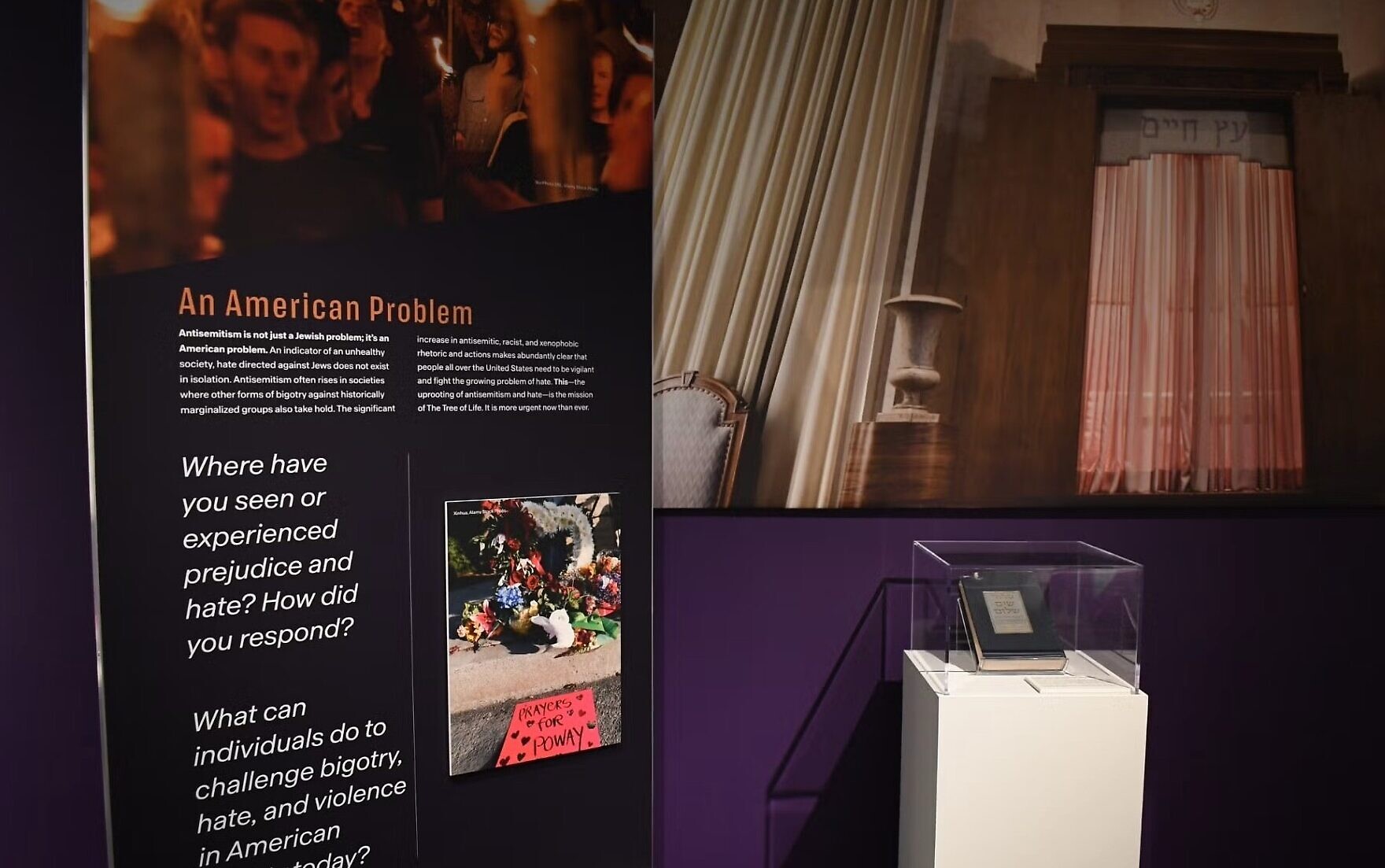
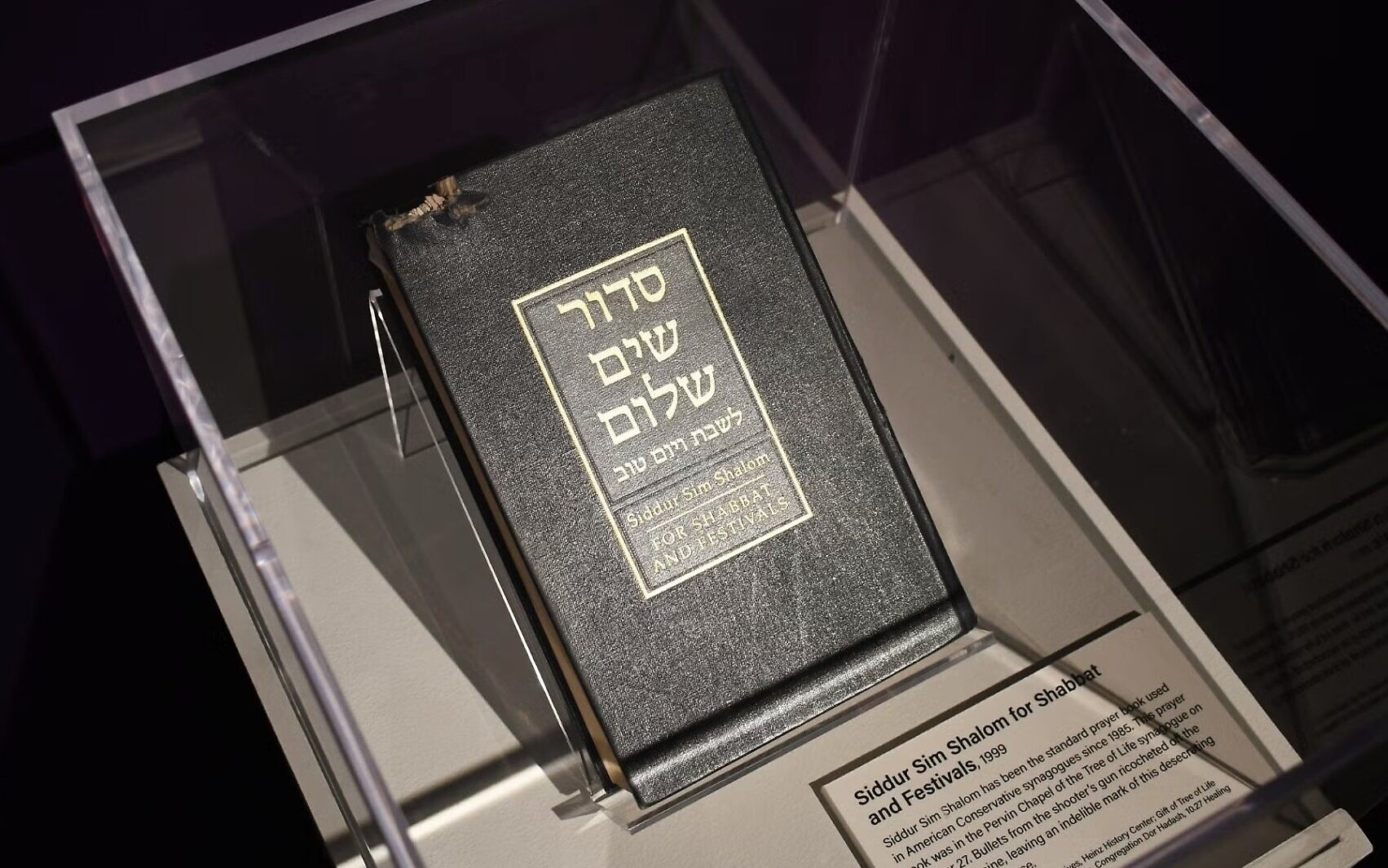
JTA via New York Jewish Week — At first glance, the prayer book is one that’s found at countless Conservative synagogues across the country: Siddur Sim Shalom, which was published in 1985 by the Rabbinical Assembly.
But the chewed-up appearance of the book’s left corner tells a different story: This siddur was grazed by a bullet during the October 27, 2018, mass shooting at Pittsburgh’s Tree of Life synagogue. That day, 11 Jewish worshippers from three congregations were killed during prayer services — the deadliest act of antisemitism on American soil.
The book is one of 22 objects on view at a new exhibition at the Museum of Jewish Heritage: A Living Memorial to the Holocaust. The exhibit chronicles the long history of American antisemitism before and after Pittsburgh, from the 1915 lynching of Leo Frank, a Jew who was wrongly convicted of murder, to the firebombing last June at a pro-Israel demonstration in Boulder, Colorado, where at least seven people were injured and one later died.
“Lessons from the Tree of Life: Lighting the Path Forward” is part of a series of exhibits, events and installations at the museum marking three terrible anniversaries: the Tree of Life shooting in Pittsburgh, the October 7, 2023, invasion of Israel by Hamas and Kristallnacht, the Nazi-led pogrom of November 9, 1938.
“We decided that at this point in time that [an exhibit on Pittsburgh] would be an important thing to do,” Jack Kliger, CEO of the Museum of Jewish Heritage told the New York Jewish Week. “And, obviously, the events going on both here and around the world are so timely, and important in a very elemental way. [It’s] a time for us to have hope.”
He added, “But we cannot have hope without remembering and understanding who we are, where we came from, and the history of the events, particularly in the 20th century.”
The Pittsburgh exhibit is hosted by the Museum of Jewish Heritage and created by the Tree of Life — a new memorial that’s rising at the site of the Pittsburgh shooting — and the Rauh Jewish History Program and Archives at the Heinz History Center in Pittsburgh.
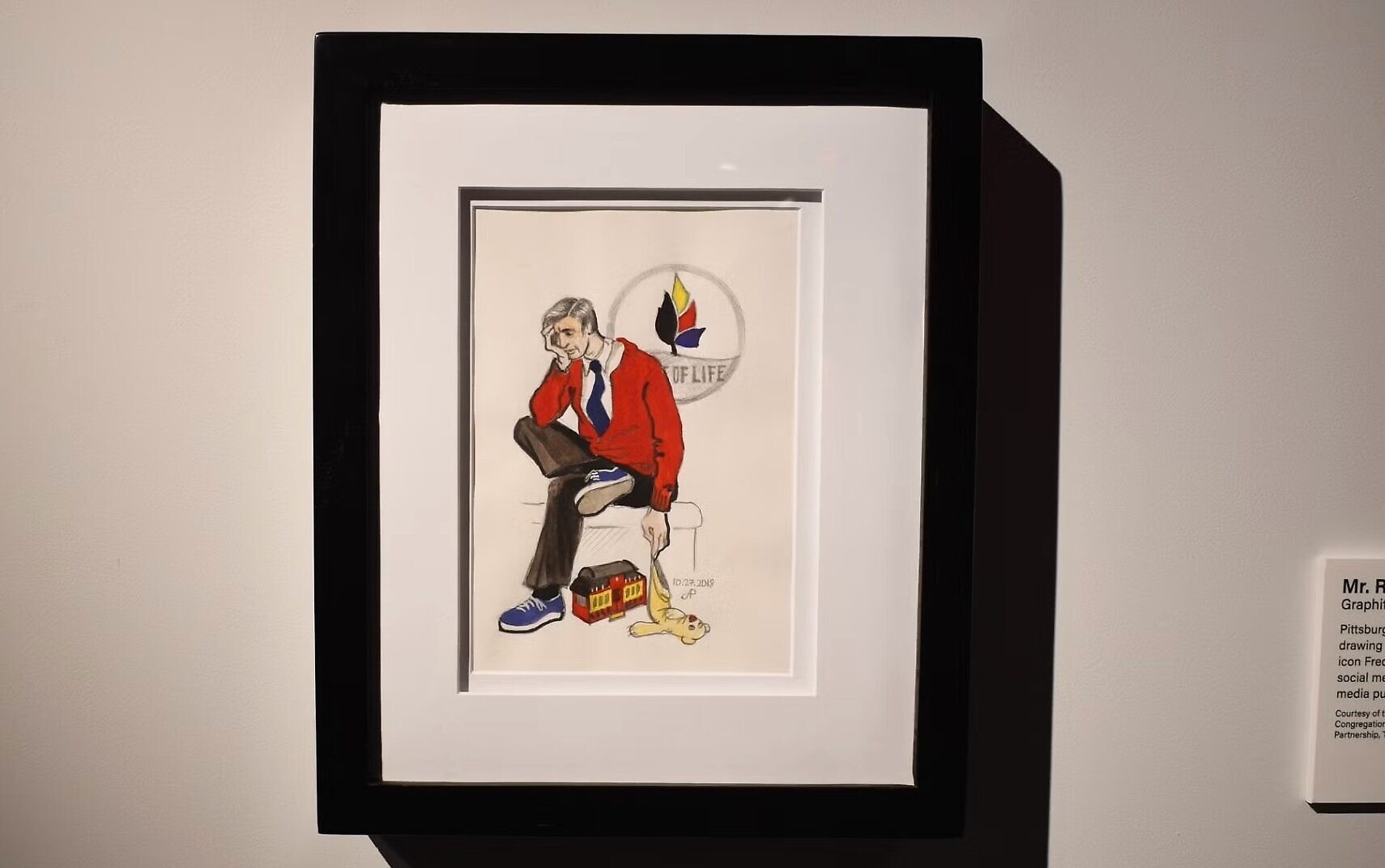
Other items on view include a hand-painted commemorative plate with the Pittsburgh Steelers’ logo, a Star of David and the phrase “stronger than hate”; a painting of children’s television star and Pittsburgh native Fred Rogers, in tears in front of the Tree of Life logo; and notes written on miniature ribbon scrolls, penned by members of Temple Beth Orr in Coral Gables, Florida — a synagogue whose community was deeply affected by the 2018 shooting at Marjory Stoneman Douglas High School in Parkland, Florida.
The exhibit opened on Sunday, October 5, which is also the day that many Jews around the world commemorated the second anniversary of Hamas’s October 7 invasion of Israel. (This year, October 7 falls on the first day of the festival holiday of Sukkot, and many Jewish institutions — including the museum — will be closed.) “Lessons from the Tree of Life” will be on view in New York through November 9 — the 87th anniversary of Kristallnacht, when Nazi-led mobs torched synagogues, looted Jewish-owned shops and arrested Jews.
The confluence of all three harrowing anniversaries means it’s a busy time for the museum. As such, a parallel exhibit also opened on Sunday: “Maintaining Memory,” a reflection space where visitors are invited to a rotunda where a ner tamid (eternal flame) in the shape of a menorah, crafted in Romania in 1930, is lit.
“All of this is designed to remember and honor those who were lost as well as those who survived,” Kliger added, referring to the victims of October 7, the Tree of Life shooting and Kristallnacht. “And the story of survival is very important in all three instances.”
The exhibits are part of “a commemorative series of events and installations in the museum,” said Kliger. Such events include three days of October 7-related programming, including a screening of the film “Torn,” about the battle over the “Kidnapped” posters on New York City’s streets, and a conversation about uprooting antisemitism with Amy Spitalnick, CEO of the Jewish Council for Public Affairs,; Atlantic writer Yair Rosenberg, and Carole Zawatsky, CEO of the Tree of Life museum.
“We’ve always committed ourselves to covering 20th century Jewish life before, during and since the Holocaust,“ Kliger said. “The Holocaust was not a meteor that hit the Earth by itself. It happened in the context of events that happened before, and sadly, events that continue to happen, but that we continue to fight to make sure that ‘never again’ has a meaning.”







The Times of Israel Community.