

New PBS series examines bittersweet ties that have historically bound US Blacks and Jews
For Black History Month, docuseries ‘Black and Jewish America: An Interwoven History’ parses what has unified and divided the communities, amid today’s renewed tensions
 Add ToI as a Preferred Source on Google
Reporter at The Times of Israel
In the opening decades of the 20th century, Black and Jewish journalists began documenting ominous similarities in the ways their communities were targeted by violence. In Eastern Europe, there were pogroms against Jews. In the United States, there were lynchings and race riots against African Americans. A February 11, 1911, headline in The Afro-American Ledger equated “Jew Baiting in Russia” with “Negro Baiting” in the US. Many other American newspapers of the period — Black, Jewish and Yiddish — also made this comparison in their coverage.
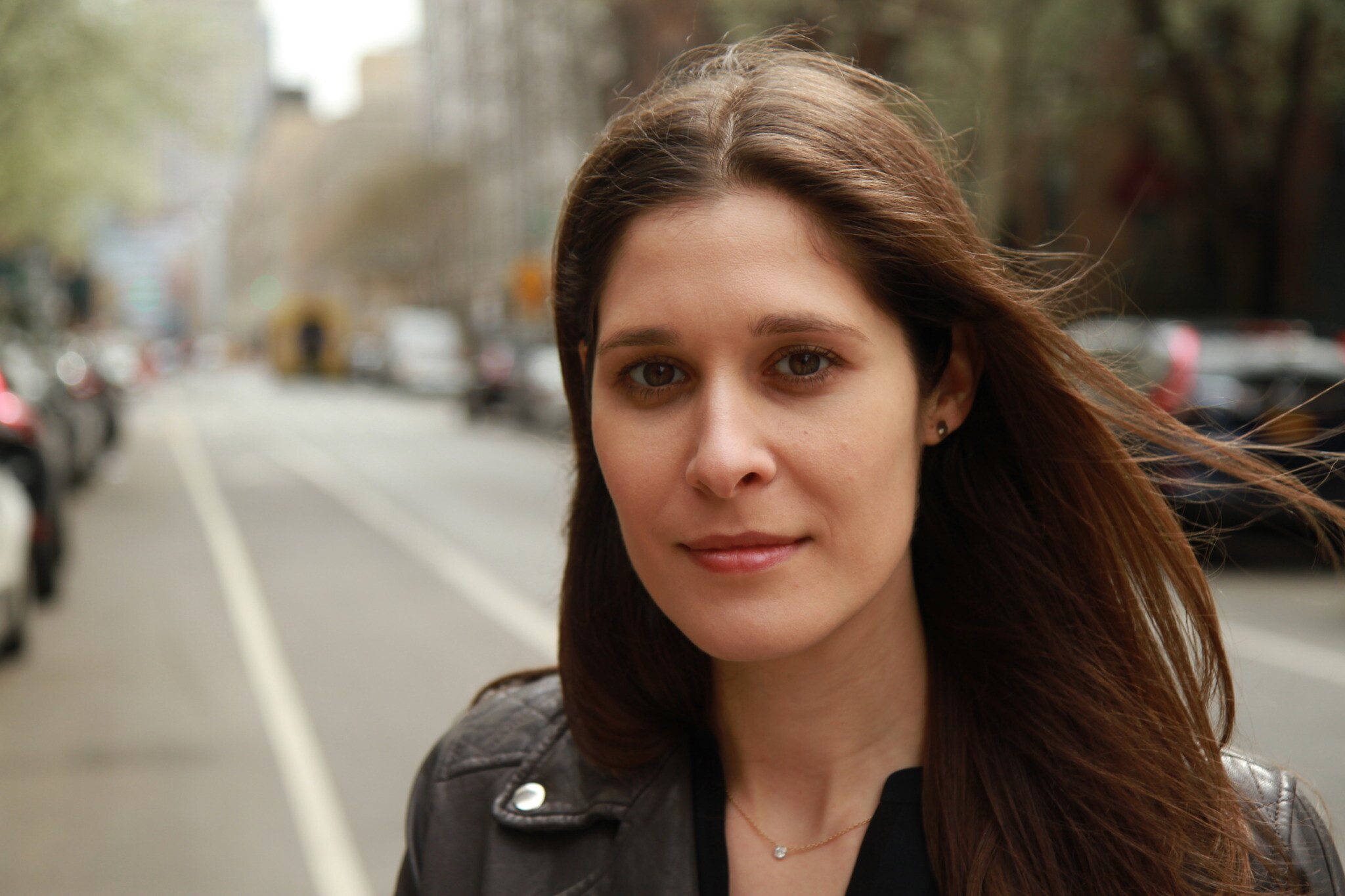
Filmmaker Sara Wolitzky described these articles as one of the historical surprises she encountered while working on the new PBS documentary series “Black and Jewish America: An Interwoven History.” Directed and executive produced by Wolitzky and fellow filmmaker Phil Bertelsen, the four-part series runs throughout February, which is Black History Month.
Episode one, “Let My People Go,” aired on February 3. Surveying the historical Black-Jewish relationship, which arguably peaked in closeness during the Civil Rights Movement of the 1950s and ‘60s, the episode found previous connections between Blacks and Jews in the US, including in early 20th-century newspaper articles.
“Both [communities] were very aware of the plight of the other,” Wolitzky told The Times of Israel over Zoom. “Black newspapers, and Yiddish or Jewish newspapers, were reporting on racial terror in their respective communities — ‘Pogroms going on in Eastern Europe are like what’s happening to us in America,’ and vice versa.”
She added, “Even if Jews had a relative amount of safety at that time in America, there was a commonality [with Blacks] in their persecution, and mutual sympathy.”
The series was conceived by Henry Louis Gates Jr., the director of the Hutchins Center for African and African American Research at Harvard, during a much more recent period of racist strife in the US: The 2017 “Unite the Right” demonstrations in Charlottesville, Virginia, at which marchers waved Confederate flags and shouted anti-Jewish slogans. Gates is an executive producer on the series, as well as writer and host.
“Dr. Gates was always of the belief that anti-Black racism and antisemitism were these two streams under the footbridge of Western culture, as he says in the film,” Wolitzky said. “That moment [in Charlottesville] was on the heels of the Charleston Mother Emanuel church shooting, and not long before the horrific Pittsburgh Tree of Life synagogue shooting.”
“At that moment, it became very obvious that this was a resurgence of white nationalism in the country,” she said. “It seemed to feel like an important moment to look back at this long, long history [Blacks and Jews] have together.”
As the series explains, it’s a history that predates American independence. Blacks first came to the British North American colonies as enslaved persons, and slavery continued under the early American republic. Black enslaved persons found comfort in the Hebrew Bible, notably the Exodus narrative. To protest their bondage, they surreptitiously sang a spiritual referencing Moses’s exhortation to Pharaoh — “Let My People Go.”
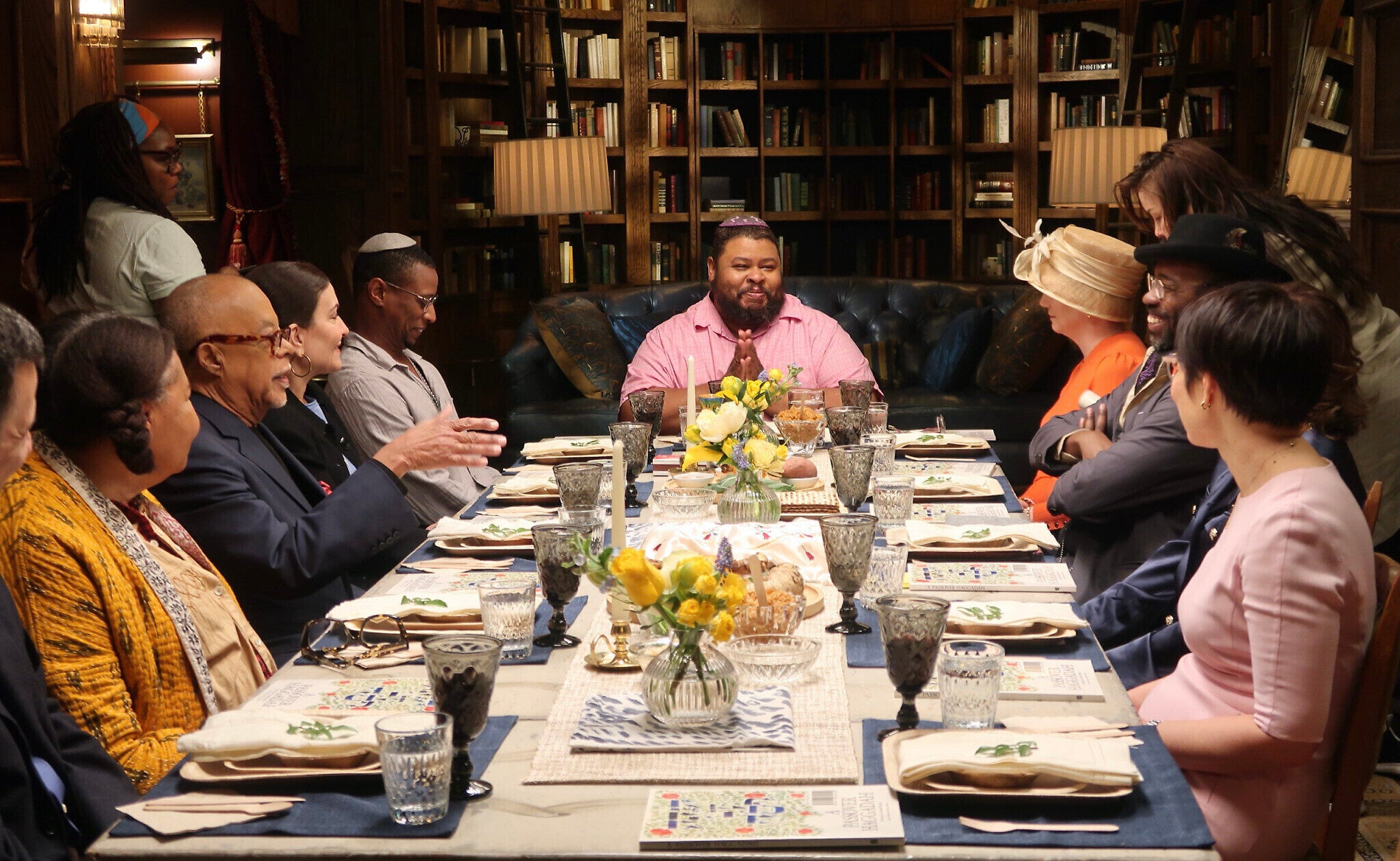
In the series, the spiritual gets referenced — and sung — during a Passover seder attended by prominent Blacks and Jews, including Gates, who describes the attendees as “a group of friends, journalists, teachers,” including several Black Jews — such as culinary historian and chef Michael Twitty, who prepared a West African-inspired meal, and Orthodox rabbi Shais Rishon, who is also known by his pen name, MaNishtana.
Although slavery was outlawed during the Civil War, Blacks’ troubles did not cease. Jim Crow laws legalized segregation in the South, prompting many Blacks to move north in the Great Migration. Those who remained in the South — and even some who went North — were menaced by lynching and race riots.
In the early 20th century, some Jewish Americans tried to help. They included Joel and Arthur Spingarn, who were among the founders and future presidents of the National Association for the Advancement of Colored People; and Sears, Roebuck and Co. co-owner Julius Rosenwald, who partnered with Black civil rights leader Booker T. Washington to create “Rosenwald Schools” for Black children in the South.
During this period of activism, “Jews were not the only white allies,” Wolitzky said, “but their numbers in the population disproportionately represented some of the white allies who joined with Black leaders like W.E.B. Du Bois and Ida B. Wells to make this push for Black rights.”
Indeed, she noted, “Joel Spingarn and Du Bois had a really close friendship. Joel becomes his closest white friend… A lot of the work [Du Bois] did with the NAACP, Spingarn was supporting him.”
Red diaper babies raised in the Civil Rights Movement
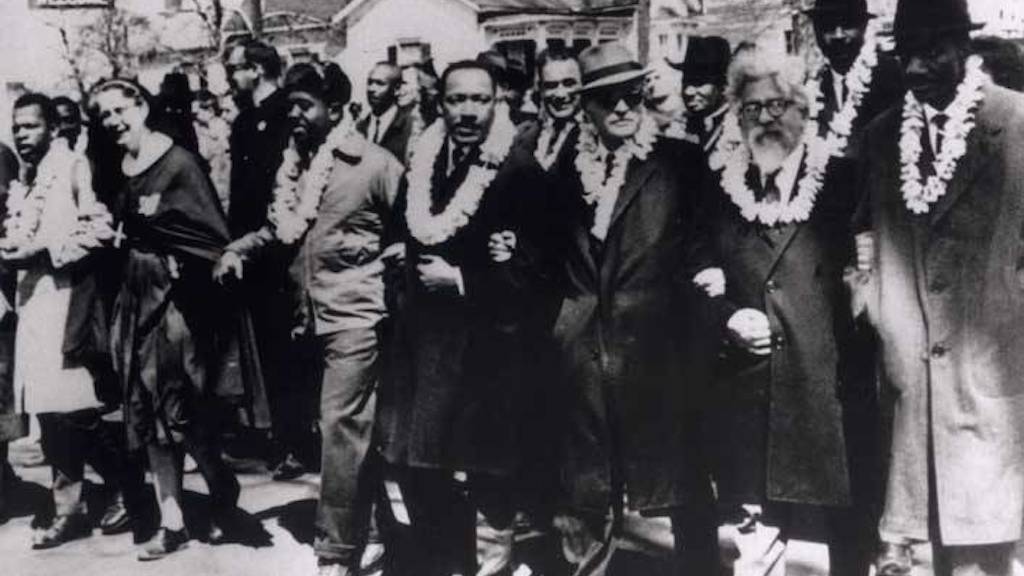
Decades later, the Civil Rights Movement witnessed new partnerships between Blacks and Jews, including through another famous friendship: The bond between the Rev. Dr. Martin Luther King Jr. and Rabbi Abraham Joshua Heschel — whose daughter, Dartmouth College Jewish studies professor Susannah Heschel, is among the experts interviewed in the series. The Civil Rights Movement, profiled in episode three, also included many young Jews who left their homes in the North to call for desegregation in the South.
“[Of the] young people going down to the South, we know Jews were disproportionately represented, certainly in the white students going to join groups like SNCC and CORE,” Wolitzky said. “They weren’t necessarily motivated consciously by their Judaism or religious conviction, but they came from families with leftist values and were what many called ‘red diaper babies,’ the children of socialists, Communists, leftist movements… They see it as the right, ethical thing to do.”
Some of them lost their lives, including Andrew Goodman and Michael Schwerner, who were killed with Black civil rights activist James Chaney in Mississippi in 1964.
There were some complications to the narrative, Wolitzky explained: “Michael Schwerner is the first [of the three activists] to go to the South… A rabbi said, ‘Please leave, you’re putting us in danger.’ There was a lot of risk associated with it.” And, she added, “there was a question whether some of the Black leaders… were happy to have what they considered white kids coming down. Some were. Some of them thought it was sort of co-opting the movement to some degree. It was never a simple thing.”
“By the end of episode three,” she noted, “we also deal with the ways divisions and flashpoints start to chip away at the feeling of unity,” including the Six Day War and “the sort of anti-Zionism that draws at least a part of the more radical Black Power movement, and the tensions it causes.”
These tensions erupted again, much more recently, after the bloody October 7, 2023, Hamas onslaught on Israel and the subsequent Israeli war against Hamas in the Gaza Strip. Some Black activists, as well as some Jewish activists, charge Israel with committing genocide against the Palestinians. Even before October 7, such activists often equated Israel’s treatment of the Palestinians with apartheid — a system of segregation used against Blacks in South Africa during white minority rule.
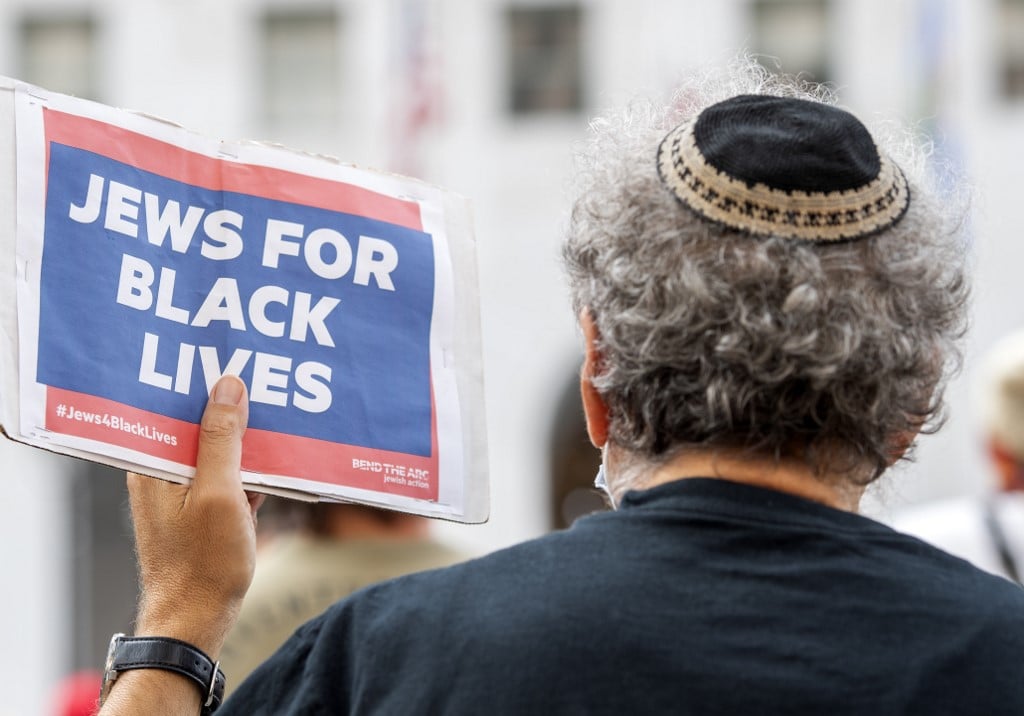
In episode four of the series, Gates visits the campus of the University of California Los Angeles and speaks with Black and Jewish students participating in an initiative to bring both groups together after the unprecedented tensions of recent years: Dialogue Across Difference, which was created by history professor David Myers before October 7.
“With October 7, with the [Gaza] war, I think a takeaway really is about us needing to be able to find a way to both have these difficult conversations, and create coalitions in which we don’t have a litmus test,” Wolitzky said. “As Dr. Gates would say, we can agree to disagree and still come together over shared values and shared goals in the face of common enemies.”
“A lot of forces in the world, at the moment, would love to pit these two groups against each other,” Wolitzky reflected. “Forces of division are at work. We cannot let them win. More good comes from us standing together than standing apart.”







The Times of Israel Community.