

New plan looks to replace Israel’s solar water heaters with PV cells and heat pumps
Ubiquitous rooftop heaters may be on their way out as government pushes new technologies that offer cheaper, more efficient ways to heat water
 Add ToI as a Preferred Source on Google
Zev Stub is the Times of Israel's Diaspora Affairs correspondent.
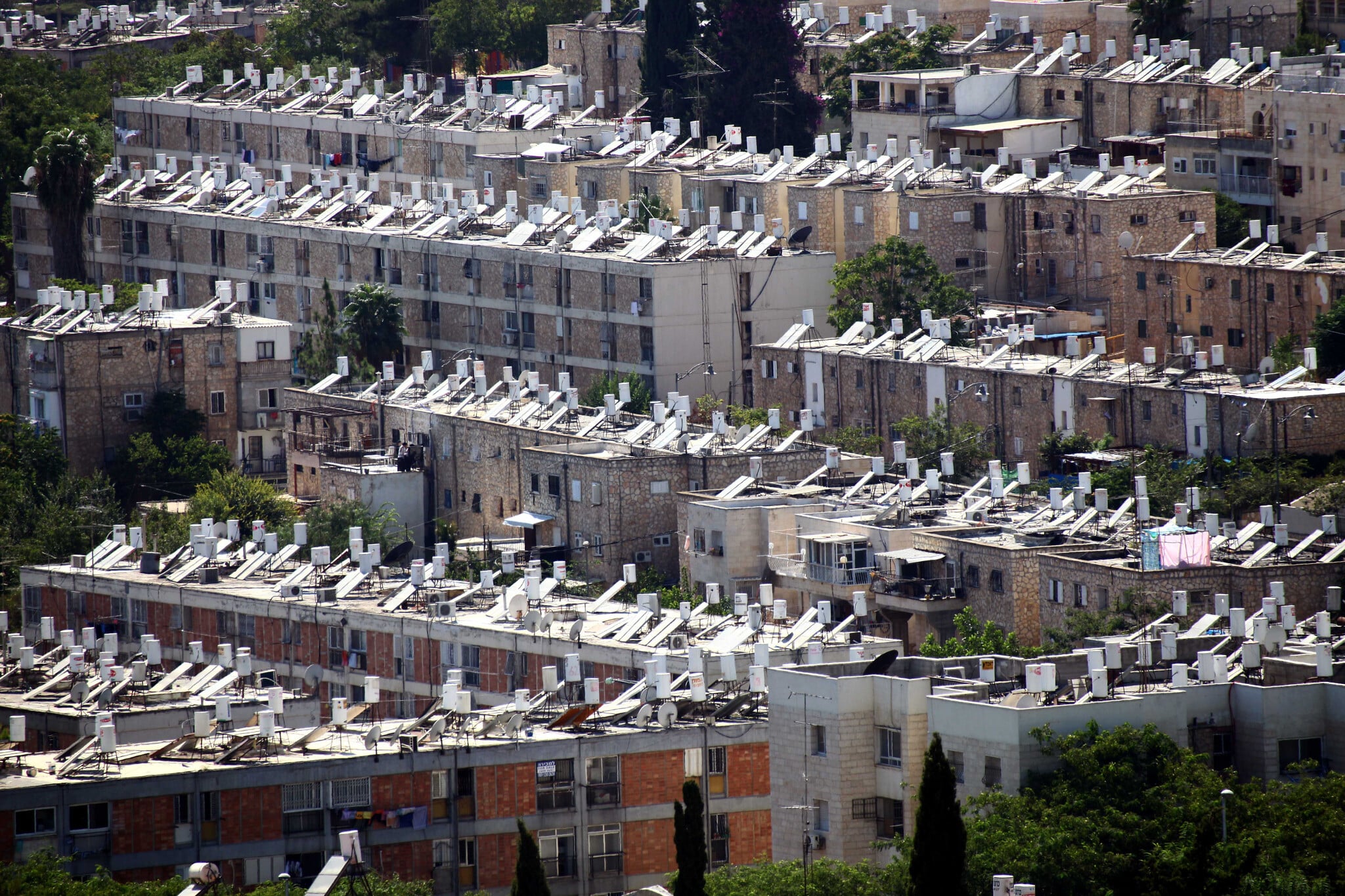
The Energy and Infrastructure Ministry unveiled a proposal Wednesday to phase out Israel’s ubiquitous rooftop solar water heaters in favor of photovoltaic (PV) panels and heat pumps, a move it says will help lower living costs and reshape the nation’s energy economy.
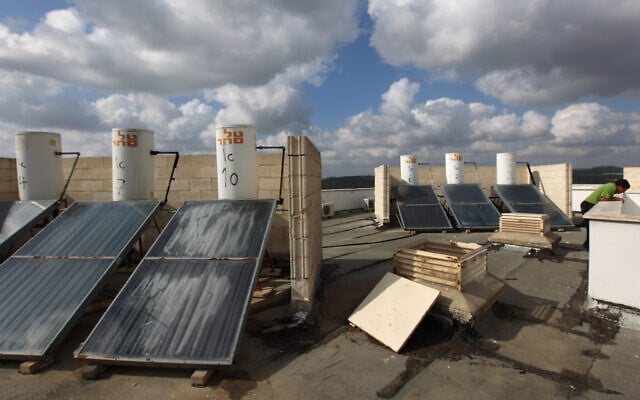
It’s a move that would mark a significant shift from energy regulations dating back to the 1980s that made solar water heaters a mandatory fixture on Israeli homes. While this system was advanced for its time, more efficient technologies are now available, the ministry said.
“After 50 years, the time has come to move on from these old methods,” the ministry stated in its announcement.
Regulations for new non-residential buildings and single-family homes go into effect Thursday, while a proposal to do the same for multistory residential buildings is open for public comment for the next two months, with hopes that it will go into effect sometime during 2026, a spokesman for the ministry clarified.
The ministry hopes to offer incentives for existing buildings to upgrade to the new system in the future, but it recognizes that it would be virtually impossible to make it mandatory to do so, he said.
Solar water heaters currently serve about 85% of Israeli households, and save households roughly 5% of their total electricity consumption, the ministry said.
However, they aren’t always useful, as solar power can’t be collected at nighttime or on cloudy days, ministry representatives explained at a press conference. When solar energy isn’t available, residents can use inefficient 2.5-kilowatt boilers powered by their electricity providers.
During peak hours for showering at night, electric heaters can use as much as 25% of all electricity produced in the country, the ministry said. Overall, heating water accounts for about 14% of total annual household electricity consumption.
Solar water heaters also look unsightly atop building rooftops, the ministry noted, and they benefit only the top seven floors of an apartment building. According to building regulations, apartments that are more than seven floors from the top floor cannot use the solar heaters, a limitation that has grown more significant in recent years as buildings get taller.
Currently, homes with solar water heaters pay NIS 220-440 ($68-136) per month to heat their water, compared to NIS 900-1,800 ($279-558) for those that cannot, the ministry said.
Implementation
The ministry proposal calls to replace this system with a new model combining PV systems with heat pumps for private homes and shared residential buildings.
Solar water heaters on building rooftops would be replaced with PV solar cells that would power the heat pumps, which are 2.5 to 4 times more energy-efficient than standard electric boilers. Excess electricity generated by the PV cells could be used for other purposes or sold to the electric company, generating income for the building.
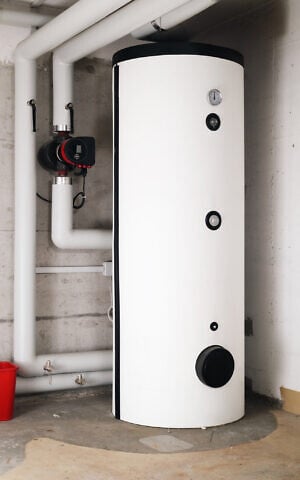
Heat pumps use compression to heat water more efficiently than boilers, in a similar way to air conditioners, and are already produced in Israel by companies like Tadiran and Electra.
The new system will require an additional investment of some NIS 4,500 ($1,150) per apartment in new construction, but could save households NIS 500-1,500 per year, the ministry said. That means the system would pay for itself within several years. Government incentives for the program may also become available.
The plan could also generate economic benefits of up to NIS 3.3 billion (about $1 billion) by 2050, the ministry said. Peak-hour electricity demand would be reduced by roughly 1,050 megawatts, equivalent to the output of at least two large conventional power plants, while adding about 1,100 megawatts of solar capacity on residential rooftops.
The ministry hopes the plan will go into effect for all new residential buildings in Israel during 2026. By 2030, Israel could have 100,000 homes on the new system, the ministry estimated.
Israel will have 1.8 million new homes by 2050, compared to about three million in the country today, the ministry said.
The Energy and Infrastructure Ministry noted that the proposal is part of a broader government effort to cut emissions and reduce household energy costs. Other measures already in place include mandatory energy-efficiency ratings for new apartments and import reforms aimed at lowering the price of efficient appliances. The government is also advancing sustainable-building standards and infrastructure for electric-vehicle charging.
These policies will help reduce air pollution, lower greenhouse gas emissions and ease the cost of living for Israeli households in the years ahead, the ministry said.










The Times of Israel Community.