

New Yad Vashem exhibit showcases Holocaust art and stories from living survivors
Art curator says ‘New on Display,’ which opened Monday, is the result of aggressive acquisitions aimed at preserving Shoah works — and their makers’ testimony
 Add ToI as a Preferred Source on Google
Yaakov Schwartz is The Times of Israel's deputy Jewish World editor
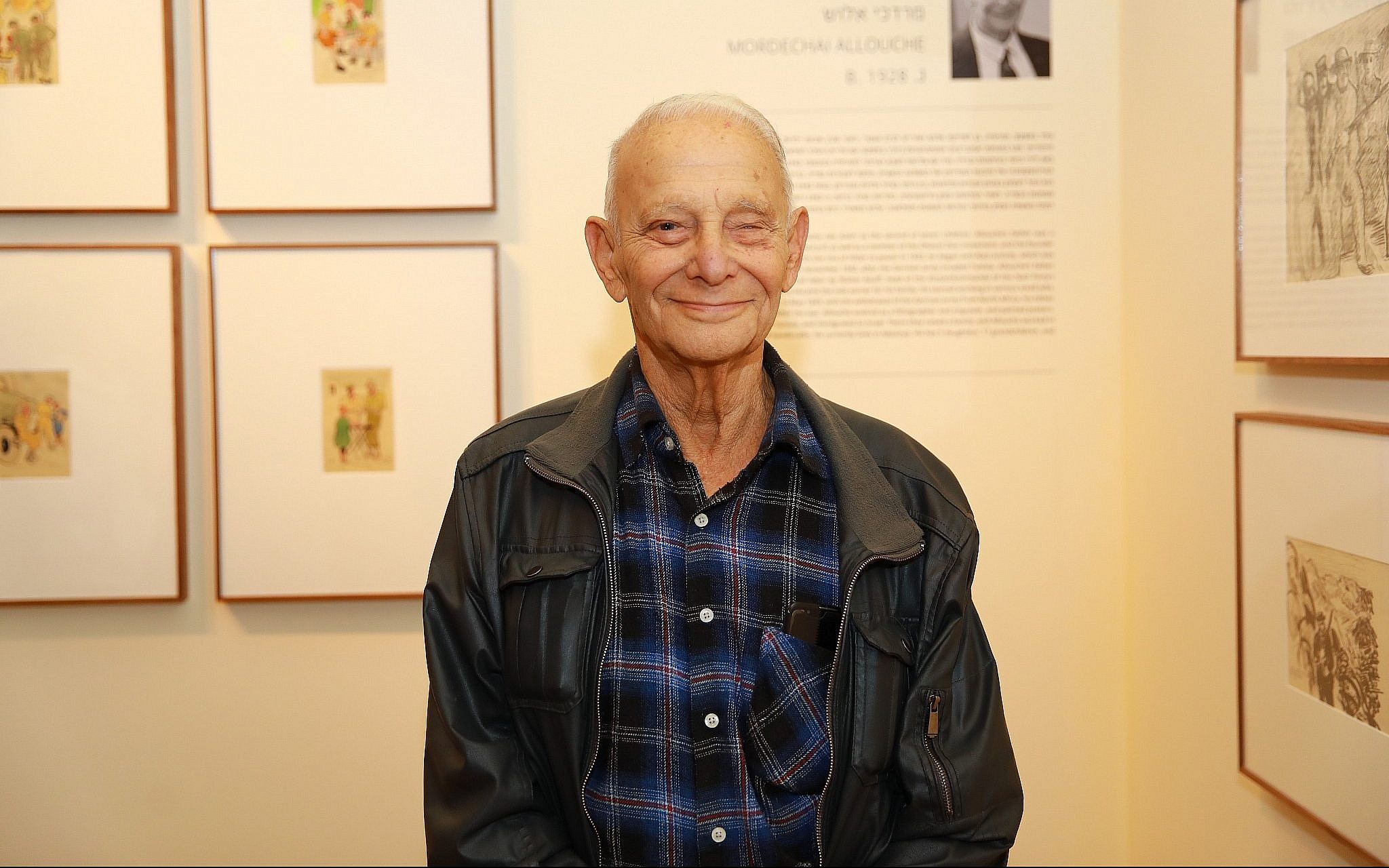
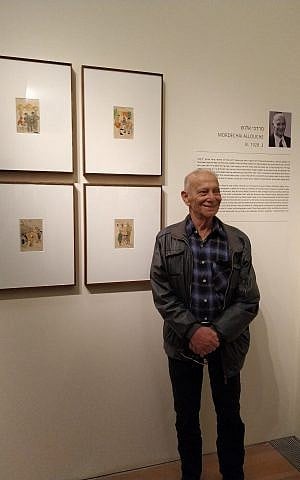
Ninety-one-year-old Mordechai Allouche smiles broadly as he stands next to four colorful, hand-painted postcards of British and German soldiers absorbed in 1940s daily life in his Nazi-occupied hometown of Sfax, Tunisia.
The illustrations, which hang alongside a photo and biography of Allouche, are part of “New on Display,” a collection of 46 pieces by 13 artists unveiled Monday at Yad Vashem’s Museum of Holocaust Art.
Between 1942 and 1943, those postcards were a key source of income for Allouche. Then just 15, the boy was the sole supporter of his family after his father, a Jewish anti-Nazi dissident, was arrested and sent to a forced labor camp immediately following Germany’s invasion of Tunisia in November 1942. Between working odd jobs and peddling the postcards, Allouche was able to scrape up enough for the family to live on.
Though the artist was a victim of some of the soldiers he painted, he didn’t make them out to be villains. The figures Allouche portrayed are handsome and strapping, captured enjoying wonderfully human moments. This was to his benefit – these same soldiers were Allouche’s best customers.
“We did what we could in order to eat,” the energetic Allouche tells The Times of Israel, gesturing to the postcards, which he donated to Yad Vashem two years ago. He is the only surviving artist to make it to the exhibit’s opening.
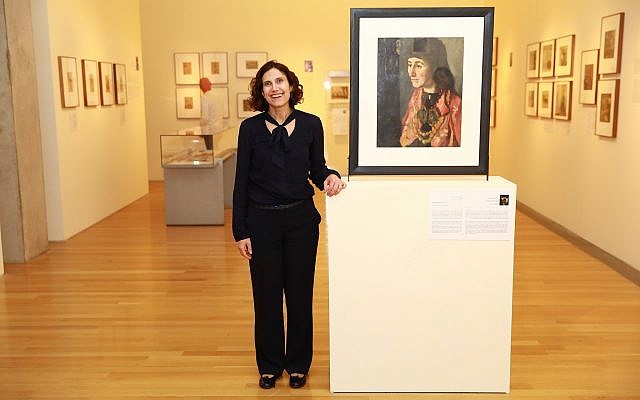
It is exactly this sort of first-hand, personal testimony that makes the exhibit special, says the museum’s curator, and director of Yad Vashem’s art department, Eliad Moreh-Rosenberg.
“Over the last few years, we’ve made tremendous efforts to enrich our collection with new artworks, due to the awareness that these are the last moments when we can still find works from the time of the Holocaust when there are still the last survivors among us,” Moreh-Rosenberg tells The Times of Israel. She adds that properly preserving the art is also a top priority.
“We decided not just to wait. In the past we were receiving wonderful artworks, but people would come to us with them. Here, we decided to be active, and we took the initiative, and we contacted people, and we received sometimes whole collections,” she says. “People are not necessarily aware of what they have, because for them it might be a very precious, sentimental piece, but they don’t understand the impact it can have as a national treasure.”
This underestimation of the value of his art was once true for Allouche.
“I’ve got lots of these things,” Allouche beams. “Different poses, different locations. I never thought that this stuff would ever interest anybody. But when they came to me to collect these materials, I was more than happy to contribute.”
Not all of the artists whose works are on display were forged during the Holocaust. The exhibit includes artworks created prior to, during, and after World War II, including one extensively restored 1934 cityscape by the artist Carol Deutsch.
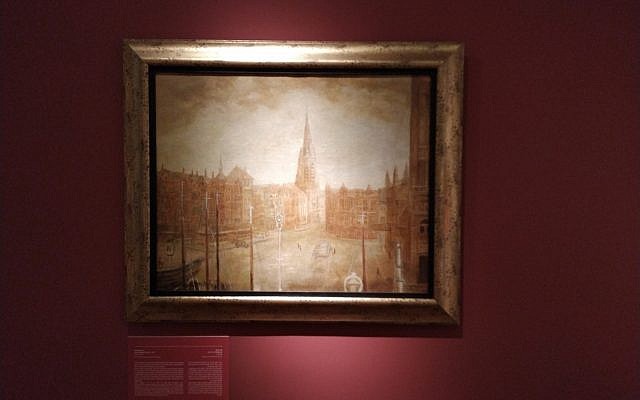
“When I saw this painting the first time, it came to Yad Vashem in such bad condition. And the restoration process here was just phenomenal – seeing it this way takes my breath away,” says Debbie Deutsch-Berman, the artist’s great-niece, who also works in Yad Vashem’s marketing division.
Moreh-Rosenberg says that Yad Vashem received the painting from the cousin of Deutsch’s wife, who now lives in Herzliya. The work is typical of prewar Deutsch, Moreh-Rosenberg says, “before he came back through his art to his Jewish roots.”
The painting is not dissimilar from many European works from that era, and uses muted tones to illustrate a dreary landscape of the Belgian city of Ostend, where Deutsch lived at the time.
“You’d never guess that he was Jewish just by looking at it,” says Moreh-Rosenberg.
Vivian Uria, the director of Yad Vashem’s museum division, says that Israel’s national Holocaust museum is unique in the depth of research it is able to conduct into the history of its artifacts.
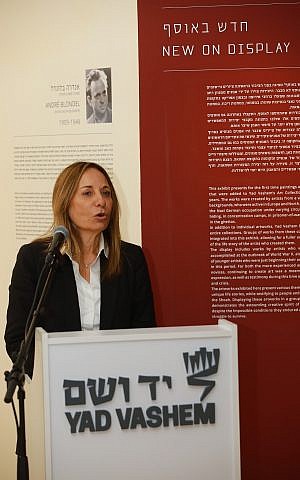
“As opposed to the artifacts they have at Auschwitz, where they are so numerous and impossible to identify with any one person, here we are able to tell a specific story with each piece,” Uria says.
Deutsch’s inevitably tragic story is further told in a series of 99 biblical illustrations on permanent display at the museum along with the ornate wooden box they were originally stored in.
He created the pieces as a gift to his three-year-old daughter Ingrid while the family was in hiding after the Nazis implemented the Final Solution in Belgium.
“Obviously it’s not a standard three-year-old’s birthday gift,” says Deutsch-Berman. “He’s basically saying through these paintings, ‘This is my legacy, this is what I want to leave you with.’ And I think the fact that this is what he’s doing, that this is his final testament, he’s saying, ‘I may not survive this, but the lessons, the images that illustrate the roots that we come from, will survive the Holocaust.’”
Deutsch and his wife were eventually informed upon by a neighbor and sent to Auschwitz. Deutsch was sent on a forced death march to Buchenwald in December 1944, where he died on arrival. His wife, Fela, was sent to Birkenau’s medical experimentation block, after which her fate is unknown.
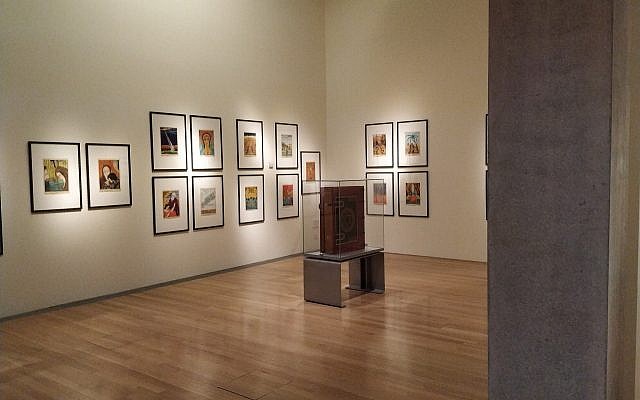
Ingrid and her grandmother survived the war in hiding with a Catholic family, and found the box containing the paintings intact when they returned home after the war’s conclusion.
“The Nazis tried to dehumanize their victims – to erase their humanity in every way they could. In Auschwitz, they even went so far as to strip people of their names, and branded them with numbers,” says Uria.
“These works are evidence that in times of suffering, the artists went to great lengths, often even endangering their lives, in order to express themselves. And this shows the strength of the human spirit, how it’s impossible to completely extinguish someone’s humanity,” says Uria.





The Times of Israel Community.