

Out of Pakistan, a fiery feminist film takes on child marriage
As business transactions or settling feuds, one in five Pakistani children marry under age 18, says ‘Dukhtar’ director Afia Nathaniel ahead of her film’s screening in New York
 Add ToI as a Preferred Source on Google
Jordan Hoffman, a member of the New York Film Critics Circle, is The Times of Israel's long-time film reviewer and the co-host of The Reel Schmooze.
NEW YORK — Sometimes an ugly story can still be beautiful.
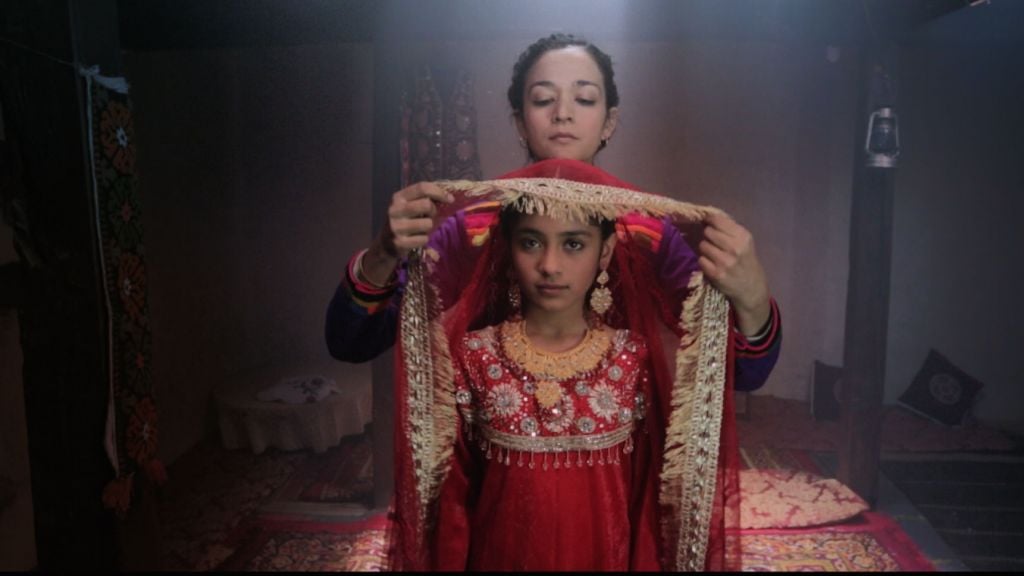
“Dukhtar (Daughter)” is the first film written and directed by Afia Nathaniel, a Pakistani woman living in New York City. It’s shot in some of the most gorgeous regions of Northern Pakistan, though this is no leisurely travelogue. It concerns a young mother named Allah Rakhi (Samiya Mumtaz) who takes action against the prevailing culture of her remote community, in which underage girls are traded into marriages.
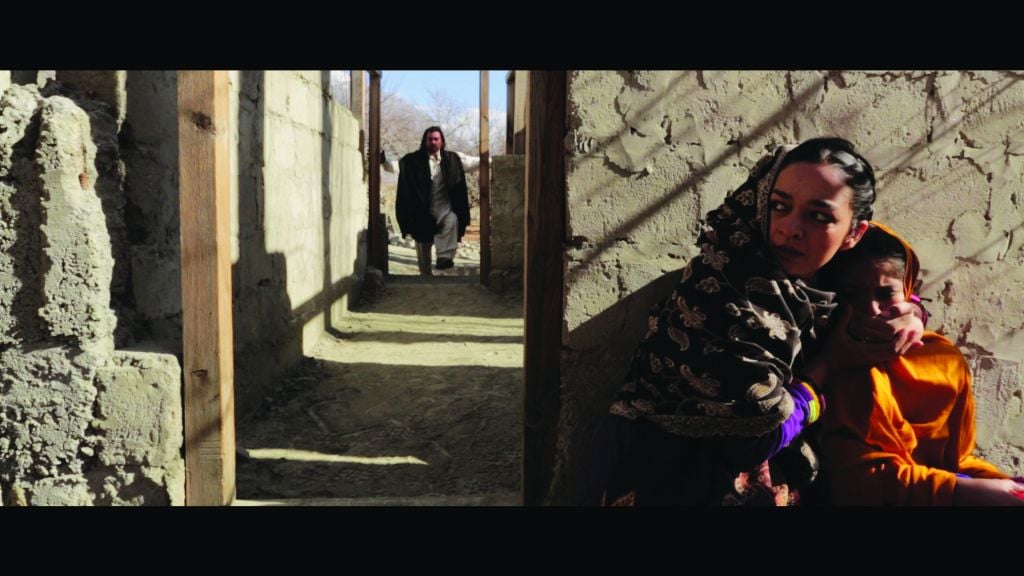
Zainab (Saleha Aref) is a spunky and sharp ten-year-old whose only misfortune is to be born in an area where a local chieftain can demand that she be, essentially, handed to him as his slave to smooth over some business trouble. Allah Rakhi, who was herself betrothed at a young age to someone she didn’t love, fakes out her husband on the day of the wedding, and begins a breathless trek to Lahore, where the mother she hasn’t seen in years still lives.
While the subject matter is serious, “Dukhtar” is basically a chase film. The chieftain’s henchman are on the hunt for the mother and daughter, who take refuge with a truck driver. The driver (Mohib Mirza) is a fascinating character, an ex-Mujaheddin whose anger has mellowed and is now driven to spout romantic poetry in the presence of nature and beauty.
After a successful festival run, the movie is out in New York and Los Angeles prior to its eventual availability on streaming services. I spoke with the director in New York and our abridged look at our conversation is below.
Pakistan is a modern country with big cities and an economy, but it’s also a gigantic country. How common is this problem of 10-year-old girls put into slave-like situations like this?
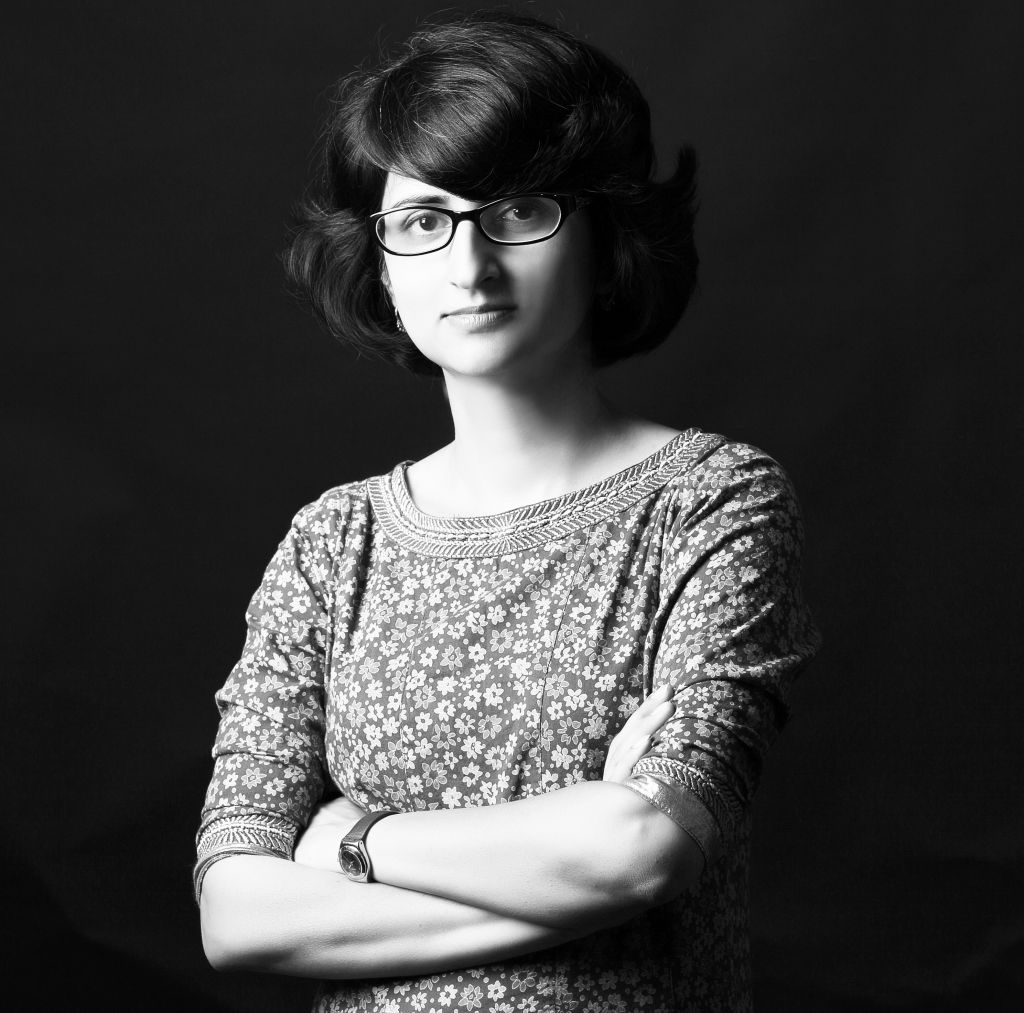
Pakistan lives in several centuries at the same time. It’s modern, it’s progressive, it’s also very traditional, and can be very fundamentalist. The issue itself is not considered common but the statistics are that for one in every five under the age of 18, these marriages happen. Children, especially girls are given away, and that’s a staggering number, one in every five.
While pockets of certain areas have a bigger concentration of child marriages versus the big cities, for me it’s this overall ratio that is unacceptable.
Not just Pakistan though, it’s a wider issue in several countries, especially the South-Asian region, where girls can be given away in marriage as part of a transaction. It’s a business settlement, part of settling feuds or strengthening relationships and families. That’s something that I wanted to address through cinema.
A film crew is usually predominantly men. What was the vibe on set? Was there a lot “well, I would never do that!”
‘To be able to bring realism in an industry where it’s always escapism was something very different’
The vibe was very passionate because the crew itself was a very progressive, modern, forward-looking kind of a crew and cast. Most of us banded together as a first-time collective. Nobody on our crew had ever made a feature film before. It’s the first time cinematographer, first time editor, first time production designer.
This is a very different kind of movie in the context of our local film industry. Normally what you see is the song and dance routine, cheap copy of the Bollywood style, a kind of catering to the male fantasy and escapism, and so to be able to bring realism in an industry where it’s always escapism was something very different.
I did read about was while you’re shooting these remote locations, there was someone who issued a fatwa on the film? Or I’m I exaggerating things a little bit?
Wasn’t quite that dramatic. We were in a very traditional part of the country and had been given permission, but when we actually arrived there was this one Molvi who had a problem with us filming. The local authorities said, “We’re going to give you all the protection you need. There is nothing to worry about, but it’s your decision to make whether you want to film despite this or not.”
‘There’s upheaval happening around us, the ground reality changes every single day, every single hour’
We made the decision to not film. We just don’t want to be endangering the cast and crew any further, it’s already a difficult … the sectarian violence, there’s upheaval happening around us, the ground reality changes every single day, every single hour. There are security forces in the region, so we said, “Let’s not push our luck here and go into another area where we will be more welcome.”
But we were welcomed everywhere very warmly, and people knew exactly what we were doing. We did not hide anything. Many of these places where we shot in, especially Hunza, these are very progressive areas, so the communities came out, the villagers came out to help us make this film and we wouldn’t have been able to do it without their help.
An unexpected aspect of the film is the design, the truck for example. Are all trucks in that region of the world painted so bright and bedazzled?
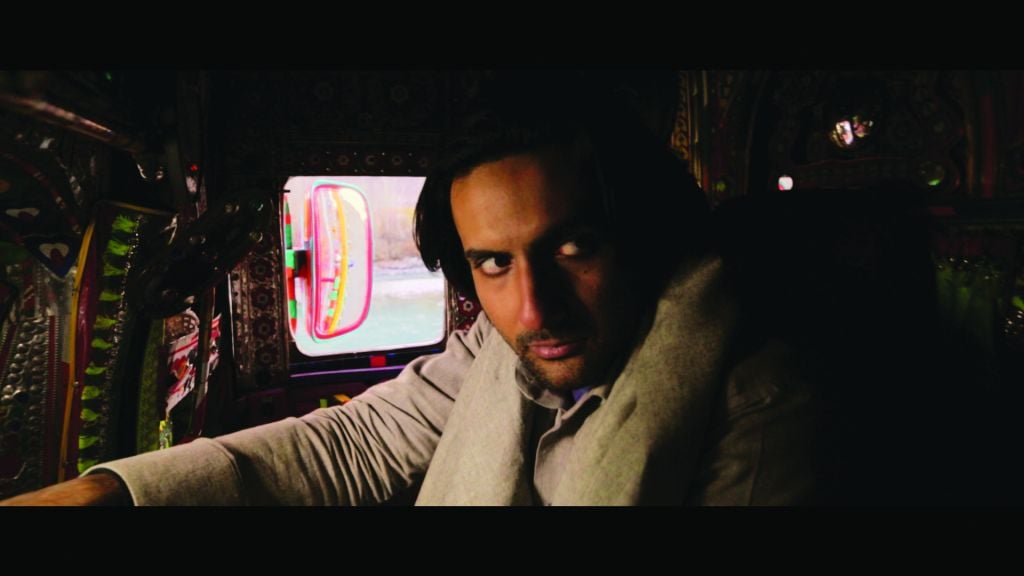
They are! I wish I had put in more shots of it. it’s funny I get asked this question when I’m in the West. Every truck driver embellishes the truck with his own love of poetry, of art, of politics, and just anything.
This specific one spoke to the driver’s character. He’s a guy with a mystery, a past, but he’s also a bit of a romantic. The tiger symbol on the back? That represents bravery, but it also represents his free spirit.
The characters in the film are in a remote area, there’s not a lot of wealth, they’re very few creature comforts. But the clothing they all wear is extremely intricate and dazzling and highly stylized.
Westerners ask me, “Why are they dressed so brightly?” I say, “Even if she was on the run she would dress exactly as she was. She’s not going to wear a man’s clothes suddenly. Not suddenly start wearing browns and grays. This is what she wears everyday and this is how she’s going to cover her head, and this is how she’s going to move.” That seems surprising to some people.
The women embroider their own clothes, they make their own clothes and they’re passed on from mother to daughter. Even in lower middle class the women dress up. It represents the culture, each different kind of embroidery represents where you’re from.
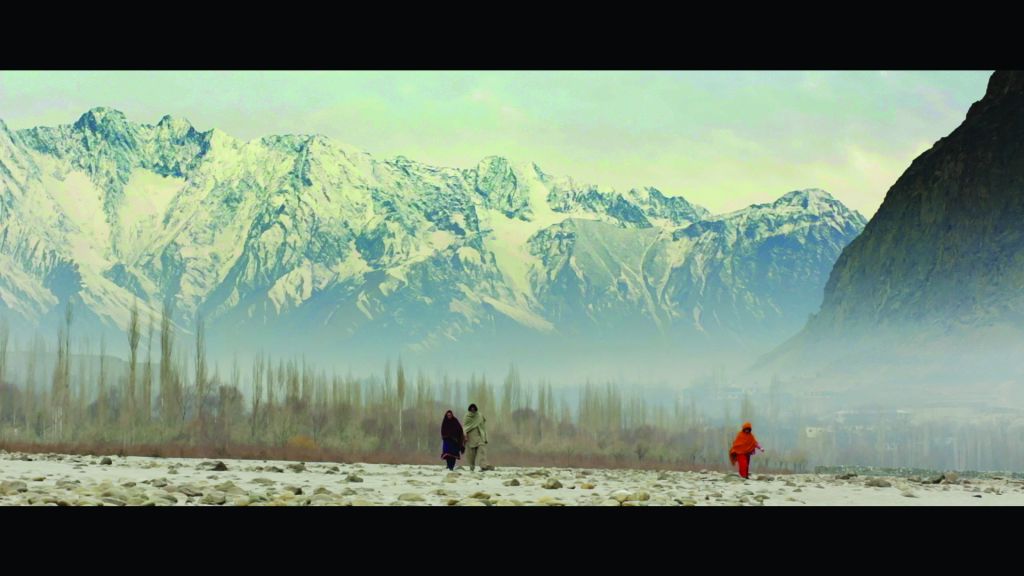
If I can psychoanalyze other Americans, I think that those colors and the design is something that is associated with Indian people, and you’re showing a Muslim group, and I think a lot of people don’t realize that Pakistani culture is its own thing.
I think that has to do with how Muslim countries are depicted in cinema, or in television by others who are not from the region. When Pakistan is depicted in “Homeland” or other thrillers, Hollywood thrillers, it’s always the frame is drained of color. It’s almost inhuman, it’s almost as if this is not part of the palette, or the complexity of the palette is completely lost and I find that it’s lost, because the subliminal message it sends is that it’s dark, it’s dangerous.
I mean it depends what the film’s message is. For me the message was one of hope, always, and I think the palette of the film reflects that and it’s interesting to see how audiences read that.
“Dukhtar (Daughter)” is at Cinema Village in New York City and Laemmle Music Hall in Los Angeles.



The Times of Israel Community.