

PM and Smotrich say Haredi draft exemption bill to be set aside to help fund Iran war
Opposition leaders gloat after finance minister says legislation ‘won’t be promoted for now’ as part of state budget, which must be approved by March 31 or the government will fall
 Add ToI as a Preferred Source on Google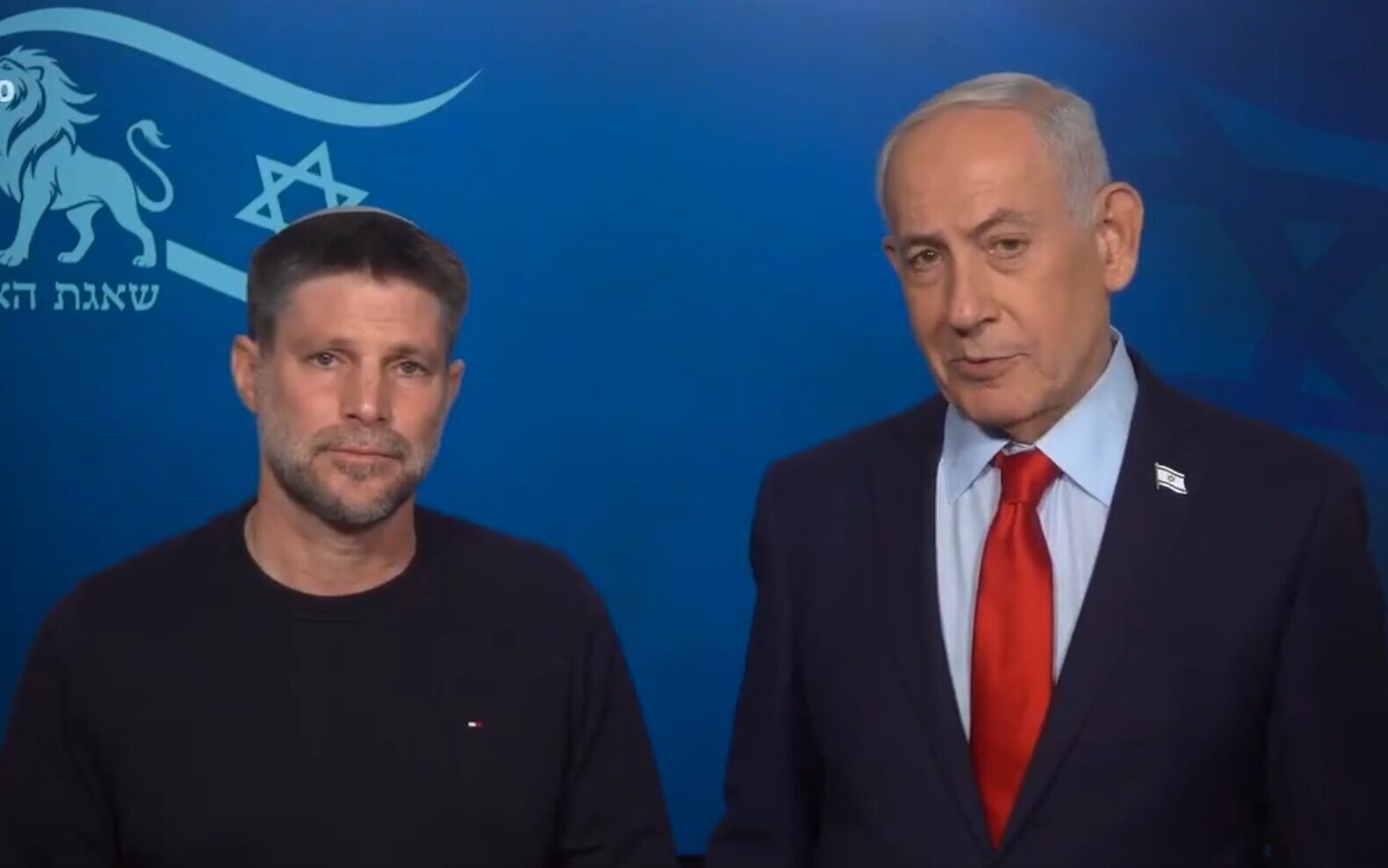
The government is putting aside controversial legislation to largely exempt members of Haredi communities from mandatory military enlistment, so the 2026 state budget can pass as fast as possible to help cover the cost of war with Iran, Prime Minister Benjamin Netanyahu and Finance Minister Bezalel Smotrich said Tuesday.
The statement, which was met with declarations of victory from the opposition, came as ministers voted overnight to slash the budgets of all ministries but defense by 3 percent, and to add NIS 28 billion ($9 billion) to the NIS 112 billion ($34 billion) defense budget.
“This is not an expenditure. It’s an investment,” said Smotrich in a joint video statement with Netanyahu. “To succeed in this mission, we’re putting aside contentious issues that aren’t fitting in wartime.”
“We’re putting aside the enlistment law, which won’t be promoted for now, as well as a number of reforms that have not gained wide support,” said Smotrich, whose plan to expand dairy imports was removed from legislation accompanying the budget on Tuesday amid opposition from Netanyahu’s Likud party.
“We wanted to bring more good news to the citizens of Israel in this budget, with an emphasis on the struggle against the cost of living,” he said. “But the responsibility resting on our shoulders requires us to focus on passing the budget immediately for the security of the state and the welfare of its residents.”
Netanyahu, in his remarks, hailed Israel’s accomplishments in the ongoing bombing campaign that the United States and Israel launched against Iran on February 28 in a bid to topple its clerical regime and destroy its nuclear and ballistic missile capabilities.
“There was no question — we had to go to war,” said Netanyahu. “But — and there’s a big but — it all costs money. A lot of money.”
“That’s why we need a special budget” with “tens of billions of shekels to help the defense budget in the war effort,” he said.

The state budget passed its first reading in January with partial Haredi support, and needs to pass its second and third readings by March 31 or the government will fall, with a new election automatically called.
Multiple Hebrew reports amid the ongoing war with Iran have indicated that two of the Knesset’s three Haredi factions would likely support the state budget, despite the government’s failure to codify ultra-Orthodox yeshiva students’ exemption from the draft. Netanyahu also told the pro-government outlet Channel 14 last week that the budget would pass before the enlistment law.
Hours before the statement by Smotrich and Netanyahu, the government on Tuesday authorized over NIS 5 billion ($1.6 billion) in discretionary funds for Haredi institutions, West Bank settlements and other party priorities in the 2026 state budget, drawing harsh condemnations from the opposition.
Opposition celebrations
Nonetheless, opposition leaders cheered the announcement Tuesday evening that the government was deferring the legislation on Haredi military service.
“For many months, we thwarted every possibility of advancing the law in the Knesset,” wrote Opposition Leader Yair Lapid on X. “Tonight, Netanyahu and Smotrich admitted what we have long said: the despicable law has failed.”

Former prime minister Naftali Bennett, the leading candidate to replace Netanyahu, wrote: “We won; we won big.”
“The people of Israel: one. The Netanyahu government and the Haredim: zero,” he added.
“After two years of determined struggle by the reservist organizations, by the entire people of Israel, against the law that I defined as ‘the most anti-Zionist law in the history of Israel,’ we won,” Bennett continued. “Today, everyone understands that everyone must serve together. One service for one nation.”

Likud MK Yuli Edelstein, whose party booted him from the helm of the Knesset Foreign Affairs and Defense Committee last year after he demanded legislation that penalized Hared draft dodgers, said the announcement by Smotrich and Netanyahu was a “huge step on the way to vanquishing the draft evasion law.”
“Together, we’ll keep striving to widen the IDF’s recruitment base until we pass a real, historic enlistment law that will truly answer to the needs of the military, and lighten the burden on people who show up to serve time after time,” said Edelstein.
A subdued Haredi response
The Knesset’s ultra-Orthodox factions were silent in the wake of Smotrich and Netanyahu’s joint announcement, choosing not to release any statements or official responses to the decision to shelve the draft exemption bill.
Speaking with The Times of Israel on condition of anonymity, a senior Haredi political source explained that “you can’t oppose the budget during such a sensitive time for the people of Israel. It’s a war. Nobody is busy with politics right now. Except maybe Bennett,” the source stated.
Netanyahu, who last week told Channel 14 that the budget would pass before the conscription bill, appeared to have been preparing for Tuesday’s announcement for some time, holding meetings with ultra-Orthodox representatives as part of a push to muster support for the budget.
Speaking with the Emess news site on Sunday, Degel HaTorah MK Yitzhak Pindrus indicated that his faction would vote in favor of the budget despite delays in passing the exemption bill, asking: “Is it possible to wage a war without a budget?”
Opposing the decision to set aside such a divisive piece of legislation during the war would likely have engendered significant public pushback as well as anger among coalition MKs whose support will later become necessary if the Haredim are to have any chance of passing their bill. In addition, Tuesday evening’s announcement was preceded by the government’s approval of billions of shekels in coalition funds for Haredi institutions, a move decried by the opposition as political bribery.
Despite this, the United Torah Judaism party’s Degel HaTorah faction subsequently voted against the coalition on the matter of splitting one of Smotrich’s key reforms from the annual Arrangements Bill, attributing its stance to “statements last night by senior coalition officials against the coalition agreements between the ultra-Orthodox parties and the coalition.”
A long-demanded bill
Ultra-Orthodox parties have demanded a law to keep their constituencies out of the military after the High Court in June 2024 ruled that there was no legal basis for the Haredi yeshiva students’ decades-long blanket exemption from the draft.

The current version of the bill would ostensibly increase military conscription in the Haredi community, but ultimately enshrines continued exemptions for full-time yeshiva students.
The bill has come under fire from IDF brass, the attorney general, and a wide array of other critics, who have objected to it on the grounds that it is full of loopholes, preserves inequality in the mandatory draft, and will not increase Haredi enlistment amid what the military says is a manpower shortage.
Since the war in Gaza was sparked by the Hamas-led onslaught of October 7, 2023, the military has repeatedly told lawmakers that it lacks 12,000 troops due to the strain of the conflict and other military challenges.
Some 80,000 ultra-Orthodox men aged between 18 and 24 are currently believed to be eligible for military service, but have not enlisted.









The Times of Israel Community.