

PM to Amona residents: Accept deal, ‘we’ve done the maximum’
Citing ‘love of settlements,’ Netanyahu says no other government has done more for West Bank communities than his
 Add ToI as a Preferred Source on Google
Raoul Wootliff is a former Times of Israel political correspondent and Daily Briefing podcast producer.

Prime Minister Benjamin Netanyahu implored Amona residents Sunday to accept a revised agreement that would see over half of the outpost’s families remain on the hilltop and prevent the forcible evacuation of the illegal settlement slated for this week.
Speaking at the weekly cabinet meeting, Netanyahu said his government has shown more love for settlers than any other and called on residents to take the deal which could delay the court-ordered evacuation past the December 25 deadline.
“We have held dozens of discussions and submitted… many proposals, some I would say out-of-the-box, very creative proposals,” said the prime minister. He said the government has sought to find a solution “out of goodwill” and its “love” for the settlement movement.
“There has not been a government that showed more concern for settlement in the Land of Israel and no government will show more concern,” the prime minister said.
Netanyahu said he, Education Minister Naftali Bennett and Amona leaders met through the night to come up with the solution, though it was previously reported that they had only met with Samaria Regional Council head Yossi Dagan.
“I think that Amona community leaders, who were with me and Minister Bennett in my office until the early morning, can attest to a simple fact: We have done the maximum,” Netanyahu said. “Now I can only hope that the residents of Amona, who are now discussing the proposed outline among themselves, will accept it and this would be the right decision for them, for the settlements, for the entire people of Israel and for the State of Israel.”

Residents began debating the proposal at 8:00 a.m. Sunday morning and were said to have been given until noon to provide a response, though the reported deadline came and went with no final decision announced and talks ongoing.
“Everyone just needs to sit and be patient now,” a spokesman for the settlement told The Times of Israel.
The revised agreement would see twice as many families stay on the hilltop, as compared to a previous proposal rejected by the settlers last week.
Under the agreement, 24 families would receive mobile homes on a plot meters from the outpost — as opposed to the 12 in last week’s offer — while the remaining families would be given temporary residences in the nearby settlement of Ofra.
As with the earlier deal, the government promised to work towards a more permanent solution with the possibility of creating a settlement in the area, in exchange for a pledge by the residents that they would leave their homes peacefully, in compliance with the court order.
If accepted, the government would again request a one-month postponement for the evacuation from the High Court of Justice.
Although the final date for the evacuation was set just seven days from Sunday, the High Court is obligated to rule on an extension as long as it is presented before the December 25 deadline, according to a spokesperson for the court.

The plots in question are believed to mostly belong to “absentee” landlords, which in this case refers to Palestinians who left before or during Israel’s capture of the area in 1967 and whose identities are unknown. They are administered by the state’s Custodian of Absentee Properties, a legal status that Attorney General Avichai Mandelblit has suggested would make the temporary use of the lands less problematic under international law.
But in a move that scuppered a previous deal for a different plot of land, the anti-settlement group Yesh Din said Sunday that it plans to lodge legal appeals against these plots, claiming they have proof that the land was also privately owned by Palestinians.
It was unclear whether such a petition would nullify the government’s new plan.
Following marathon talks last Tuesday, residents voted 59-20 against a similar deal that enabled just 12 of the some 40 families living in Amona to receive housing on an adjacent plot. Residents said they rejected that deal because “the government didn’t really commit to anything” and would only agree to a plan that ensured every family could move to a home immediately.
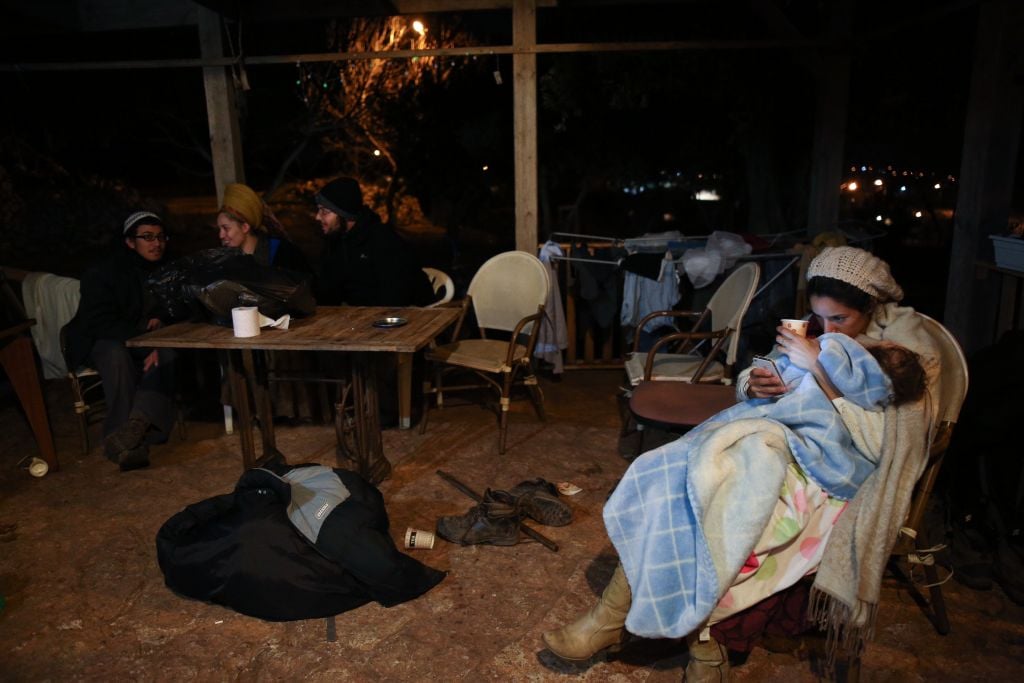
On their part, the residents would have to sign a declaration, which Jewish Home party sources said was legally binding, that they would leave their homes peacefully, avoiding a repeat of the violence that followed the destruction of several permanent buildings in the outpost in 2006.
“We the people of Amona accept — and we will let the court know — that this plan is acceptable for us and that we will leave the area of the settlement peacefully and without violence and we will not oppose the fulfillment of the court order, on the date the political leadership will decide,” the document that had been rejected by the residents last week read.
Judah Ari Gross contributed to this report.










The Times of Israel Community.