

Jewish stargazer loses physics Nobel to neutrino researchers
Vera Rubin, together with fellow scientist Kent Ford, found evidence of the universe’s mysterious dark matter
 Add ToI as a Preferred Source on Google
Vera Rubin, a US astronomer who has described herself as a religious Jew, emerged as the pundits’ choice for Nobel Prize for Physics, but failed to win the prestigious award on Tuesday.
Rubin, 87, and Kent Ford, 81, observed evidence for the existence of dark matter, the mysterious, undetectable hypothetical substance of which most of the universe is believed to be made.
The two have long made the list as top choices to win the prize, and with each passing year that they don’t, predictions that they will finally be picked by the Swedish Academy of Science have increased.
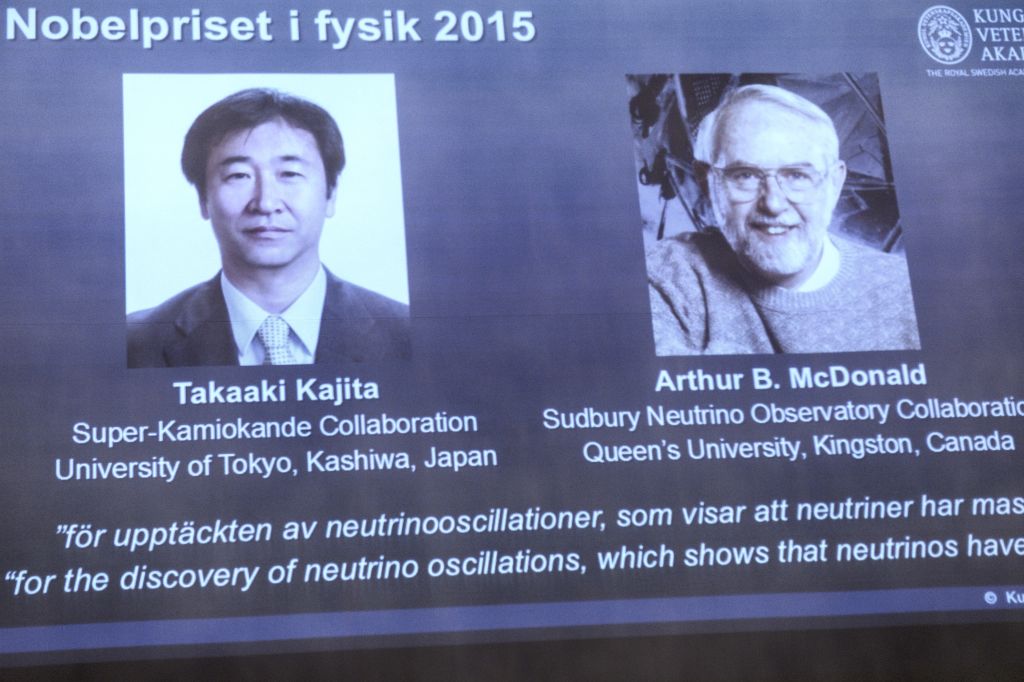
However, the pair lost Tuesday to Takaaki Kajita of Japan and Arthur McDonald of Canada who won the Nobel Prize in physics for the discovery of neutrino oscillations. The Royal Swedish Academy of Sciences said the two researchers had made key contributions to experiments showing that neutrinos change identities.
“The discovery has changed our understanding of the innermost workings of matter and can prove crucial to our view of the universe,” the academy said.
In the Sigma Xi’s Nobel Prize prediction bracket, Rubin and Ford scored 66.7 percent of the votes to win the coveted prized.
Ben Stein, director of Inside Science, the news service of the American Institute of Physics, posted a prediction last week that also named Rubin and Ford as his choice for winners.
There is a Facebook page, set up after the announcement of the 2014 physics winners, supporting Rubin’s nomination for the prize.
Research done by Rubin and Ford is considered essential to the understanding of dark matter, a mysterious element which scientists say makes up much of the universe.
Dutch astronomer Jan Oort and Swiss astronomer Fritz Zwicky first came up with the notion that there was more matter in the universe than meets the eye when they observed some stars moving faster than expected, suggesting additional gravitational pull from an unseen source. Zwick used the German phrase dunkle Materie — dark matter — because whatever was causing the additional gravity couldn’t be seen.
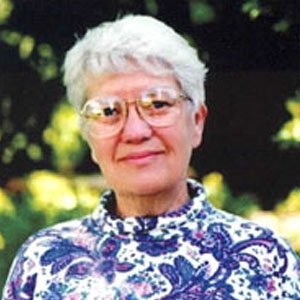
In 1970s Ford and Rubin measured speedier than expected orbital speed of outer galaxy stars and used their observations to show evidence of dark matter that emits no electromagnetic radiation or visible light, making it very hard to identify.
To date, scientists have never actually seen or isolated any dark matter and are only able to observe the influence its gravity has on the universe.
Nobel prizes are not awarded posthumously so with Oort and Zwicky both deceased, Ford and Rubin’s work makes them most eligible, pundits say.
The Catholic EWTN network, citing an interview with Rubin from 1996 in which she said she identifies as a religious Jew, quoted her as saying “my science and my religion are separate. I’m Jewish, and so religion to me is a kind of moral code and a kind of history. I try to do my science in a moral way, and, I believe that, ideally, science should be looked upon as something that helps us understand our role in the universe.”
Born in 1928, Rubin gained her masters degree in physics at Cornell University. In 1996 she was awarded a Gold Medal from the Royal Astronomical Society, becoming the first woman to win the honor in over 160 years.
The same year she was appointed to the Pontifical Academy of Sciences, the Vatican’s scientific academy.









The Times of Israel Community.