

The smartphone joins the shofar as a High Holiday prayer accessory
Please text and Facebook during the service, urge congregation leaders throughout the US
 Add ToI as a Preferred Source on Google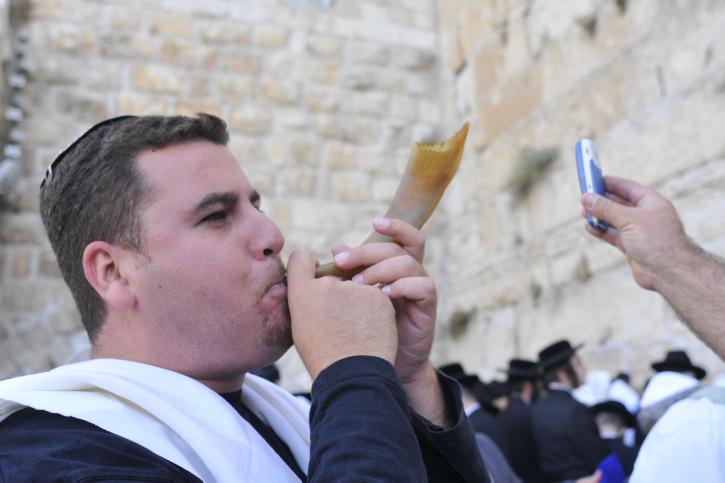
JTA — Don’t turn off your phone — it’s not an announcement typically heard as religious services begin.
But congregants at a Miami Beach High Holidays service for young adults will be asked to use their cellphones to send text messages to the rabbi during parts of the Rosh Hashanah evening service this year.
Rabbi Amy Morrison of Reform’s Temple Beth Sholom will be leading the free service for The Tribe, a semi-autonomous pluralistic group, at a nearby Florida Jewish museum. Morrison plans to stand, iPad in hand, before a 5-foot screen and ask congregants to respond at various points in the service — texting, for example, whom they would like to forgive, how they would like to be remembered and their own transgressions. She expects more than 250 people to attend.
“They can interact with the rabbi and they’ll drive the content of the service — they’ll see each other’s comments and can react to them,” said Rebecca Needler Dinar, The Tribe’s director. “We don’t call it a service; we call it an experience.”
Dinar and Morrison also have prepared a special prayerbook for the service that includes quotes from an array of sources — from Rashi, the biblical commentator and the prophet Amos to novelist Louisa May Alcott, author Maya Angelou, rapper P. Diddy, the musical the “Lion King” and the movie “Kung Fu Panda.”
The unusual service is just one way that technology and social media are changing Jewish observances in certain communities. While an increasing number of synagogues are offering real-time Internet streaming of services for those unable or unwilling to participate in person, some shuls have begun to incorporate social media into the congregational experience.
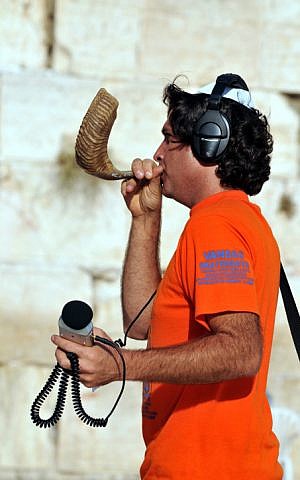
At Congregation Or Ami in Calabasas, California, also a Reform temple, Rabbi Paul Kipnes has tentative plans to encourage congregants with smartphones to use Facebook to reflect on the shofar after it is blown for the second time during the service.
“Maimonides says, ‘Awaken, sleepers.’ Most of us hear the shofar and continue sleeping through it,” Kipnes said. “It’s a show, not an alarm clock. I’m saying OK, everybody, sit up, wake up, reflect.”
Given that so much of the High Holidays liturgy is in the collective — “We have sinned” — Kipnes says it is appropriate for congregants to share their thoughts collectively during the service.
“Prayer,” he said, “is not supposed to be a spectator sport.”
A youth group at Temple Shalom in Newton, Massachusetts, also used texting last year in its Rosh Hashanah service. Scott Kroll, the Reform synagogue’s youth educator at the time, brought the idea to the teens from a digital media program he had taught at Kutz Camp in Warwick, New York. The campers incorporated texting into the session’s final evening services in conjunction with the Avinu Malkeinu prayer, expressing their hopes for the coming year.
“High school kids are never told to take out their cellphones and use them during a service,” Kroll said. “I thought it may be a little gimmicky, but it ended up being very meaningful.”
The New Year’s wishes were projected on a screen in front of the chapel, “allowing them to create collective prayer,” Kroll said.
“Mobile phones and texting is part of teenagers’ everyday life,” he said. “Being able to incorporate that into a holiday service is not odd to them,” but rather helped “enhance their prayer experience.”
“Social media for teens and kids and young adults — and increasingly for older adults — is a way of communicating and staying in touch,” he said.
Texting during services might not become common, but Kroll says he thinks “the norm will be integrating new forms of communications and digital media into services, particularly in Reform. It’s obvious that most Conservative and Orthodox services would not embrace this.”
The Tribe, which is funded by Synagogue 3000’s Next Dor, Temple Beth Sholom, the Woldenberg Foundation and other local groups, is composed of Jews across denominations.
“The vision of outreach is reaching people where they are,” Dinar said. “This is the language of that generation.”









The Times of Israel Community.