

Remember, remember, the third of July
Egypt’s Muslim Brotherhood was the spearhead of a series of Islamist victories in the ‘Arab Spring.’ As of Wednesday, that’s over

 Add ToI as a Preferred Source on Google
Avi Issacharoff, The Times of Israel's Middle East analyst, fills the same role for Walla, the leading portal in Israel. He is also a guest commentator on many different radio shows and current affairs programs on television. Until 2012, he was a reporter and commentator on Arab affairs for the Haaretz newspaper. He also lectures on modern Palestinian history at Tel Aviv University, and is currently writing a script for an action-drama series for the Israeli satellite Television "YES." Born in Jerusalem, he graduated cum laude from Ben Gurion University with a B.A. in Middle Eastern studies and then earned his M.A. from Tel Aviv University on the same subject, also cum laude. A fluent Arabic speaker, Avi was the Middle East Affairs correspondent for Israeli Public Radio covering the Israeli-Palestinian conflict, the war in Iraq and the Arab countries between the years 2003-2006. Avi directed and edited short documentary films on Israeli television programs dealing with the Middle East. In 2002 he won the "best reporter" award for the "Israel Radio” for his coverage of the second intifada. In 2004, together with Amos Harel, he wrote "The Seventh War - How we won and why we lost the war with the Palestinians." A year later the book won an award from the Institute for Strategic Studies for containing the best research on security affairs in Israel. In 2008, Issacharoff and Harel published their second book, entitled "34 Days - The Story of the Second Lebanon War," which won the same prize.
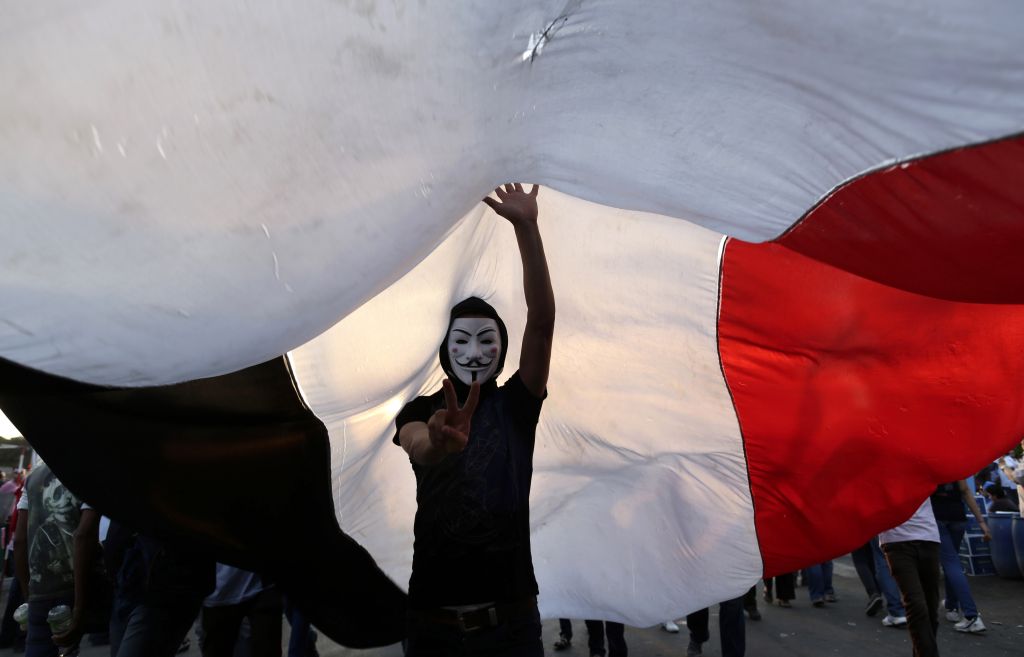
The third of July 2013 will likely go down as one of the most significant days in the period of Middle East history known as the “Arab Spring.” A dramatic day not just for Egypt, but for Islamist movements all over the region.
Roughly two and a half years after Islamist parties conquered one Arab state parliament after another, Egypt’s Muslim Brotherhood — the most dominant representative of the ideological stream — is having to acknowledge the limits of power. The movement’s continued rule in Egypt now depends on the good will of the very institution it has despised for decades: the military and security establishment.
If President Mohammed Morsi, a Muslim Brotherhood man, decides to respond to the army’s Wednesday ultimatum and consent to call new elections as the opposition demands, there will be repercussions for the standing of Sunni movements in Tunisia, Gaza and even Syria.
Even if he doesn’t capitulate to the pressure, and opts to remain in office, he will be a weak president, bereft of real authorities or freedom to act, and he will eventually have to give up his seat.
As of Tuesday night, Morsi does not seem willing to give an inch. His speech was clear; he intends to stay in power and will not surrender. But by Wednesday afternoon, many things may change.
Either way, the Muslim Brotherhood’s success story from a year ago, transformed into today’s resounding failure, will likely mark the path of sister movements across the Middle East.
Neither of the two July 3 options open to Morsi and the Muslim Brotherhood’s leadership are favorable. But in light of the millions of people flooding Egypt’s cities for the third day in a row Tuesday demanding his ouster, the US’s call on Morsi to declare early elections, and the wave of resignations amongst his own officials, calling for new presidential elections appears to be the lesser evil.
If Morsi accepts the will of the demonstrators and the military now, there is still a plausible chance that the president or another Muslim Brotherhood candidate can prevail. The movement’s leadership is aware of this, and so there have been voices calling on Morsi to give in to the public’s demands. The secular opposition, it is worth noting, has yet to agree on a single candidate to represent it.
Meanwhile, the army has continued pretending to play the role of impartial broker between the Brotherhood and the opposition. The army’s High Command issued a statement forbidding soldiers to participate in protests while in uniform and Defense Minister Abdel Fattah al-Sisi met with Morsi. All very dignified and professional. However, simultaneously, a senior army official leaked to Reuters details of the “Road Map” that al-Sisi planned to present Morsi if the president proves unable to find a solution to the crisis by Wednesday afternoon.
In essence the military’s plan is for Morsi to accept the opposition’s demands in their entirety: the dissolving of parliament, freezing the passage of the new constitution, establishing an interim government to be headed by Supreme Constitutional Court chairman Adly Mansour (Morsi’s rival), and calling presidential elections.
The leak may have been partly a test balloon, meant to push Morsi and the brotherhood deeper into the corner, but it’s safe to assume that the “Road Map” the army will present on Wednesday will not be much different.
The army’s ultimatum expires on Wednesday afternoon. Al-Sisi and his men hope Morsi will agree to early elections before then. Even if the president refuses to do so, the chances that the army will order its forces to take over government installations are very low, at least for now.
The army is, however, expected to give a “green light” for protesters to take action against Morsi and the Muslim Brotherhood. And it is doubtful that the security forces watching over Morsi in his safehouse will continue to do so loyally if he refuses to do what the military expects of him — essentially, to obey orders. If such a scenario unfolds, the protests we have seen so far, which have already led to the death of seven people and the injuring of 144 others, may become more violent.








The Times of Israel Community.