

Staring at rocks and glowing ducks on the other side of the planet
A first-time visitor’s reflections on Japan, a land of contradictions that you might say is at the opposite end of the first-world spectrum from Israel. But that’s far from the full story

 Add ToI as a Preferred Source on Google
David Horovitz is the founding editor of The Times of Israel. He is the author of "Still Life with Bombers" (2004) and "A Little Too Close to God" (2000), and co-author of "Shalom Friend: The Life and Legacy of Yitzhak Rabin" (1996). He previously edited The Jerusalem Post (2004-2011) and The Jerusalem Report (1998-2004).
This Editor’s Note was sent out earlier Wednesday in ToI’s weekly update email to members of the Times of Israel Community. To receive these Editor’s Notes as they’re released, join the ToI Community here.
Back home for 10 days from a first visit to Japan, I’m still reeling from the culture shock. A double dose: The assault on the senses that is Japan, and the contrast in returning to Israel.
As some of you will know first-hand, Japan is a land of contradictions — energized and dignified; at once wary and aspirational when it comes to the West; deeply religious but not religiously extreme; its people solitary and uncommunicative by day, but extroverted, warm and garrulous inside restaurants and (especially) sake bars at night.
If you live there or have been there, you might dispute one or all of those generalizations, with valid arguments. Like I said, a land of contradictions.
First impression: Where we started, in Tokyo, there are just so many people — 40 million, the largest city in the world, four times Israel’s entire population. Think of Times Square or Piccadilly Circus and then multiply that I don’t know how many times over to get a sense of how many neon-dazzling shopping, eating and people-watching hubs there are in the capital. Seven stories up, in buildings that range from unremarkable to cutting-edge architecture, there are huge numbers of people in restaurants, electronics stores, vinyl record shops, cosmetic surgery salons.
Inside, they thrum with activity and noise.
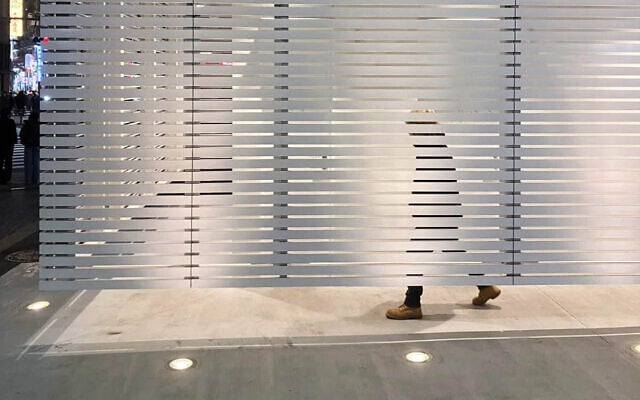
But even in the most packed and vibrant areas, outside on the streets themselves, the traffic is horn-free and disciplined, and there’s an almost supernatural near-silence on the sidewalks.
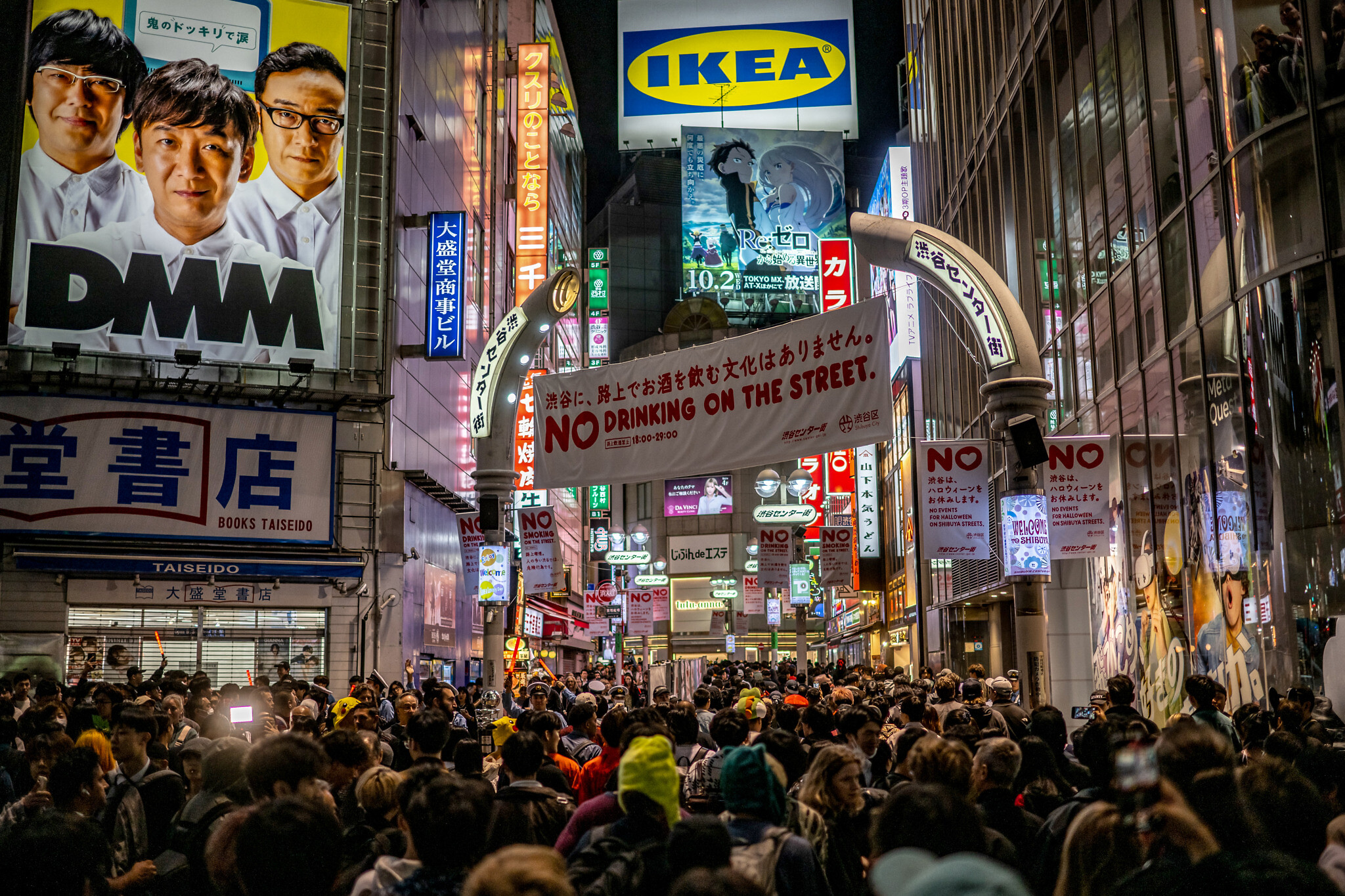
In our brief experience, people are incredibly polite. Every act and interaction is accompanied by small bows and repeated thank-yous (arigato gozaimasu); people will go out of their way to help you with directions, even if they actually don’t know where you should be going; we heard multiple anecdotes of people going to great lengths to return forgotten phones and bags; there is apparently very little crime.
We witnessed only one act of violence, directed at a tiny toy: A passenger on a late-night train took a seat opposite us, alongside a small, glowing plastic duck (it had a light inside) that had been left, alone, in a largely empty carriage, and, with sudden, single-strike efficiency, kicked it off the seat and out through the train doors.
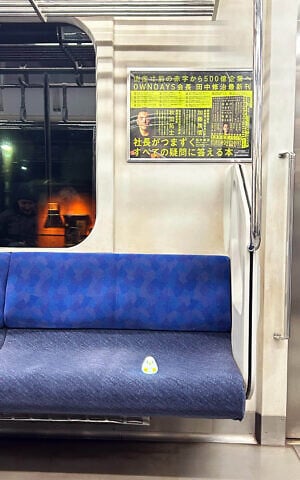
This was quite spectacularly out of (national) character, especially on trains, where signs ask passengers not to speak on their phones, and most people dutifully obey, sitting and standing, again, in near-silence. Almost all are headphoned, watching or typing impossibly fast on their phones — those, that is, who are not asleep; 12-hour workdays are not uncommon; many of the city’s commuters, in early mornings, evenings and later, are out cold, plainly exhausted.
The diet seems heavy on carbs (rice and noodles), and strikingly light on vegetables and fruit. Yet people are not overweight, and life expectancy is super-high.
There appears to be a generational shift underway — a deferential, self-effacing older generation, and many super-hip, rowdy youngsters. Japan is proud and protective of its culture, traditions and history (though its Yushukan war museum notably misrepresents its alliance with the Nazis and its World War II-era war crimes). But the faces in its advertising are of Westernized-looking young Japanese models. Stores sell home kits used by some young Japanese to temporarily insert a crease into their eyelids, which gives a more Western appearance; it’s not a new phenomenon, but it’s quite widespread.
Some of the above, including the endless thank-yous, is very different from Israel. On that point, as with many aspects of our experience, interactions somewhere in between the Japanese and the Israeli norms would be nice.
I held myself back from starting this column with the toilets, but we do all need to, ahem, let it out sooner or later, so here goes. If you’ve seen the movie Perfect Days, you’ll know that Tokyo’s public toilets are works of art — architecturally, technologically and hygienically. My wife, never one to let a good public convenience go to waste, took advantage of four in the space of a few hundred meters, and a few short hours, in central Tokyo one evening. Lavatories far and wide across the land are high-tech pleasure palaces — spotless, with heated seats and music choices. Some have lids that rise to greet you when you enter the room.
I won’t go too deep into the details, but there are so many control panels, with so many, how shall I put it, post-relief options, that it is often rather difficult to identify the button that will simply flush the device. In one of the innumerable tiny, three-table, one-woman-run cafes in a Tokyo suburb, I couldn’t find the flush button in the routinely glorious loo, even using my phone and its trusty camera-translate function. I gave up and called in my ultra-competent better half — who couldn’t find it either, and broke out into an uncontrollable giggling fit. The owner, alerted to our plight, swiftly typed out a message on her phone, translated it into English and proffered the device: “Are you having trouble flushing the toilet?” We nodded. She arranged the evacuation.
Speaking of endless tiny cafes, bars and restaurants in every city we visited, I don’t begin to understand the Japanese economy. I don’t know how a bar or cafe can survive on half a dozen customers an evening. More widely, salaries don’t seem to be particularly high, yet people generally appear to live well. Big, global exclusive brands have a major presence in the city centers. It was suggested to me that Japan’s middle class has not been squeezed as it has been in much of the West.
Japan’s population decline is well-documented. There seems to be a growth, of late, in people having children, but many of the prams have dogs in them, I kid you not (pun intended). Dogs in jackets. Dogs who, as we witnessed, when placed on the sidewalk and encouraged to propel themselves, remain rooted to the spot, stubbornly refusing to budge, until their owners return them to their doggy carriage.
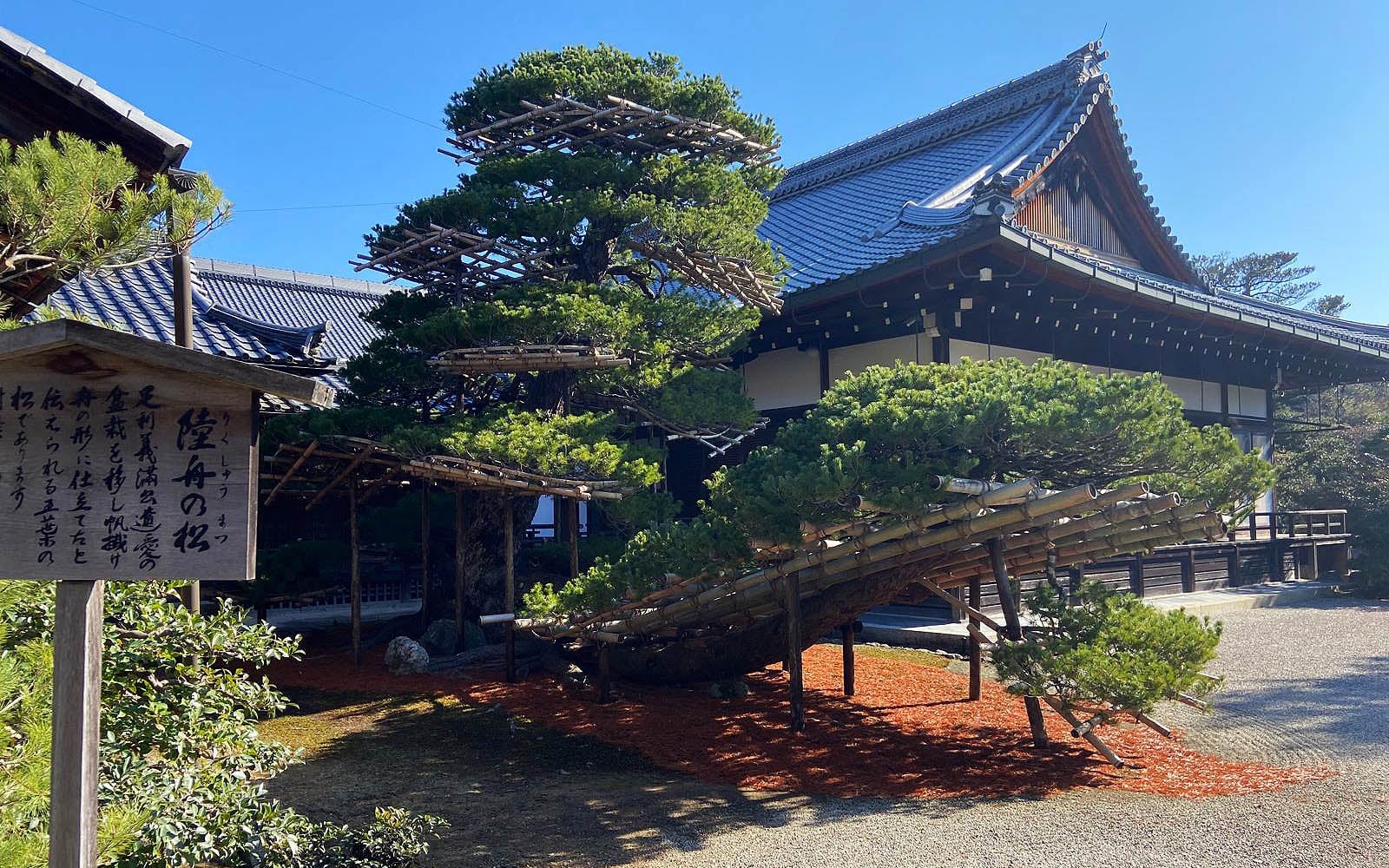
The government seems to push maximal employment. People in their 70s and 80s are employed to stand all day at the entrances to building sites, with little red reflective batons to warn pedestrians if a truck is about to emerge. Half a dozen young men and women are on hand to direct visitors to the ticket counter at museums, when one would be more than enough. Trees and vegetation are carefully pruned; we were there when snow was still around, and trees and branches everywhere that are at risk of being snapped by the weight of snow are tied and supported with complex ropes and bamboo props — a massive labor endeavor. How does any of this work economically?
Japan is incredibly clean — there is simply no garbage on the streets, and there are endless cleaners and sweepers keeping the country pristine. There is also nowhere to throw garbage — except in the 7-Elevens and Lawson convenience stores on every block. A friend who visited Japan a few weeks before me told me he came home with some of his garbage in his luggage, having failed to find anywhere to dispose of it en route to the airport.
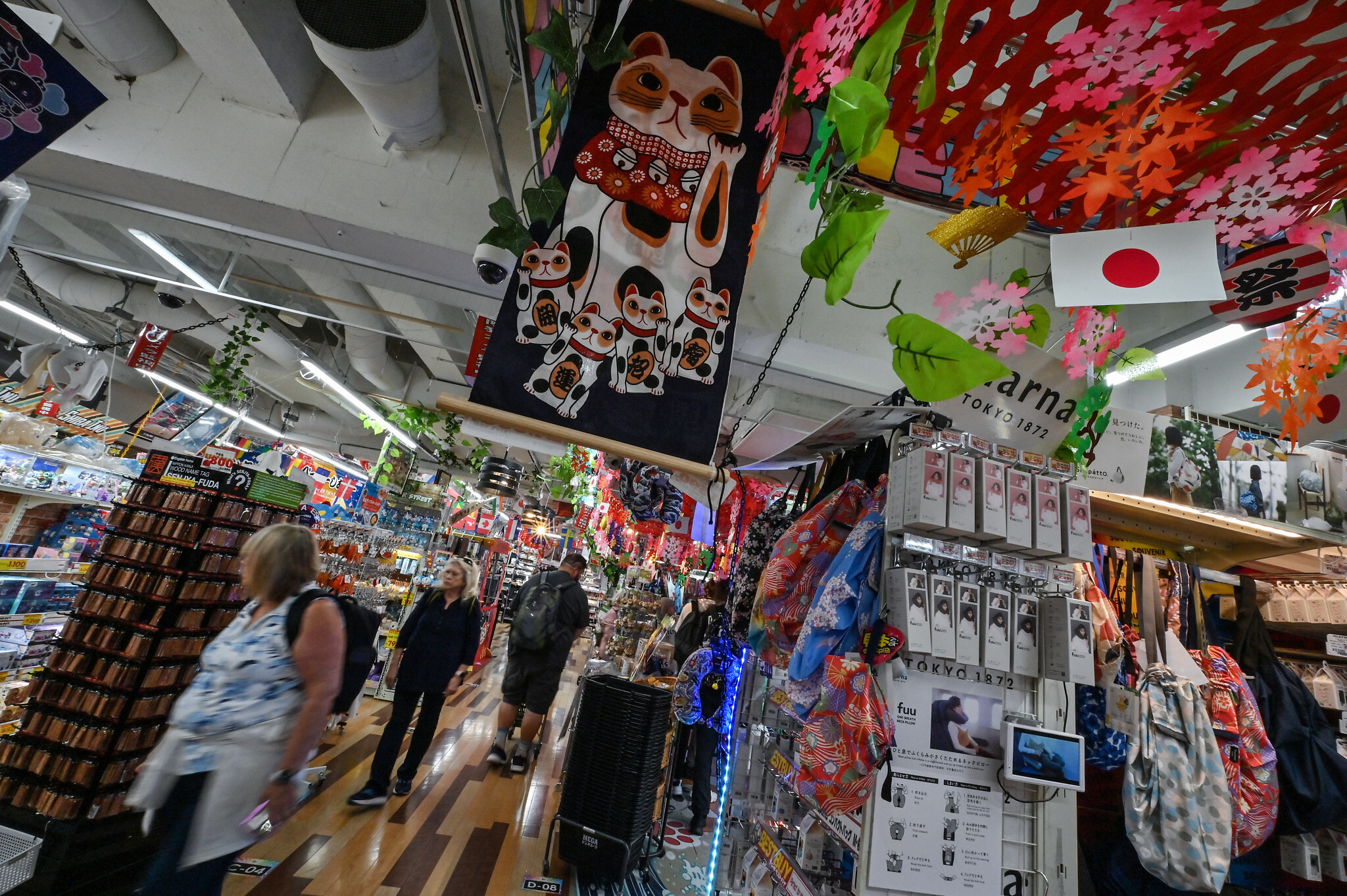
Yet Japan creates great quantities of what others might deem unnecessary garbage, but that it plainly values: extreme packaging. Pieces of fruit are individually wrapped. Clothes purchases are double- and triple-wrapped. We saw somebody in a stationery store buying a box; it was wrapped… in a box. And then in wrapping paper. And bagged.
And it’s very big on recycling. Residents are required not merely to place paper and boxes for recycling, but to break down and flatten cardboard boxes, and then to stick the piles of flattened boxes together with (paper) masking tape, and put them outside in recycling boxes on specific days of the week. You might say that Japan could save itself much of this process by using less packaging in the first place. You would be failing to understand Japan.
My aforementioned Israeli friend with the high-flying garbage, a safety officer who does some work for the Jerusalem-Tel Aviv fast train, also told me that he stood watching the vast, endless commuter flow at a central Tokyo underground station and “I was jealous.”
Of the cleanliness?” I asked. “The reliability of the service?”
“Of the discipline of the passengers,” he replied. Nobody pushing, nobody jumping the lines, nobody running.
That’s true enough, and anything but Israeli. At the same time, the little stenciled footprints telling you where exactly to stand when the train pulls in, along with things like those “don’t speak on your phone” signs, are a little too authoritarian for my tastes. Again, as so often, something in between the Japanese and Israeli extremes might sit better.
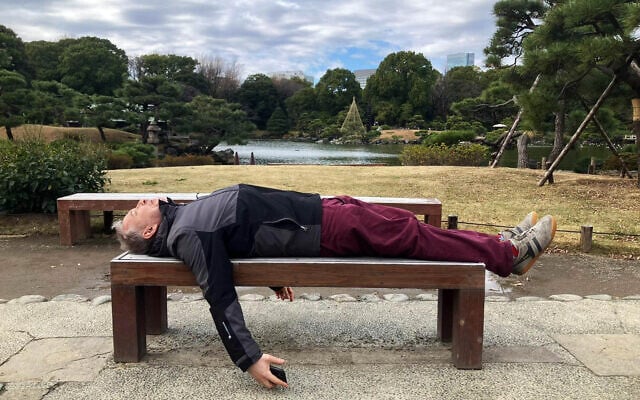
Contradictory as ever, super-fast-paced Tokyo is also blessed with multiple parks, temples, shrines, and Zen gardens, including in the heart of the city, where people take time out, away from the hubbub.
I’m not generally one for meditation and silent contemplation. I would not have believed you if you’d told me I’d spend any length of time watching rain falling on a shallow, sculpted pool of water, beneath swaying trees (at the Suzuki Museum in Kanazawa), looking at 15 rocks placed hundreds of years ago on white sand in a temple garden (at Ryoanji in Kyoto), or walking slowly around a lake, with its little bridges and gray herons (at the Kiyosumi Gardens in Tokyo), and then lying down on a bench there to stare at the clear blue sky.
But I did all of that, and more like it, through the trip, and it was good for my soul.
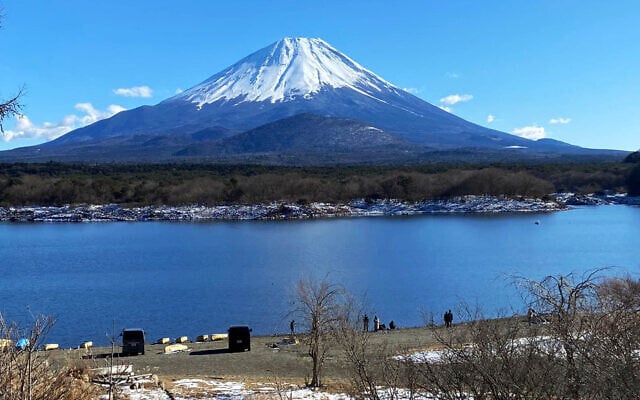
The most moving experience, though, was spending two days in the shadow of Mount Fuji — vast, seemingly symmetrical, a lone, towering presence, its summit at times partially obscured by cloud, at times visible in every snow-laced detail. It is a mountain, obviously, not a person. But it is, undoubtedly, a presence — a natural wonder, inspiring awe and humility.
Returning to Tokyo from the Fuji area, I played soccer one evening in a fast-paced game on a small pitch on the roof of a mall. I was about 25 years older than the next-oldest participant, but fortunately the players, mostly foreigners working in Japan, were not ultra-competitive. (“I should have brought my dad to play when he visited,” one of them remarked to me, then thought better of it: “Would have killed him, though.”) Improbably, silhouetted in the distance, there was Mount Fuji. I was so enraptured by the sight, I neglected to take a photograph. It felt a little like unexpectedly running into an old friend.
Finally, I’ll note that we felt no hostility there, as Israelis. We told anyone who asked where we were from. One inquired about the differences between Tokyo and Jerusalem. Another, in a Tokyo sake bar, bought us a round of drinks, though I think that was generosity rather than Zionism. A waitress in a cafe in Fujiyoshida, near Mount Fuji, when we complimented her on a dish that included hummus and that we said had various Middle Eastern flavors, asked us how we knew and where we were from. When we said Israel, she gushed that she was so happy we liked the dish because she had made it herself, and that she has always wanted to visit.
We didn’t run into many Israelis, though I know tourism from Israel to Japan is soaring; it’s pretty cheap right now, given the strength of the shekel. We did meet a couple of Chabadniks offering tefillin tutelage and Shabbat candles.
At the stunning Art Museum on the relatively remote island of Teshima, we mused to each other, in Hebrew, that we were probably the only Jews on the island. At which point a middle-aged gentleman, standing alongside us, began counting out loud, “ehad, shtaim, shalosh” — an endearing Brazilian Jewish entrepreneur, it turned out, visiting with friends.
Ten days after the trip, I’m largely over the jet lag but still reeling from the content. I suppose you might say that, in many ways, Japan and Israel are at either end of a first-world spectrum — we Israelis are in your face, full of emotion, at once tough and tender; the Japanese are more restrained, more constrained. But that’s superficial, misleading and inadequate as regards both of us.
Most of us here and there are living life, in vastly different contexts, as best as we can and know how. Personally, I think the brief interaction with their world has changed me, however minorly, for the better. Now, where can I get one of those toilets?








The Times of Israel Community.