

The award-winning novel that appeared out of nowhere
Acclaimed translator Idra Novey’s debut book ‘Ways to Disappear’ is a five-year secret project turned Sami Rohr Prize winner
 Add ToI as a Preferred Source on Google
Reporter at The Times of Israel

NEW YORK — For Idra Novey, the art of translating is transporting, whether through words or actions.
“We are all translating ourselves all the time. The person you are at a meeting is not the person you are over dinner. You are translating your own self, depending where you put yourself, just like you do with a book,” said Novey, speaking with The Times of Israel via Skype from her Brooklyn home.
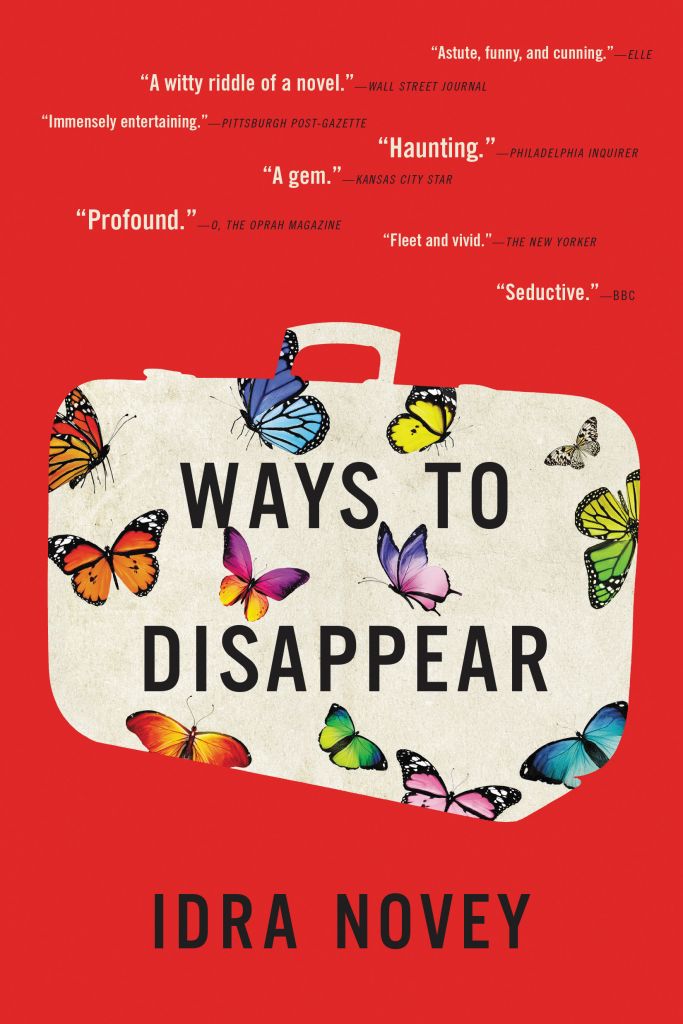
It’s an idea that goes to the heart of her debut novel “Ways to Disappear,” a literary mystery that earned the poet and translator the 2017 Sami Rohr Prize for Jewish Literature.
The plot centers on Beatriz Yagoda, an acclaimed Brazilian novelist, who vanishes after climbing into an almond tree holding a suitcase and a cigar. When Emma Neufeld, Yagoda’s American translator, hears about the incident she leaves her marriage-minded boyfriend and flies to Brazil to track down the author.
Along the way several characters pop up, including Flamenguinmho, a loan shark who thinks the publication of Yagoda’s next book will repay her $600,000 debt. There are Yagoda’s two children, Raquel and Marcus, and Yagoda’s longtime, and somewhat jaded, publisher and editor, Roberto Rocha.
The idea for the opening scene sprang from a daydream Novey had one afternoon. She had to be three places at once and didn’t want to be at any of them.

“And I looked outside and I thought what I would really love to do is climb a tree with my book, leave my phone at home and do this unexpected, slightly irrational thing. That image stayed with me and I think when something stays with you it accrues meaning,” she said.
It works because it captures the vitality of Brazil, she said.
“People are far more accepting of spontaneity in Brazil than one would be in perhaps Boston or Connecticut. There is an openness to unexpected responses, and I think you see that in its literature too, which is part of what drew me to it,” said Novey.
Beneath the plot lie questions about what it means to disappear, both literally and metaphorically; how switching language allows one to slip on a different skin, and how what is left unsaid might be more revealing than what is said.
As Yagoda’s daughter says in the book, “She had no patience for the illusion that you could know someone because you knew her novels. What about knowing what a writer had never written down. Wasn’t that the real knowledge of who she was?”
For Novey, the blank spaces help give the story its weight.
‘The beauty of literature, why it stays with you, is because of what you intuit that makes it resonate’
“Subtext is what separates literature from any other kind of writing. If you’re reading a manual for how to put together a paper airplane there is no subtext. You just follow the directions. The beauty of literature, why it stays with you, is because of what you intuit that makes it resonate,” she said.
Readers will likely see shades of Novey in Neufeld’s character. Both women, the real and the imaginary are Portuguese-to-English translators for cult-classic Brazilian writers. In real life Novey also translates the work of Clarice Lispector, a Brazilian writer she first fell in love with in college.
In the book Beatriz Yagoda is Jewish, something revealed ever so subtly. It was a way for Novey to explore what it means to be Jewish.
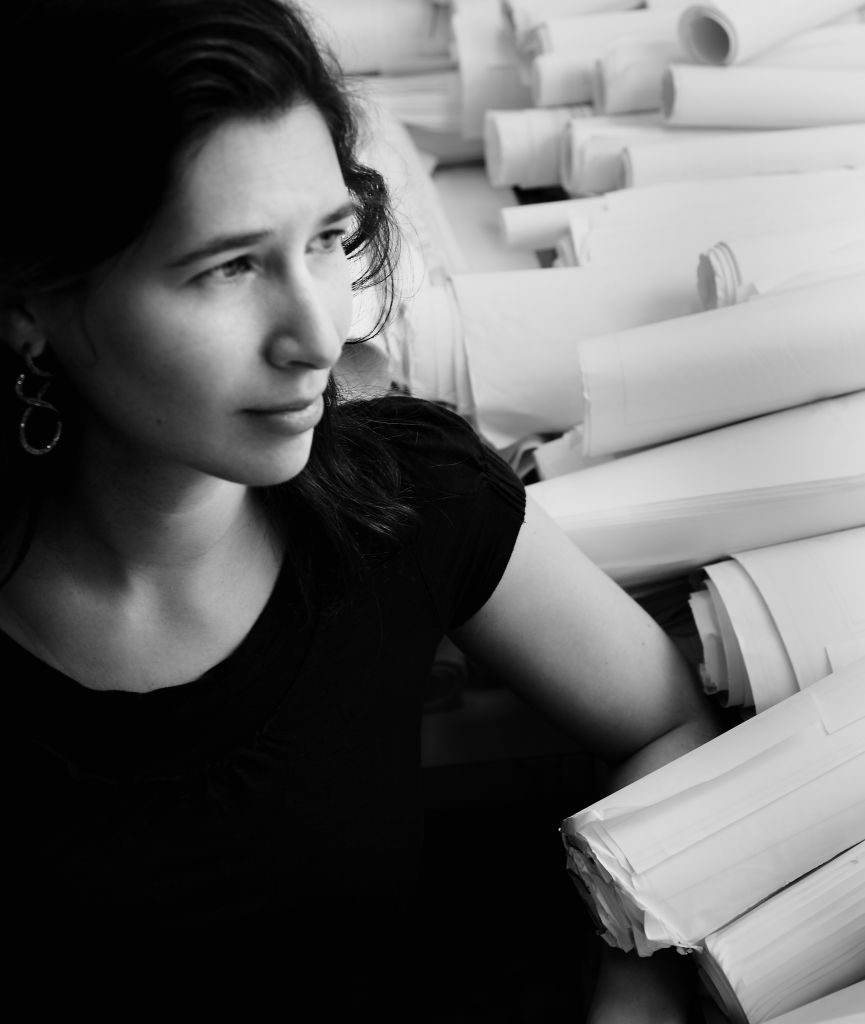
“I think when you live in a very anti-Semitic place as I did growing up in Appalachia, or as my husband did growing up in Chile, you don’t bring up that you’re Jewish unless you have to. You learn to be cautious,” she said. “As for Beatriz, although her whole life is in Brazil, she is still seen in some way as an ‘other’ because her parents immigrated to Brazil from South Africa. To us as readers she is seen as an immigrant, but it is also code for ‘outsider,’ for ‘Jewish’ and that code shapes the sensibility of her writing, and her absurdist humor, as it most certainly has shaped mine.”
Novey said several readers have compared the sensibility of the humor in the novel to a Coen brothers’ movie, including critic Sam Sachs in the Wall Street Journal — a comparison that thrilled Novey, an ardent admirer of their movies, especially “A Serious Man.”
As one of four children, Novey grew up in the Rust Belt of western Pennsylvania. She had a bat mitzvah and learned basic Hebrew, but was drawn to Spanish, largely because her parents hosted two exchange students, one from Argentina and another from Brazil.
Her interest in Spanish led her to spend her junior year of college in Chile, where she eventually moved after studying comparative literature at Barnard College in New York City. From there, she went to Brazil.
Novey met her husband, who is from a Sephardic family in Chile, on the New York subway. Five years later they married and moved to Brazil, where they lived off their wedding money until it ran out. Now back in New York, the couple and their two children spend a month in Chile each year.
She and her family speak only Spanish at home and she reads in Spanish and Portuguese nightly.
“It’s a chance to shift the things you highlight about yourself. I think I’m a little easier going in Spanish than in English. I parent differently in Spanish, it’s more mindful parenting. A new language creates an opportunity for self-reinvention,” she said.
Having taught creative writing at Princeton University and worked with the Bard Prison Initiative, Novey encourages her students to broaden their literary diet to include authors from around the world.
‘I was secretly trying to write a reckless novel that would push the genre of fiction in a direction I hadn’t seen it taken before’
She worked on “Ways to Disappear” for five years, keeping the project a secret until it was sold. With an already established reputation as an award winning poet and a translator — her translation of “On Elegance While Sleeping” by Emilio Lascano Tegui was shortlisted for the Best Translated Book Award for 2010 — she said keeping her work a “covert operation” allowed her more freedom to work on a book that could set the literary world aflame.
“I was cheating on my public life, similar to the way Beatriz turns to her online poker life. She secretly gambles reckless amounts of money under her father’s name and I was secretly trying to write a reckless novel that would push the genre of fiction in a direction I hadn’t seen it taken before,” Novey said.
“I wasn’t beholden to anyone. No one asked me about it. They just asked about what I was up to as a translator and professor, as a parent and member of my family, and that freed me up to experiment in ways I don’t know if I would have experimented otherwise.”









The Times of Israel Community.