

The elderly were among the most vulnerable in the Holocaust – and the most overlooked
‘Eldercide,’ on display at London’s Wiener Holocaust Library through April 30, explores how older Jews were especially unlikely to survive the Nazis, while those who did faced enormous challenges
 Add ToI as a Preferred Source on Google
Robert Philpot is a writer and journalist. He is the former editor of Progress magazine and the author of “Margaret Thatcher: The Honorary Jew.”
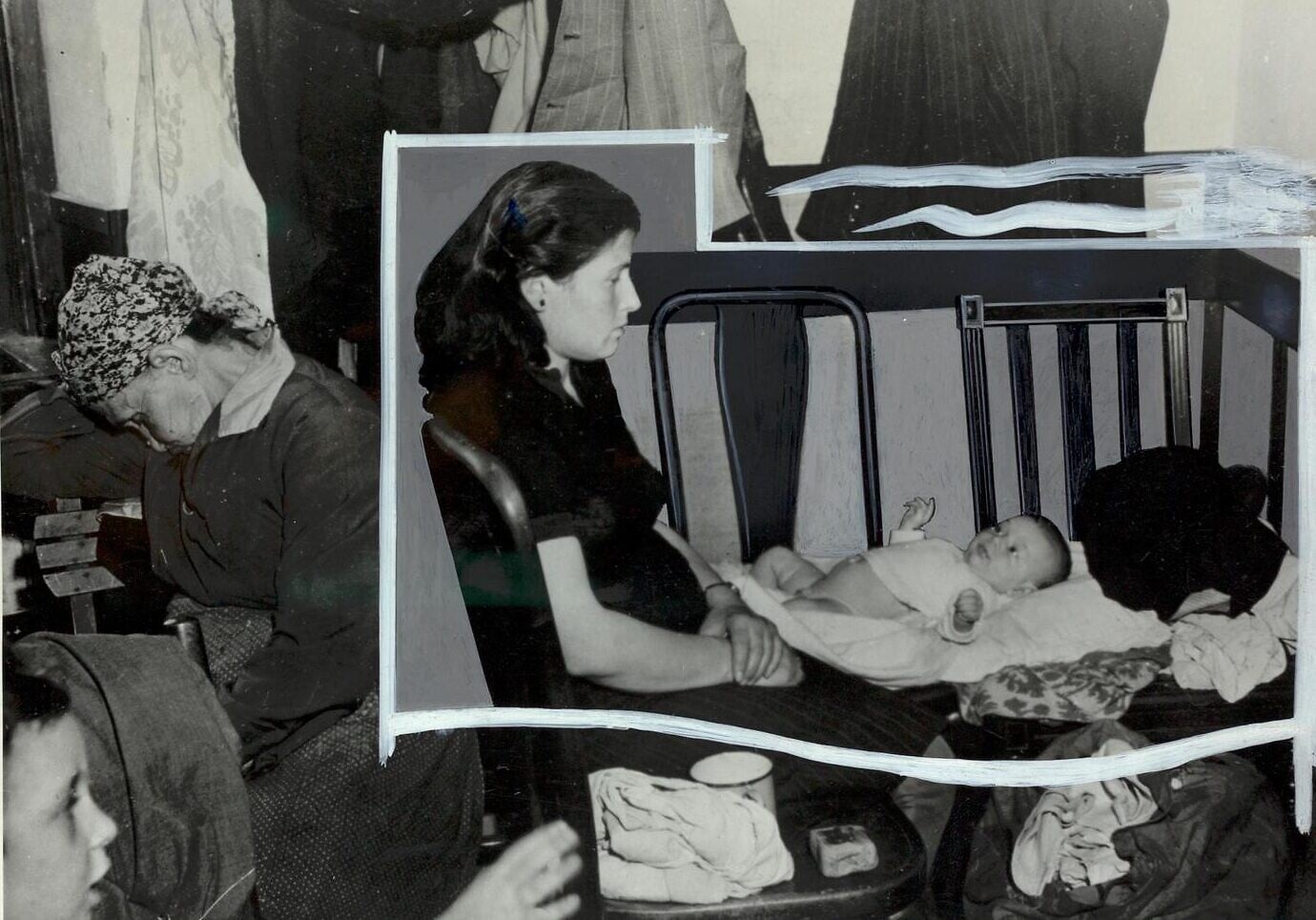
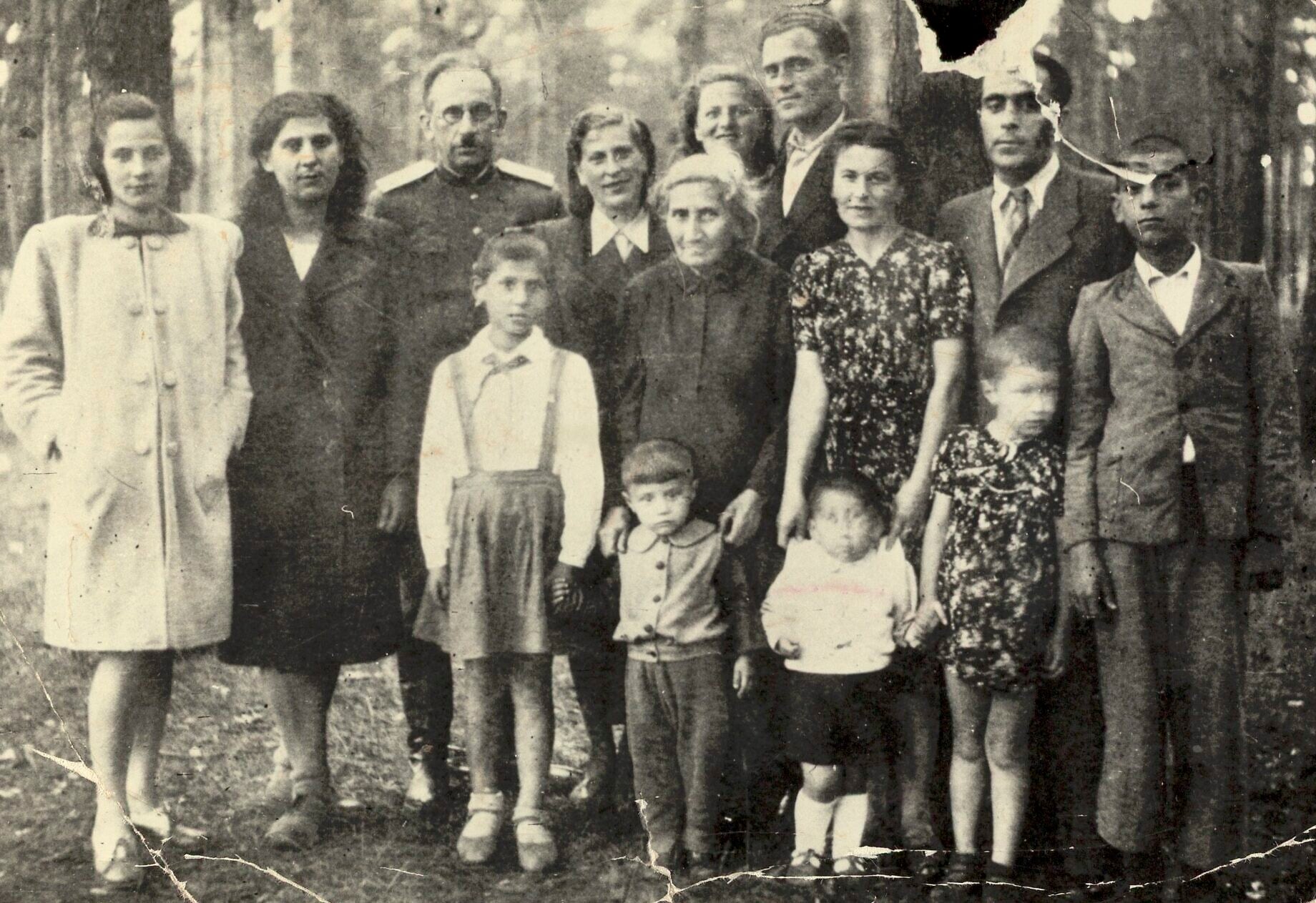
LONDON — It is a picture that speaks a thousand words: An image taken by an aid agency shows three generations of Holocaust survivors — and the markups to prepare it for publication that crop out the elderly grandmother.
“Eldercide: Older Jews and the Holocaust,” a new exhibition at London’s Wiener Holocaust Library, explores the largely untold story of older Jews during the Shoah, examining stories of flight, persecution and survival through rare photographs, personal stories and objects. The exhibit runs through April 30.
In Britain, the stories of Jewish child refugees who escaped the Nazis on the famous “Kindertransport” are well known. But the plight of the elderly relatives they left behind is much less familiar.
It wasn’t until the 1980s and 1990s — by which time those older survivors had long since died — that researchers began to systematically record the audiovisual testimony of survivors. Organized programs for survivors to speak in schools or on Holocaust Memorial Day — instituted in the UK in 2001 — also came too late to capture their experiences.
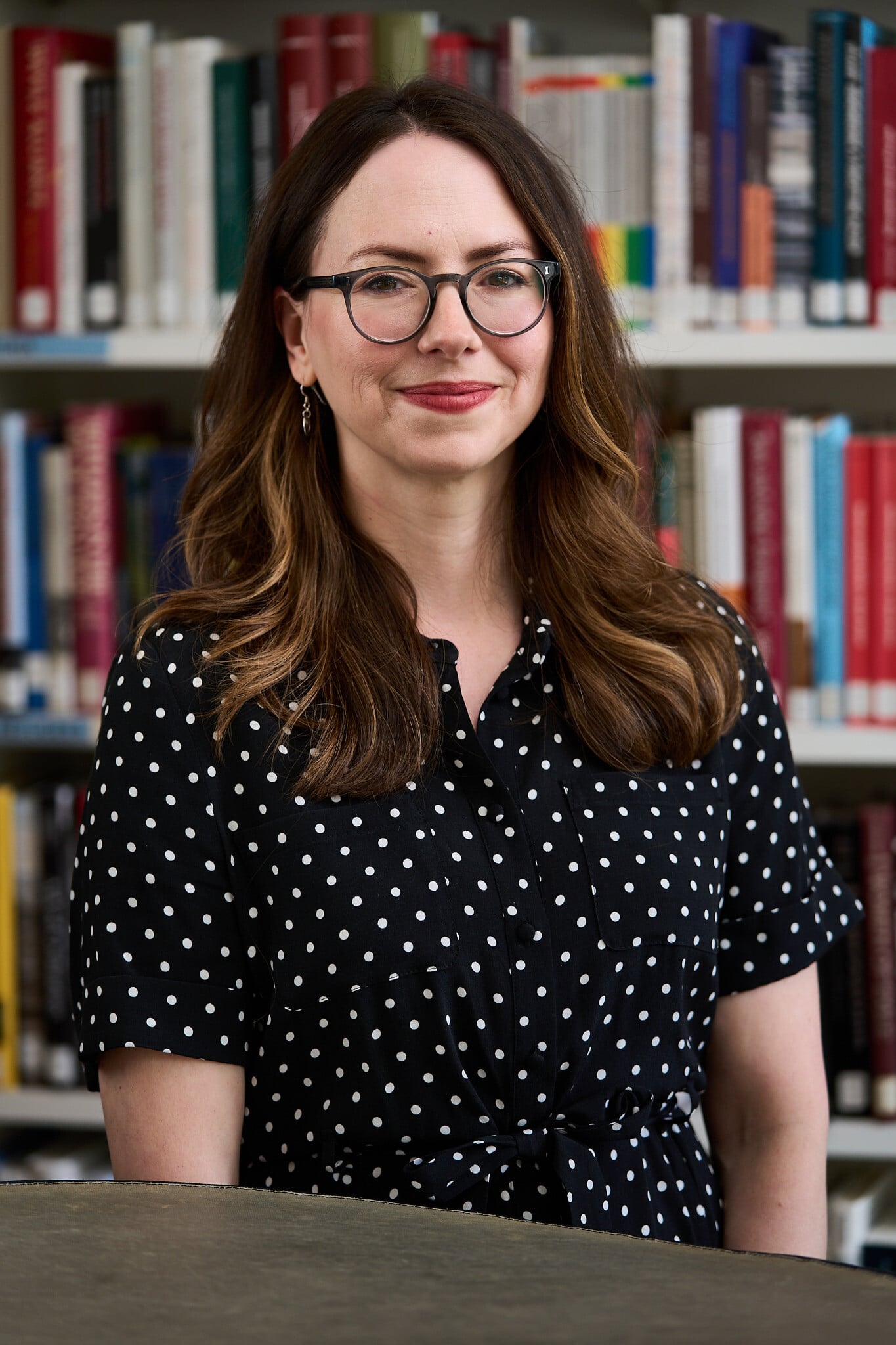
“Our stories of the Holocaust are somewhat skewed by survivors today because they were children, and so they’re talking about their parents’ experiences or remembering their grandparents, but we don’t necessarily have those voices of elderly survivors,” says Christine Schmidt, acting co-director of the library.
The experience of the generation born in the wake of the Industrial Revolution is both unique and difficult to piece together. Some of those featured in the exhibition were born before the Russian Empire abolished serfdom, others in the immediate aftermath of the US Civil War and the unification of Germany.
“It stretches your mind from the 20th century into the 19th,” says Schmidt. “It allows you to think of a longer timeline for people who were impacted by the Holocaust.”
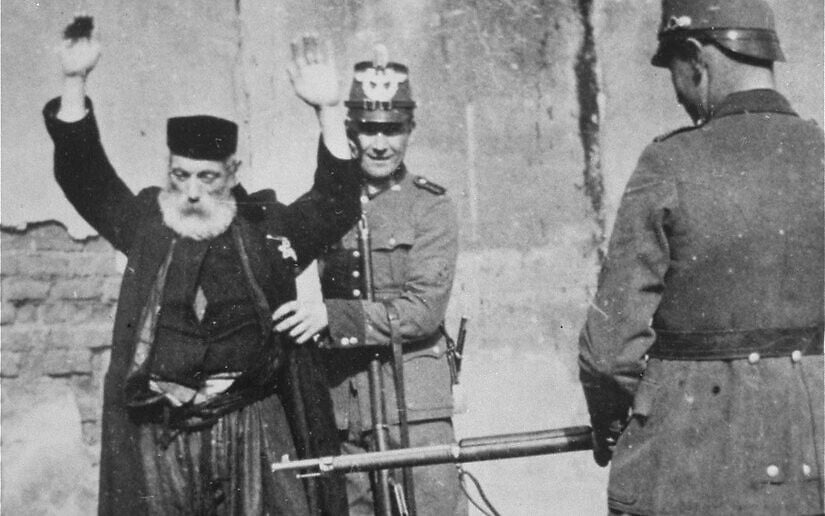
Most older Jews who were deported to the camps did not come out alive. The Nazis deemed the elderly, like children, “not fit for work,” meaning they were often selected first for transports and then for the gas chambers.
In the first liquidation of the Warsaw Ghetto in the summer of 1942, for instance, the elderly, children and the sick were singled out as “unproductive” and sent to the Treblinka extermination camp. Within months, only a few hundred elderly ghetto residents — some of whom tried to disguise their age, present themselves as fit for work, or hide in cellars or attics — remained.
“The exhibition tries to strike a balance between the particular vulnerability of the elderly due to age and the physical challenges of the persecution they faced,” says Schmidt, “but also their agency, and the fact that there were people who managed to escape and there were people who survived.”
It was, the exhibition notes, especially difficult for elderly Jews to flee Poland. Some chose to stay, believing the Germans would behave “civilly” as they had in World War I. Attempting to flee east to the Soviet Union was, however, a perilous form of escape: The Soviet authorities deported many Jewish refugees to Siberia or central Asia, subjecting them to long journeys in cattle trucks with meager supplies of food and water. And those that made it to the settlements, camps and gulags faced forced labor, hunger and illness. Their best chance of survival then came if families remained together, with younger adults working while the elderly cared for their grandchildren.
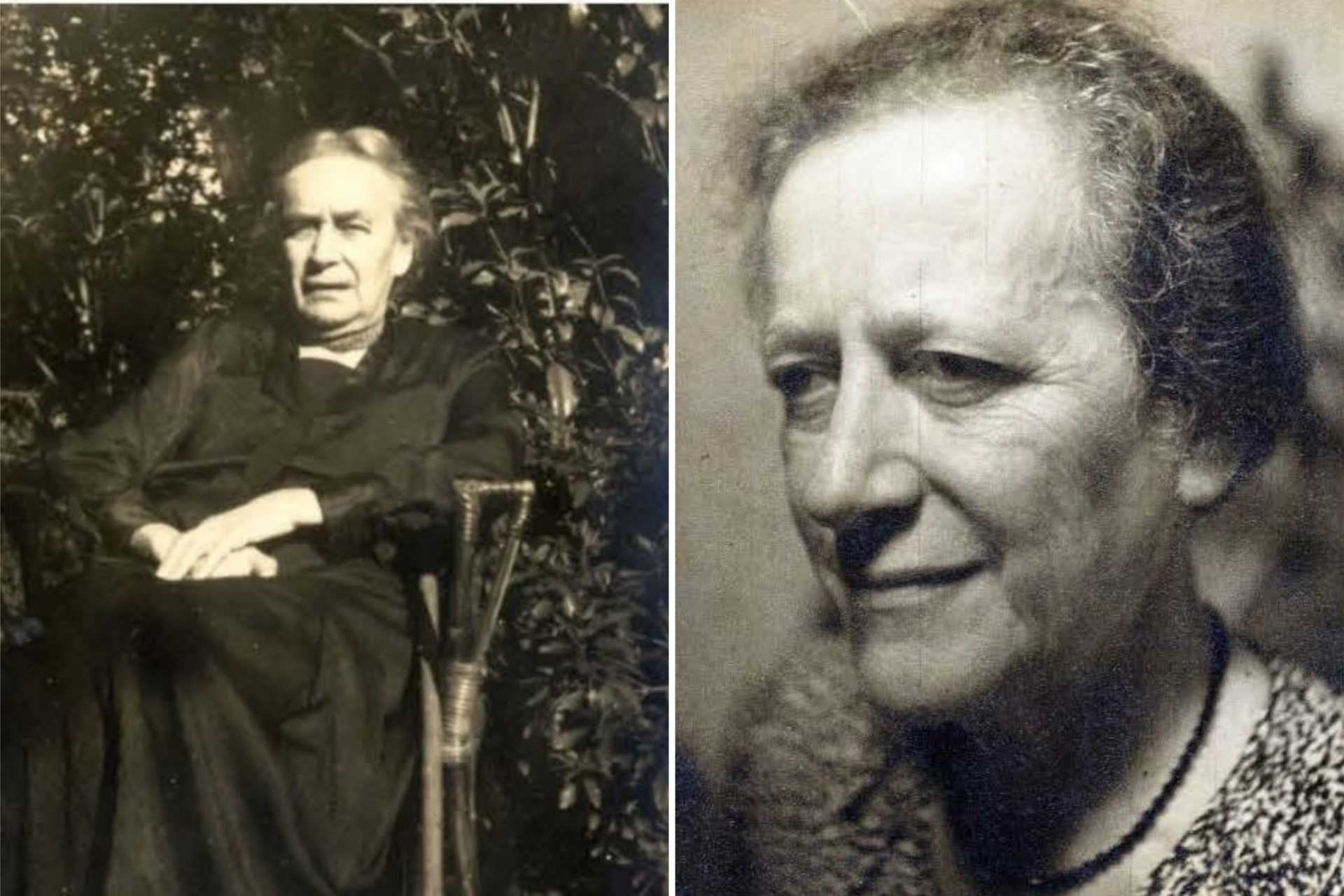
But some did make it out to safety. Antonia Jacoby, aged 61, and her mother, Fanny Behrendt, aged 83, fled Breslau (today’s Wrocław) in 1940, undertaking a journey across the Soviet Union, Manchuria, China, and Korea, before reaching Kobe, Japan. Fanny, whose pension savings had helped fund their journey, died a month before the end of the war, having been born in 1857. Antonia moved to Israel in 1947, where she died in 1968.
The depths of Nazi subterfuge
The warped nature of the Nazis’ attempts to disguise their intentions is underlined once again in the experience of older Jews. Elderly German Jews, for instance, were forced to buy “retirement home contracts” — a way of conning them out of their life savings and presenting a false impression of their eventual fate. With good reason, many distrusted the Nazis and, as these forced retirements commenced, opted to take their own lives. In late 1942, 75 percent of those committing suicide in Berlin were Jews — the majority of whom were women aged over 60.
The Nazis also attempted to deceive the Red Cross in June 1944 by presenting Theresienstadt as a retirement settlement for older German Jews, rather than, as it was for many, a point of transit to the death camps further east. In reality, while the elderly were not murdered on arrival at the camp, they suffered the harshest treatment, with many succumbing to hunger, illness and disease.
Amid the suffering at Theresienstadt, some stories highlighted by the exhibition stand out. Philipp Manes, who was in his late 60s when he and his wife, Gertrud, were deported from Berlin in 1942, established the Orientation Service. Initially intended to help newcomers, it morphed into a cultural hub which organized more than 500 events, including lectures, readings, theater and musical performances. Manes himself interviewed many prominent ghetto residents. Tragically, Manes and Gertrud were sent on the last transport from the camp to Auschwitz in October 1944 and murdered.
Very few older Jews who were deported survived their ordeal, although the precise number of elderly survivors is unknown. Grim statistics offer pointers. By 1948, the elderly constituted just 1.5% of displaced survivors of the camps.
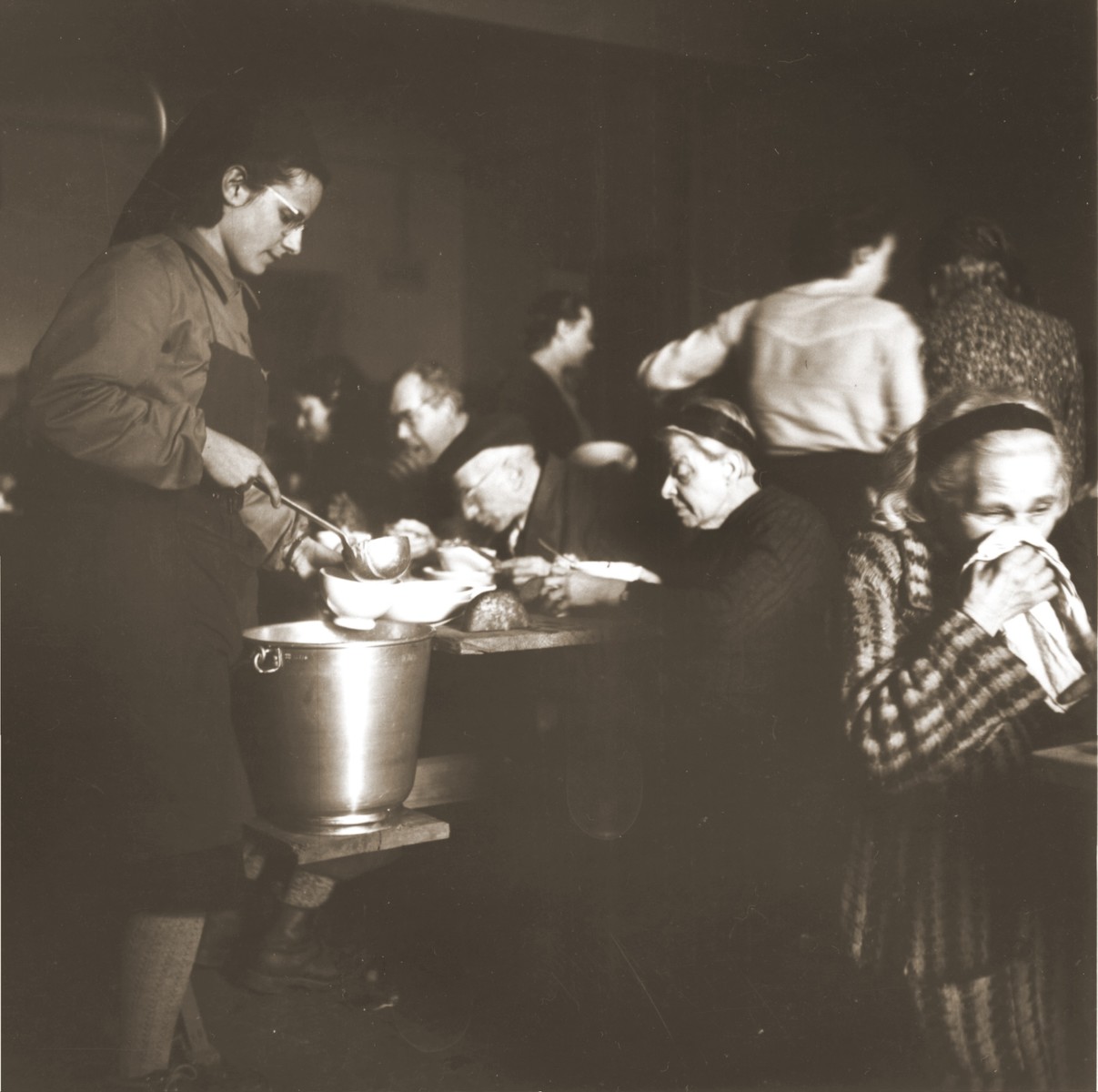
Another clue is provided by data compiled by UN and Jewish relief agencies, which recorded the number of elderly survivors in displaced persons camps or Jewish old age homes. The numbers in American Joint Distribution Committee-funded care homes in Germany and Czechoslovakia were bleak: 92 residents in Berlin, 80 in Cologne, 100 in Dresden, and 30 in Bratislava. The largest group of elderly survivors is thought to have come from Theresienstadt, where around 4,800 people over the age of 65 survived.
Liberated, but not free
Liberation from the camps brought new challenges. “They had physically survived, but having seen the wreckage of family, of community, of their homes, it’s also clear that liberation isn’t just freedom. It came with all sorts of other difficult realities,” says Schmidt.
“We old people are completely desolate,” Richard Feder, a survivor of Theresienstadt who went on to become chief rabbi of Slovakia, wrote in 1947. “We have lost our brothers and sisters, children, grandchildren, everything that was dear to us, everything that made life beautiful. We have lost everything… Only death will rid us of our grief.”
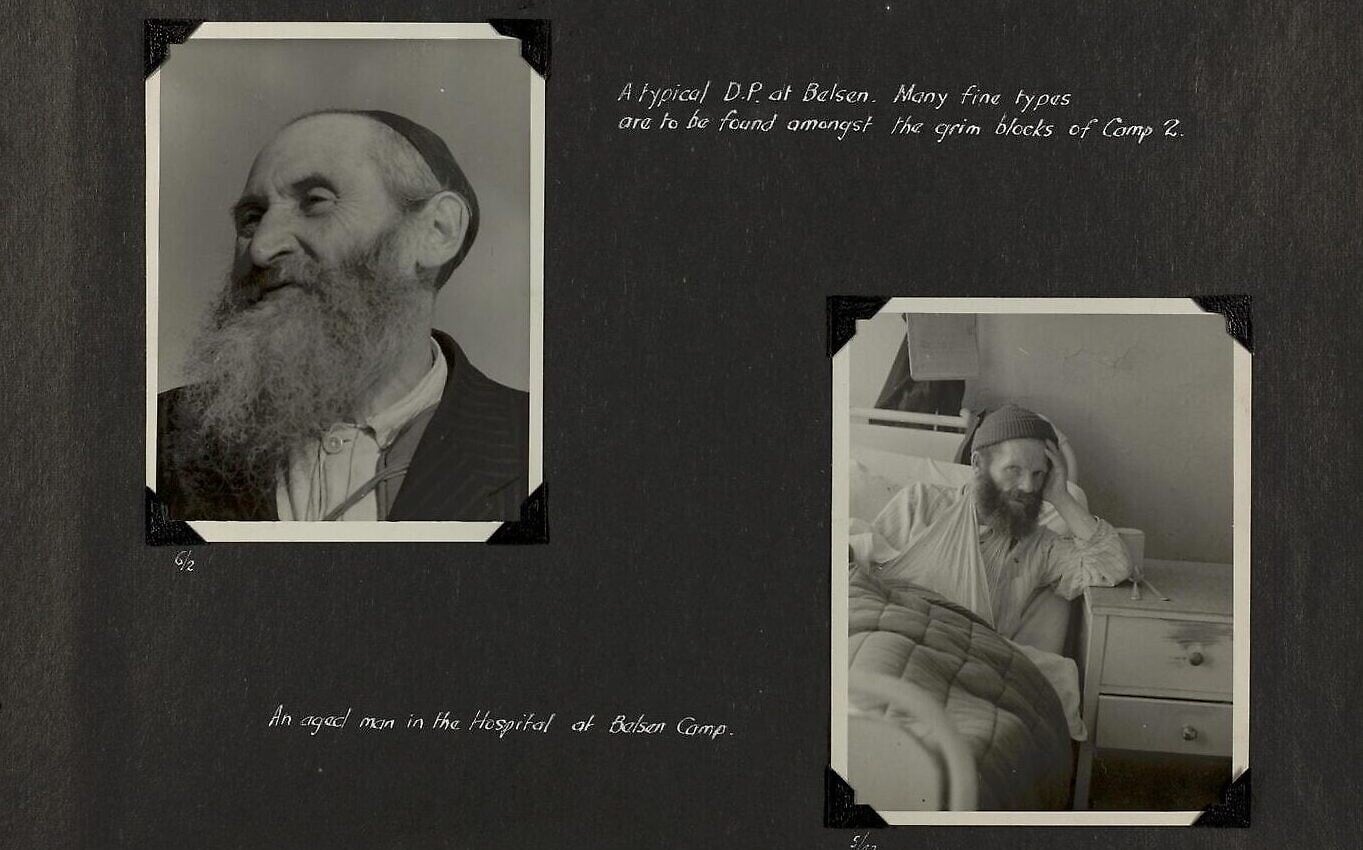
Thanks to Nelly Wolffheim, a German-Jewish feminist and writer who fled to Britain in 1939, the stories of some elderly survivors didn’t go unrecorded. In the 1950s, she conducted at least 30 interviews with survivors — many of them elderly — for the Wiener Library’s eyewitness testimony project. The interviews reveal the challenges faced by older refugees — loneliness, financial insecurity and the loss of their status and professions — but also underline their strength and contributions later in life.
The resilience of some elderly survivors was remarkable.
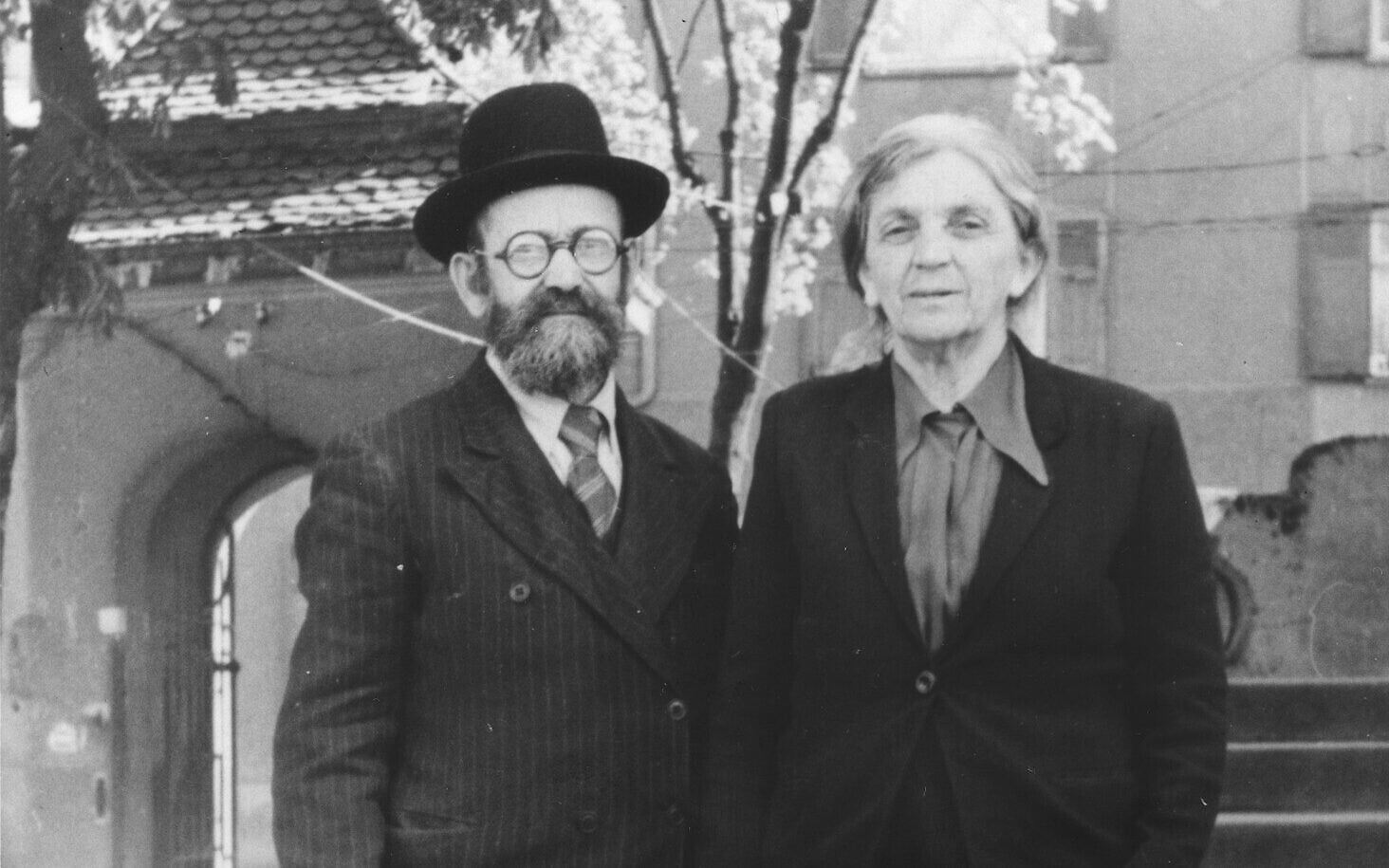
Mordechai and Sheindl Rajs fled into Soviet-occupied territory in 1939. After the war, they traveled through Czechoslovakia and Austria back to Germany. Initially, they lived at a displaced persons camp. Owing to health problems, they were forced to wait until 1951 to secure visas to the United States.
Gabriele “Jella” Caro was 70 when the Nazis annexed her native Austria in 1938, and was deported to Theresienstadt four years later. In the camp, she spent long hours peeling potatoes and plucking horsehair to earn a small amount of extra food, although that didn’t prevent malnutrition from damaging her eyesight. After the war, she returned to Vienna, living for a time in a room with 14 other survivors at a home for elderly returnees. The exhibition displays a letter she wrote at this time. “I am completely alone here. My friends are all gone, some have died, many took their own lives or were deported. It really is a miracle that I returned. It is very sad to be so alone at age 77, without a home.”
Despite all she had endured, Caro lived to see her 100th birthday. In a strange twist of fate, a descendant of Caro — unaware that she featured in it — visited the exhibition in December. He has subsequently donated another letter and shed additional light on her experiences.
For the descendants of these elderly survivors, treasured heirlooms provide a link with the past.
Avril Stone, for instance, now has tongs given to her Lithuanian grandparents, Bertha and Yitzhak Gutman, as a wedding present in 1903. The couple escaped to a forest when the Germans invaded. While Yitzhak became ill and died in hiding in 1942, Bertha survived. In the early 2000s, Stone was given the tongs by relatives in Israel who had taken them for safekeeping when they escaped to Russia. “Being in possession of the tongs is highly emotional, and they are greatly treasured,” Stone is quoted as saying in the exhibition.
For her grandparents — and many others — the Holocaust, Schmidt notes, marked “the very end chapter” of their lives. They had worked, raised families, had grandchildren, only to now be faced with a “cataclysm in their twilight years.”










The Times of Israel Community.