

The five Ws: Who, who, who, who and who
Like an owl with verbal diarrhea, the Israeli press asks the same question again and again as it tackles several disparate stories
 Add ToI as a Preferred Source on Google
Joshua Davidovich is The Times of Israel's Deputy Editor
A day which saw little in the way of big news leaves Hebrew papers with little in common Wednesday morning, and yet their top stories are still linked by a single question: Who? Who are those who treat attackers: doctors or judges? Who are the attackers themselves? Who are the soldiers who protect Israel, and who are those who criticism them? Who is Interior Minister Silvan Shalom: an upstanding citizen or a politician who should be investigated for sexual harassment? Who is Yukiya Amano: a faithful public servant or a stooge of the P5+1?
Tabloid Israel Hayom leads off its coverage with what it plays up as a shocking expose, that medics at the scene of a terror attack must treat the injured according to the severity of their wounds, even if that means treating the attacker before a victim.
The paper, which runs its piece as a preview for a fuller Friday report, calls the change “a dramatic shift” by the ethics bureau in the doctors’ labor union, which published the new rule earlier this week but didn’t publicize it for fear of political backlash during the terror wave, according to the report.
The paper points out that a contributing factor in the decision was the death of Eritrean national Haftom Zarhum, who was mistaken for a terrorist, beaten and left untreated after a terror attack in Beersheba in October.
“Doctors aren’t judges. The significance of leaving the [old] rule is that the doctor needs to check who is guilty and punish them by withholding treatment,“ Dr. Tami Karni, the head of the ethics panel that made the call, tells the paper. “In a mass casualty event it’s very easy to make a mistake in identification, and it’s clear that the doctor treating people on the scene isn’t able to do an exact identifying of the injured.”
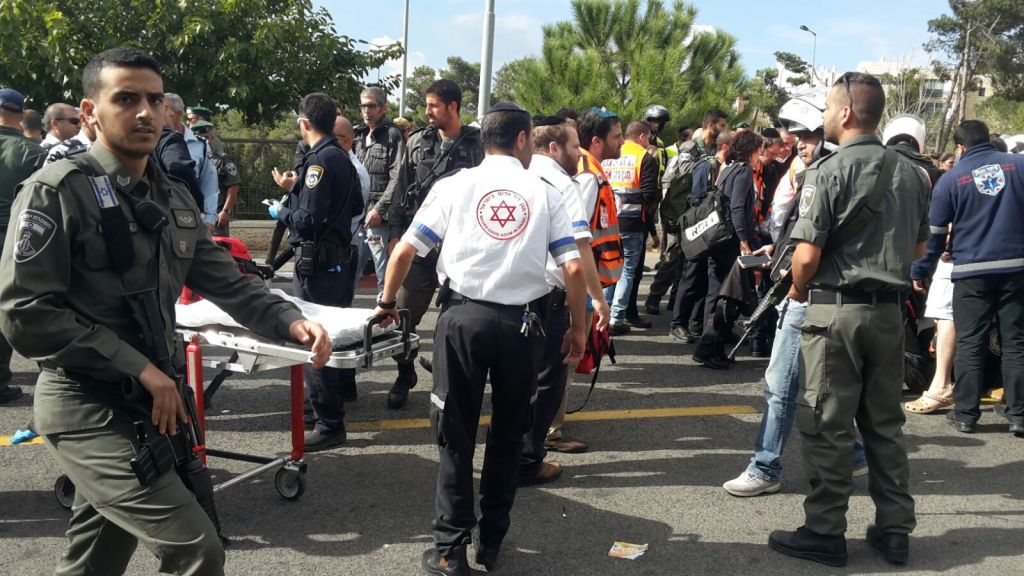
But Israel Hayom also includes a fair amount of criticism of the measure, including from Asa Kasher, the author of the army’s ethics manual, who calls the measure “absurd.” To prove his point he sets up a laughably clean scenario with two people injured and one clearly the terrorist.
“At the scene of an attack, you stray from pure medical considerations, and that’s how it should be,” he tells the paper. “Assume you have two injured and the victim dies because the doctor doesn’t manage to treat him in time – will you go to the family and say ‘We’re sorry, we had no choice but to treat the terrorist first?’”
On Haaretz’s front page is not a discussion of what to do with attackers, but rather who they are. A day after writing that the army has yet to find a way to clamp down on the lone wolf attackers who appear to materialize out of nowhere, Amos Harel attempts to profile the average Palestinian assailant during the current wave of violence.
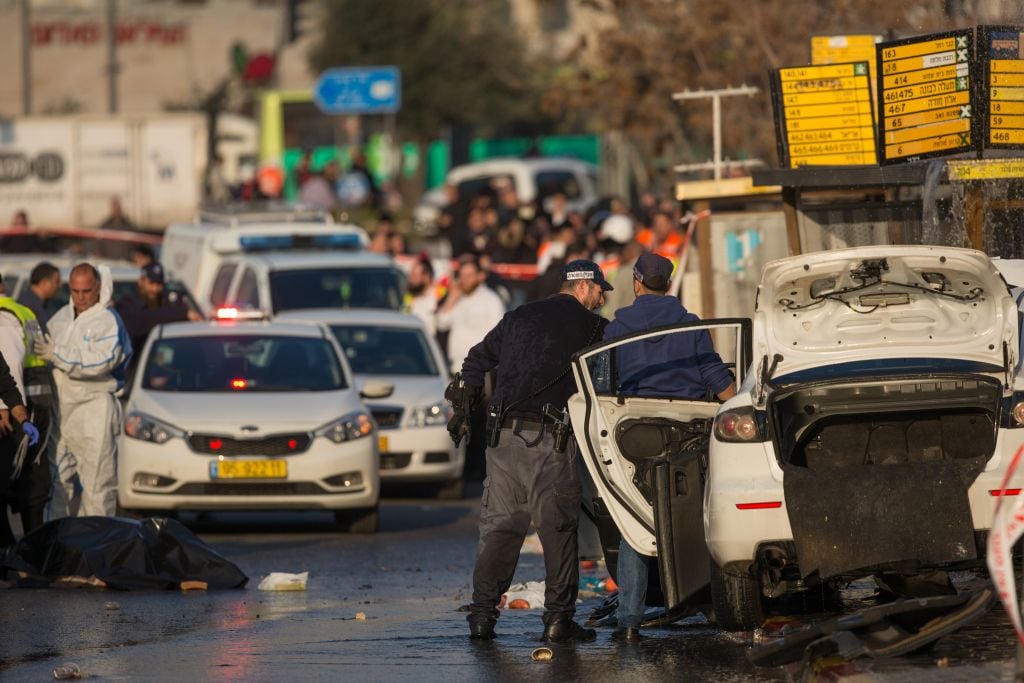
Crunching the numbers of Palestinian attackers – a total of 123, including people who were found with weapons and admitted to planning attacks – Harel comes up with a picture of an assailant, usually young, who is often motivated by revenge or a spur of the moment impulse, and not social media incitement as Israeli officials often allege.
“In most cases the perpetrators made their final decision quickly, sometimes as little as an hour before the attack, security officials say. More than once they made their decision following the report of an incident on television, or based on rumor,” he writes. “Not all the assailants were active on social media and some did not even have regular access to the Internet. More traditional networks had no less of an impact than social media and technology on the assailants’ decision to act, such as family and clan relationships. In many cases, young assailants committed their acts in an attempt to emulate male or female terrorists from their neighborhood or clan, or to avenge the death of friends or relatives who were killed in incidents that were broadcast on television or radio.”
On the other side of the proverbial fence from Palestinian attackers are Israeli soldiers, and the question of who they are is at the center of Yedioth’s lead story, which quotes parents of killed troops complaining that the Breaking the Silence veterans group is painting their children as war criminals.
The article comes amid a storm of criticism against the dovish group, which collects testimony from former soldiers alleging wrongdoing within the army, as well as a wellspring of support among leftists and free-speech activists.
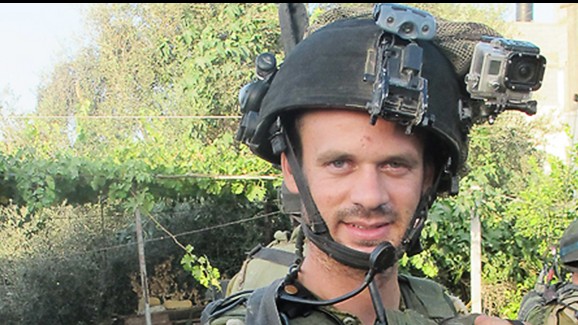
The populist Yedioth falls squarely with the first group, giving the parents a large stump to “break the silence” and trash the group.
“Even before I was bereaved I felt that what Breaking the Silence was doing was horrifying,” Michal Sarel, mother of Benayahu Sarel, killed in the 2014 Gaza war, is quoted telling the paper. “How is it possible that officers are doing holy work, risking their lives, and afterwards they say these harsh things about them and slander them so much?”
Jumping into muddy waters of a different sort, Haaretz reports on complaints made against Interior Minister Silvan Shalom of sexual misconduct, a year after he was pretty much cleared of similar claims which managed to torpedo his run for president just the same. The paper notes that the woman, like others who have complained against Shalom in the past, is refusing to file a police complaint but was happy to tell officials what happened.
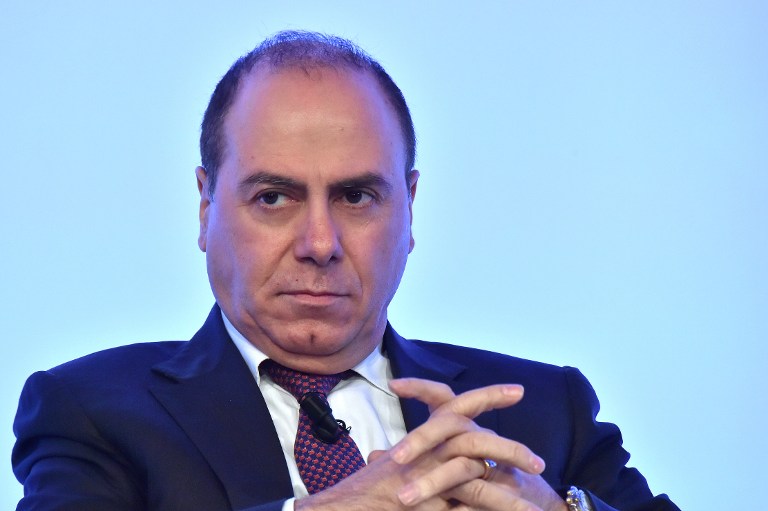
“The former employee said that Shalom touched intimate parts of her body many times, although she pushed him away and clearly resisted him. She also described instances when they were sitting together in the back seat of a car and Shalom tried to insert his fingers into her panties and touch her sexual organs, but she was dressed in a manner that prevented him from doing so,” the paper reports, adding that the abuse would get worse when the two would travel and be forced to stay at a hotel.
The paper quotes Shalom responding in a statement that “This is a recycling of groundless claims.”
(Update: The allegations against Shalom were not substantiated and a police investigation was subsequently closed.)
The woman may have managed to get away from the grip of her alleged adversary, but the same can’t be said of Israel, after the UN’s nuclear watchdog closed a probe into Iran’s nuclear activity despite what Jerusalem says is evidence the ayatollah regime pursued a nuclear weapon.
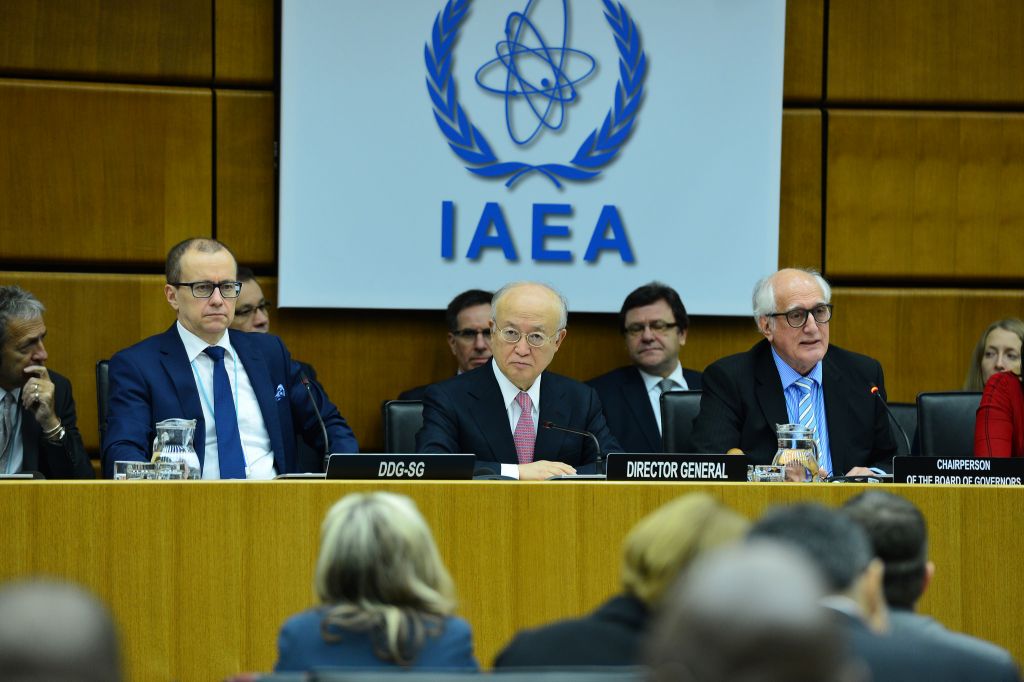
In Israel Hayom, Dan Margalit takes the baton and accuses IAEA head Yukiya Amano of being little more than a puppet of the world powers who want to see a deal with Iran no matter what.
“Amano has understood for a while what is expected of him and has acted accordingly. Obama and other Western leaders wanted a deal at any cost, and not for what should have been the price,” he writes. “Amano didn’t go to Parchin. Iran scoffed and sent him models as they saw fit. That’s like checking the alcohol level of someone who ran over pedestrians two days after the accident.”






The Times of Israel Community.