

The Gaza border fence won’t protect you, but the IDF will
Palestinians have broken through the southern barrier several times this month, but 20-year-old chain links aren’t the last line of defense against terrorists
 Add ToI as a Preferred Source on Google
Judah Ari Gross is The Times of Israel's religions and Diaspora affairs correspondent.
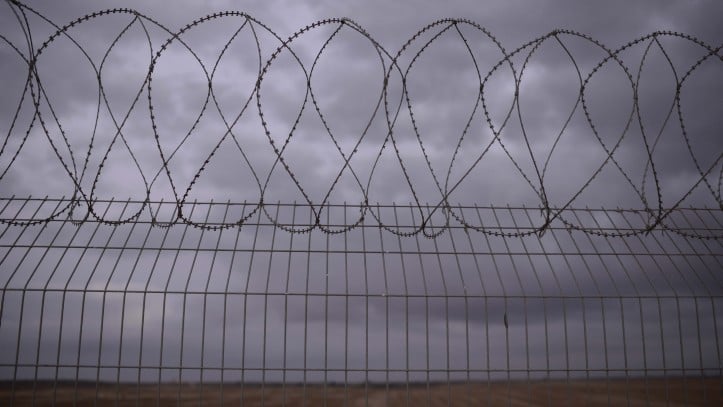
Over the course of the past month, the fence separating Israel from the Gaza Strip has been breached by Palestinians multiple times in multiple locations along the border. But that’s not necessarily cause for concern.
The threat of terrorists infiltrating Israel from Gaza is certainly a real one, as is the sniper fire that drove the IDF to recommend that farmers near the border stay at least one kilometer (0.6 miles) from the border. This is especially troubling when you consider that there are Israeli communities, like Nahal Oz, located barely two kilometers (1.25 miles) from Gaza.
Many have therefore wondered why it possible, even easy, for Gazans to cut through the barrier separating Israel from the Strip.
But the IDF’s 20-year-old chain-link fence along the border was never designed to prevent that by itself. It is merely one element in the border security — an undoubtedly important element, but not the sole protector of Israel’s southern communities.
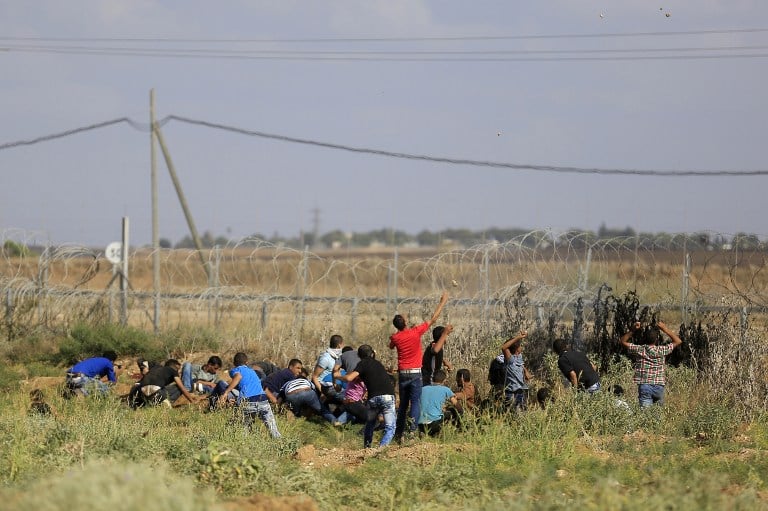
A combined effort of surveillance systems, boots on the ground and the fence has successfully repelled the numerous attempts by Palestinians to enter Israel during violent riots along the border.
The original fence was built following the signing of the 1993 Oslo Accords, aimed at demarcating the Palestinian control over the Strip and preventing terrorists from sneaking into the surrounding Israeli communities. Parts of that fence were destroyed in 2000 in the early days of the Second Intifada.
The IDF rebuilt those parts of the barrier in 2000-2001. For the past 15 years, the bulk of the improvements and upgrades have not been to the chain link, razor wire-topped fence, but to the security systems surrounding it.
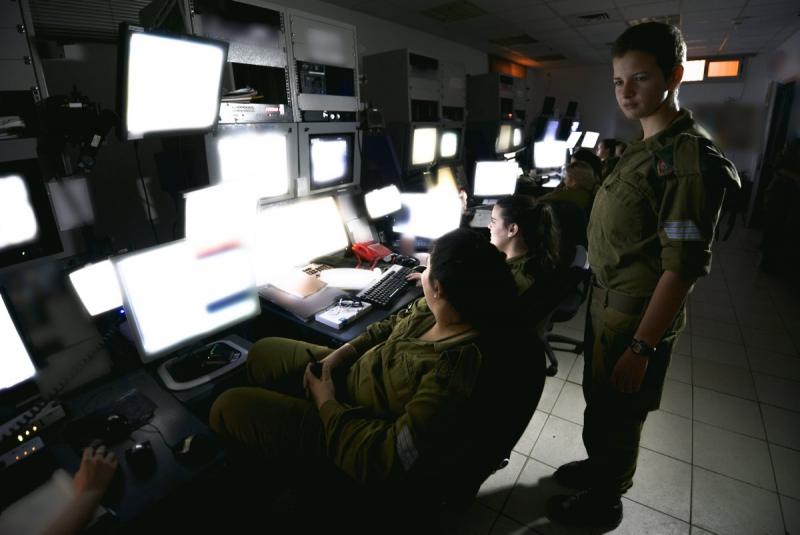
The 60-kilometer (37-mile) barrier is now covered in sensors that detect breaches, and a command center — staffed 24 hours a day, seven days a week almost solely by female soldiers — monitors the border via a series of closed circuit cameras equipped with night vision.
When those lookout soldiers, known in Hebrew as tatzpitaniot, spot a person or group approaching the buffer zone — a one kilometer (0.6 mile) area surrounding the border where Palestinians were forbidden to enter — from the Gaza side, they quickly alert IDF troops on patrol in the area.
According to official IDF protocol, those entering the zone would first receive a verbal warning, then a warning gunshot in the air and finally, a gunshot to the legs or lower body to halt their approach. There are, however, exceptions to that protocol, notably one that allows the IDF to fire at anyone seen crawling toward the fence at night.
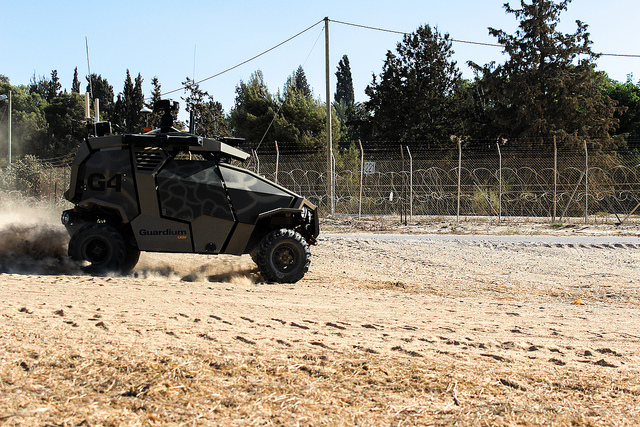
Unmanned vehicles called Guardiums also patrol the border both autonomously and under the control of nearby operators. They can also be equipped with loudspeakers to warn potential infiltrators, and even with guns and other weaponry.
With this combined effort — surveillance, fence and troops — the IDF has successfully blocked the dozens of Palestinians who have broken through the border fence in the past month.
The more troubling threats to Israel’s border communities remain the same as the ones from last summer’s Operation Protective Edge — undergrounds tunnels and infiltration from the sea.
Though most of the information surrounding the project is still being kept secret, the IDF announced in April that it was advancing its research and installing tunnel detection systems along the borders.
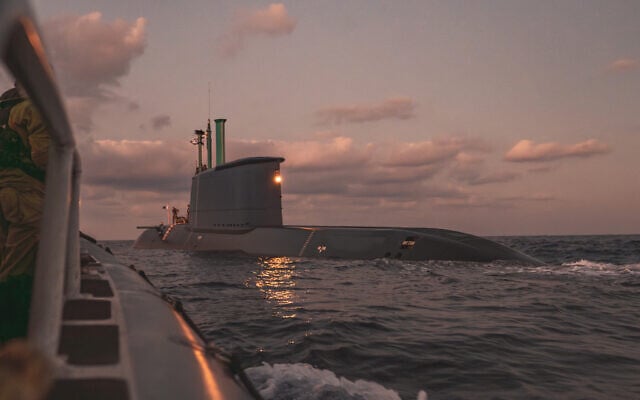
Since the infiltration of Hamas naval commandoes into the shores of Zikim near Ashkelon in the early days of the Gaza war, the Israeli Navy has stepped up its patrols along the coast. That front remains difficult to control as the vastness of the sea gives Gazan ships sufficient room to evade capture and detection, but newly installed cameras and underwater surveillance systems may help to end that danger.
The growing number of riots and demonstrations on the Gaza-Israel border is problematic not primarily because of the threat to the Eshkol region in southern Israel. The true threat comes from the possible development of an additional front for the IDF and the rest of Israel’s security forces to handle.
An increasingly complicated dynamic is unfolding in Syria, especially with the addition of Russian and Iranian troops in the region, and the IDF is devoting more and more resources to blocking the outburst of full-scale, violent rioting in the West Bank.
For now, Hamas is actively working to prevent other terrorist groups in the Gaza Strip from firing rockets and carrying out other attacks against Israel. But should those riots along the border increase, it would require more military resources to control and potentially distract the IDF from its other fronts.
But regardless, the IDF has already announced plans to replace the aging fence with one similar to the barrier along the Israel-Egypt border in the coming months. That fence is 7 meters (21 feet) high at its tallest point and contains an even greater number of sensors and surveillance cameras.









The Times of Israel Community.