

Top aide to Khamenei puts kibosh on military site inspections
Despite nuclear deal’s terms, Ali Akbar Velayati joins chorus in opposition to inspections, missile restrictions
 Add ToI as a Preferred Source on Google
Marissa Newman is The Times of Israel political correspondent.
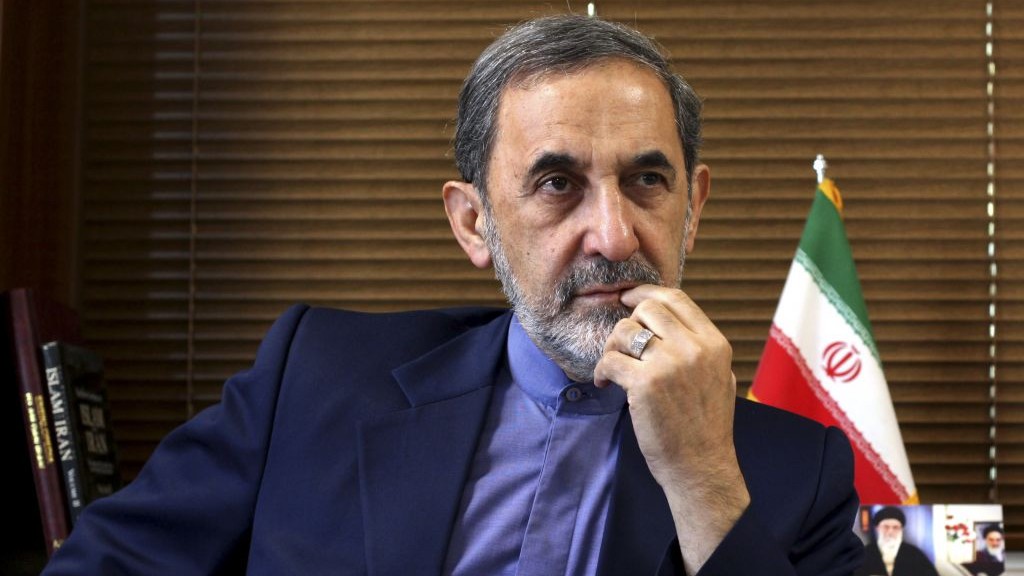
A senior aide to Iran’s supreme leader on Tuesday ruled out international inspections of military sites, echoing comments made by the country’s defense minister a day earlier.
Ali Akbar Velayati, chief adviser on international affairs to Ayatollah Ali Khamenei, also maintained Iran would continue its production of medium and long-range ballistic missiles.
“They have made some comments about defensive and missile issues, but Iran will not allow them to visit our military centers and interfere in decisions about the type of Iran’s defensive weapons,” Velayati said, according to Iran’s semi-official Fars News Agency.
The statements by top Iranian officials in the past few days appear to contradict the terms of the nuclear deal reached between Iran and world powers last week, which outlines a procedure granting international inspectors access to all Iranian sites under certain conditions. Before the deal was signed, Khamenei was adamant that there would be no access to military sites, but the final text of the agreement does not distinguish between military and non-military facilities.
With regard to missile development, Velayati said projectiles that are not designed to carry nuclear warheads remain outside the scope of the nuclear deal.
“Missiles like Shahab, Sejjil and the like, have never been used for carrying nuclear warheads, and therefore, are not subject to the paragraphs of the Vienna draft agreement,” Velayati said, using the Iranian names of the missiles.
Velayati, a former presidential candidate, is suspected of helping carry out the 1994 attack on the AMIA Jewish center in Buenos Aires that left 85 dead.
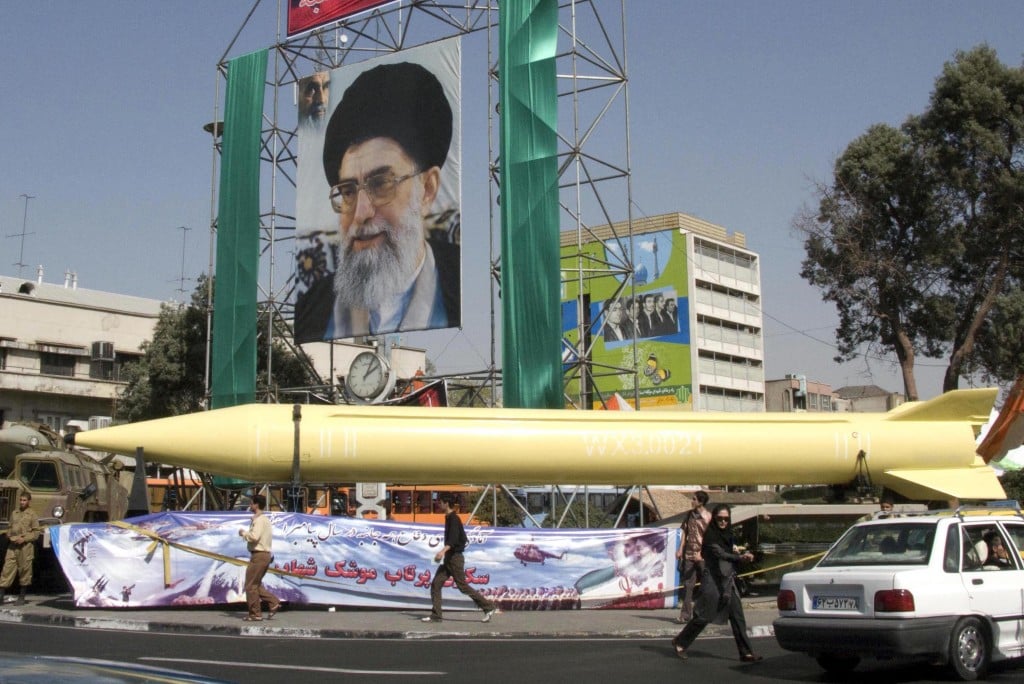
Also seeking to distance missile development from the nuclear deal, Foreign Minister Mohammad Javad Zarif explained that the UN resolution approving the nuclear deal — passed unanimously on Monday — contains a clause restricting the development of missiles. The nuclear deal, however, does not, he said.
“Using ballistic missiles doesn’t violate the Joint Comprehensive Plan of Action; it is a violation of a paragraph in the annex of the [UN Security Council] Resolution (2231) which is non-binding,” Zarif said, according to the Fars.
“This paragraph [of the annex] speaks about missiles with nuclear warheads capability and since we don’t design any of our missiles for carrying nuclear weapons, therefore, this paragraph is not related to us at all,” Zarif added.
Brigadier General Hossein Dehghan, Iran’s defense minister, on Monday said Tehran would not allow international inspectors to enter the Islamic Republic’s military sites, adding that it would “resolutely” pursue missile development.
The comments came on the heels of Iran’s Foreign Ministry saying the UN could not ban Iranian ballistic missile development under the deal and a top military commander rejecting the UN’s adoption of the groundbreaking accord earlier in the day.
Taken together, the comments shed doubt on Tehran’s willingness to keep to some of the concessions agreed to in the pact, which has been touted in the West as the best way to keep Iran from developing a nuclear weapon. The United Nations Security Council unanimously endorsed the accord on Monday.

Dehghan “underlined that Tehran will not allow any foreigner to discover Iran’s defensive and missile capabilities by inspecting the country’s military sites,” according to Fars.
Dehghan also stressed that Iran’s missile activity was not bound by the nuclear deal, which lifts punishing economic sanctions on Iran in exchange for curbs on enrichment and increased access to nuclear sites by atomic inspectors.
“Missile-related issues have never been on agenda of the nuclear talks and the Islamic system will resolutely implement its programs in this field,” Dehghan said in a meeting with defense ministry officials.
The defense minister slammed the US for its “boastful remarks” surrounding the accord, and said Washington lacked insight on Iran.
“The US officials make boastful remarks and imagine that they can impose anything on the Iranian nation because they lack a proper knowledge of the Iranian nation,” he stated.
There was no immediate reaction from the US or the other five world powers that reached the agreement with Iran in Vienna last week.
The terms of the deal
Under the Iran agreement, the International Atomic Energy Agency can request access to any sites, should it produce evidence of a violation of the nuclear deal.
The accord stipulates that inspectors must “provide Iran the basis for such concerns and request clarification,” according to the Vienna agreement. The requests must be done in “good faith,” and “will not be aimed at interfering with Iranian military or other national security activities, but will be exclusively for resolving concerns regarding fulfillment” of the deal’s terms.
If Iran’s explanations do not adequately assuage the IAEA’s concerns, the agency “may request access to such locations” to make sure no illicit activity has occurred there. “The IAEA will provide Iran the reasons for access in writing and will make available relevant information,” the deal further stipulates.
Should the Iranians and the inspectors prove unable to “reach satisfactory arrangements,” Tehran will resolve any concerns “through necessary means agreed between Iran and the IAEA,” the deal reads.
If there is still no agreement two weeks after the initial inquiry is filed, a so-called Joint Commission — consisting of the six world powers and Iran itself — will vote on how to resolve the crisis. Altogether, the process could take up to 24 days from the time the IAEA first requests access to a site under suspicion.
On Sunday, US Secretary of State John Kerry defended the delay, saying the idea of “anytime,anywhere inspections” was a fantasy.
“It’s called ‘managed access.’ It’s under the IAEA. Everyone understands it and the intelligence community has made it clear to us, as they did before we signed on to this deal, that we would be able to know what they are doing during that intervening time,” he said.
Provided that Tehran respects the agreement to the letter, seven UN resolutions — passed since 2006 to sanction Iran — will be gradually terminated, the text of the resolution says.
Raphael Ahren, AFP contributed to this report.









The Times of Israel Community.