

Trolling Pompeo, Iran’s foreign minister attacks US over migrant separation
Mohammad Zarif responds to US secretary of state’s criticism of Tehran’s economic policies by copy-pasting most of his own statement
 Add ToI as a Preferred Source on Google
Michael Bachner is a news editor at The Times of Israel
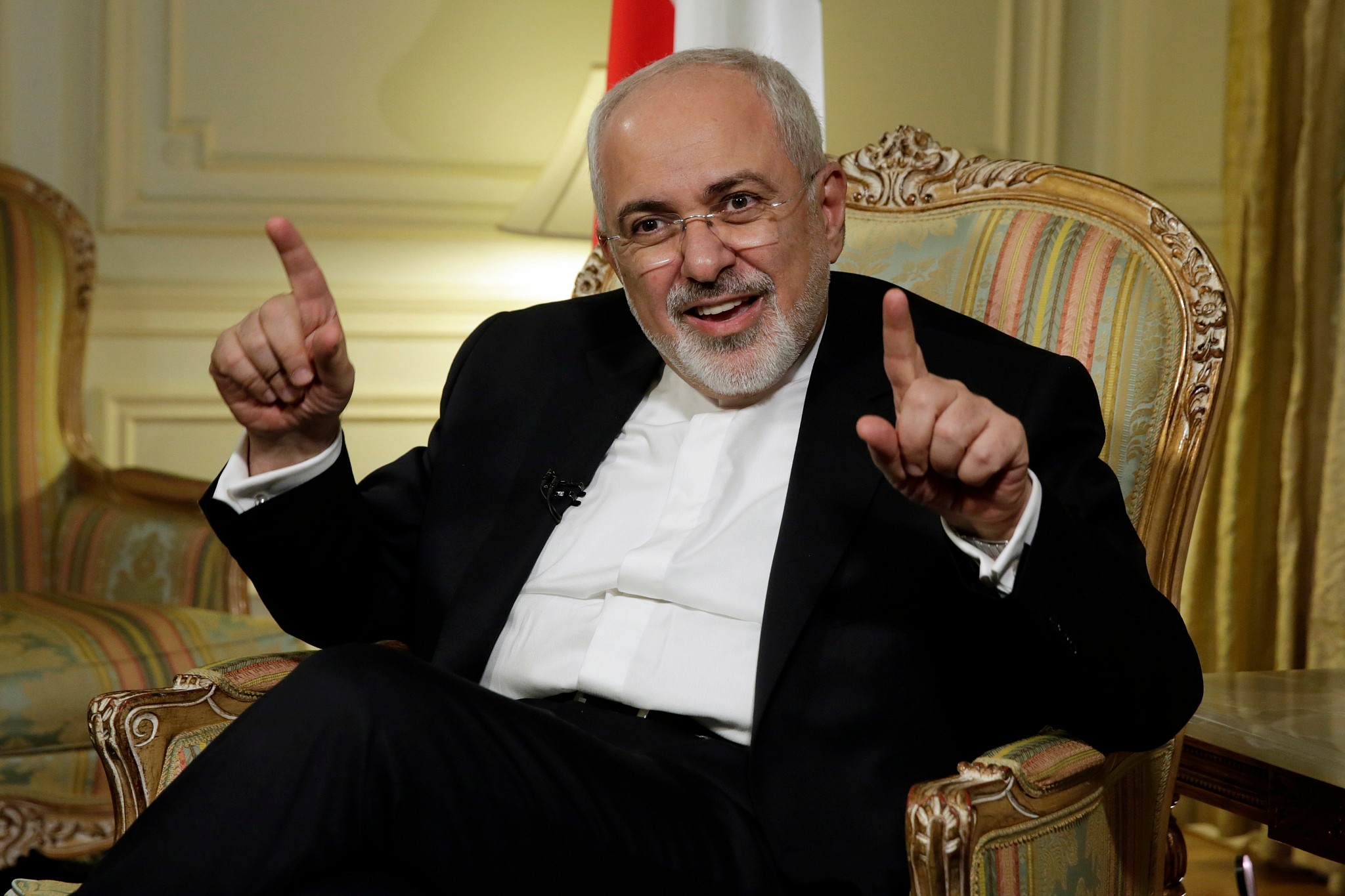
Iran’s foreign minister on Thursday issued a barbed response to US Secretary of State Mike Pompeo’s harsh statement this week, which blamed the Islamic Republic’s leadership for the country’s economic woes and expressed support for mass anti-regime protests by Iranians.
Mimicking Pompeo’s statement almost word for word, Mohammad Javad Zarif similarly blamed the United States government for “squandering its citizens’ resources” and “wasteful expansion of its nuclear arsenal.”
“Those who live in glass houses shouldn’t throw stones,” Zarif said in a tweet introducing his statement, calling it “Secretary Pompeo’s statement on Iran” but replacing words to read “MY statement on the US.”
On Monday, hundreds of Iranians demonstrated in the streets of Tehran, just as merchants in the city’s Grand Bazaar closed their shops to protest Iran’s economic troubles. Smaller protests continued in the following days.

Pompeo said in his Wednesday remarks that, “The Iranian government is squandering its citizens’ resources, whether its adventurism in Syria, its support for Hezbollah, Hamas, and the Houthis, or its ambitions for wastefully expanding its nuclear program, it will only add to the suffering of the people of Iran. It should surprise no one that protests continue in Iran.”
His Iranian counterpart used the same words, switching the word “Iran” with “the US” and replacing the description of Tehran’s “adventurism” with US fighting in Iraq and Afghanistan and “its blind support for Israel and other terror-sponsoring regimes.”
Zarif drew a parallel between the protests in Iran and demonstrations in the US over separation of migrant children from their parents, a policy which provoked an outcry but has since been reversed by US President Donald Trump.
He also compared Iran’s struggling economy to the US’s, citing a statistic that 40 million Americans live below the poverty line “in the world’s richest nation.”
Those who live in glass houses shouldn't throw stones.
S̶̷e̶̷c̶̷r̶̷e̶̷t̶̷a̶̷r̶̷y̶̷ ̶̷P̶̷o̶̷m̶̷p̶̷e̶̷o̶̷'̶̷s̶̷ MY statement on I̶̷r̶̷a̶̷n̶̷ the #US : pic.twitter.com/T2UgoST8RZ
— Javad Zarif (@JZarif) June 28, 2018
“We condemn the US government’s same futile tactics of suppression, imprisonment of protesters, separation of immigrant families and caging of their babies, and the denial of Americans’ frustrations,” Zarif said, copying large portions from Pompeo’s statement.
“The people of the United States are tired of the corruption, injustice, and incompetence from their leader,” he concluded, still using many of his US counterpart’s words. “The world hears their voice.”
In recent months, Iran’s currency has plummeted against the US dollar and the Trump administration announced plans to restore economic sanctions against the Islamic Republic after Trump withdrew the US from the Iran nuclear deal in May. And on Monday, the rial hit 88,000 to the dollar in the black market, marking a steep decline from 59,000 last month.
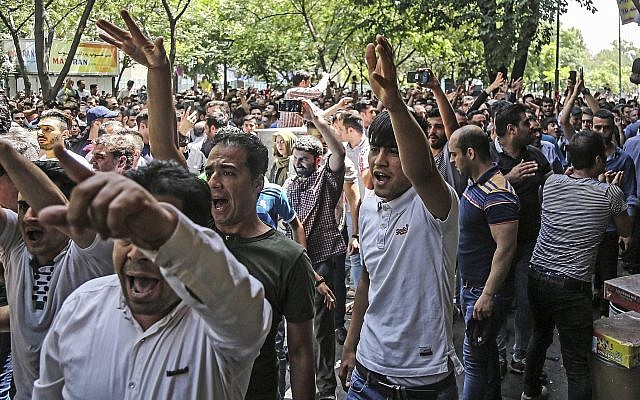
The protests — which were reported to occur in other Iranian cities besides Tehran — were similar to those that broke out between December 2017 and January 2018, in which scores of civilians objected to the government of President Hassan Rouhani for both its economic management and repressive policies.
Those demonstrations were the largest in Iran since the so-called Green Revolution in 2009, which were met with a massive crackdown by the regime.
In the US, more than 2,000 children have been separated from their parents in recent weeks and placed in government-contracted shelters — hundreds of miles away, in some cases — under a now-abandoned policy toward families caught illegally entering the US.
Amid an international outcry, Trump last week issued an executive order to stop the separation of families and said parents and children will instead be detained together.
Eric Cortellessa and Times of Israel staff contributed to this report







The Times of Israel Community.