

US ‘not pulling out in any way’ from Mideast peace efforts, says official
State Department rejects ‘false’ report of Abbas-Kushner rift, but concedes ‘some meetings more difficult than others’
 Add ToI as a Preferred Source on Google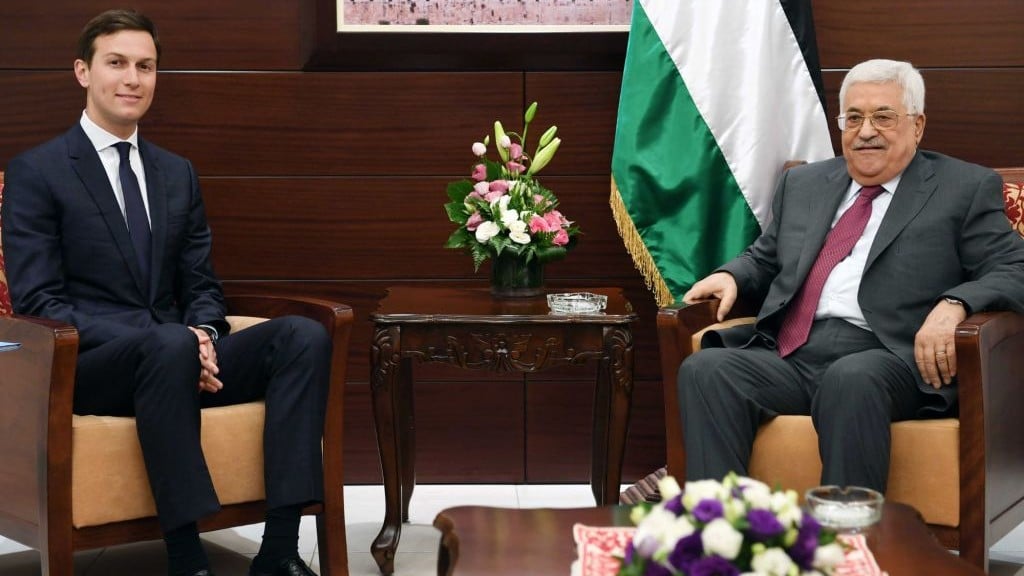
The State Department rejected claims that a meeting last week between Palestinian Authority President Mahmoud Abbas and senior White House official Jared Kushner went awry and an unconfirmed report that US President Donald Trump was ready to pull the plug on efforts to revive Israeli-Palestinian peace talks.
In a press briefing on Tuesday, State Department spokeswoman Heather Nauert reiterated that Trump has made Mideast peace “one of his top priorities,” adding that allegations that Abbas left his meeting with Trump’s son-in-law fuming were “false,” while conceding that “some meetings and conversations may be a little bit more difficult than others.”
Palestinian sources told Hebrew and Arabic media last week that the sit-down had not gone well and that the Palestinian leader had accused the US of taking Israel’s side while refusing US demands that Ramallah cut off payments for some convicted terrorists and their families.
Kushner met with Abbas in Ramallah on Wednesday, along with Trump’s international negotiator Jason Greenblatt.
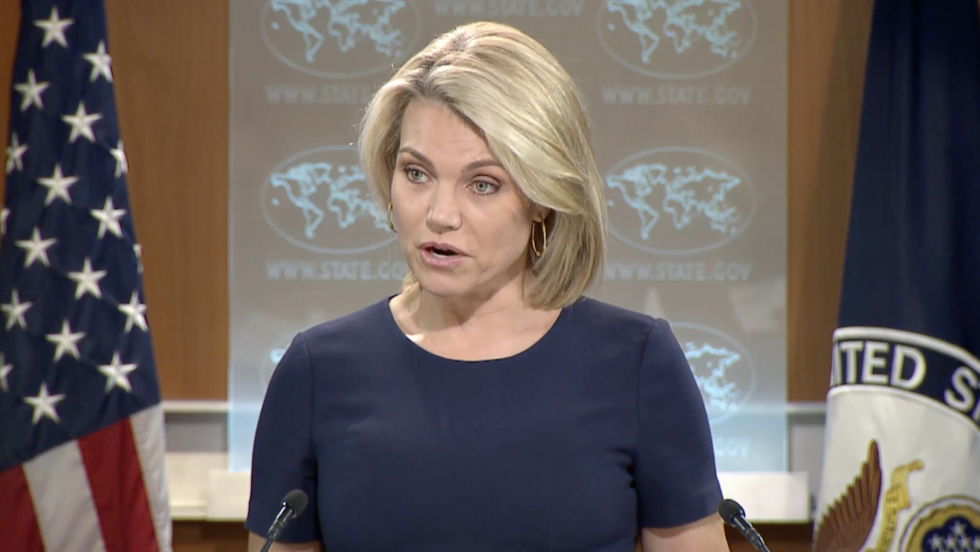
Nauert said Tuesday that the Trump administration knows “that this is not going to be a one-shot deal” and that peace would not materialize “in one meeting or one trip.”
“It is no surprise also that some meetings and conversations may be a little bit more difficult than others. Some will be more challenging. The President has said himself that it is not going to be an easy process, that both sides – the Israelis and the Palestinians – will have to give a bit in order to be able to get to a peaceful arrangement, which we hope to see,” she said.
“But we are not pulling out in any way, shape, or form of this as being one of our priorities,” said Nauert.
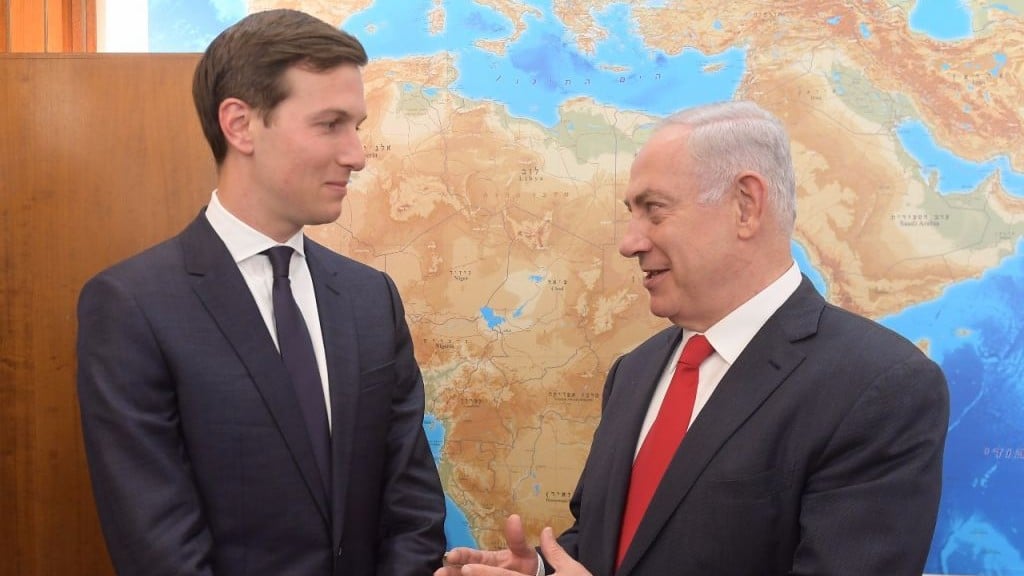
During his trip to the region last week, Kushner held two key meetings — with Prime Minister Benjamin Netanyahu and then with Abbas — before heading back to Washington.
Kushner reportedly began his meeting with Abbas by stating all the Israeli concerns, including stopping the payments, according to Hebrew media reports, angering Abbas.
“The American delegation accepted Israel’s position with regard to paying salaries to prisoners,” a Palestinian source told Ynet, “and described it as a means of inciting terror, demanding it be stopped.”
According to reports in Arabic media, the Americans watered down their demand about payments to prisoners. Originally the US wanted all payments halted, but now they only want the Palestinians to stop paying salaries to some 600 prisoners serving life sentences who are responsible for the deaths of Israelis, Israel Radio reported, quoting Arabic media.
Abbas has defended payments to Palestinian prisoners, including convicted terrorists, as a “social responsibility,” and said Israel was using the issue as a pretext to avoid peace talks.
Palestinian sources said the US officials had also taken the Israeli stance regarding incitement.
“They sounded like Netanyahu’s advisers and not as honest mediators,” a Palestinian source told Haaretz.
“We told the Americans that the settlements were the source of the despair and terror because they remove any future hope for Palestinians to live in their own land,” a Palestinian source told Ynet.
The source said, “We don’t have great expectations from these negotiations, but why should we pay such a high price as ending salary payments?”
Reportedly Abbas refused to end the payments to prisoners, but instead insisted on restarting the trilateral committee on incitement. The committee includes Israeli, Palestinian and American officials and was formed as part of the Wye River Memorandum in 1998. The committee met every two months until the outbreak of the Second Intifada in September 2000.
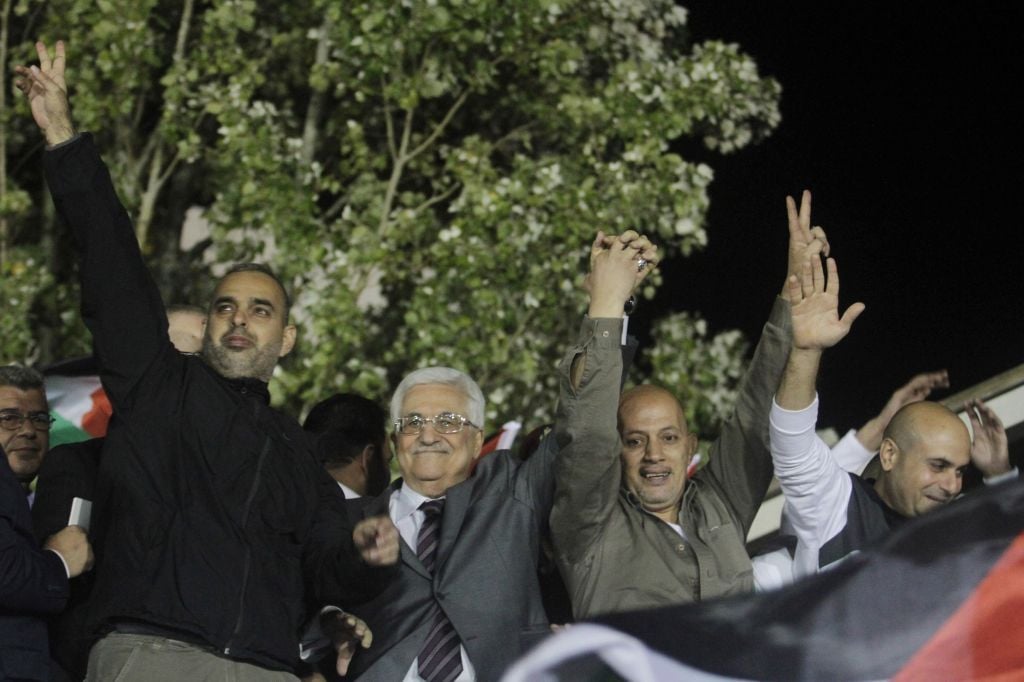
Earlier this week, Netanyahu accused Abbas of lying that he wants peace and “poisoning” the minds of young Palestinians, amid a resurgent efforts at peacemaking by the US.
Sitting down with Netanyahu on Wednesday before he met with Abbas, Kushner and other US officials discussed “potential next steps” to make progress on Trump’s goal of “a genuine and lasting peace” between Israelis and Palestinians, the White House said. The meetings are aimed at laying the groundwork for a resumption of negotiations for the first time in three years.
US sources confirmed that the payments to prisoners and incitement were discussed, but denied that they clouded the talks. They said that the talks mainly focused on hearing the Palestinian demands and their order of priority.

But hinting at challenges facing peace efforts, both sides “underscored that forging peace will take time and stressed the importance of doing everything possible to create an environment conducive to peacemaking,” a White House statement said.
A senior Palestinian official said Wednesday that the preparatory meeting with Greenblatt a day before the meeting with Kushner had also not gone well and became tense over the payments to prisoners. He said the Americans “are buying” Netanyahu’s complaints about Palestinian incitement, and that Greenblatt was insisting on an end to the payments.
The official, speaking on condition of anonymity because he was discussing a closed diplomatic meeting, said the Palestinians had rebuffed Greenblatt’s pressure and demanded an Israeli settlement freeze. He said a Palestinian delegation would head to Washington next month for further talks.
A meeting between Trump and Abbas in Bethlehem in May was also reportedly tense, with the US leader angrily berating his counterpart over allegations of incitement.






The Times of Israel Community.