

US plans to start 2nd phase of Gaza deal before Hamas disarmed, last hostage’s body returned
Trump plans to unveil Board of Peace and other bodies involved in Strip’s postwar management next week after monthlong delay, hopes to begin decommissioning program in coming weeks

 Add ToI as a Preferred Source on Google
WASHINGTON — US President Donald Trump’s administration told Prime Minister Benjamin Netanyahu last week that it is committed to both bringing back the final deceased hostage from Gaza and disarming Hamas but is not prepared to condition the commencement of phase two of its peace plan on either, a US official and two sources familiar with the matter told The Times of Israel Wednesday.
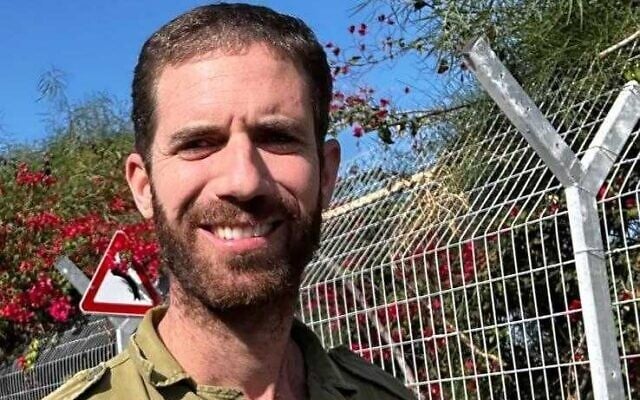
Jerusalem has pushed back on proceeding with phase two — which envisions the establishment of mechanisms involved in the rebuilding and management of postwar Gaza — before Hamas returns the remains of Israel Police Master Sgt. Ran Gvili and hands over its weapons.
The US has been in talks with Mideast mediators Egypt, Qatar and Turkey, which have assured Washington that Hamas will agree to a gradual disarmament plan that would begin with the terror group giving up its heavy weaponry and the launch of a “buy-back” program for lighter weapons, according to the US official and two Arab diplomats, who said the goal is to begin implementing the program in the coming weeks.
It was not clear whether this framework will be sufficient for Israel. Hamas officials have publicly asserted that the organization will only agree to give up its weapons in a negotiated process that results in the establishment of a Palestinian state.
Still, the Trump administration is aiming to next week unveil the Board of Peace, along with an intermediate executive committee and a Palestinian technocratic committee, the US official and two Arab diplomats said, confirming a report in the Axios news site. Washington had first planned to reveal the makeup of those bodies in mid-December but has been pushing off the announcement amid struggles to rally international support, as an October ceasefire deal between Israel and Hamas has barely held.
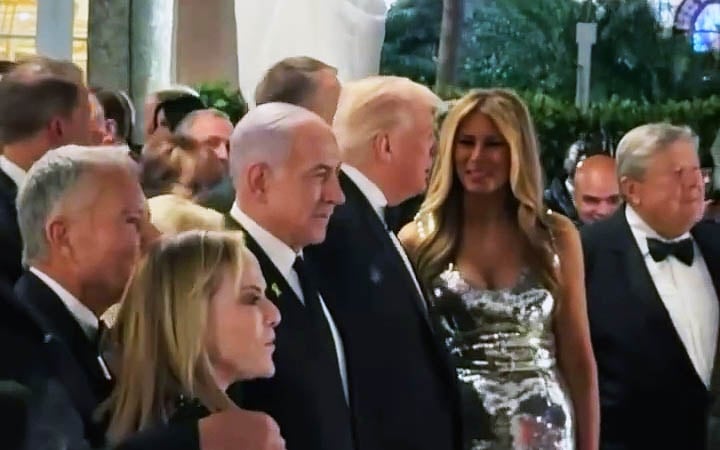
Trump told Netanyahu during their meeting last week at the president’s Mar-a-Lago resort in Florida that he wants to quickly advance to the second phase of the ceasefire deal, the US official said, adding that the premier raised concerns but said Israel would cooperate with the effort.
Filling the Board of Peace
The US has informed interlocutors that it secured commitments from Egypt, Qatar, the United Arab Emirates, the United Kingdom, Italy and Germany to have their leaders join Trump on the Board of Peace, four officials familiar with the matter revealed to The Times of Israel last month.
Washington has since worked to get additional countries on board, albeit with little success, one of the Arab diplomats said on Wednesday, adding that the US is considering filling spots on the panel with the heads of the World Bank, International Monetary Fund and World Economic Forum.
The US is hoping to announce the makeup of the Board of Peace next week so that some initial fundraising can be conducted before the first meeting of the panel is held the following week at the World Economic Forum in Davos, Switzerland, the US official and two Arab diplomats said.
The US official clarified that the timeline is not set in stone, as other foreign policy issues such as Venezuela or Ukraine may take precedence.
Moreover, the US official said that the Trump administration wants the Board of Peace to be used to assist in the resolution of other conflicts around the globe as well.
Palestinian technocratic committee
Washington still plans to have an intermediate executive committee be more closely involved in oversight than the Board of Peace, with Trump’s top advisers Jared Kushner and Steve Witkoff expected to participate along with former UK prime minister Tony Blair, while the UN’s former Mideast envoy Nickolay Mladenov will be responsible for liaising with the Palestinian technocratic committee in Gaza. Axios reported that Mladenov will visit Israel this week for meetings with Netanyahu and other senior officials.
Egypt has been leading efforts to establish the Palestinian technocratic committee, while consulting with the US, Israel and the various Palestinian factions. A list of 12 names of politically unaffiliated individuals was submitted to the Shin Bet security service, which went on to approve eight of them, the Arab diplomat said.

While the West Bank-based PA has pushed for one of its ministers to join or even head the committee, Israel vetoed this idea outright. Instead, one member of the technocratic committee is slated to be a former PA official, according to two sources familiar with the matter.
International Stabilization Force
It is unclear whether next week’s planned announcement by the US will address the makeup of the ISF, which is tasked with phasing out Israeli forces in Gaza. The US has struggled to get countries to contribute troops.
Washington touted Indonesia and Azerbaijan as two countries it expects to join the multinational force, but the latter’s president ruled out that idea this week.
The US had also planned to hold a follow-up conference in Washington to further clarify the ISF’s mandate to countries skittish about joining, though it has not yet been finalized, as the administration has prioritized other foreign policy issues.
The US official downplayed the apparent ISF recruitment woes, insisting that countries would agree to contribute troops once they realize that they will not be expected to send their soldiers into battle against Hamas, as the mandate will be more modest than Washington and Jerusalem initially envisioned.
Reconstruction
Meanwhile, efforts were moving ahead to establish a pilot residential compound straddling the Israeli side of the Yellow Line ceasefire demarcation on the ruins of the southern Gaza city of Rafah, the Arab diplomat said.
The IDF has been clearing rubble from the area and defusing unexploded ordnance for the quick construction of a neighborhood capable of housing some 20,000 Palestinians, the diplomat added.
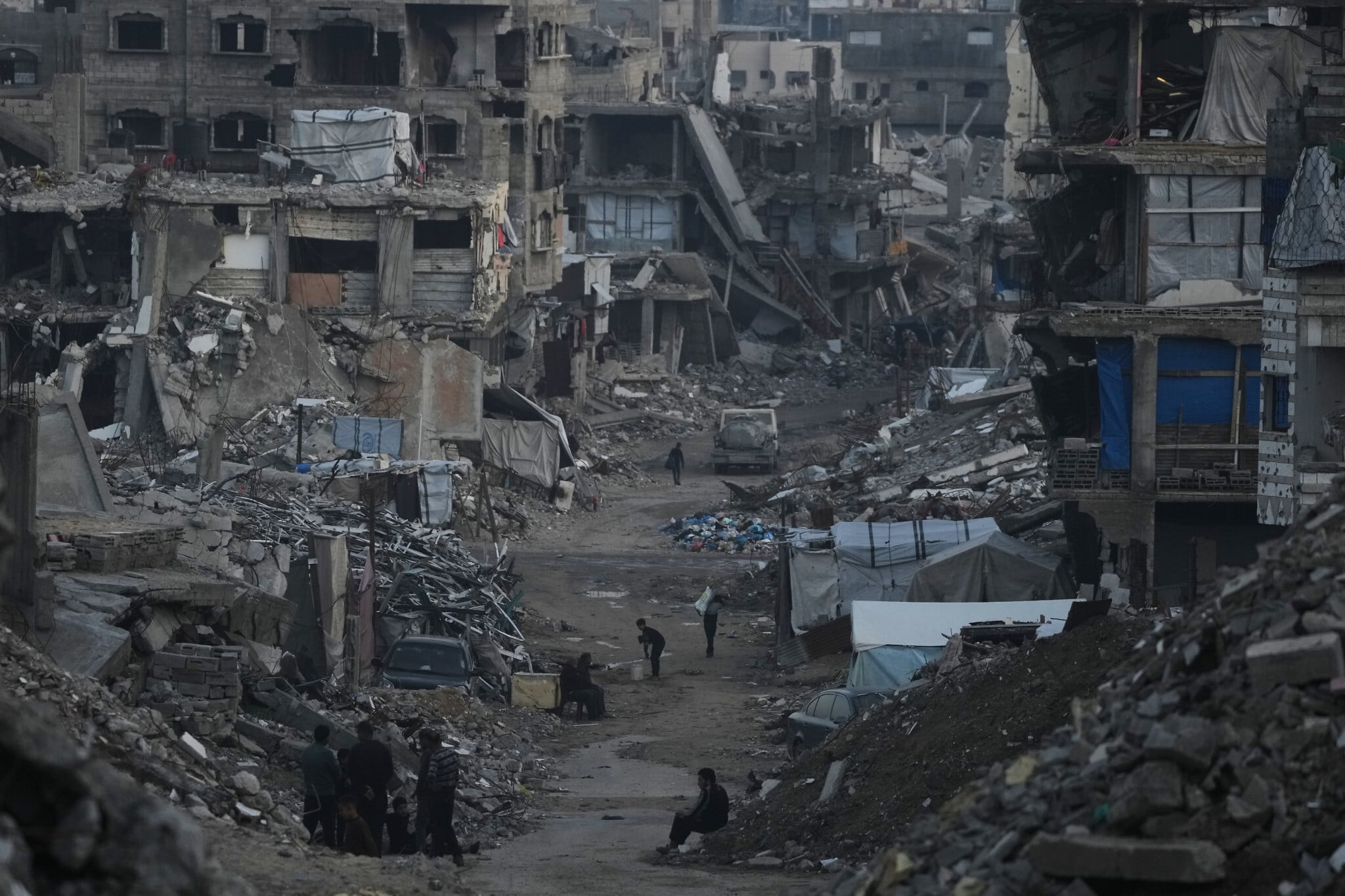
The US hopes to replicate the project throughout the Strip, though the diplomat acknowledged that much will depend on the success of the technocratic government and efforts to marginalize Hamas.
A UN aid official said that Gaza’s reconstruction will also hinge on Israel easing restrictions on the items it allows into the Strip, arguing that curbs on the import of dual-use goods have been debilitating.
“If we can’t even get tents in now, imagine how hard building equipment will be,” said the aid official, referring to curbs on materials that Israel says can be refashioned into weapons.
The general benchmark for what Israel allows into the Strip has been items deemed “life-saving,” which has meant largely limiting the diet of Gazans to dry food products while barring educational materials such as desks and notebooks, as aid organizations struggle to get children back into schools.
Search for final hostage’s body
As for Gvili’s remains, two Arab officials told The Times of Israel last month that Hamas and Palestinian Islamic Jihad’s search for his body had slowed amid Israeli strikes in Gaza. An IDF strike on December 13 killed senior Hamas commander Raed Saad, in what Washington privately recognized was a violation of the ceasefire, a US official said at the time.
On Wednesday, search efforts picked back up for the first time in nearly a month.
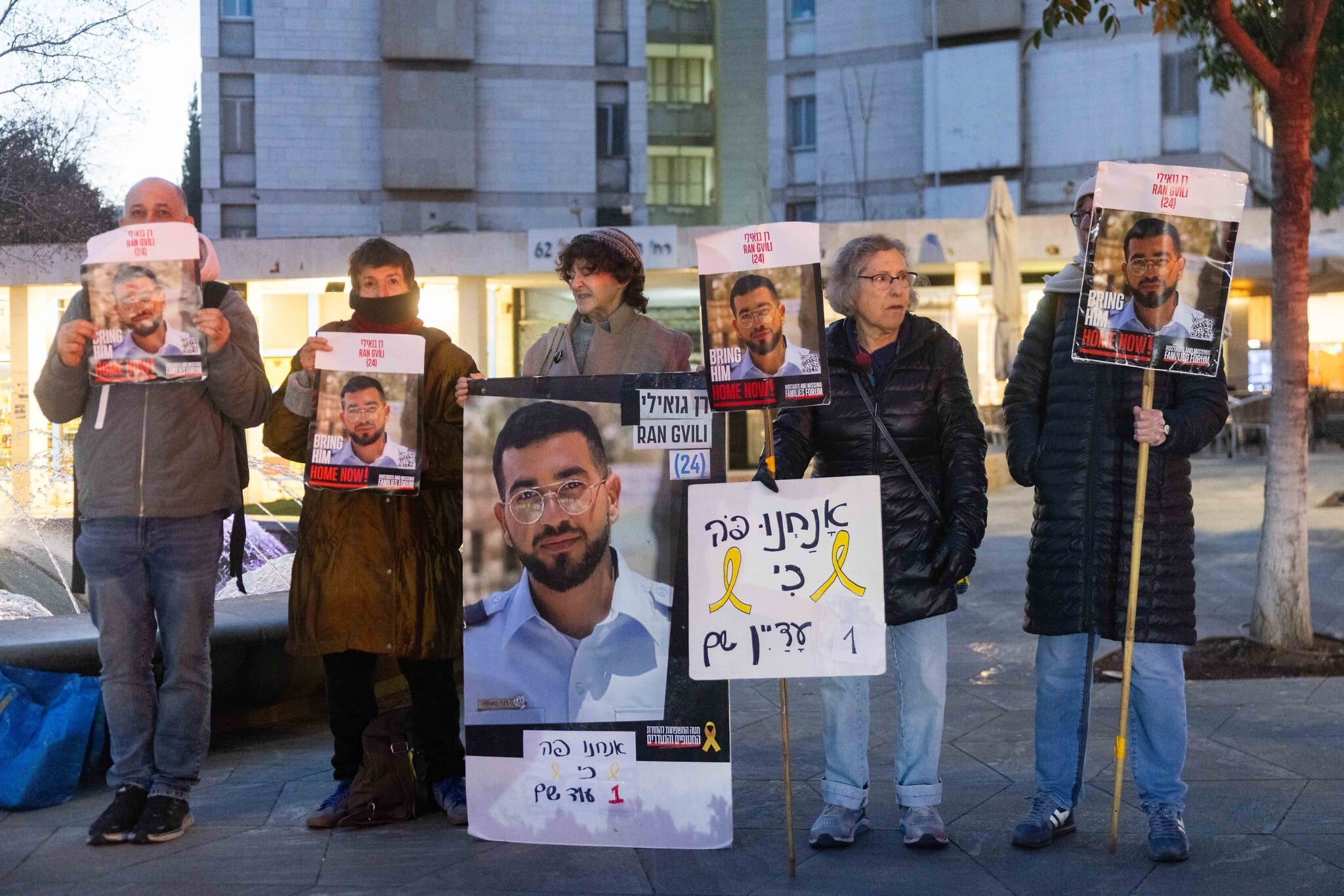
The October ceasefire agreement required Hamas to return all hostages within 72 hours but appeared to recognize that finding the remains of every slain captive may take longer.
Mediators have stated that an unpublished annex to the ceasefire agreement also mandated the reopening of the Rafah Border Crossing between Gaza and Egypt. A US official told The Times of Israel last week that Netanyahu indicated during his Mar-a-Lago meetings that Israel would reopen the crossing in the coming days, but he reportedly told his cabinet that he will not do so until Gvili’s body is returned.


The Times of Israel Community.