

Warming Trump-Sharaa ties put Israel’s feet to fire on emerging Syria security deal
Pushed toward an agreement with ex-jihadi Syrian president, a wary Jerusalem seeks to at least secure its border, protect the Druze and perhaps contain Turkey along the way

 Add ToI as a Preferred Source on Google
Nava Freiberg is The Times of Israel's deputy diplomatic correspondent.
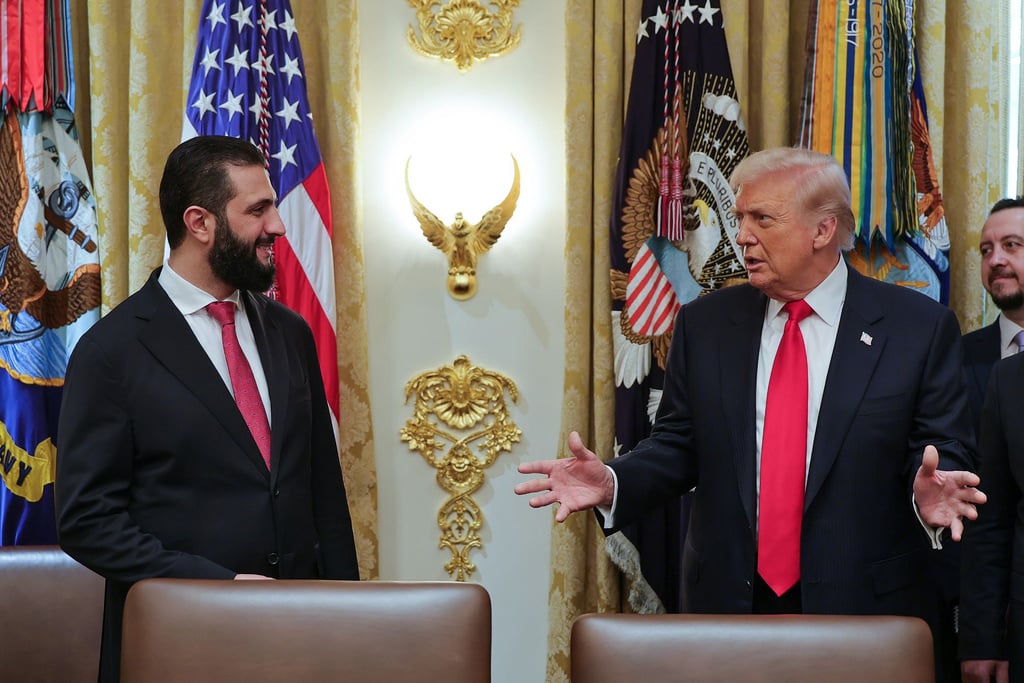
Syrian President Ahmed al-Sharaa likes to move quickly.
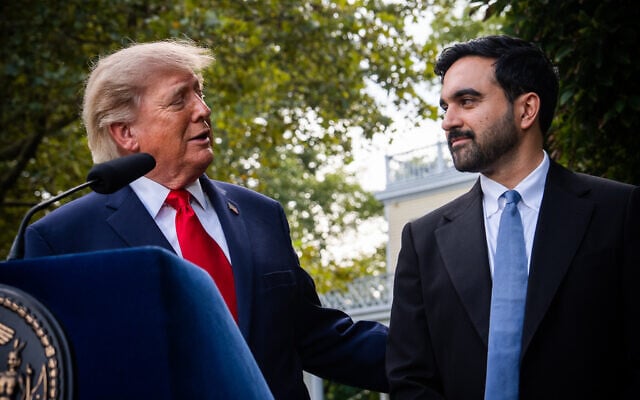
Eleven months ago, his forces rushed into Damascus to topple longtime Syrian dictator Bashar al-Assad, sparking his dizzying ascent from jihadist warlord to respectable statesman. Within weeks, Washington removed the $10 million bounty on the head of the former al-Qaeda commander, and last week, he became the first Syrian head of state to be hosted by a US president in the Oval Office.
For many, the sight was a curious spectacle, but for Israel, the latest display of Sharaa’s rising stock on the world stage carries with it important implications for national security. Jerusalem faces the challenge of figuring out its approach to a rapidly transforming Syria while securing its own interests vis-à-vis its northern neighbor.
Under Prime Minister Benjamin Netanyahu, this means ensuring that a series of red lines remain inviolable, protecting vulnerable minorities, and preventing hostile powers from gaining a foothold on parts of Syria near Israel’s borders.
While the Trump administration has near-instantly embraced Sharaa as a pragmatic partner capable of stabilizing Syria and containing extremist threats — confident it can shrug him off if need be like a Muammar Ghadhafi of Libya or Manuel Noriega of Panama — Israel has no such luxury.
Instead, Jerusalem is trying to balance a more cautious approach while knowing it must adapt quickly to a young leader whose ideological trajectory remains unclear, but whose future could reshape the security of Israel’s northern frontier and beyond.
From Idlib to Washington
Before seizing power in an 11-day lightning offensive last year, Sharaa led Hayat Tahrir al-Sham, an Islamist rebel group that originated as al-Qaeda’s Syrian branch. After the group severed ties with al-Qaeda in 2016, Sharaa spent more than a decade fighting Islamic State, overseeing arrests and raids against ISIS cells in HTS-controlled Idlib.
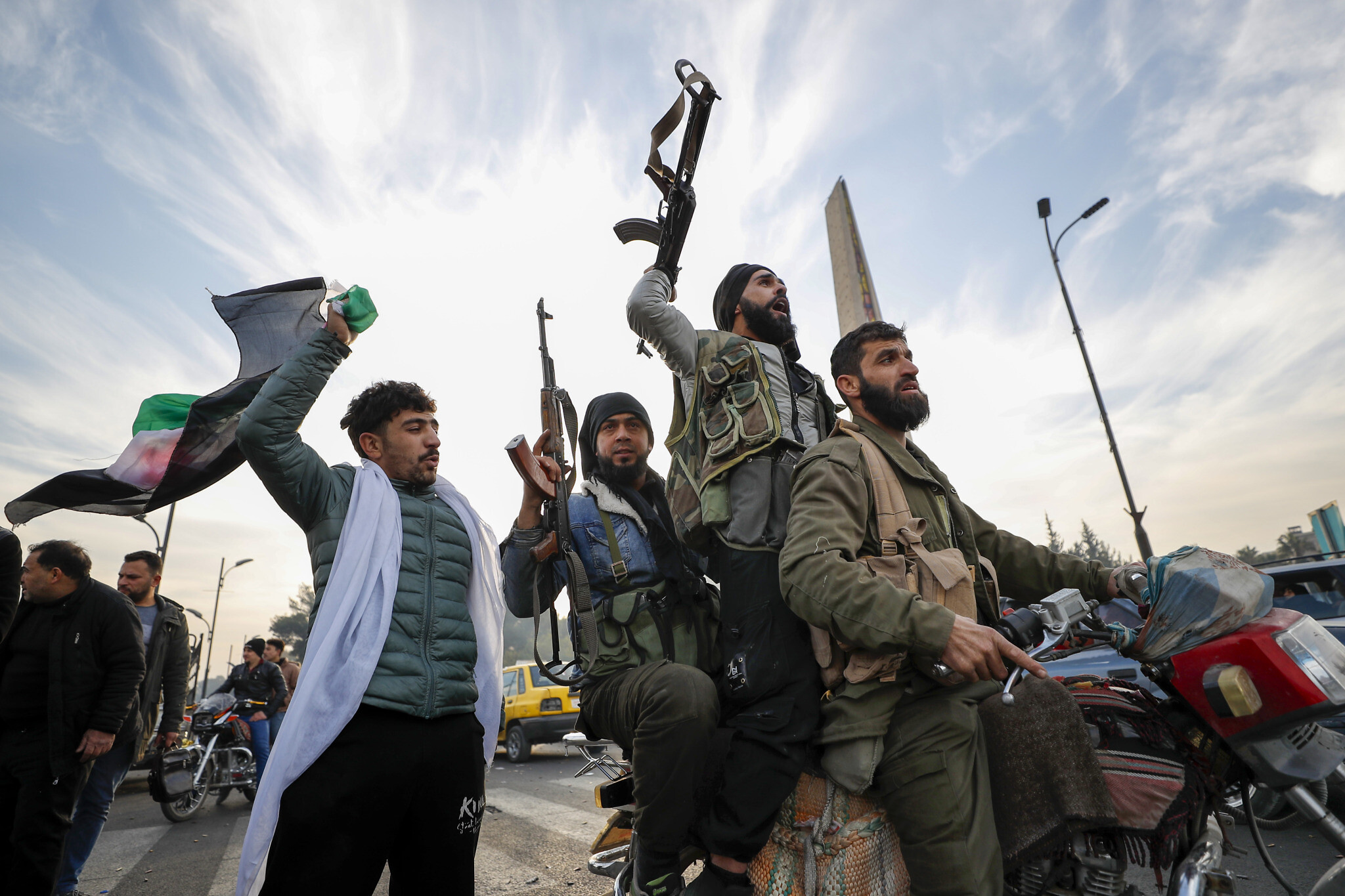
Long locked out of Damascus by Assad’s alliances with Russia and Iran, the US saw an opening with Sharaa to reshape Syria’s security landscape and gain an important client, bringing a country that had been part of what George W. Bush called the axis of evil into the West’s orbit.
But Sharaa’s past continues to stir Israeli skepticism.
“The al-Sharaa regime is an enigma,” cautioned Major General (res.) Yaakov Amidror, a former national security adviser and senior fellow at the Jerusalem Institute for Strategic Studies. “Sharaa claims he has changed, but there is not a single case in the history of the Middle East where a radical Islamist movement changed for the better after taking power.”
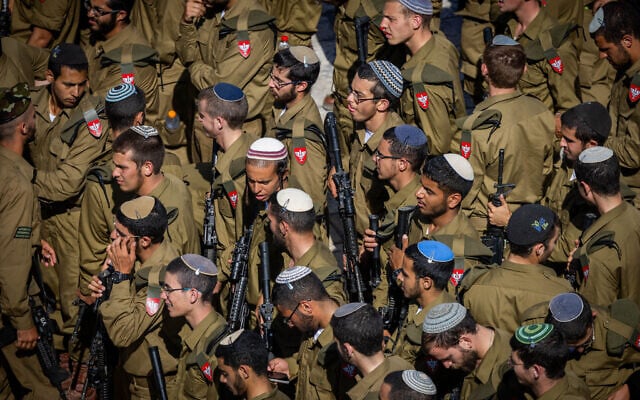
Sharaa’s rise triggered a bellicose Israeli response. The IDF quickly pushed into southwestern Syria after Assad’s fall, launching an ongoing deployment that the government calls a temporary measure against potential spillover threats.
In March, after hundreds of civilians from the Alawite minority were reportedly killed in clashes between Sharaa’s forces and Assad-loyal militants, Foreign Minister Gideon Sa’ar warned world leaders that Syria’s rulers “were jihadists and have remained so, even if they now wear suits.”
Months later, Israeli forces took action to stop Sharaa-backed fighters from entering Druze parts of Syria, including bombing his military headquarters in Damascus.
Tensions have since taken a back seat to Washington’s efforts to broker a potential Israeli-Syrian security arrangement, and perhaps more. Still, Israeli forces remain across the border in Syria, and officials continue to cite extremist elements and the regime’s treatment of minorities — especially the Druze — as reasons to move warily.
But with each Western capital Sharaa visits, Israel’s caution appears less and less in sync with the US and other allies.
Since their first meeting in Riyadh in May, Trump’s support for Sharaa has steadily grown, all while Sharaa toured European and Arab capitals and delivered a confident debut at the UN General Assembly.
“It’s getting harder to argue with the international recognition Sharaa is now receiving, despite all the suspicion and skepticism from Israel’s perspective,” said Carmit Valensi of the Institute for National Security Studies in Tel Aviv.
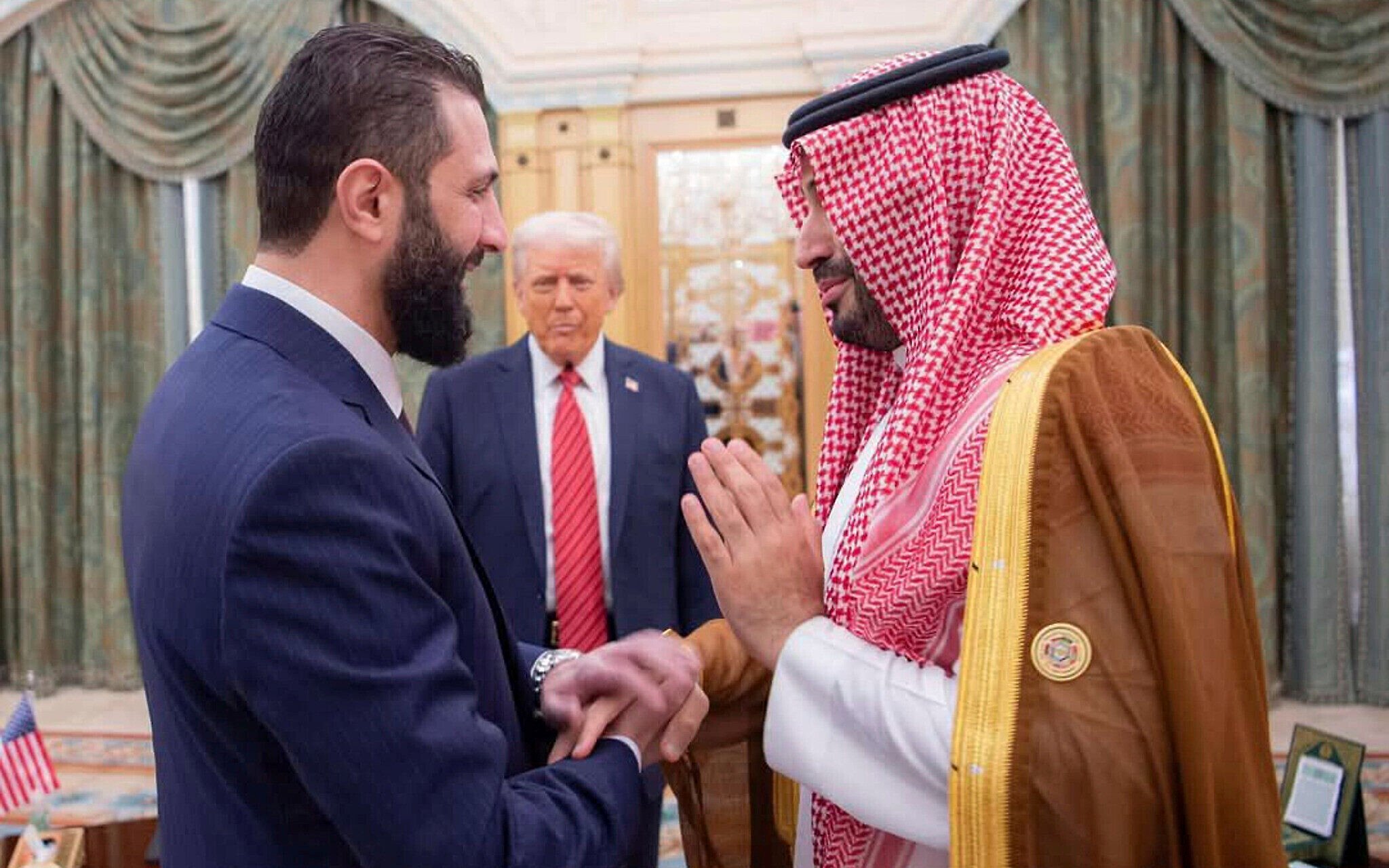
For his part, Sharaa has shown a decidedly measured approach toward Israel, prioritizing stabilizing southwestern Syria and seeking a security arrangement that includes a mechanism to halt Israeli strikes. In Washington this month, he said that a security deal or normalization was still distant, though he did not rule either out.
His growing international legitimacy — coupled with the Trump administration’s drive to restore regional order, from Gaza to Lebanon and now Syria — could present opportunities for Israel, but only if Jerusalem clearly defines and protects its core interests, according to experts.
“I think there are more opportunities here than risks,” Valensi said. “If we can reach a security agreement that guarantees calm along the border while still allowing us a degree of operational freedom in case we identify threats to our territory — especially with American backing and oversight — then that could benefit us. ”
Israel’s concerns
Israel’s immediate priorities in a security arrangement with Damascus are preventing any hostile force from organizing in southern Syria and ensuring that the country’s Druze minority is protected.
Israel, home to about 150,000 Druze, cited protecting the community earlier this year when it struck Syrian military sites amid allegations that regime-aligned units massacred civilians in Sweida, a major Druze population center in the Syrian Golan.
Until credible mechanisms are in place, Israel must remain deployed in the buffer zone inside Syria it seized after the regime change and act to prevent the emergence of any threatening force in the area, Amidror said.
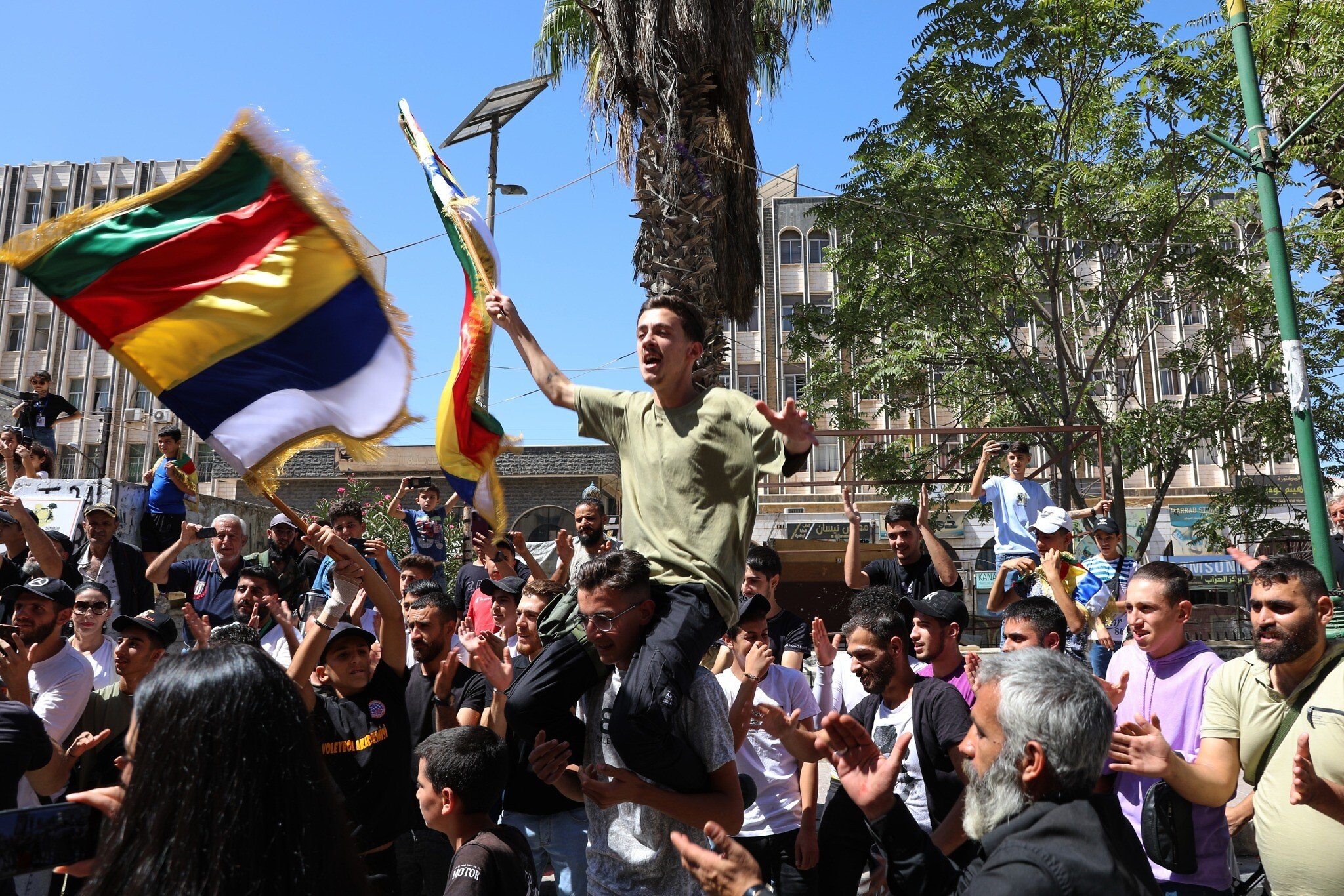
Even under US pressure, he noted, Israel must act independently when necessary: “Israel is a sovereign state. It can tell the Americans: ‘You are far away, we are close — we will not move until we are satisfied,” he added.
What’s more, Sharaa’s government faces continued instability. Hours before his White House arrival, reports emerged of two Islamic State plots to assassinate him that had been thwarted in recent months, a reminder of how fragile Syria’s transition remains after 14 years of civil war and how volatile Syria has been since its independence in 1946.
Israel is a sovereign state. It can tell the Americans: ‘You are far away, we are close — we will not move until we are satisfied.
Until Hafez Assad seized power in 1970, the country was wracked by repeated coups and counter-coups, and the 50-year stability under the Assad family was only maintained by brutal autocratic rule.
On a visit to Damascus last month, Michael Rubin, a senior fellow at the American Enterprise Institute, forecast conflict in Syria’s future: “Almost everyone saw dark clouds on the horizon… Israel must also prepare for renewed civil war, likely between Damascus and the Kurds, perhaps with the Turks and Emiratis supporting proxies.”
Signs of progress
Despite ample warning signs, there are indications that Sharaa may be able to steer Syria toward greater stability.
On the ground, many Syrians see economic relief and stability as their top priority. Aymenn al-Tamimi, an independent researcher based in northern Syria, said that Sharaa’s White House visit and the easing of some sanctions were welcomed as signs that Syria is heading toward economic revival.
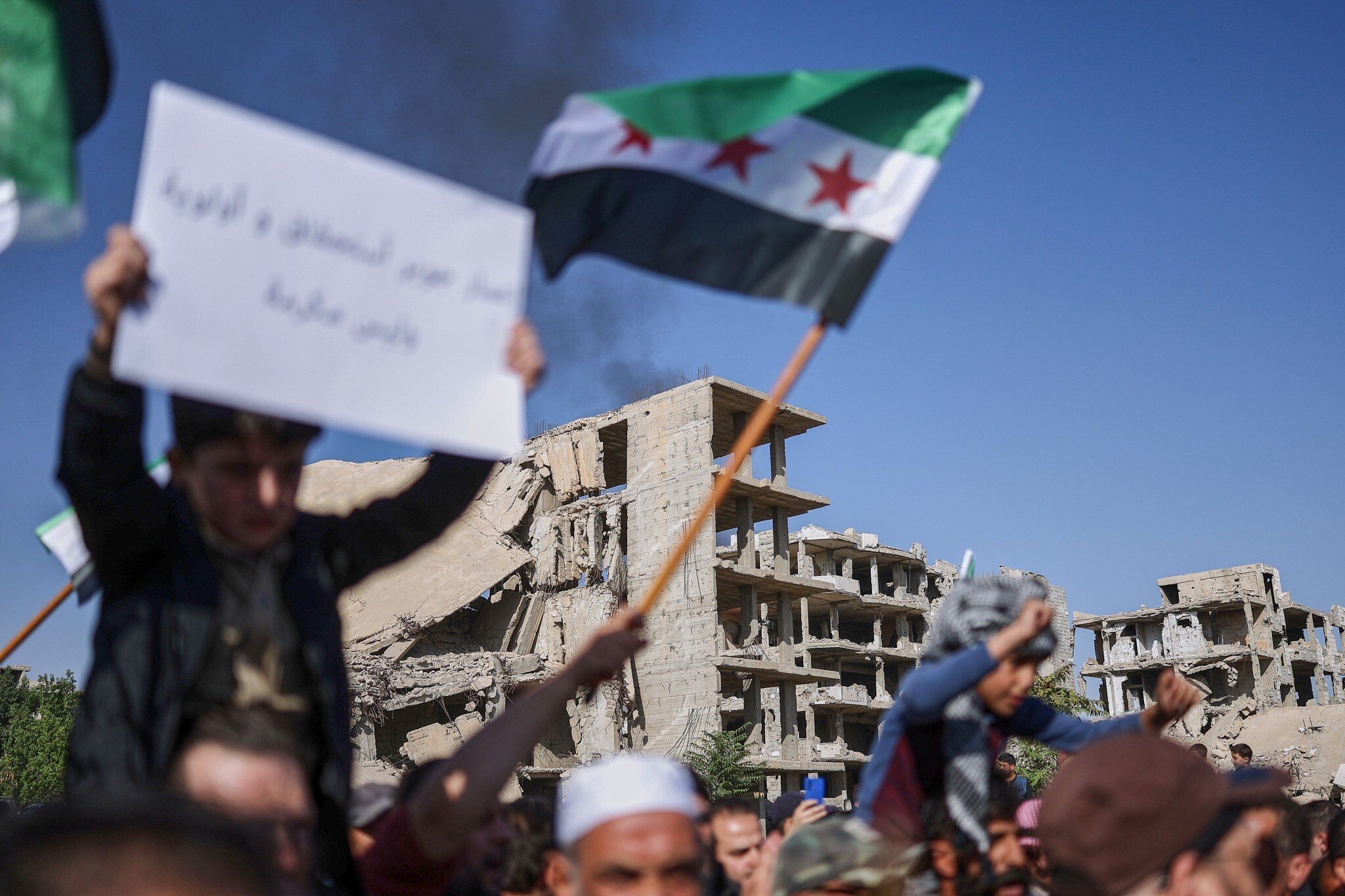
He stressed that HTS had moderated even before Sharaa took power, underlining the more gradual nature of the group’s shift.
“One of the reasons the US didn’t actively go after Sharaa before the regime fell was because they thought he was useful in cracking down on Islamic State and also on al-Qaeda within the northwest of Syria,” he said.
Washington’s recent moves reflect this view. Shortly after his White House visit, the US-led coalition fighting ISIS announced Syria as its 90th member. On Thursday, US special envoy Tom Barrack wrote on X that Damascus would assist Washington in fighting ISIS, Iran’s Revolutionary Guards, Hamas and Hezbollah.
Europe, too, sees tentative promise. A senior European Union official told The Times of Israel that Brussels welcomes Sharaa’s early commitments to peaceful relations and international law but remains troubled by “the waves of violence that occurred in the past year, including in Sweida.”
The official insisted that the transitional authorities must protect all Syrians and integrate armed groups into unified national forces, while expressing concern that Israeli strikes “risk fueling sectarianism and undermining Syria’s transition.”
The official urged all sides to respect the 1974 disengagement agreement, which created a UN-patrolled buffer zone between the countries’ forces, and emphasized the EU’s support for continued Israeli-Syrian dialogue.
Buffer buster
Unless it can reach a security arrangement with Syria, Israel may find its troops deployed indefinitely in the buffer zone, which is several kilometers wide, risking a repeat of its long presence in southern Lebanon after 1982.
After dealing with the Palestinian threat at the time, Israel intended to maintain a light presence in Lebanon to stiffen the capabilities of local allies, only to be drawn into a prolonged occupation that created the conditions for the emergence of a more dangerous enemy — Hezbollah.
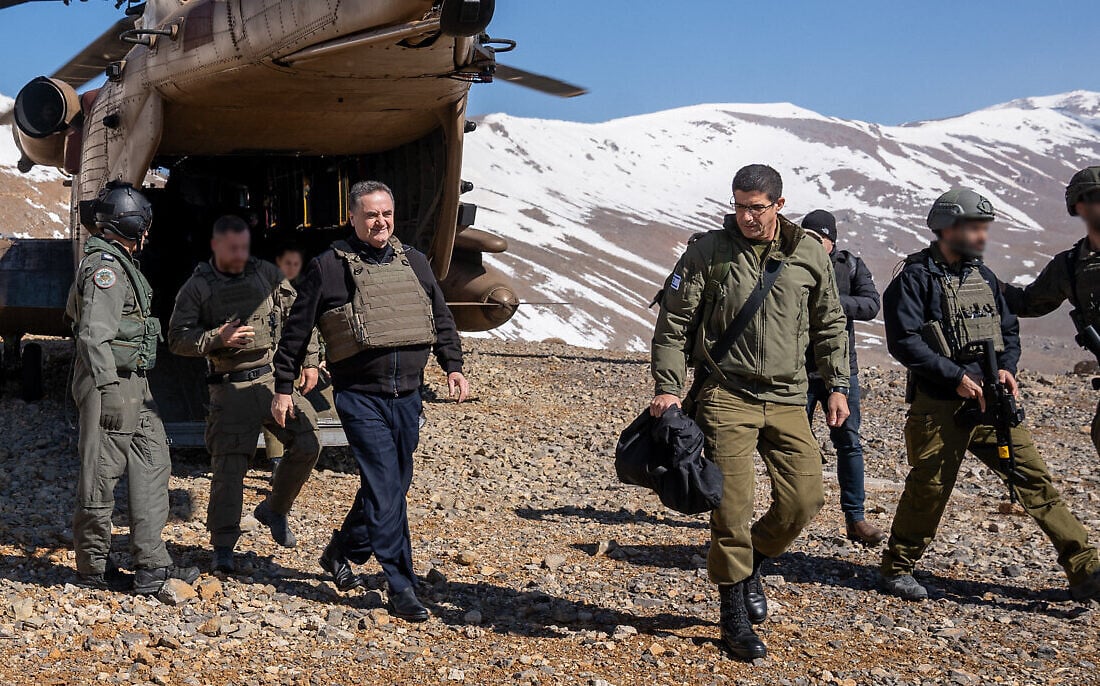
For now, Israeli forces are largely unchallenged in southern Syria. But the situation could grow more complicated if Sharaa or insurgents stop tolerating their presence, a situation that may become more likely as time passes, experts warned.
Valensi cautioned that blocking Syrian forces from returning to the border could backfire by “undermining al-Sharaa’s legitimacy,” feeding a narrative among Syrians that “under al-Sharaa’s watch, Israel controls Syrian land and acts freely there.”
On the flip side, engagement and cooperation with Damascus on border arrangements could set the stage for eventual normalization with a former enemy.
According to the Saudi al-Hadath channel, Netanyahu and Trump’s son-in-law Jared Kushner discussed Israel’s concerns regarding the potential security agreement with Syria during a meeting on Trump’s Gaza plan last week. Netanyahu reportedly asked Kushner to pressure Syria to move forward with the security agreement, as doing so could pave the way for Damascus to join the Abraham Accords normalization agreements.
While the US is a major player with significant leverage in Damascus, other interests are also weighing on efforts to shape Syria’s future, not least those of Turkey.
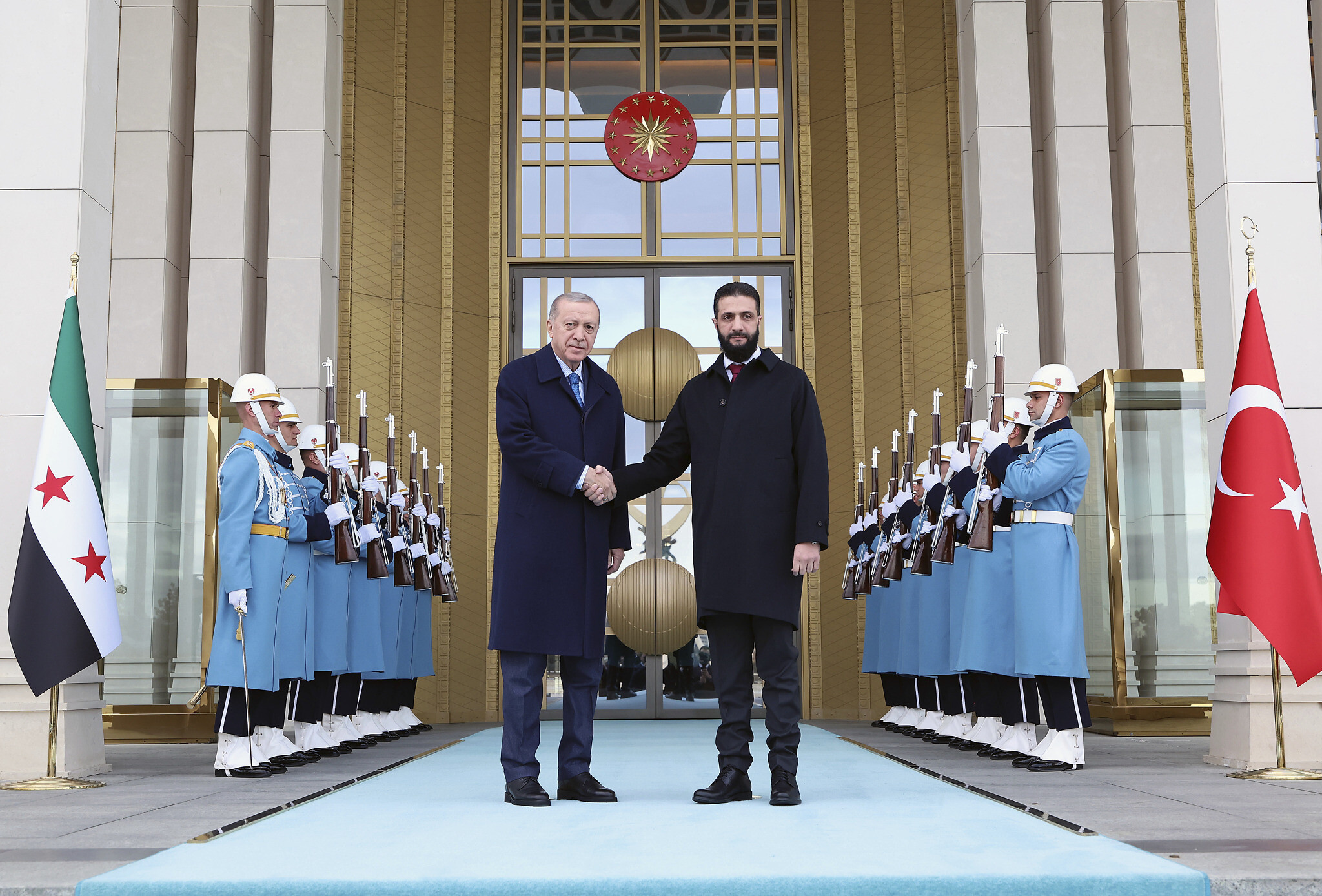
A key backer of the insurgency that toppled Assad, Ankara retains significant influence in northern Syria, a reality that deeply worries Jerusalem, due to Turkish President Recep Tayyip Erdogan’s support for the Muslim Brotherhood and for Hamas. Turkey hosts Hamas leaders and Erdogan regularly likens Israel to Nazi Germany.
As Israel seeks to place its thumb on Syria’s future, diluting Turkey’s influence will likely emerge as a major point of contention, though one in which Jerusalem may see little success.
Al-Tamimi said Israel must “temper expectations” about rolling back Turkish involvement, which he understood as inevitable. Instead of hoping to marginalize Ankara — or focusing on distant goals like normalization — he argued that Israel should concentrate on shaping the security arrangement with Damascus.
No going back
Whether Sharaa can enforce a security deal in the south — let alone stabilize Syria in the long term — remains uncertain. Even so, the US is expected to keep pressing Israel to engage more fully with the emerging arrangement and with the new regime
“We’re already on the path of dialogue and movement toward a security agreement. There’s no avoiding it — whether we like it or not — especially because of significant American pressure,” Valensi said.
We’re already on the path of dialogue and movement toward a security agreement. There’s no avoiding it — whether we like it or not.
Success will require anchoring Israel’s interests in the arrangement — keeping hostile groups from re-forming in southern Syria, guaranteeing protection for the Druze, and ensuring the military can act if new threats emerge — similar to its situation in Lebanon, where Israel preserves operational freedom to strike emerging threats even without formal consent from the other country.
Amidror added that greater Syrian dependence on the US benefits Israel: “The more al-Sharaa is dependent on the United States, the better it is for us, because the Americans will not want an al-Qaeda-style regime there.”
In the meantime, uncertainty still hovers over Sharaa’s transformation. On Friday, the Foreign Ministry conspicuously referred to him by his recently shed nom de guerre, Abu Muhammad al-Julani, as it condemned an invitation circulated by Syria’s Culture Ministry for an event celebrating the October 7, 2023, Hamas-led massacre in southern Israel.
Syrian officials clarified that the invite was unauthorized and removed within hours, but Israel bluntly warned: “Anyone who celebrates a massacre seeks more massacres, not change.”
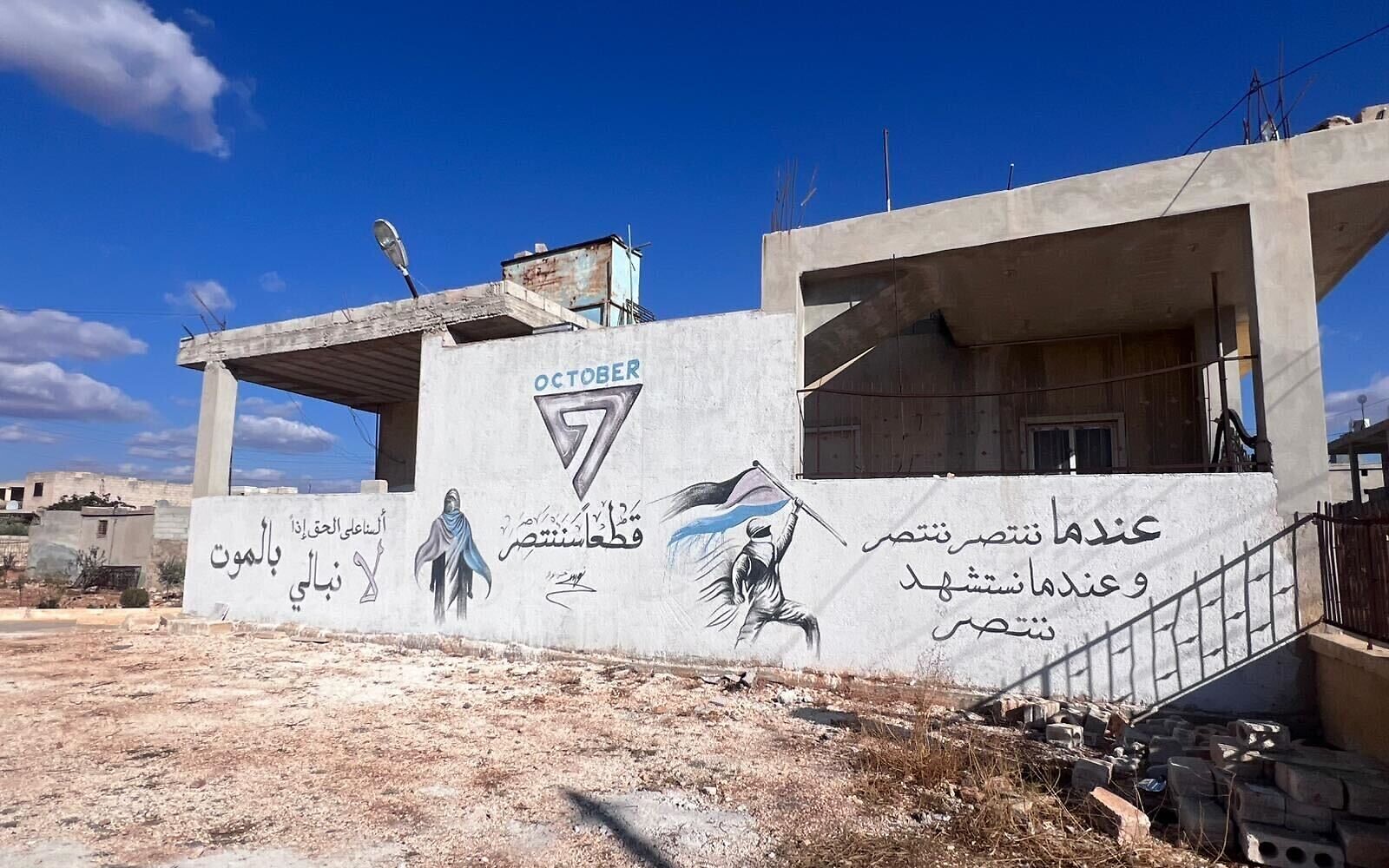
Reminders of hostile forces that shaped Syria before Sharaa’s rise are hard to miss. In the northern Syrian city where al-Tamimi resides, a mural glorifying the October 7 attack still covers a wall — a vivid marker of the Iranian and Hezbollah influence that has long rooted itself in the country, and of the tensions Jerusalem must keep in view as it navigates what comes next.





The Times of Israel Community.