

Would Gershom Scholem have hated Bibi’s government?
In new biography/memoir, author George Prochnik claims the famed Jewish intellectual’s aversion to jingoistic nationalism would put him at odds with Netanyahu’s administration
 Add ToI as a Preferred Source on Google
Until the work of Jewish scholar Gershom Scholem, the world of Jewish mysticism had been discarded as irrational, fanciful nonsense. Scholem’s work in the field — a mix of theology and the dark cosmos — changed all that.
While reflecting on why he chose a life dedicated to Kabbalah and Jewish mysticism, Scholem once wrote, “the Kabbalists had a fundamental feeling that there is a mystery — a secret — in the world.”
For Scholem, that mystery was to be mined in the Holy Land. In 1923, Scholem moved from his hometown of Berlin to the British Mandate of Palestine, remaining in Israel until his death in 1982.
Those six decades were spent teaching, thinking, writing, and debating the meaning of ancient Jewish texts, asking how history, theology and philosophy could help formulate opinions on everything from Zionism, to nation building, to confronting old Jewish cultural and political questions in a new dimension.
At least, initially.
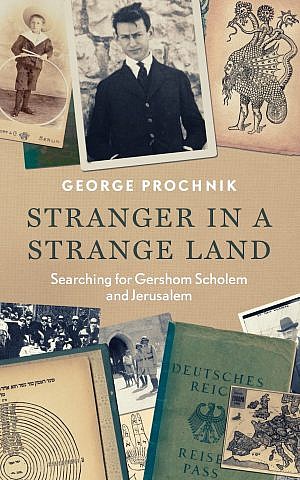
In his recently published book, “Stranger in a Strange Land: Searching for Gershom Scholem and Jerusalem,” New York-based author George Prochnik argues that in later years Scholem would profoundly disagree with the brand of Zionism that the State of Israel was founded on.
Prochnik says that those disagreements would only increase as the state evolved, becoming, in Scholem’s opinion, far too militaristic and nationalistic in outlook.
Prochnik has a deep affiliation with 20th century central European Jewish intellectuals. His previous book,“The Impossible Exile,” documented the last days of the most famous of these thinkers, Stefan Zweig. The best-selling Austrian Jewish novelist fled Nazi Europe, eventually committing suicide with his wife in 1942, in Petrópolis, Brazil.
Prochnik claims that the tragic ending to Zweig’s life revealed an odyssey of a paradise lost: a Jew wandering the globe in search of a land that he could call home, only to discover he didn’t have one.
Scholem’s life, on the other hand, documented a dream of paradise found — giving up on a European nation that was on a dark road to fascism, instead finding comfort in Palestine, a land that offered unlimited intellectual and spiritual possibilities.
“When he was writing at the end of World War I, Scholem [argued] that Zionism doesn’t really have a doctrine, but that ultimately it needed to have a rigorous historical consciousness and sense of solidarity with all humanity,” says Prochnik.“That’s an indication of how humanistically broad Scholem’s ideas were.”
A Jewish state was not paramount in Scholem’s thinking about what Zionism was
“A Jewish state was not paramount in Scholem’s thinking about what Zionism was,” he adds. “His idea was that a number of Jewish leaders, thinkers and writers would all go to Jerusalem, and that somehow it would become an engine that would reinvigorate Jewish life globally.”
Following in the great tradition of Jewish mysticism, Scholem’s work argued that certain types of knowledge cannot be worked out through traditional rational analysis, believing instead that meaning can be found in images and symbols that often defy conscious rationality.
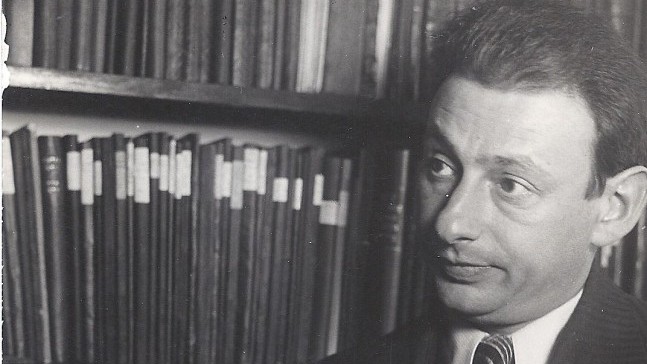
As Scholem himself once put it, “The mystical symbol is an expressible representation of something which lies beyond the sphere of expression and communication.”
Prochnik’s narrative can essentially be broken into three sections: The book is part Scholem biography, part intellectual dissection of Kabbalah and Jewish mysticism, and part personal memoir.
It was Scholem’s work, after all, that drove Prochnik to convert to Judaism.
Eventually, Prochnik would take up residency in Israel with his wife — from whom he has since split — between 1987 and 1996.
However, just like his intellectual and spiritual guru, Prochnik soon found a deepening rift between his own views and that of Israel’s government.
Prochnik first read Scholem 30 years ago while holidaying in the west of Ireland with his wife.
He had been flirting with the idea of converting to Judaism for some time. His father was a Jewish refugee who left Austria in Nazi Europe for the United States, but Prochnik grew up without any religious affiliation himself. After finding a spiritual connection through Scholem’s work, the author finally took the leap to join the Jewish faith.
“One of the things that I found fascinating about Scholem’s presentation of Judaism was that it subverted the idea of a fixed monolithic law, and the notion that Judaism’s core identity had been firmly defined too,” Prochnik explains.
Prochnik believes Scholem’s greatest intellectual achievement is his understanding of Kabbalah, which he saw as a lens of historical interpretation on Jewish experience.
Kabbalah is an ancient wisdom that reveals how the universe and life work. On a literal level, the word Kabbalah means “to receive.” It’s the study of how to receive fulfillment in our lives.
“[Kabbalah] had been understood traditionally as a theological debate,” the author explains.
“But Scholem looked at subjects like Jewish experiences of exile, redemption, as well as the politically disenfranchised individual Jewish life,” says Prochnik. “He came to the conclusion that you could still have agency as being part of this grand cosmic process.”
It was the essay “Kabbalah and Myth” that specifically drew Prochnik’s intellectual and spiritual curiosity to Scholem’s work over three decades ago. That piece points out that Jewish philosophers paid a heavy price for their disdain of the primitive levels of human life, ignoring the terrors from which myths are made.
19th century Judaism had refused to engage with the struggles of everyday life
“Scholem felt that 19th century Judaism had refused to engage with the struggles of everyday life or face up to the calamities that people in positions of oppression or marginalization came in contact with,” Prochnik explains.
“Scholem felt that Kabbalah allowed for the individual to play a role in these huge events. And that it not only empowered the individual, but it provided a sense of collective human solidarity against present dark forces,” he adds.
Many academics, scholars, critics, and writers have made comparisons between Scholem and Sigmund Freud. But another towering Jewish central European intellectual also had an enormous influence on Scholem’s work: Walter Benjamin.
Prochnik spends a considerable amount of his latest book discussing the continual tensions between the two scholars. They were close friends for many years before Benjamin committed suicide near the Spanish-French border in September 1940, while fleeing the horrors of Nazi Europe.
Scholem first met Benjamin in Berlin in 1917, when he was just 15. Prochnik notes that Scholem discovered in the dashing young European cosmopolitan intellectual an individual with a philosophical curiosity he had never encountered before.
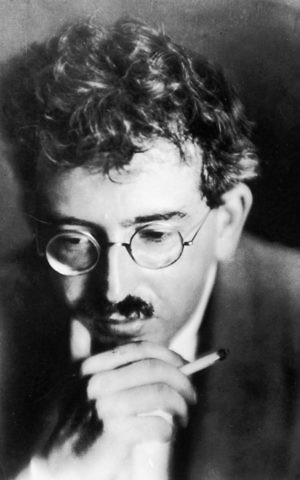
Archives, Vienna
However, Benjamin, despite all of his intellectual brilliance, simply didn’t have the same knowledge about Jewish mysticism that Scholem possessed.
And so both worked off the other’s respective intellectual gifts — even if much of the time they disagreed on matters pertaining to politics, spirituality, history, culture, and theology.
“Benjamin’s devotion to learning, and his ability to look at everything was — at least in Scholem’s mind — in the great tradition of Jewish thought,” Prochnik says.
“It’s this tradition of commentary — a key idea in Judaism — that the truth does not lie in some radical original formulation out of nowhere,” he continues, “but that it spins, almost in a kaleidoscopic vision, in an arrangement of ideas and historical knowledge to give a new light on them. Benjamin had his own terms for these things. But it’s a dialectical idea for a progressive enlightenment that the two men shared.”
Even though Benjamin and Scholem’s relationship was fraught, Prochnik believes they never had a definite break or permanent falling out as such.
“They understood that they were living lives of resistance and that they were fighting for some humanistic ideal that was opposed to the overarching political realities of their time. And that this was a shared struggle,” says Prochnik.
They were fighting for some humanistic ideal that was opposed to the overarching political realities of their time
Prochnik points out that both men had their own views of how history worked, too.
Benjamin became increasingly drawn towards a Hegelian/ Marxist view of history which believed history had fixed laws and results. Scholem, on the other hand, was coming from a different angle entirely.
“At one point in 1967 [in Israel] Scholem talked about living in what he called the ‘plastic hours’ of history,” Prochnick explains.
Scholem believed that in these so-called “plastic hours” everything can change because history is in such a volatile flux — and these are moments which other historical eras simply don’t have.
“When he made those statements about the importance of history, it was because his own investment in Judaism did not begin with Jewish mysticism, but with Jewish history,” says Prochnik.
Scholem died in 1982, on the eve of the First Lebanon War.

“So he saw Israel evolve into the rough outlines of what exists today. Even if it was not quite as right wing and reactionary,” says Prochnik.
Prochnik believes that if the Jewish scholar were he alive today he would be making similar comments about those “plastic hours.”
“What I think would have surprised Scholem is the amount of cultural jingoism that exists in Israel today,” Prochnik says.
“Take for example the recent [code of ethics proposed] by the Israeli Education Minister [Naftali Bennett] about professors being able to speak about certain political issues.
“Scholem was already [predicting] that kind of [political cultural censorship] in the post ’67 years,” Prochnik adds.
The arrival of a new kind of “messianic Zionism” that began sweeping across Israel in the post ’67 era concerned Scholem greatly, Prochnik claims.
“Scholem was one of the first signatories on a letter that was issued from the Hebrew University after the 1967 war saying that the territories had to be returned immediately,” says Prochnik.
“So when you consider how much the settlement project has expanded since 1967, it seems inconceivable that Scholem would not have seen a danger in the way Israel [has developed] to what it has presently become,” the author concludes.









The Times of Israel Community.