

Abbas meets Jordanian king on possible US embassy move
Meanwhile, Hamas leader Ismail Haniyeh heads to Cairo for talks as he drums up support to lead terror group’s political bureau

 Add ToI as a Preferred Source on Google
Avi Issacharoff, The Times of Israel's Middle East analyst, fills the same role for Walla, the leading portal in Israel. He is also a guest commentator on many different radio shows and current affairs programs on television. Until 2012, he was a reporter and commentator on Arab affairs for the Haaretz newspaper. He also lectures on modern Palestinian history at Tel Aviv University, and is currently writing a script for an action-drama series for the Israeli satellite Television "YES." Born in Jerusalem, he graduated cum laude from Ben Gurion University with a B.A. in Middle Eastern studies and then earned his M.A. from Tel Aviv University on the same subject, also cum laude. A fluent Arabic speaker, Avi was the Middle East Affairs correspondent for Israeli Public Radio covering the Israeli-Palestinian conflict, the war in Iraq and the Arab countries between the years 2003-2006. Avi directed and edited short documentary films on Israeli television programs dealing with the Middle East. In 2002 he won the "best reporter" award for the "Israel Radio” for his coverage of the second intifada. In 2004, together with Amos Harel, he wrote "The Seventh War - How we won and why we lost the war with the Palestinians." A year later the book won an award from the Institute for Strategic Studies for containing the best research on security affairs in Israel. In 2008, Issacharoff and Harel published their second book, entitled "34 Days - The Story of the Second Lebanon War," which won the same prize.
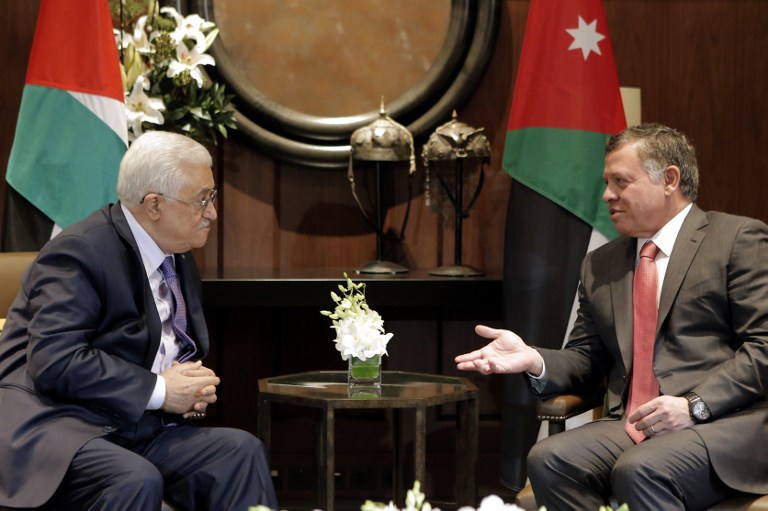
Palestinian Authority President Mahmoud Abbas met Sunday with King Abdullah II of Jordan to discuss the repercussions should the United States move its Israel embassy from Tel Aviv to Jerusalem, while a top official from the rival Hamas organization prepared to meet with Egyptian officials in Cairo on Monday.
The two meetings come amid warming ties between Egypt and Hamas, the terror organization and de facto rulers of the Gaza Strip, which borders Egypt’s Sinai Peninsula.
The official Wafa Palestinian news agency reported Abbas and the king discussed US President Donald Trump’s declared intention to move the US Embassy in Israel from Tel Aviv to Jerusalem, which the Palestinians have condemned and Amman has called a “red line.”
The two leaders, who have met before, also discussed steps needed to revive the peace process with Israel. The meeting was held in Hussein palace. The get-together came ahead of a gathering of the Arab League in Amman in March.
After the meeting, Abbas said that the two sides agreed upon “a series of steps we’ll take if the US moves the embassy to Jerusalem,” without elaborating.
Meanwhile, Hamas leader Ismail Haniyeh was considered the leading candidate to become chairman of the Hamas political bureau, and was scheduled to hold talks with senior Egyptian officials on Monday, Palestinian sources told the Times of Israel.
Haniyeh’s visit to Egypt is unusual and came after he spent four months abroad. For most of that period, Haniyeh was in Qatar although he also visited various Arab states, including Saudi Arabia. Haniyeh’s visit to Cairo comes in the shadow of strained tensions between Egypt and the Palestinian Authority, in part because of Cairo’s cozying up to Hamas.
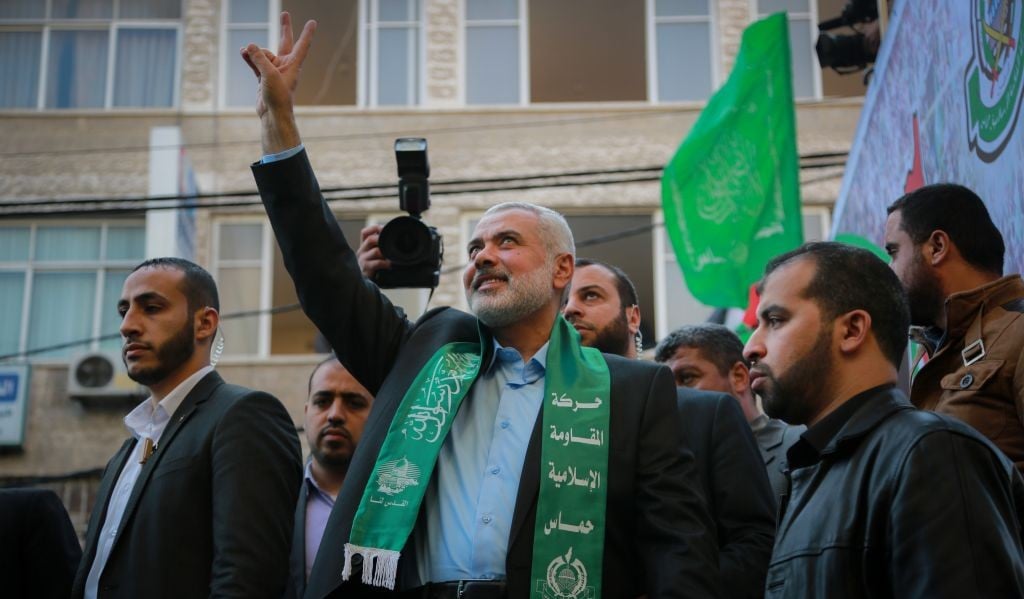
Egypt has recently opened the Rafah border crossing between Egypt and Gaza, even allowing goods into the Palestinian enclave from Sinai.
Among other things, Egypt has permitted the import of materials that are used by the Hamas military wing to build tunnels and to manufacture various weapons. In the past, the tunnels have been used to build a defense network inside Gaza for use against any Israeli incursions, for smuggling between Gaza and Sinai, and to launch deadly terror attacks inside Israel by burrowing under the Israeli-Gaza border fence.
The meetings with Haniyeh are expected to strengthen his position in Hamas, which for the past month has been engaged in preparations for elections to the chairmanship of the political bureau. Haniyeh’s main rival in the contest is Moussa Abu Marzouk.
His Majesty King Abdullah II receives Palestinian President Mahmoud Abbas #Jordan pic.twitter.com/PjcJfxwulV
— RHC (@RHCJO) January 22, 2017









The Times of Israel Community.