

Authorities deny ignoring ‘illegal’ Palestinian town
Settlers group claims Arabs building homes without permits near Hebron; Civil Administration says majority of construction is authorized
 Add ToI as a Preferred Source on Google
Judah Ari Gross is The Times of Israel's religions and Diaspora affairs correspondent.
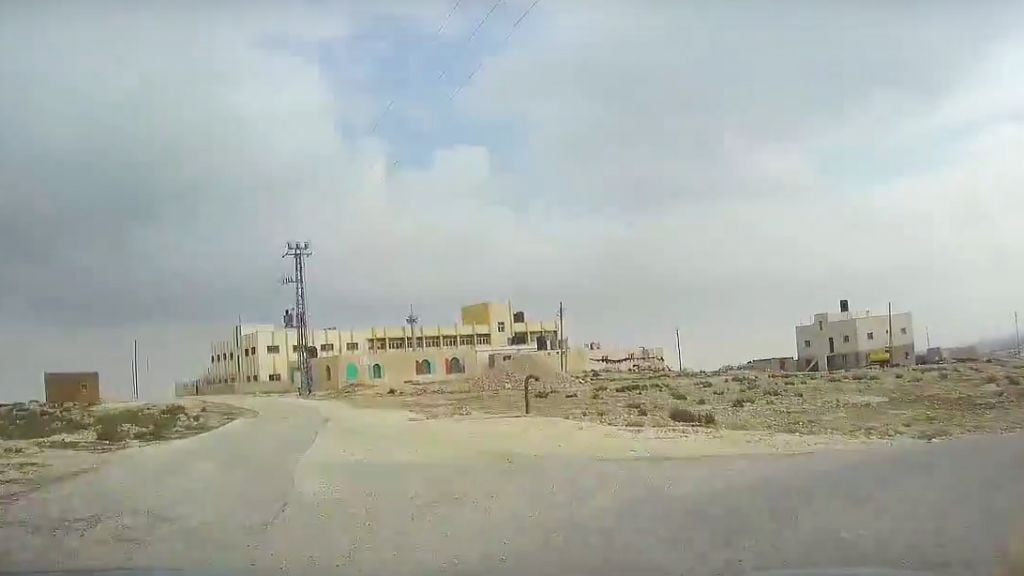
A settlers rights organization this week accused Israel’s Civil Administration of turning a “blind eye” to what it described as an illegal Palestinian construction project in the West Bank.
The Civil Administration, a Defense Ministry department that handles the day-to-day management of the West Bank, denied the claim raised on Wednesday during a Knesset committee hearing by the Regavim movement. The Civil Administration said the building site in question was planned in the 1980s.
“We are speaking of a collection of structures made up of three compounds, which were planned in the second half of the 80s and were aimed at providing for the Bedouin population that has lived in that area for decades,” it said.
Israel enforces the laws against illegal construction “equally” for both Israelis and Palestinians, said Maj. Gen. Yoav Mordechai, Israel’s coordinator of government activities in the territories.
In addition, he said, the levels of enforcement in the West Bank are “hundreds of percentage points higher than all the other districts of Israel.”
The Regavim nongovernmental organization referred specifically to the construction of a “new and illegal Palestinian city,” which they said was being built with money from the European Union and the Gulf states.
Prime Minister Benjamin Netanyahu’s government has taken considerable offense at the EU’s funding of illegal Palestinian construction projects and promised to work against it.
“They’re building without authorization, against the accepted rules, and there’s a clear attempt to create political realities there,” Netanyahu said in January.
According to Regavim, the “Palestinian city” is located on army land, in an area known as Firing Zone 917, in the hills south of Hebron.

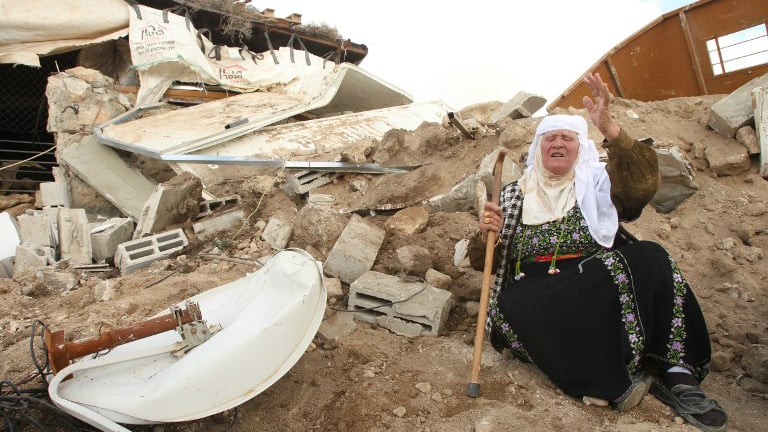
This is not to be confused with the nearby Firing Zone 918, where a number of illegally built Palestinian structures were demolished earlier this year.
“The accelerated building that’s going on there in recent days spans dozens of kilometers and includes hundreds of housing units, schools, clinics and mosques,” Regavim said in a statement.
But the Civil Administration said that although a few buildings are located in Firing Zone 917, the vast majority of the village’s structures were not built on army land.
The few buildings that are on army property are “in the process of being taken down from the firing zone,” the Civil Administration said on Thursday.
Regavim, however, refused to accept the government’s position, saying Israel “turned a blind eye” to the site. The group claimed Palestinian builders neglected to file the proper paperwork for the construction in the Hebron Hills site and exceeded the building permits they were granted.
The Civil Administration denied this accusation as well. “Decrees have been issued against any deviations from [the three] compounds, and enforcement actions have been taken, including demolitions and confiscations,” it said.
Regavim was cofounded by settler activist Yehuda Eliyahu and current Jewish Home MK Bezalel Smotrich in 2006. Since joining parliament, Smotrich has stepped down from his position in the organization, but continues to support it.
The nongovernmental organization uses the country’s legal system to act as something of a selective civilian enforcer of Israel’s construction codes, aimed at preventing illegal building by Arab Israelis and Palestinians in the West Bank and Israel.










The Times of Israel Community.