

Barak says ‘good-bye,’ for now
Outgoing defense minister and Netanyahu lavish praise on each other at Bar-Ilan send-off
 Add ToI as a Preferred Source on Google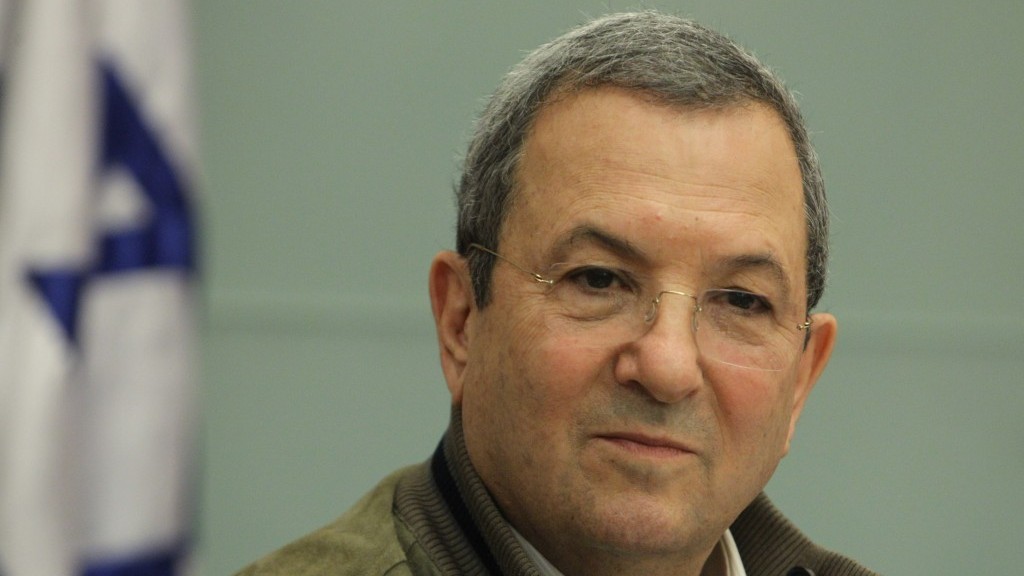
Ehud Barak bid farewell to the Defense Ministry and to political life on Wednesday at an event attended by Israel’s military and political leadership.
Barak, who held the post of defense minister for six years, expressed confidence that Prime Minister Benjamin Netanyahu and the defense establishment would be able to meet the country’s existing challenges: “The steering wheel is being held by strong, trustworthy and confident hands,” he said at the send-off, held at Bar-Ilan University.
The outgoing defense minister had announced in November that he was leaving political life, at least for the time being. He recently told CNN that he would remain out of politics for at least five years.
Speaking at the event, Netanyahu reminded attendees of the current threats to Israel’s security.
“This will be a decisive year for the security of Israel and its citizens. Weapons which threaten us are piling around us,” said the prime minister. “Just as I do not underestimate the danger, I also do not underestimate our ability to deal with it.”
Speaking of Barak, his longtime colleague, Netanyahu described a relationship spanning decades, initially formed while the two served together as IDF fighters.
“Over the past four years, I discovered a man who is deeply committed to the future of Israel and thinks about how to ensure its security,” the prime minister said, and added, turning to Barak, “The State of Israel cannot give up on people like you.”
Barak had a decorated 35-year career in the Israeli military, achieving the rank of Lieutenant-General and serving as IDF Chief of the General Staff between 1991 and 1995.
He was foreign minister under then-prime minister Shimon Peres in the late 1990s, and he became prime minister in 1999, with an electoral victory over the incumbent Netanyahu. His term as prime minister is often remembered for the territorial concessions he was reportedly willing to make at a peace summit hosted by then-US president Bill Clinton at Camp David. Those concessions were rejected by the Palestinians under the leadership of the late Yasser Arafat — according to Clinton and others — and the summit disintegrated, as did Barak’s government several months later.
As head of the Labor party, Barak assumed the role of defense minister under then-prime minister Ehud Olmert in 2007. He continued in the position throughout the following Knesset term, headed by Netanyahu’s Likud party. But in 2011, Barak broke ranks with Labor and formed the Independence party along with four other Labor MKs. The breakaway faction remained loyal to Netanyahu and Barak kept his post.
In light of Barak’s departure from political life, members of the Independence party did not contest the recent Knesset elections.





The Times of Israel Community.