

ToI poll finds Likud and Yashar neck and neck on 23 seats as deadlock continues
Neither bloc headed by Netanyahu’s and Eisenkot’s parties gets a Knesset majority; unlike in other recent surveys, Ofer Winter’s new party fails to enter parliament
 Add ToI as a Preferred Source on Google
Tal Schneider is a Political Correspondent at The Times of Israel
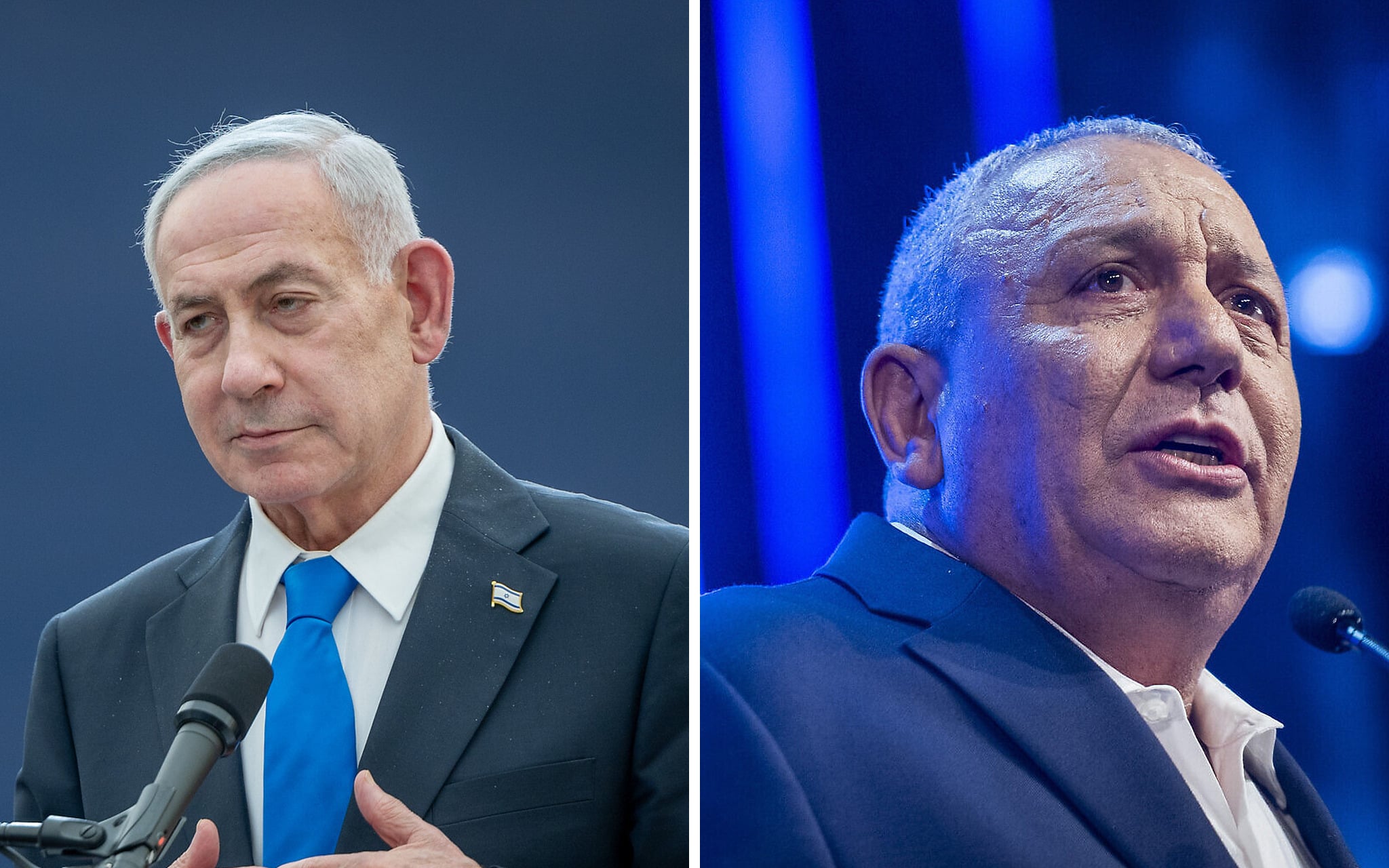
A poll published Thursday by Times of Israel’s Hebrew-language sister site found that Prime Minister Benjamin Netanyahu’s Likud party and Gadi Eisenkot’s Yashar would each get 23 seats if elections were held now, with the deadlock persisting between the blocs led by the two frontrunners.
Neither candidate was seen as being able to muster a 61-seat majority in the 120-seat Knesset, in the survey from Zman Yisrael.
It was the first poll by Zman since registration for party slates ended on Tuesday. A Zman poll last week gave each of the parties 22 seats.
After the ruling Likud and challenger Yashar came former prime minister Naftali Bennett’s B’Yachad party with 15 seats, a position unchanged over the past three weeks.
Next came the hawkish Yisrael Beytenu (10), the ultra-Orthodox Shas (10), fellow ultra-Orthodox party United Torah Judaism (9), and left-wing The Democrats (8).
The Joint List, a coalition of Arab-majority parties, got 7 seats. Far-right Otzma Yehudit scored 6 seats, followed by Arab-majority party Ra’am with 5.
Bringing up the rear was far-right Religious Zionism with 4 seats.
The new right-wing People of Israel party, whose leader, Ofer Winter, has said he would back Netanyahu, did not pass the election threshold of 3.25 percent of the vote, equal to four seats. That was in contrast with other Hebrew media polls, published Wednesday, that gave the party 4-5 seats.
Yoaz Hendel’s Reservists party and Benny Gantz’s Blue and White — both not aligned with either bloc and pushing for a cross-bloc coalition without Haredi or Arab parties — similarly did not clear the threshold.
Despite the slight shuffling with the main political camps, the anti-Netanyahu bloc led by Eisenkot had 56 seats, while the current coalition led by Likud had 52, both short of the 61 seats needed for a majority.
While the Joint List has historically not joined a government, Ra’am did join Bennett’s government in 2021. With its five seats, Ra’am could give the change bloc a majority, the poll showed. However, several hawkish leaders within the bloc have ruled out such a scenario.
The poll also found that 74% of respondents said they were satisfied with the slate submitted by the party they intend to vote for, while 9.2% were not happy, and 16.4% said they didn’t know.
Among Yashar voters, satisfaction rose to 85%, with 6.82% unsatisfied and 7.95% saying they didn’t know. Likud voters were 81% satisfied, 9.41% unsatisfied, and a similar percentage didn’t know how they felt.
The poll was conducted by political consultant Yossi Tatika of Tatika Research & Media in collaboration with the Adgenda panel managed by Roy Schindler. It was conducted on September 9-10, and included 500 Jewish and Arab respondents. The maximum margin of sampling error is 4.4%.
Polls published by Hebrew media on Wednesday showed similar results, albeit with most predicting that Winter’s People of Israel party would make it into the Knesset.
Elections are scheduled for October 27.







The Times of Israel Community.