

Main opposition factions ink surplus-vote deals in bid to maximize Knesset representation
PM claims agreements show his rivals ‘will form left-wing government’; Joint List No. 2 says alliance of Arab parties to sign deal with Ra’am, but neither makes formal announcement
 Add ToI as a Preferred Source on Google
Ariela Karmel is a political correspondent at The Times of Israel. She previously reported for Calcalist and Haaretz. She holds an MA in Middle Eastern and African History from Tel Aviv University and a BA in Political Science from the University of British Columbia.
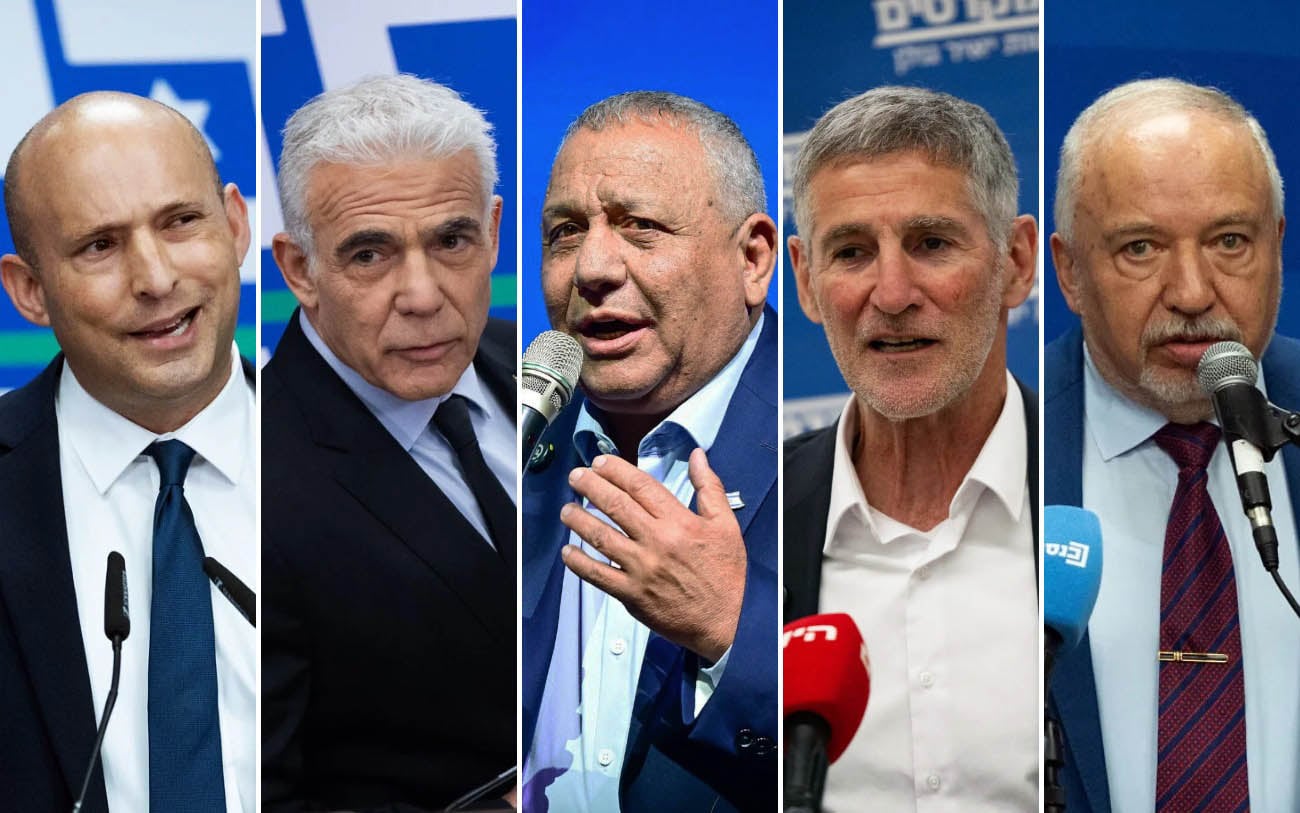
Israel’s four main opposition parties announced Thursday that they would sign surplus-vote agreements aimed at maximizing the anti-Netanyahu bloc’s representation in the next Knesset, as the rival sides jockey for advantage ahead of the October 27 elections.
Gadi Eisenkot’s Yashar party announced that it will sign an agreement with Yair Golan’s Democrats, while Avigdor Liberman’s Yisrael Beytenu will sign one with B’Yachad, the joint electoral list headed by former prime ministers Naftali Bennett and Yair Lapid.
“In the upcoming election, the goal is clear: to prevent the loss of votes, maximize the strength of the bloc and replace the government responsible for the October 7 failure,” the Democrats said, welcoming the agreement with Yashar and cooperation across the opposition bloc.
Yashar said the agreements would help ensure that “every ballot cast by Israelis seeking change and the replacement of the government responsible for the October 7 failure will go to one of the parties in the change bloc.”
Unlike the mergers Prime Minister Benjamin Netanyahu has pushed among smaller right-wing parties at risk of failing to cross the 3.25% electoral threshold, the agreements do not combine the four opposition parties into joint lists. Each will run independently and receive its own votes and seats.
Rather, under Israel’s electoral system, the agreements allow each pair to pool their surplus votes when the final Knesset seats are allocated, increasing the chances that one of the parties will pick up an additional seat.
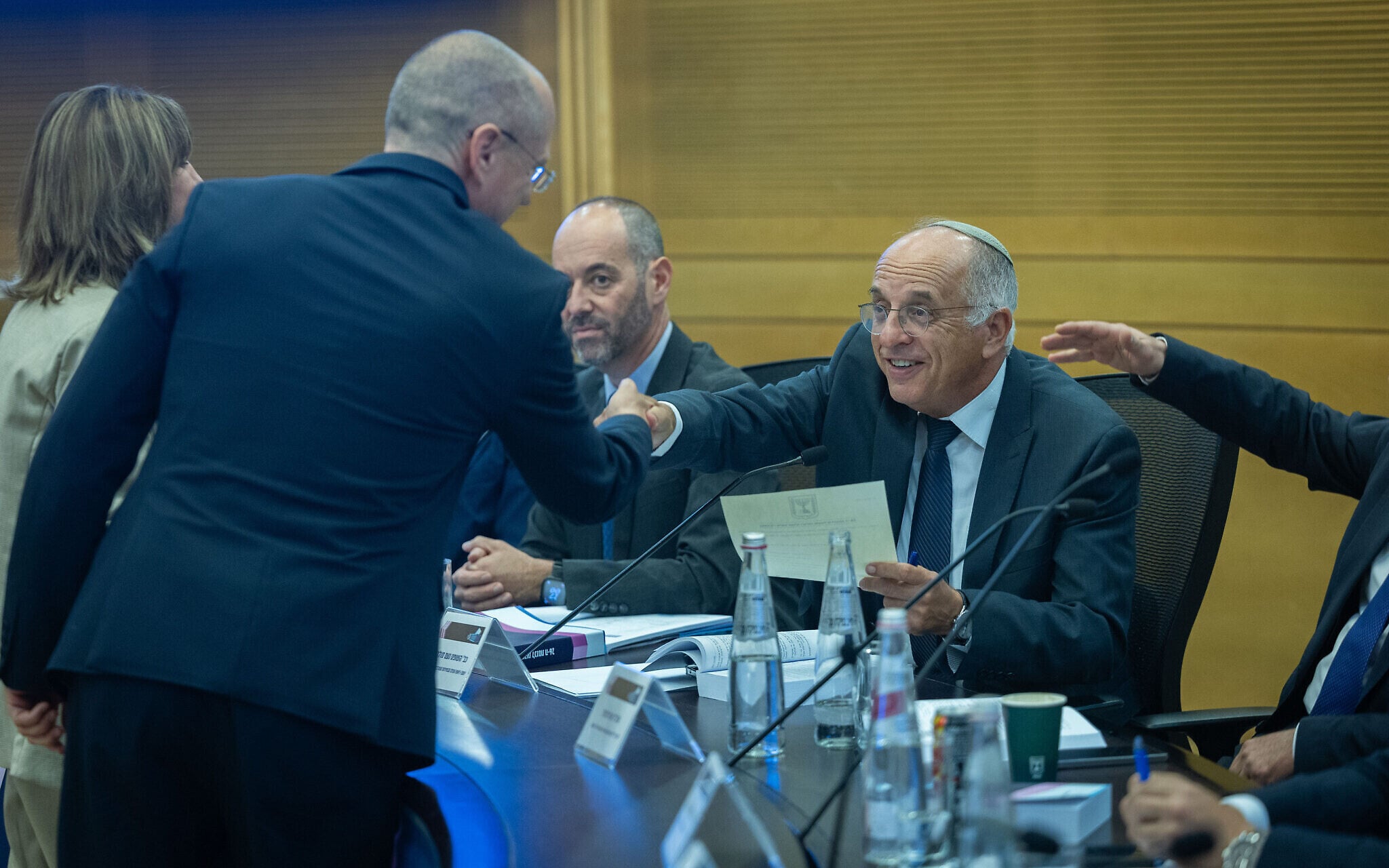
Even though it has been a standard maneuver across parties in previous elections, the government sought to portray it as proof that the center-right Eisenkot was actually a closet leftist.
“Eisenkot will form a left-wing government with Yair Golan, Liberman and the Arab parties,” Netanyahu wrote on social media in response the agreement between Yashar and the Democrats.
Far-right Finance Minister Bezalel Smotrich put out a similar statement railing at Eisenkot and Golan, claiming “they will establish a dangerous left-wing government.”
All four opposition parties are currently polling far above the electoral threshold, with a survey released Wednesday by Channel 12 poll news showing Yashar with 25 seats, surpassing Netanyahu’s Likud by four seats. B’Yachad has been consistently polling at around 13 seats, the Democrats at 10 and Yisrael Beytenu at nine, giving the four-party opposition bloc a combined 57 seats. Other recent polls have put them at or even above the 61-seat majority needed to form a government, though additional surveys published Wednesday by Channel 13 news and the Kan public broadcaster both had the blocs tied, at 53 and 52 seats each, respectively.
The balance of power between the blocs is held by the Islamist Ra’am party and the Joint List of fellow predominantly Arab factions Hadash, Ta’al and Balad, which the television polls from Wednesday put at 11-14 seats between them.
Ta’al leader Ahmad Tibi, the No. 2 on the Joint List, wrote on X Wednesday that the alliance would sign a surplus-vote agreement with Ra’am and said that he had discussed the matter with the party’s leader Mansour Abbas.
Neither party, however, formally announced such an agreement.
Times of Israel staff contributed to this report.










The Times of Israel Community.