

Bon Voyage, Bibi
The Hebrew media muses about the prime minister’s US trip, and steels Jerusalem residents for a massive anti-draft rally
 Add ToI as a Preferred Source on Google
Marissa Newman is The Times of Israel political correspondent.
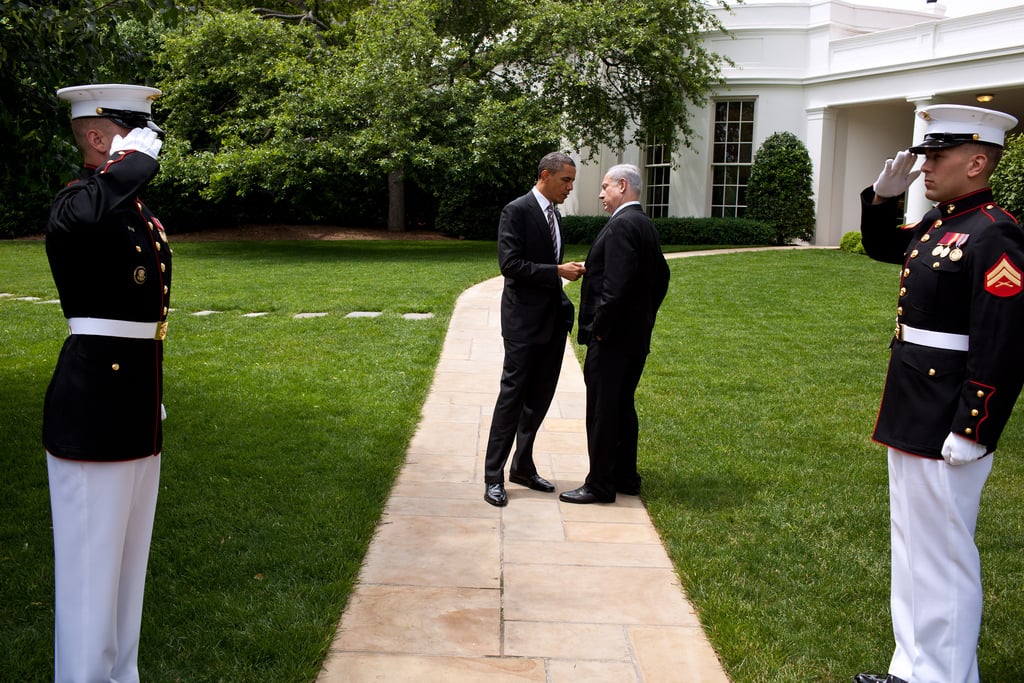
With a big week ahead, Friday’s Hebrew papers are thin on news and heavy on speculation: The Israeli press gears up for Prime Minister Benjamin Netanyahu’s visit with President Obama, braces the public for a large-scale Haredi anti-enlistment protest set for Sunday, and wonders where the Holyland corruption case is headed.
Haaretz outlines the questions both Netanyahu and PA President Mahmoud Abbas (the former in his visit next Monday, and the latter in his upcoming trip to the White House on March 17) are expected to face in their respective meetings with the US president.
First and foremost, the two leaders will be asked how they expect to respond should peace talks collapse, the paper reports.
“Obama will ask Netanyahu what he intends to do with the Palestinian population in the West Bank, how he will deal with the Palestinian proceedings with the various UN agencies, and how he intends to overcome the growing boycott [threat] and [Israel’s] deterioration of status with the EU. The president will ask Abbas how unilateral negotiations with the UN will bring about an independent state and an IDF withdrawal from the West Bank, and how exactly he intends to pay the salaries of tens of thousands of PA employees should the US and EU cut off aid.”
Obama is slated to present an ultimatum to both sides: “to cooperate with the US proceedings and move forward, or to remain isolated, in trouble, and deal with reality. And the reality the two sides will face the day after peace talks fail will not be sympathetic.”
Ahead of the meeting, Maariv focuses on a report from the Foreign Ministry’s department of political research, which indicates that the Palestinians are growing increasingly disillusioned with Secretary of State John Kerry. According to the report, Kerry is accused of providing “vague solutions” regarding future borders and the status of Jerusalem, and that with regard to security measures, he “tends to favor Israel.”
The report also states that Palestinians are prepping themselves for “the day after” peace talks fail, and more openly express the potential repercussions for Israel than they have in the past. The Foreign Ministry report quotes Saeb Erekat, a Palestinian chief negotiator, saying that a “political offensive” would be likely in the events talks fail to support this assertion.
The paper also claims that unnamed officials well informed on the status of the negotiations have said that the Israeli government intends to divide the settlements into three primary blocs — the largest will be annexed to Israel; the second will remain under Palestinian rule; and the third will be subject to forcible evacuations. The Prime Minister’s Office dismissed the claims, referring to it as a “false report” and stated that the prime minister “does not intend to evacuate any settlement or uproot a single Israeli.”
Yedioth Ahronoth emphasizes the seemingly gratuitous expenses the US trip entails, and mocks Netanyahu’s entourage, which is to consist of 30 staff members, including four spokesmen and dozens of security personnel. The paper lists in full the various officials accompanying the prime minister. In a statement from the Prime Minister’s Office, officials stress that, due to Netanyahu’s packed itinerary, the large staff is necessary. The representatives reassure citizens that, unlike a previous spending spree that led to a public outcry, “No bed was installed [on the PM’s plane] for this flight.”
The Hebrew papers also highlight the mass ultra-Orthodox rally planned for Sunday against the impending vote on the draft law that would see criminal sanctions against Haredi yeshiva students who do not enlist.
The prayer demonstration in Jerusalem on Sunday will also be attended by a number of prominent religious-Zionist rabbis and Jewish Home MK Moti Yogev, Yedioth Ahronoth reports.
Organizers are estimating that between 120,000 and 400,000 will attend, including — in a separate area — thousands of women and children. The entrance to Jerusalem will be closed to traffic from 2 p.m. on Sunday, and roads throughout the capital are expected to be blocked as well.
Israel Hayom dubs the rally “The million [person] protest.” In an op-ed for the paper, Dan Margalit calls it “a formative test for Israeli society of its ability to respect the other; of its obligation to include and bind them under its laws. And this dual and seemingly contradictory task is not easy.”
Margalit warns that, should the protest escalate and lead to clashes between police and demonstrators, it would not bode well for the ultra-Orthodox public, and would likely encourage the Knesset to advance harsher legislation.
“The Haredim are approaching [the protest] with considerations of what they will gain from it. That’s fine. So long as they don’t ignore the question of what they have to lose,” he writes.
Haaretz features a poll of its readers on the anticipated effects of the so-called “Equality of the Burden” bill. When asked whether the aim of the universal draft bill is to increase equality or to boost the political standing of Yesh Atid party leader Yair Lapid, 24 percent of respondents said it was for equality; 42 percent claimed it was for Lapid’s benefit; and 29 percent responded that it was a mix of the two. Regarding whether the law would increase or decrease equality upon its implementation, 42 percent said it would not change a thing; 25 percent felt it would lead to greater equality; and 18 percent said that it would cause greater inequality.
Negotiations continue with the prosecution to add former prime minister Ehud Olmert’s ex-office manager Shula Zaken as a state witness, but the possibility of it happening grows increasingly slim, Israel Hayom reports.
“The chance of a plea bargain is nearly zero,” a legal representative involved in the proceedings told the paper. “There is a huge disparity between the reports and the reality.”
The main reason a bargain is unlikely to be reached is Zaken’s insistence on receiving community service rather than jail time in exchange for her testimony — a provision on which neither side will compromise, the paper reports.
According to Yedioth Ahronoth, while negotiations have admittedly stalled, Zaken conceded on Thursday night to serve a short prison sentence if a deal can be done. However, the prosecution reportedly rejected the offer and is not convinced Zaken has testimony that could radically alter the case. The negotiating parties also don’t anticipate that the judge will accept her testimony, should she serve as a witness.
“She already changed her version [of the story] too many times,” sources from the prosecution told the paper.








The Times of Israel Community.