

Fighting fire with ire
Were terrorists behind some, many, or most of the blazes ravaging Israel? Each of Israel’s dailies tells a different story
 Add ToI as a Preferred Source on Google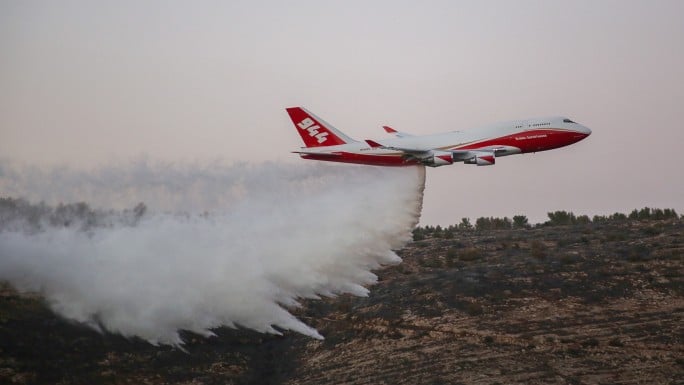
The rash of fires over the weekend, ravaging thousands of homes and prompting allegations of terrorism, inflames Sunday’s Hebrew newspapers, as news reports offer contradictory accounts of who was responsible and pun-happy pundits lament political “pyromania” that they argue is “fueling incitement” against Arab Israelis.
In its coverage, the Yedioth Ahronoth daily plays up the personal loss, featuring multiple stories on Israelis lamenting the destruction of their homes and property.
“Thursday in Haifa was red and orange; Friday was black. Black Friday,” writes veteran columnist Nahum Barnea.
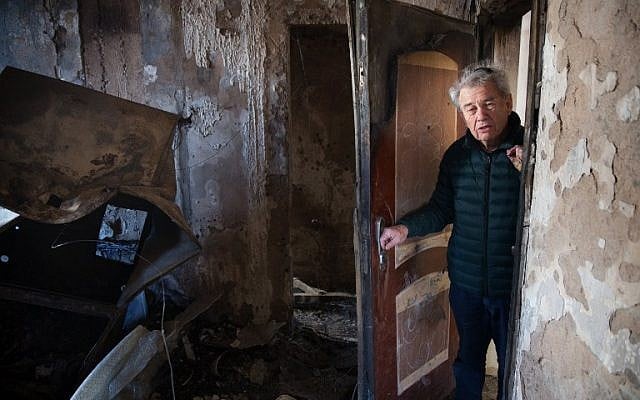
From the streets of the northern city, Barnea describes an encounter with a man whose apartment was destroyed. “What did you lose? I asked. ‘All of our old photos,’ he said. ‘And the photos from our wedding. We saw our home, which we loved with all our hearts, disappear. We had two bronze statues: they melted. The refrigerator melted. It’s unbelievable what the fire did.'”
“But people were not burned and did not melt. The great accomplishment in combating he fires is that it did not leave behind casualties,” continues Barnea. “For this accomplishment, all should be praised, from the prime minister to the public security minister to the last firefighter,” he writes.
Barnea also emphatically notes that arsonists — terrorists — were behind many of the fires.
“A large number of the incidents in the current wave were sparked by arson, with a terrorist motive. Whoever denies this fact is burying his head in the sand. Those who started the fires did not intend to just harm trees: they intended to [destroy] towns, homes, people.”
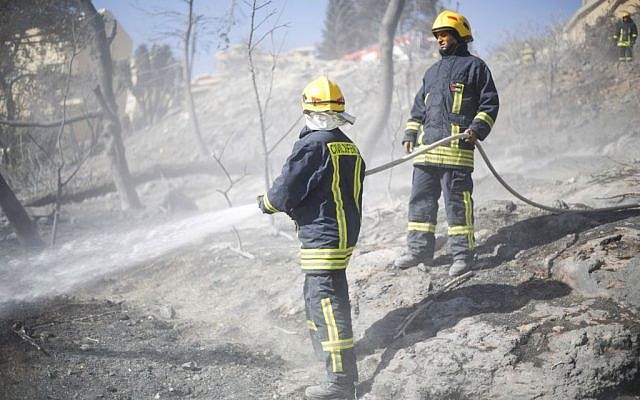
While urging the security forces to track down the perpetrators and hailing their efforts thus far, Barnea also rejects statements from politicians, accusing them of “fueling incitement.”
“There is no benefit to the inflammatory statements by ministers and Knesset members. They won’t strip the citizenship from the families of youths that threw a cigarette in the forest, just as they don’t strip the citizenship of murderers,” he writes.
Haaretz, meanwhile, focuses in its headline on the 1,600 Israelis rendered homeless by the fires, and in its news report downplays the allegations of arson and stresses that the information supplied by police is incomplete.
In its front-page story, the daily notes that “the police offered only partial information about the detainees [in connection to the fires], which according to its statement, were not involved in starting the the biggest fires in Haifa, the Jerusalem hills, or Zichron Yaakov. Several of the fires that are suspected to have been [deliberately] set by the suspects happened in Arab towns.”
In its editorial, Haaretz rails against “political pyromania,” referring to calls by politicians to severely punish the arsonists.
“Some of the fires may have been started by arsonists, and there may be people who incited others to set fire to houses and forests. But alongside the investigation to uncover the arsonists, if there are any, must come caution, rigorousness and responsibility to stop the political pyromania directed toward an entire group of Israeli citizens,” it writes, referring to Arab Israelis.
Israel Hayom focuses its coverage on the arson accusations, under the headline: “Fighting the arsonists.” The daily also includes a banner “arson terror” over its coverage.
Contradicting the Haaretz report, the daily says the Zichron Yaakov blaze was deliberately set. Citing an investigation by the local fire department, “the fire in Zichron Yaakov broke out as a result of nationalistic arson.” According to the daily, a spokesperson maintained “the findings are unequivocal and that ‘a human hand, certainly, deliberately caused the fires.'”
Columnist Dan Margalit warns against blaming the Arab Israeli community for the spate of fires, while suggesting that the suspected attacks appear to be organized by a larger terror network.
“There is no room to blame the Arab public for the wave of fires,” writes Margalit. “MKs from the Joint (Arab) List have expressed their disgust, the residents have shown their willingness to help, and the Palestinian Authority has offered its equipment to help the firefighters. There is no room for incitement.
“However, and with no contradiction, I suggest the police and Shin Bet think outside of the box and not view these fires as another chapter of the ‘knife intifada.'”
Margalit argues that setting the fires required more preparation than the wave of stabbing attacks that began in October 2015.
“If they managed to prepare so quickly, several hours from one incident to another, there is a suspicion, or at least it must be checked, whether they were prepared in advance and organized under the guidance of a central [terrorist] figure (if not a national figure, then a regional one),” he writes.





The Times of Israel Community.