

Iran nuke talks may extend past deadline, Western sources say
Negotiations reach critical stage ahead of June 30 target date for deal to rein in Tehran atomic program
 Add ToI as a Preferred Source on Google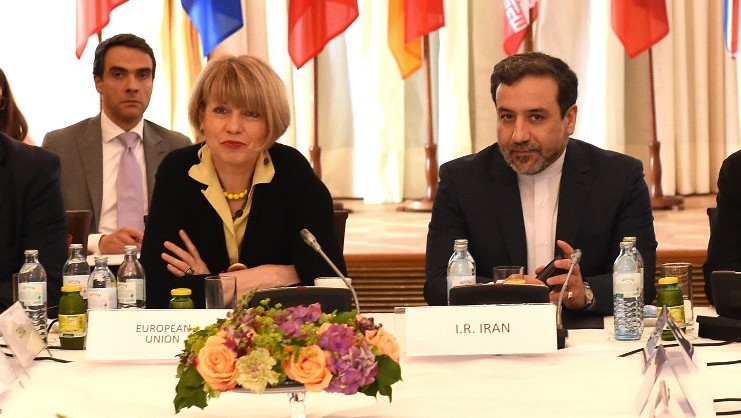
Nuclear talks between the six world powers and Iran may be extended past the June 30 target date for a finalized accord.
According to two Western sources including a senior US official, the negotiations were at a “delicate” stage and may have to go beyond the self-imposed deadline, CNN reported Friday.
The sources also downplayed a report in the Russian press indicating that the negotiations reached a critical slowdown. A report in the news agency Tass quoted a Russian official as saying the talks were “virtually stalled.”
Russia’s deputy foreign minister was quoted earlier Friday as saying that the talks have slowed.
“The rate of progress… is progressively slowing down,” Sergei Ryabkov was quoted by Russia’s RIA Novosti as saying as he arrived for the latest round of talks in Vienna.
“This is very worrying to us because there is very little time before the deadline and we urgently need to enter the final stage.”
In April, Iran and the five permanent members of the UN Security Council plus Germany agreed in Lausanne, Switzerland to the outlines of a deal aimed at ending the decade-old standoff over Iran’s nuclear program.
According to this framework, due to be finalized by June 30, Iran will dramatically scale down its nuclear activities in order to render any dash to making nuclear weapons all but impossible.
In return Iran, which denies wanting nuclear weapons, will see painful sanctions lifted by the six powers — the United States, Russia, China, Britain, France and Germany.
On Thursday French Foreign Minister Laurent Fabius said that in particular the issue of tighter UN inspections of Iran’s remaining facilities after the mooted deal was not yet sewn up.
“The talks are supposed to wrap up on June 30. We have not yet completed our negotiations,” Fabius, seen as something of a hawk in the talks, told French channel BFMTV and radio station RMC.
“If we want to be sure that the accord is solid we need to be able to inspect the sites… We don’t yet have this certainty. This is one of the points we are discussing,” he said.
“The agreement needs to be verifiable, solid, robust and right now we don’t have such a guarantee.”
Under the hoped-for deal the UN nuclear watchdog, the International Atomic Energy Agency (IAEA), would keep even closer tabs on Iran.
Iran though is uneasy about this since it would potentially include the IAEA going to sites — including military ones — where it suspects undeclared nuclear activity might be taking place.
Other sticking points are thought to be the procedure for handling possible deal violations and an IAEA probe into allegations of past Iranian efforts to develop a nuclear weapon.
The six powers have said they will only lift sanctions once Iran has taken certain steps and want to retain the ability to “snap back” sanctions if the Islamic Republic breaks the agreement.
The deal is also highly complex, comprising a main document of around 20 pages plus five “annexes” totaling an additional 40-50 pages, Iran’s lead negotiator Abbas Araqhchi said last Saturday.
“Each word of this instrument is being discussed and sometimes quarreled on,” he said. “There are differences but work moves forward.”
On Wednesday a US official said that the final stretch would be “pretty tough”.
“You are all well familiar with the roller coaster ride of these negotiations and we all expected that this will get more difficult,” the official told reporters.





The Times of Israel Community.