

Jordan’s King Abdullah appoints new PM ahead of elections
Abdullah Ensour to form transition cabinet until the nation votes for new one
 Add ToI as a Preferred Source on Google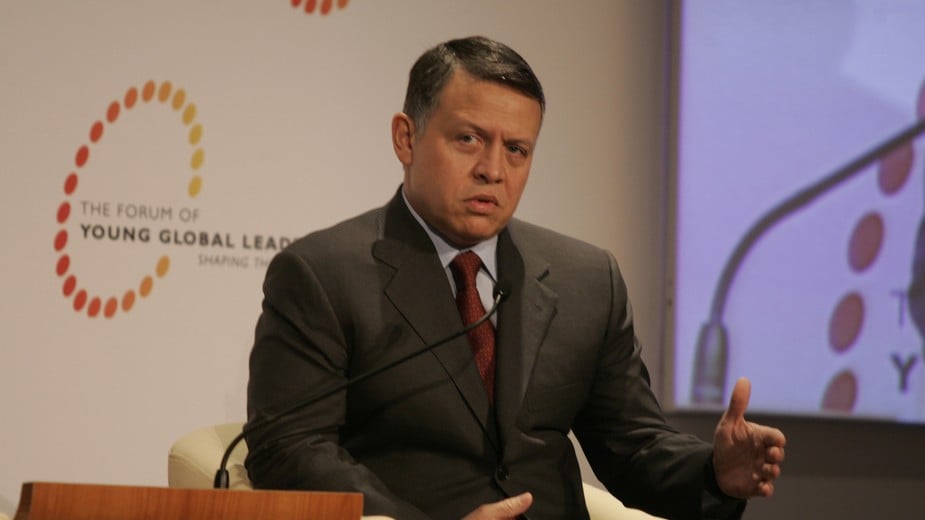
AMMAN, Jordan (AP) — Jordan’s King Abdullah II appointed a veteran independent politician on Wednesday as his new caretaker prime minister ahead of parliamentary elections — the last time he will make such an appointment according to his own reform plan.
As part of the political roadmap that addresses popular pressure for a broader role in decision-making, the parliamentarians elected in the vote scheduled for the end of this year or early 2013 will choose the next prime minister.
The changes were decreed by Abdullah earlier this year to transfer more power to elected bodies and forestall any chance of an Arab Spring-style uprising similar to those that toppled regimes elsewhere in the region.
A royal palace statement said the king appointed Abdullah Ensour, a former lawmaker and deputy prime minister, to head the government. Ensour is identified with the Arab nationalist trend in Jordanian politics but also has good ties with the Islamist opposition.
“Ensour’s government is the last before Jordan’s transition to parliamentary governments,” the palace statement said.
He replaced Fayez Tarawneh, who resigned as mandated by the king’s constitutional changes, which stipulate that the cabinet must resign if parliament was dissolved. Parliament was disbanded last week, half-way through its four-year term, setting the stage for the upcoming elections.
Jordan has weathered 22 months of street protests calling for a wider public say in politics. The protests have been small compared to mass uprisings elsewhere in the region, which have led to four Arab leaders being deposed so far. The king has addressed them by giving up some of his powers, such as transferring to parliament the right to pick prime minister.
The next moves will see an independent electoral commission, recently formed as part of the reforms, set the date of the elections, manage and supervise them — responsibilities that were previously in the hands of the Cabinet.
The king however will still retain powers, heading all three branches of government as well as the military. It is assumed that he will continue to set key policies, including foreign and security.
The commission said more than 2 million Jordanians, or one third of the population, have registered to vote and that the number is expected to grow before the enrollment ends on Oct. 15.
Government officials say privately the number shows that Jordanians trust the reforms initiated by the king, who pushed through the changes despite reluctance in parliament — a largely conservative body of tribal Bedouin politicians who are loyal to the king but fear that the modifications would undermine their longstanding influence.
The opposition for its part continues to hold protests, saying that the election law favors locally-based conservative candidates rather than parties with an ideological base. The Islamists are boycotting the polls. The government says it has adopted a globally recognized system of elections, and that the Islamists’ alternative would inflate their own representation.
Few opposition groups, however, question whether Jordan should remain a monarchy.
Abdullah changed 42 articles, or one-third of Jordan’s 60-year-old constitution, giving parliament more powers, such as piloting parliamentary governments and significantly restricting cabinet influence.
He also created a constitutional court to monitor the application of the law and the independent electoral commission.
Other moves included a political party law that encourages a multiparty system, a municipality law that allows Jordanians to govern their towns by electing mayors and city councils, a regulation lifting restrictions on rallies and public gatherings, and reforms allowing a teachers union to be formed for the first time ever.
It was not immediately clear when Ensour would form his Cabinet, but it is expected to be within days.
Copyright 2012 The Associated Press.






The Times of Israel Community.