

Lies, damned lies and stabbings
Israel’s papers launch a personal attack on PA President Abbas after he accuses authorities of ‘executing’ a 13-year-old, who is, in fact, still alive
 Add ToI as a Preferred Source on Google
Adiv Sterman is a breaking news editor at The Times of Israel.
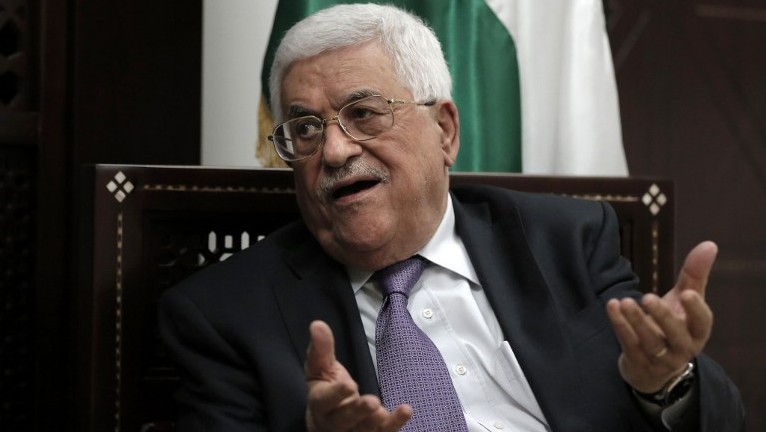
As the ongoing wave of violence, fear, and murder refuses to subside, Israel’s leading papers finally lose patience with Palestinian Authority President Mahmoud Abbas, pointing an accusatory finger at him for utterly failing to make any constructive comments aimed at calming tensions in the region. The main headlines fume and rage at Abbas’s less than accurate accusations against Israel, according to which security authorities “executed” a 13-year-old Palestinian who earlier this week stabbed an Israeli boy in Jerusalem, although by all accounts, the Palestinian child is demonstrably alive.
Yedioth Ahronoth leads with the word “liar” plastered in big, bold letters alongside a not-so-flattering image of the PA leader, and highlights the inaccurate account offered by Abbas in his speech yesterday. “While Abu Mazen waves a picture of “a killed Palestinian child,” the 13-year-old kid, who stabbed and critically injured a Jewish boy his age, is hospitalized, fully conscious, in moderate condition.
Israel Hayom is even more critical of Abbas, mounting a direct, personal attack at the PA president rather than just at his comments. “Liar,” reads the daily’s main headline in letters even larger than the ones printed in Yedioth. The right-leaning paper further shows a still image from security footage of the 13-year-old Palestinian stabber and his accomplice cousin, 15, holding knives as they run in Pisgat Zeev, moments before stabbing the Jewish victim. “Outrage across the board after another delusional speech of the [PA] chairman,” reads the daily’s subhead. The paper goes on to quote a statement by the Prime Minister’s Office, according to which Abbas is “cynically using religion and is inciting terror,” as well as a statement by the Zionist Union which claims the Palestinian leader’s comments “distorted reality.”
Haaretz leads with the two stabbing attacks by Palestinians in Jerusalem, near the old city’s Damascus Gate and later at the city’s central bus station, with the latter assault moderately wounding a 70-year-old woman. Abbas only appears later on in the top article, and the paper stresses the errors in the claims posed by the Palestinian leader as well.
One of Yedioth’s top analysts, Sima Kadmon, asserts that Prime Minister Benjamin Netanyahu’s recent initiatives to curb terrorist attacks in Jerusalem are effectively splitting the capital into two different and distinct halves — the eastern, predominantly Arab side, and the western, mostly Jewish one. “The slogan that accompanies every elections since 1996, which contains a warning that the left will divide Jerusalem, has become a reality this week, with only one small difference: the leader of the Likud party is the one to have done so.”
Kadmon is referring to the security cabinet’s approval of several operational initiatives aimed at providing additional security for Israeli civilians. The cabinet ordered the IDF to reinforce the police, authorized police to impose “closures” around parts of East Jerusalem, and asked for work to be done to complete the West Bank security fence. In addition, it decided to confiscate the property of terrorists, to demolish their homes and revoke residency rights, and to withhold the bodies of terrorists killed during their attacks. “What are these imposed closures if not a series of border stations dividing the city?” Kadmon ponders rhetorically.
Staying on the topic of the government’s new initiatives, Haaretz military correspondent and defense analyst Amos Harel asserts that the security steps taken by the Israeli leadership cannot address all threats and still suffer from some flaws. “When we use the term closure, the public may be reminded of the IDF’s operations in the West Bank during the days of the second intifada,” writes Harel. “But this is not the case in East Jerusalem, and it seems that the reinforcements in the center of cities is aimed primarily at enhancing the feeling of safety for Israeli citizens, and not only their actual security,” he continues. While the initiatives do provide security services with additional means to combat terrorism, “the gaps are still large and the basic danger still remains,” Harel adds.
Yedioth reports on the anxiety experienced by Israeli parents in light of the situation. The paper says that scores of parents across the country have offered to help in patrolling around their children’s schools and kindergartens, firstly in order to provide security to the kids but also in order to calm themselves. Yedioth adds that while the Finance Ministry has vowed it would pay for security guards at all educational institutions across the country, local municipalities have yet to receive exact instructions on the matter.
After a near full paper of gloomy news, Yedioth on its last page finally offers a feel good story on an IDF soldier who was severely injured three years ago, and is now not only healthy and happy, but is celebrating the birth of his first daughter. Ziv Shilon lay in a hospital bed in the Soroka Medical Center in Beersheba three years ago after being wounded and losing his arm on the Gaza Strip border, the article explains. “Yesterday, he returned to the hospital and was moved to tears after his wife Adi gave birth.” Shilon, in an excited Facebook post, said the experience offered him a new perspective on life. “My biggest victory in life came today,” he wrote.






The Times of Israel Community.