

PM urges Meretz to drop bill that would label West Bank products
As Europe moves to implement a similar policy, Netanyahu appeals for across-the-board opposition to boycott efforts
 Add ToI as a Preferred Source on Google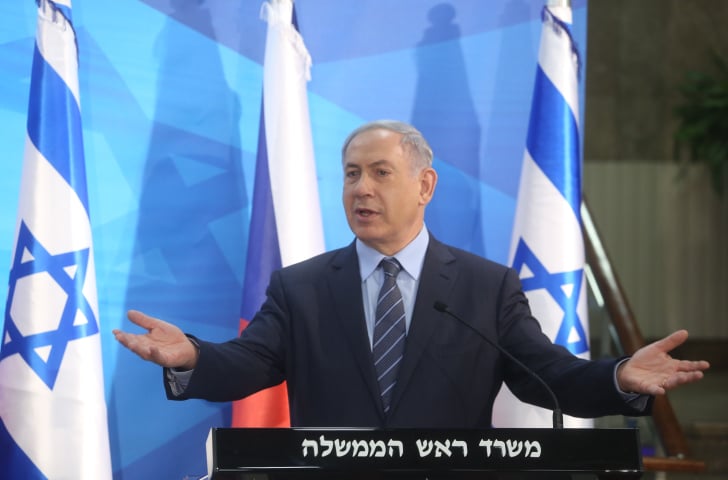
Prime Minister Benjamin Netanyahu on Monday exhorted the liberal Meretz party to withdraw a Knesset bill that would mandate the labeling of products manufactured in the West Bank, amid calls from European countries to implement a similar policy.
“I was surprised to discover that one of the factions in the House [Knesset] has submitted a bill to label products,” Netanyahu said. “I urge it to withdraw this proposal.”
The Meretz bill was submitted last month, backed by its five party members. The bill calls for a clause to be inserted into the Law for Consumer Protection that would mandate that manufacturers state “the city or community where the product was made.”
The explanatory text accompanying the bill said the law as it stands is lacking, since “the… location does not reflect the place where goods were actually produced and may actually be quite remote from it.
Read: Irksome EU labeling of settler goods could snowball into BDS avalanche
“The community or city where a product was made has great importance regarding the quality of a product, the working conditions there, climate effects on production and the circumstances of production, including whether it is inside Israeli jurisdiction or in territory held by Israel by way of occupation,” it said.
“The Israeli consumer has the right to know what the European consumer knows — if the product before him was manufactured in Israel or the West Bank,” the party said in a statement to the Walla news website.
In response, the prime minister slammed the party for the bill and its timing.
“The State of Israel is in the midst of a struggle against efforts to boycott it in international arenas. There is opposition to these efforts from right and from left and an effort to act against the boycott calls,” the prime minister said at the opening of a Likud faction meeting.
The prime minister was referring to the recent gains by the Boycott, Divestment and Sanctions (BDS) movements, including garnering support by Britain’s National Union of Students, and a pullout by the Orange telecom company which Israel considered a boycott but which the CEO has denied is linked to the pro-Palestinian movement and has since walked back. Meanwhile, in Europe, lawmakers are increasingly weighing the labeling of products made in the West Bank.
“Legislation against this phenomenon has already started in the US, and this helps our international efforts,” said Netanyahu, referring to laws recently passed in the state of Illinois that threatens companies boycotting Israel with state divestment from their pension plans.
Responding to the prime minister on Monday, the Meretz party alleged that Netanyahu’s government had been labeling West Bank products for years. It is “a simple fact that the Netanyahu government on its own (!) labels products exported to Europe and manufactured beyond the Green Line even today (!!), as part of its trade agreements with the European Union,” it said.
The party statement may have been referring to a 2005 agreement in which Israel reluctantly agreed to hand over postal codes of its manufacturers to the EU, thus allowing European countries to identify the companies located in the West Bank. West Bank exports are not exempt from customs fees, while products from within the Green Line are.
“It is unclear why the prime minister is so scared that Israeli consumers receive the same information European consumers get when they buy ‘made in Israel’ [products], but if the PM really wants us to remove the bill – here’s an idea: Start negotiations for a permanent agreement to end the occupation,” it said.
Read: When it comes to tackling BDS, Israel is all talk, no action
In an interview with Haaretz in February 2014, Meretz head Zahava Gal-on said she opposed a boycott against Israel, but added that she refrained from buying products made in the West Bank.
“The decision by the EU as part of Horizon 2020, an umbrella program for research and development, was dramatic and significant. It stated that the billions to be invested here would be invested inside legitimate and sovereign Israel and not in the settlements. I support that policy. I haven’t bought products from the settlements for years,” she said. “Israel should not be investing in the settlements. The policy of control of the settlements will cause European friends to stop investing in Israel completely.”
In April, the foreign ministers of 16 of the European Union’s 28 member states sent a letter to EU foreign policy chief Federica Mogherini asking her to promote the labeling of products from the settlements in store chains throughout Europe. Germany wasn’t among the signatories. Then-foreign minister Avigdor Liberman strongly condemned the bid, suggesting that European nations might as well label them “with a yellow star” such as the one used by Nazi Germany to identify Jews before and during the Holocaust.



The Times of Israel Community.