

A Muslim in the Jewish Home, and a Jew among the pan-Arabs
The election campaign is barely underway, but that hasn’t stopped the competing parties from playing the ethnic card
 Add ToI as a Preferred Source on Google
Haviv Rettig Gur is The Times of Israel's senior analyst.
It’s Sunday, 86 days before Election Day (67 of them workdays, for those counting). For all the blustering rhetoric, the campaign is still in its early, chaotic days, rife with primaries and other silliness. And the new week began with unexpected appeals to diversity from some surprising quarters.
Salad (days) taken with a grain of salt
The election campaign is still in its gestation period. Major parties, including Labor, Likud, Jewish Home and Meretz, are still in the throes of their primary campaigns. One should therefore be extra-skeptical about, for example, Netanyahu’s newfound right-wing stridency, Herzog’s incantation of “revolution!” in front of party activists, or the fact that Jewish Home candidates are tripping over each other in the rush to condemn Tzipi Livni’s electioneering advice for John Kerry.
Likud’s primary, both for party leader and the Knesset list, will take place in nine days, on December 31. Netanyahu is all but certain to win against challengers Danny Danon and Yoav Kish.
And once its house is in order, the Likud will have a two-week head start on the other primary-holding parties. Labor’s primaries are two weeks later, on the 13th of January. Jewish Home’s are on the 14th. Meretz’s are on the 19th.
By January 29, all parties, whether they hold primaries or not, must submit their final candidate lists to the Central Elections Committee.
Only then, at the end of next month, will the election campaign assume its final shape. There will be no more chances for parties to join together or break apart, and no more courting of high-profile celebrities for attention-hungry slates. The election will finally be the simple, straightforward 12-way race (at last count of viable parties) that Israelis apparently want.
Strength in diversity
It’s been a strange few days for diversity in politics.
There have always been non-Jews in the Likud and Labor, and always a few Jews eager to join the ranks of the avowedly communist (and nowadays socialist) Arab-majority Hadash.
But now, suddenly, on the edges of Israel’s ethnic-politics spectrum, diversity has become a buzzword, an ideal to be celebrated.
Jewish Home’s ethno-political identity is hard to miss, especially if you just read the first two words of this sentence. But on Sunday, the party announced that Anett Hiskia, “a Muslim Israeli-Arab, 45-year-old mother of three,” is running in the party primaries.
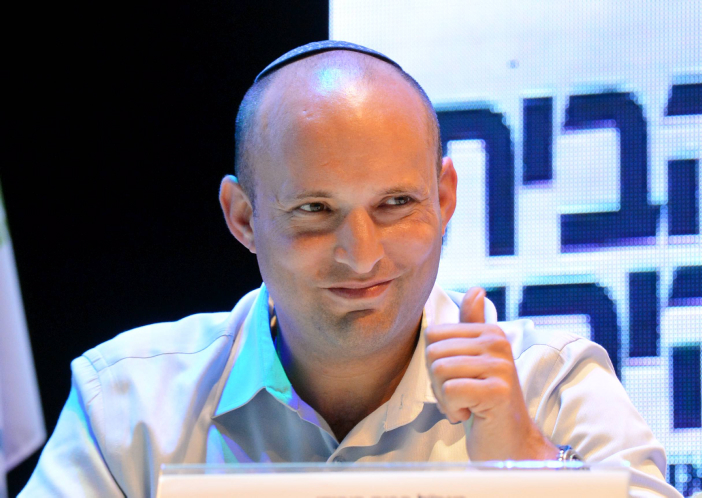
Hiskia is an interesting figure in her own right. Her three sons served in the Israel Defense Forces, including one in a combat role in the summer’s war in Gaza. She opposes a Palestinian state and believes in a strong Jewish one that cares for its ethnic minorities.
Her views are not as rare as some might believe. For over a decade, polls have shown that the percentage of Arab Israelis who are proud to be Israeli, proud of the IDF and believe they are better off in the Jewish state reach well into the double digits.
But it is still surprising to see these views embraced so eagerly by a party called, well, “Jewish Home.”
“I welcome Anett to the race…. She represents the new group of people drawn to the party due to its values and their love for the State of Israel,” gushed Jewish Home chairman Naftali Bennett.
Meanwhile, on the other side of the political spectrum, lawmakers from Ra’am-Ta’al and Balad are hard at work overcoming their own deep ideological differences and constructing a shared “pan-Arab” list that might stand a better chance of passing the 3.25% electoral threshold passed into law earlier this year.
The negotiations are still underway, but MK Ahmad Tibi (Ra’am-Ta’al) is the favorite in polls of Arab voters for leader of the new slate, including in a recent poll conducted by Nazareth’s Arabic-language Kul al-Arab newspaper, where Tibi was favored by almost half of respondents. So when Tibi speaks about the new list, it’s worth listening.
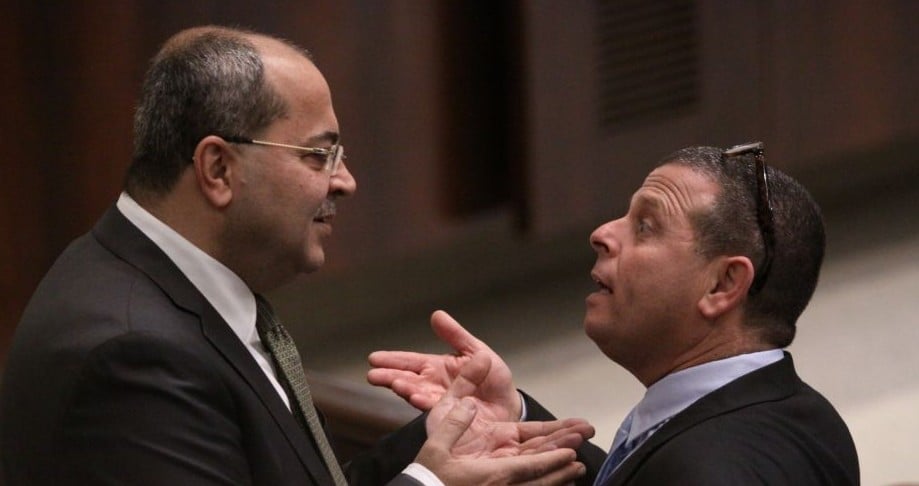
On Sunday, he said this to the Knesset Channel: “Women, and also Jews, and not just one Dov Khenin [the only Jewish MK in Hadash], will be in realistic slots” — that is, high enough on the list to stand a good chance of getting into the Knesset.
It is an interesting comment on changing political norms that Tibi is concerned about the presence of Jews in a new multi-party list whose sole unifying identity is — not to beat around the bush — its Arab-ness. There are no Jews, after all, on either the Ra’am-Ta’al or Balad lists in the outgoing Knesset.
According to reports, Tibi’s announcement wasn’t just an expression of his opinion. Arab lawmakers sought and won the agreement of the Islamic Movement, a powerful force in Ra’am-Ta’al, to place Jews on the new list.
There you have it: Israel’s ethnic politics in all their fractal glory. The more Jewish a party tries to be, the more eagerly it seems to embrace non-Jews. And as Israel’s Arabs put aside their differences and unite under the banner of their Arab identity, it suddenly becomes acutely important to have Jews on board.




- Israel & the Region
- Israel Inside
- 2015 Israeli elections
- Jewish Home party
- Ahmad Tibi
- Arab-Jewish relations
- Balad party
- Ra'am Ta'al party
- Hadash party
- Labor primaries
- Likud primaries
- party primaries
- Likud party
- Labor party
- Meretz party
- Central Elections Committee
- Anett Haskia
- Yoav Kisch
- Arab Israelis
The Times of Israel Community.